Home page
ع

Celebrating Our Hardworking Staff Moms on Mother's Day Under COVID-19

Nahla El Gendy
March 19, 2020
ss

#PeopleOfAUC

With Mother's Day coming up on March 21, working mothers in Egypt and at AUC are facing a lot of challenges in light of the coronavirus situation — they are trying to keep their kids safe at home and entertained, keeping pace with their online learning at home and — on top of that — working in their daily jobs.

We spoke to AUC's staff working mothers, and here are their thoughts on this year's Mother's Day:

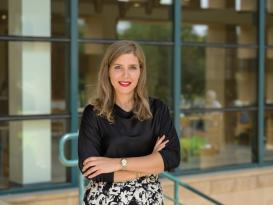
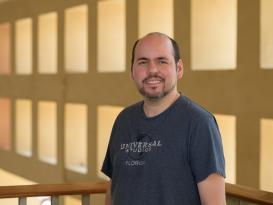
Noha Saada, senior director, Academic Advising Center: 

ss

“I think we have to strike a balance. We should neither frighten our kids nor neglect our work duties. We should work on maintaining our balance without panicking too much in order to be able to think straight. A couple of days ago, I started panicking too much, which made me get physically sick. What we are doing at work now is that we are working on a remote location policy while keeping some of the staff members on campus to maintain normal operations at the office. We are installing VPNs on our laptops and contacting students to inform them that we are taking online advising appointments, including videoconferencing tools when necessary. Concerning my two sons, things are getting really difficult. I am trying to handle it with my husband and nanny. We take annual leaves rotationally, and they are starting online learning, so I’ll be trying to keep up with the pace of their online learning when I am back from work. Things are even getting more difficult for my kids to stay at home, especially that they are used to working out three times a week, so my husband sometimes works out with them at home and we take them for a walk in open places since it is the safest option. I hope this works, and I hope people will take quarantining seriously."

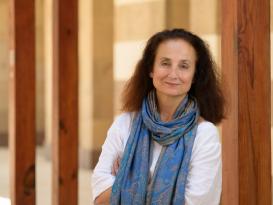
Amira El Biltagy, program manager, Yousef Jameel Public Leadership Program, School of Global Affairs and Public Policy:                                                                                                                                    

jj

“These are very difficult times. The fact that schools are shut down for two weeks and kids are isolated at home makes you think what you should and shouldn’t do: Should we have some friends at home or not? Can we eat out or not? They need to be entertained 24/7 and you still have to work, even if remotely, and in my case also study for my master's, which is quite challenging to be honest or at least harder than the usual days when they are consumed in school work and sports. I am a believer that safety comes first, so for the next couple of weeks, the plan is to hold it together and keep our sanity and divide the day among different activities, of which some, I must admit, are useless but still very much needed!”

Sherine Meshad, associate director of communications and marketing, School of Business:

dd

"It’s an everyday challenge to balance a working life and having kids staying at home in response to COVID-19. The flexibility of rotation that the School of Business has set in place makes it a bit easier to navigate the challenge of homeschooling and work responsibilities. I have to say it’s a pendulum of emotions between going up the wall and having the chance to spend more time with my kids. I'm making the best out of the situation while wishing for a cure."

Eman Abdel Salam, operations manager, School of Global Affairs and Public Policy:

jj

"What we are going through these days is hard to believe. It feels weird when all of a sudden someone pressed the pause button for your 18 hours of daily routine, and you can’t do anything about it! Having to deal with isolated, bored kids at home is not as easy as it sounds. Having to entertain them as well as do online school work is much harder than we thought, especially with my work duties. For days now, the do's and don’t lists have been growing in my head, and I'd be lying if I said I got it all under control. It’s another challenge that we as working mothers have to go through. This too shall pass.”

Salma Adly, program officer at the International Program Office:

cc

"As a working mom and a mother of two teenage girls, I find it hard to cope with this semi-crisis that we are facing nowadays. Not only is it a difficult time for all of us, but it is also extra difficult for working mothers and fathers. I find it difficult to convince my girls that this virus is not a joke and that we have to take it seriously by sanitizing everything we use and avoiding crowded places. Between online classes, which is a hassle, housework and trying to keep my family safe, I have to try to balance my work while working from home and meeting my deadlines. May this difficult time go away soon."


Share

Tips on Being Happy While Working from Home

Nellie El Enany
March 22, 2020
work-from-home

We are now facing the coronavirus pandemic. Everyone is feeling anxious, disorientated, worried and generally uneasy. Workplaces are being disrupted to an unprecedented degree, and nobody knows how long this will last. Many of us have to work from home, and this in itself can be not only challenging, but also isolating and lonely. Social bonding is important, and many of us will miss out on interacting with colleagues, and for our faculty with our students too. So, what can we all do about it?


1. Work on your time management

Time management is crucial. One way to make working from home more productive is to break work down things into smaller tasks. With distractions at home, getting into flow can sometimes be difficult. Many of us are living with our families and pets. There are house chores that have to be done, and often those around us may not understand the type of work we are doing. Having short breaks is crucial, even if this means calling a colleague for a chat, checking in on students, doing a bit of housework or, in my case, going for a cuddle with my dog, and -- even more useful -- doing a few stretches. Staying physically well will help us all stay mentally positive.


2. Take up a hobby

Since many of us will not have to spend time commuting or taking children to school, we are not going out as much and, hopefully, this will conserve some energy. Taking time out every day to learn a new language, draw, paint, practice yoga, read or even just sit still and think. These little activities can help us disconnect not only from work, but also from all the news around us, which can get overwhelming sometimes. It will also help us =feel like we are achieving a task or end goal beyond work, making us feel more satisfied and happier.


3. Stay socially bonded

While we are not seeing our colleagues and friends as much, this does not mean that we cannot stay connected. Having regular check-ins is important, especially if you have elderly family members whom you are unable to see: Speaking with them helps them feel less isolated. I find that writing letters is therapeutic, even though I am unsure when I will be able to post them. Getting my thoughts down to a friend or loved one makes me feel more connected to them and satisfied.


4. Be grateful

Over this period, I am encouraging my students to think about one thing every day they are grateful for, even if this is having a warm shower or a clean drink of water. AUC has, and historically always had, a solid community that has stuck together during difficult times. Simply knowing that your organization and colleagues are there for you gives employees a sense of psychological security and elicits feelings of happiness. In current times, this is something that organizations need to strive to do more so than ever.

Stay connected, stay grateful and stay happy!

Nellie El Enany is an assistant professor in the Department of Management. Her research interests center on issues of identity, including identity construction, stigma, legitimacy and identity work. She also has an interest in the psychology of happiness in the workplace. 

Share

Class of 2020: The Future Awaits

Yakin Ouederni
February 4, 2020
commencement
commencement
commencement
commencement
commencement
commencement

If you were on campus last Wednesday and Thursday, you would’ve seen crowds of new students eager to begin their lives at AUC wandering among a sea of caps and gowns, graduates ready to start their journeys beyond this campus.

facts

There were a total of 530 graduates from five schools at the midyear school-based commencements last week, with five PhD students, 113 master's and 412 bachelor's in all. The graduating class was 57% women and 43% men. Fifty-nine students graduated with honors, 82 with high honors and 47 with highest honors. The School of Sciences and Engineering had the greatest number of graduates.

The ceremonies featured inspiring speeches from the deans of the different schools as well as from students. The speeches emphasized the importance of being flexible with career opportunities and life changes and advised graduates to make impactful and responsible decisions. Parents and families were thanked for their support, as were the faculty and staff for their “behind -the -scenes” work. 

School of Sciences and Engineering

Dean Hassan El-Fawal recognized the importance of having a liberal arts and sciences education, noting that it is “the education of leaders, not followers.” 

“We have asked much of you as students. Now we ask of you, as graduates, to accept the responsibilities of leadership, and to exemplify the kind of courage, compassion and creativity we foster in our students and celebrate in our alumni,” El-Fawal added. 

Mohamed Mahmoud Abd El Sattar ‘20, the graduating class representative who received a bachelor's in petroleum engineering, opened his speech with a few jokes, then got serious about how important it is to keep moving forward. He closed his speech by highlighting AUC’s role in fostering proactive mindsets. 

“Here at AUC, we learn beyond academics,” he said. “We learn how to formulate our equation of life, and thanks to all of the liberal arts courses, not only do we get to formulate our equation of life, but we also get to doubt, critique and test our equations to build a better and stronger foundation for our lives to be built on. AUC served as a real-life simulation period for all of us, where mistakes are allowed, identified and corrected. Mistakes at AUC makes us better and stronger.”

The school gave out five awards to graduates for their research projects and academic performance.

The Fadel Assabghy Award for "outstanding master's thesis work" was given to Amal Abouel-Fetouh Badr for her thesis titled, “In-Depth Analysis of Culturable Microalgae Diversity in the River Nile at Different Locations,” under the supervision of Walid Fouad, associate professor in the Department of Biology. Badr completed her thesis in Fall 2019. 

The Medhat Haroun Award for "outstanding master's thesis work" was given to Tamima Sherif Elbashbishy for her thesis titled, "An Ontology Framework for Addressing Cost Overrun Through Risk Modeling: A Risk Path Approach," conducted under the supervision of Ossama Hosny, professor in the Department of Construction Engineering.

Lotfy Hussein Abdel Khaliq and Nour Mohamed Abdelhamed, both computer engineering graduates, were awarded the Abdel Rahman El Sawy award, which is presented to Public School Scholarship recipients with the highest grade point averages in an engineering department.

Established in 2017 to provide a bi-annual cash award to the highest performing graduate and undergraduate students, the Mohamed Bin Abdulkarim A. Allehedan Award was presented to Sarah Omar Youssef, who earned a master's mechanical engineering, and Rania Mohamed El-Shenety, who received a bachelor's in actuarial science. 

School of Business

"Make your life a quest for continuous improvement. Learning is always a lifelong journey, and never a destination," Dean Sherif Kamel '88, '90, '13 told the graduating class. "Always seek the next challenge, the next mission, the next endeavor. Be ambitious and be confident that anything you are passionate about and work hard for will be achieved." 

Youssef Sabek '20, who received a bachelor's in business administration, asked for a favor from his fellow graduates.

"I ask that you become ethical decision makers," he said. "I ask that you seek out responsible and climate-friendly decisions, and I ask that you treat future colleagues with dignity and compassion. This country and this region really need it."

Two awards were given out: the Student Recognition Award and the Academic Club Award. 

Nour Beshir '20, who graduated with a bachelor's in economics and business administration with a finance concentration, received the Student Recognition Award for demonstrating "outstanding services and achievements to the school since declaration to graduation." The Entrepreneur’s Society won the Academic Club Award.

School of Humanities and Social Sciences

Class representative Malak El-Shorbagy '20, who received a bachelor's in political science, expressed the importance of getting an education from a school as diverse as HUSS. 

"Being enrolled in this school will pay off because it is rich in diversity," she said. "Diversity is a non-detachable element of our HUSS institute. Diversity is what taught each and every one of us to be truly tolerant."

School of Global Affairs and Public Policy

Founding Dean Nabil Fahmy praised the graduates for their common goal, the reason they decided to pursue a career in this field. 

“You have been focused not only on your personal interest, but on the common good, with implications far beyond your immediate needs,” he said. 

Mariam Fawzy ‘20, who graduated with a bachelor’s in journalism and mass communication, said that a GAPP education equipped students with the tools to form  “proper, educated opinions about matters around us” that they will take outside the classroom. 

Graduate School of Education

Heba el-Deghaidy, the school's interim dean, noted, “This is the beginning of what we hope will be an exciting and rewarding journey where you can make a difference and make us proud at AUC."


For commencement photo albums click here.

Share

Class of 2024 Looks Forward to AUC Experience

Nahla El Gendy
February 4, 2020
ss
ss
ss
ss

AUC's campus is sparkling with energy and hope as new and returning students kick off the Spring 2020 semester. More than 80 new undergraduates and 140 graduate students started their studies as the University approaches the final phase of its centennial celebration: Experience the Future. 

The new undergraduate class — 47.5% females and 52.5% males — is enriching campus diversity, with students coming from the United States, Syria and Yemen. 

Likewise, on the graduate level, the class  — 67% females and 33% males — comprises a diverse international body coming from the United States, Yemen, Sudan, Nigeria, Eritrea, Iraq, Morocco, Palestine and Tunisia.  

Students expressed their hopes and eagerness to learn more about Egyptian history and improve their Arabic Language skills. News@AUC caught up with some of them during orientation week and on the first day of classes to learn about why they decided to join AUC and what they look forward to this semester. Here's what they had to say: 

ss

Kit Feeney

The American University of Paris

"I came to AUC for the many cool economics programs and to get better in Arabic. I am taking the Egyptian colloquial class to learn Arabic. It is a really beautiful campus; I love it, I really couldn't ask for anything more."

dd

Mateusz Puczel

Warsaw School of Economics

"I chose to come to AUC because I love the Middle East, and AUC is one of the best universities in the Middle East."

ff

Ryan Butler

The State University of New York at New Paltz

"I came to AUC because I have a love for history, and Egyptian history is my favorite, I am looking forward to learning a lot at AUC from history professors. I also love the weather; it's perfect weather given the season."

rr

Van Ieray

University of New Mexico

"I came to AUC because I am interested in Arabic and Egyptian history."

Share

Columbia Business School MBA Students Work with AUC Venture Lab Startups

Yakin Ouederni
January 28, 2020
cbs
cbs
cbs
cbs
cbs

A group of second-year MBA students from the Columbia Business School spent one week in Cairo as part of a global immersion class conducted in partnership with the AUC Venture Lab. Describing their visit in one word, the students called it “impressive.” 

CBS students were paired with a V-Lab startup and worked together throughout the fall semester to create business plans and practice consultation. To complete the class, the students came to Cairo in January to meet with Egyptian business leaders and prepare a final presentation of their work with their assigned startups. 

“We had one week to visit companies, government officials, startups, IPOs and banks,” said Marco Viola, adjunct professor at the CBS and teacher of this course. “AUC is the top University in Egypt, and Columbia is a top university in the US, so I think it’s a great partnership.” 

The students worked with six startups that had all recently graduated from V-Lab and are in their early stages of business development.  

“We are very excited about this partnership,” said Ayman Ismail, Abdul Latif Jameel Endowed Chair in Entrepreneurship, associate professor at AUC's School of Business and founding director of the V-Lab. “We’re trying to provide a platform of internationalization for our Egyptian startups. It’s great exposure to work with people in the Columbia Business School. Many of those people will end up in investment banks, venture capital funds or companies that can offer potential opportunities in the future.”  

Kyle Knopick, a CBS student, worked with the startup Amanleek, an insurance tech platform that aims to bring transparency and convenience to insurance purchase in Egypt. 

“I was really impressed with the acumen of the founders,” he said. “They were impressive even in pre-launch, pre-revenue, pre-testing and how much thought they had put into their business model. Working with them throughout the last few months has been a really fun, interesting and educative process.” 

“I’ve had a great experience at AUC,” said Karan Bains, another CBS student working with Amanleek. “AUC provides great infrastructure, a great platform [for startups] and great programming. I’ve really enjoyed my time here presenting all the work that we’ve done with these founders over the last few weeks.” 

And the appreciation for work ethic and expertise went both ways. Ihab Al-Soukary ‘13, co-founder at Amanleek, said that working with the CBS students not only exposed his team to different business practices, but will actually help shape the business in the future. 

“They were attentive and helpful,” he said. “We had so many calls over the past two months to come up with findings that we will definitely use and that will help us direct our startup in our early stages. We’re lucky to be part of this program and learn a lot along the way from different models that will help us decide where to go in the next few months.” 

Another V-Lab startup taking part in the program was EatHeal, a medically tailored nutrition and food-service provider that works with clients to create meal plans that are customized to meet their health needs. 

“I’ve been looking forward to learning from them about their marketing strategies and how they retain customers,” said Rehab Abdel Maguid, founder of EatHeal. “The team was really helpful in helping benchmark EatHeal with other delivery services in the United States.” 

Like her classmates working with Amanleek, Roshan Prakash says she was not only impressed with the progress of EatHeal, but with the energetic startup community in Cairo as well. 

“We always hear and learn about different issues in emerging markets, and while those issues are there, these businesses could exist in the United States,” she said. “I’m glad to see that the higher education system in Cairo supports innovation.” 

The conversations among the CBS visitors went beyond AUC and touched on the growing entrepreneurial culture in the country, noting the large number of startups they visited and seeing the efforts of incubators like V-Lab.

“The entrepreneurial ecosystem still needs to be developed, but you have a lot of educated people willing to take the risk, which is not easy to do,” Viola said. Speaking about the role of V-Lab in that ecosystem, Viola added that “the ability to combine practical experience with academic interest and all the knowledge and know-how that AUC has is amazing. It’s a great program and already has had a lot of impact not only with specific people, but in the economy in general.”

The co-founders of Amanleek mentioned that without V-Lab, their company wouldn’t have gotten the networking, exposure and media coverage that were helpful in kickstarting their business. 

“Our experience with the V-Lab was exactly what we needed,” said Mohammed Mansour, co-founder and project manager at Amanleek. “We needed someone to give us a kickstart in terms of finalizing our business model, our revenue streams and our customer segments. We were lucky to have the license very soon. I’m really happy we chose the V-Lab and didn’t choose another incubator.” 

The V-Lab was founded eight years ago and has since graduated over 170 startups, which have raised more than EGP 1.5 billion in investments collectively and created over 8,000 jobs, according to Ismail. 

“All of the startups in this program are V-lab alumni, and it’s great to see their progress a year after graduation,” he said. “Most of them have launched a product and are now raising investments and even growing their businesses beyond Egypt. Within the next couple of years, we’ll see those companies going up the curve and creating some really interesting stories.”

Share

AUC, College of Charleston Partner on Student Exchange

Dalia Al Nimr
January 8, 2020
Charleston

AUC and the College of Charleston in South Carolina, both liberal arts institutions with a long legacy in education, have recently partnered on a new academic cooperation and student exchange program for both undergraduate and graduate students for a period of five years. 

AUC and the College of Charleston in South Carolina


Students from AUC and the College of Charleston will receive a scholarship to spend a semester or year abroad at the other institution, providing students with a unique international experience and strengthening East-West cultural ties. "Our new partnership with the College of Charleston represents an excellent opportunity for our students to spend a semester at one of the finest liberal arts and sciences institutions in South Carolina, which provides quality education along with authentic student experiences,” said Ahmed Tolba, ’97, ’01, associate provost for strategic enrollment management and associate professor of marketing at AUC. “It is ranked no. 1 among public universities in the United States in terms of the percentage of undergraduate study-abroad students. I look forward to hosting their students at AUC and having our students benefit from a unique experience there."

AUC Trustee Jonathan Wolf (YAB '75), founder and president of Wendover Housing Partners, LLC who was a study-abroad student at AUC, and his wife Nancy were instrumental in making this program a reality. They will provide funds for AUC students to spend a semester or year abroad at the College of Charleston, while Hilton and Catherine Smith, who serve on the College of Charleston’s School of Languages, Cultures and World Affairs advisory board, will fund College of Charleston students to come to AUC.

“To find and do and be of significance, you need to study in Cairo,” said AUC Trustee Wolf to Charleston’s The College Today. “As a Westerner, my first stop out of the U.S. was the ancient world. Cairo opened up what for me later became a career and way of life. It gave me confidence. If you can succeed in another culture with another language, then there’s nothing you can’t accomplish.”

Garrett Davidson (CASA ’04, MA ’06), who studied at AUC’s Center for Arabic Study Abroad and earned his master’s in Arabic studies from AUC and is now an assistant professor of Arabic and Muslim world studies at the College of Charleston, emphasized the importance of this global experience for students.

“This is a fantastic opportunity for both institutions,” Davidson told The College Today. “As a student at AUC, I established professional and personal connections that continue today. It was the most influential experience of my life. I explored all over Egypt. I met people from all walks of life and got to hear their views on everything from politics and religion to economics and food.”

The Wolfs also established the Nancy and Jonathan Wolf Study-Abroad Scholarship at AUC.

Share

Rania Al-Mashat '95 is Egypt's Minister of International Cooperation

December 31, 2019
aa

Egypt's Minister of International Cooperation Rania Al-Mashat '95 is beginning a new phase in her mission of public service to Egypt, after heading the Ministry of Tourism for the past two years. 

Driven by a sense of responsibility to give back to her country, Al-Mashat said on her Instagram and LinkedIn accounts: 

"When you choose public office, you serve where needed. At the outset of taking over the Ministry of Tourism in January 2018, I committed to changing the narrative on #Egypt's tourism sector and advancing its frontiers. As I embark on a new challenge, I refer to a quote in my chapter published in the book, Daughters of the Nile: Egyptian Women Changing their World (December 2016): “Serving Egypt by contributing to policies that would make the richness of the Nile flow to all its citizens is not only a mission, it's a passion." She added, “ I look forward to designing and implementing policies in another portfolio along my journey of public service.”

The first woman to head the Ministry of Tourism since its establishment 60 years ago and the youngest minister in Egypt when appointed in 2018, Al-Mashat will be credited for transparently launching a "comprehensive, coherent and consistent policy framework," the Egypt—Tourism Reform Program (E—TRP), designed to unleash the potential of Egypt’s tourism sector through implementing structural reforms. Consequently, tourism has become one of Egypt’s fastest growing sectors, witnessing an unprecedented rebound, with revenues growing annually by 28 percent to record $12.6 billion in FY2018/2109 — the highest in the country’s history — and $4.2 billion in FY 2019/2020.

Al-Mashat has been recognized internationally for her relentless efforts and outstanding contributions to the tourism sector, both domestically and globally. She received the 2019 World Travel & Tourism Council Champion Award for Resilience, demonstrating strong leadership and pioneering public policies and initiatives that have increased the competitiveness of the sector, leading it through a successful recovery from adverse events. Minister Al-Mashat also received the World Travel Market's 2019 Global Leaders Award for Outstanding Contribution to the Industry on behalf of the Egyptian Ministry of Tourism. The award recognized Egypt's Ministry of Tourism as the one that has contributed the most to the global travel and tourism industry over the last two years. This marks the first time for Egypt to receive these awards.


Share

RiseUpAtAUC 2019 Recap

Nahla El Gendy
December 10, 2019
aa
a
a
a
aa
a
a
a
aa
aa
aaa
a
aa
aa
aa
a
aa
aa

For the first time, AUC was the main partner and host of #RiseUpAtAUC, the one-stop-shop event connecting startups in the Middle East and Africa, with more than 20 of AUC’s faculty and alumni as guest speakers.

In his speech at the opening of RiseUp ‘19, AUC President Francis Ricciardone emphasized the University’s role in inspiring its students to utilize their education to better serve Egypt and the communities around them. “At AUC, Egypt’s global University, we bring the world back to Egypt and we bring Egypt to the world — and not only for tourism, which is a wonderful thing, but for learning, creating, researching and developing projects and products that will improve lives. That’s what AUC is about. This is the right place for RiseUp Summit 2019,” said Ricciardone.

In its seventh edition, the summit bustled with the region's top entrepreneurs, startups, investors, creative masterminds and Fortune 500 companies. This year’s summit built on past ones, focusing on the Journey to Growth as its main theme, as well as drawing the line between the past, present and future. The three-day summit included talks, panels and chats; in-depth workshops and boot camps; networking sessions with hundreds of investors; talent matchmaking events; and exclusive satellite events.

AUC alumni speakers included Mohamed Aboul Naga ‘09, co-founder and CCO of Halan; Yaseen Abdel Ghaffar ‘10, managing director of SolarizEgypt; and Karim Fahmy ’17, CEO and co-founder of Inploy, who all stood on RiseUp’s stage to tackle different entrepreneurial topics together with international figures in various fields, including Brian Collins, chief creative officer at COLLINS; Gerardo Mazzeo, global innovation director at Nestlé; Karen Cheng, head of social at 9GAG; Marcel Muenster, founder and director of the Gritti Fund; Raya Abirached, TV presenter; and Samih Sawiris, founder of Orascom Holding AD.

“It feels very nostalgic to be back on campus for the RiseUp summit this year," said Islam Shawky, CEO and co-founder of PayMob, an infrastructure technology enabler providing payment solutions company. "I started school in 2008, so AUC New Cairo is the only campus I know. We started our company on this campus, as the six members of the founding team are AUC graduates, so we are extremely nostalgic.”

Among the workshops that took place throughout the three-day entrepreneurial marathon was one held by Kim Fox, professor of practice in the Department of Journalism and Mass Communication, titled What You Need to Know About Starting Your Own Podcast.

“I'm such a fan of RiseUp Summit because it brings together the vibrant community of thought leaders, creatives and more; the energy is contagious and inspiring,” said Fox. The ability to reach out to other attendees and speakers for potential collaborations and knowledge sharing is achievable and encouraging. It was nice to see so many of my former students and colleagues there.”

Ramez Youssef, co-founder of Tayarah, a creative production agency, also held a workshop titled From Trendsetters to Trend-Seekers. “RiseUp Summit feels so different this year, being at AUC New Cairo. The content is also different, as different people are delivering different messages,” he said. 

Startups from AUC Venture Lab (V-Lab), Egypt’s first University-based startup accelerator and a leading accelerator in the Middle East and Africa, also participated in the summit. In a special booth for the V-Lab, graduates of this year’s cycle shared their experiences with the attendees and highlighted the impact of their ideas and businesses on the Egyptian economy.

"The AUC Venture Lab had a strong presence in RiseUp Summit this year, with more than 24 startups presenting their innovations to the summit participants, investors and international partners,” said Ayman Ismail '95, '97, Abdul Latif Jameel Endowed Chair of Entrepreneurship; associate professor at School of Business and the founding director of the AUC Venture Lab. AUC also announced the launch of the new Innovation Hub, focusing on attracting corporate innovation labs to be based on campus and expand their collaboration with AUC faculty and students. Our end goal is to create a collaborative community of entrepreneurship and innovation at AUC and Egypt.”

RiseUp Summit 2019 held a competition for the best educational applications at the event, where AGORA, a V-Lab startup, ranked first and won the African App Launchpad Cup and a monetary prize. AGORA is an ed-tech app that empowers children to explore the world around them and learn from it through Augmented Reality.

The summit also included a Creative Marketplace featuring some of Cairo’s creative startups that displayed their products, including Doodle Factory and Babyfist.

As AUC turns 100, the University is not only celebrating its century-long achievements, but also looking to the future, ushering in a new centennial of innovation and service to the community.

Checkout AUC' centennial website to know  more about the upcoming centennial events.

Watch here some of AUC President Francis Ricciardone's insights about the event.

#RiseUpAtAUC  #AUCFutureMakers

Share

Accounting Research Highlights a Country's Vulnerability to Climate Change

Nahla El Gendy
December 10, 2019
the horizon split into a green half and a damaged half, representing Global Warming and climate change

Climate change is a global threat. According to NASA, 97% percent of climate scientists agree that human activities are the main cause of climate-warming trends over the past century, and most of the leading scientific organizations worldwide have issued public statements endorsing this position.

A study co-authored by Angie Abdel Zaher (MBA ’00), assistant professor of accounting, titled “Vulnerability to climate change: Are innovative countries in a better position?” takes another perspective, highlighting the impact of a country’s degree of innovation on its vulnerability to climate change.  

The more we know about the unknown, the less fearful it can become and the less damage it can project, explained Abdel Zaher, highlighting the ultimate theme behind the study. The research findings prove that a country can cope with adverse effects of climate change by knowledge exploration (as evidenced by research and development spending) and application (as evidenced by patenting). 

Most of the research nowadays focuses on the consequences of climate change. However, international business research on this issue falls short.  

“Climate change is happening and is influencing our livelihood in multiple ways,” she said. “Many studies have reflected on the danger it carries in terms of global warming and the environmental influences. However, among financial leaders, climate change is threatening the way they do business as it will never be ‘business as usual’ again.”  

Using a longitudinal sample of 73 countries for the years from 1998 to 2013, the study looks at the impact of innovation, openness to trade, and regulatory quality on a country’s vulnerability to climate change. Research findings indicate that R&D expenditures as a percentage of GDP (innovation input), openness to trade, and regulatory quality decrease a country’s vulnerability to climate change. In addition, openness to trade moderates the effect of patenting rates (innovation output) on a country’s vulnerability to climate change.

“Climate change impacts the country’s economic, social, and environmental livelihood, but the way each country deals with its own vulnerability to climate change will vary depending on how it utilizes its knowledge resources to combat such vulnerability,” affirmed Abdel Zaher.

From accounting equations to vulnerability of climate change, accountants are usually asked to project and analyze potential risks affecting the business operations. They go beyond the numbers, investigating factors that may threaten the client’s bottom line profits. Auditors are usually asked to give projections a year ahead about the financial business viability, and with such environmental issues coming to play, the predictions are shady.

“More than 1,500 of the world’s large companies are adopting the framework of the International Integrated Reporting Council, mandating companies to disclose environmental and social governance concerns to assess its performance,” added Abdel Zaher. “We, as accounting professionals, have tried to clarify some of these climate change concerns, but it is not enough to combat the hazards of climate change.” 

Abdel Zaher’s research aims to shed light on issues that are critical across the globe through the examination of country factors. It produces insights into how countries’ commitment to knowledge creation and application can better translate into sustainability. The research also stresses on the role that Multinational companies can play, in which their strategic choices can directly impact the outcomes of climate change policy, as they are mechanisms of knowledge and technology transfer and thus the benefits in one country can be used to feed into the need of another country to manage its climate change risks

“The findings will not just benefit the policymakers of the countries considered, but also those multinational companies that are crossing borders and must consider the risks of climate change on their operations,"  said Abdel Zaher.

#AUCFutureMakers 

Share

Egypt’s Ministry of Tourism Wins the World Travel Market’s 2019 Global Leaders Award for “Outstanding Contribution to the Industry”

November 19, 2019

Egypt's Ministry of Tourism recently won the World Travel Market's 2019 Global Leaders Award for Outstanding Contribution To The Industry at the biggest event of the global travel industry, the World Travel Market, which brings together a total of 5,000 exhibitors from around the globe and gathering more than 30,000 attendees. During the event, Egypt was honored among the very best in the travel industry.

Our very own alumna and Minister of Tourism Rania Al-Mashat '95 was presented the award in appreciation for the ministry's efforts in the past two years to promote tourism and having the biggest impact on the industry, marking the first time Egypt receives the award. When appointed in 2018, Al-Mashat became the first woman to hold the position and the youngest minister in Egypt.

rania
Rania Al-Mashat with the 2019 Global Leaders Award
 

Throughout her career, Al-Mashat has emphasized being driven by a sense of responsibility to give back to her country. “Serving Egypt by contributing to policies that would make the riches of the Nile flow to all its citizens is not only a mission; it’s a passion,” she said in her chapter of the book, Daughters of the Nile: Egyptian Women Changing Their World (Cambridge Scholars Publishing, 2016). You can read her feature on AUCToday's "Voices of the People" here

The award reflects another year of robust growth for Egypt’s tourism sector, reinforcing its role as a driver of economic growth and job creation. The predominant goal of Egypt’s Tourism Reform Program is to have a minimum of one individual from every Egyptian household work directly or indirectly in the tourism sector. The ministry has so far demonstrated that setting policy frameworks is not a theoretical approach but actually executable, as tourism revenues have accelerated, reaching an all-time high in 2018/2019.

Al-Mashat currently serves as a member of the Dean's Strategic Advisory Board in AUC's School of Business.

Share