Home page
ع

Eltoukhy Learning Factory: New Teaching Environment to Promote Innovation and Entrepreneurship
November 22, 2022
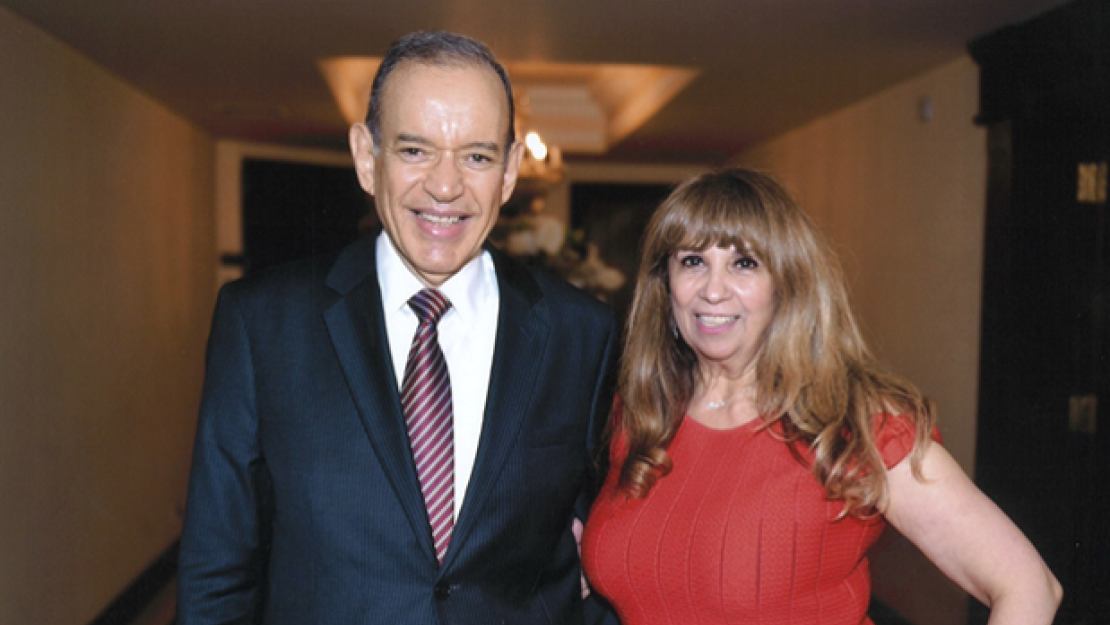
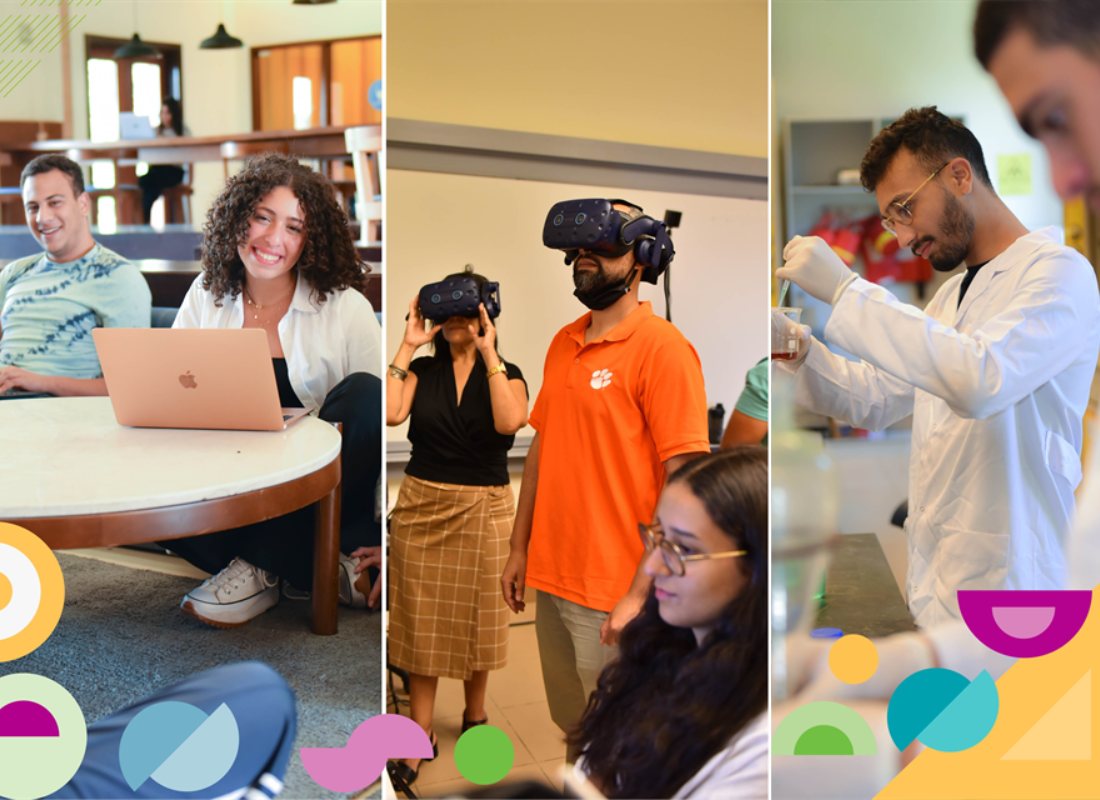
A man and a woman smiling

The first of its kind in Egypt, Eltoukhy Learning Factory for Innovation and Entrepreneurship brings together AUC students, faculty, entrepreneurs and industry. It will help students strengthen their multi-disciplinary and problem-solving skills, preparing them for careers in diverse professional sectors. Modelled on learning factories at other universities worldwide, the Eltoukhy Learning Factory will be located in AUC’s School of Sciences and Engineering on the New Cairo campus. 

Made possible through the generous support of AUC Trustee Atef Helmy Eltoukhy '74 and Fofa Eltoukhy, the Eltoukhy Learning Factory is a new innovative teaching and workshop environment to allow students to take ideas from the classroom and develop creative solutions to real-world problems.     

“This region presents complex challenges not limited to one professional sector or industry,” said AUC President Ahmad Dallal. “We are extremely grateful to Dr. and Mrs. Eltoukhy for this transformational gift, which will create a unique collaborative and multi-disciplinary learning environment at AUC. We are excited to see the entrepreneurship and creative projects that will result.”

As part of their “capstone projects” at the culmination of their studies, students will be empowered to develop their ideas, and bring them to fruition, by accessing the resources of the Eltoukhy Learning Factory and the expertise of AUC faculty. It will combine classroom teaching, hands-on learning and teamwork, and real-life applications. The students will also benefit from interaction with representatives from industry and other sectors that may bring partnerships or industry-sponsored challenges. 

“My family and I are proud to have had a long association with AUC” said Eltoukhy. "As Egypt's leading university, AUC plays a critically important role in preparing the next generation of leaders and problem solvers. It is essential that we provide them with the links to real-world problems and industry, well before they graduate. We are pleased to be able to support those experiences, and give students an opportunity to fully explore their ideas, and to realize projects through the Learning Factory."

If students are to have the competitive skills and knowledge that are required upon graduation, they will need experience with the latest technology and equipment. The Eltoukhy Learning Factory will allow students to develop their projects, benefiting from state-of-the-art equipment and diverse tools. The Factory will feature new equipment such as laser cutting, bench-top Computer Numerical Control (CNC) machines, waterjet, and 3D printing. Additional equipment will include various electronic control and testing equipment, and Internet of Things capabilities. The students will be supported by AUC faculty members from diverse departments including computer engineering, electronics and communications engineering, and mechanical engineering. Other AUC disciplines may also be involved, including arts and graphic design.

AUC graduates have a strong track record of generating successful startups. The Eltoukhy Learning Factory will be closely linked to the AUC Venture Lab that will help prototype startup ideas, and transform successful projects into new startups. AUC’s newly developed Virtual Reality lab will also be integrated with the Learning Factory, to allow for virtual prototyping prior to fabrication and testing.

An AUC Trustee, Eltoukhy is an Egyptian-American entrepreneur, former University of Southern California professor, scientist and the Founder and Chairman of Aurum Capital Management, an investment management firm. Eltoukhy has also authored many patents and publications in semiconductor and magnetic thin film technology. He is Chairman of the Eltoukhy Family Foundation, and he and his family have been philanthropic supporters of education in Egypt and the United States.    
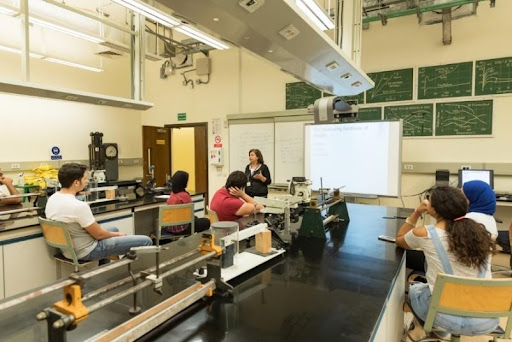
Classroom at AUC's School of Sciences and Engineering

Dean of the School of Sciences and Engineering Lotfi Gaafar, said, “We are very excited about the new Eltoukhy Learning Factory for Innovation and Entrepreneurship. It will significantly improve students’ experiential learning through expert supervision and better access to materials, tools, and equipment. This promises to have a substantial impact on students in the various sciences and engineering majors, and those from other disciplines across the University.”  

Describing the transformative impact of the lab, Board of Trustees Chairman Mark Turnage said: “The Eltoukhy Learning Factory draws upon international best practices. It will empower our students and enable AUC to remain at the forefront of innovation and practice in Egypt, and relevant to the needs of industry. We are very appreciative of this visionary gift from Atef and Fofa Eltoukhy.”   

Share

AUC, University of Sheffield Students Collaborate to Boost Egypt's First Bike Share Program

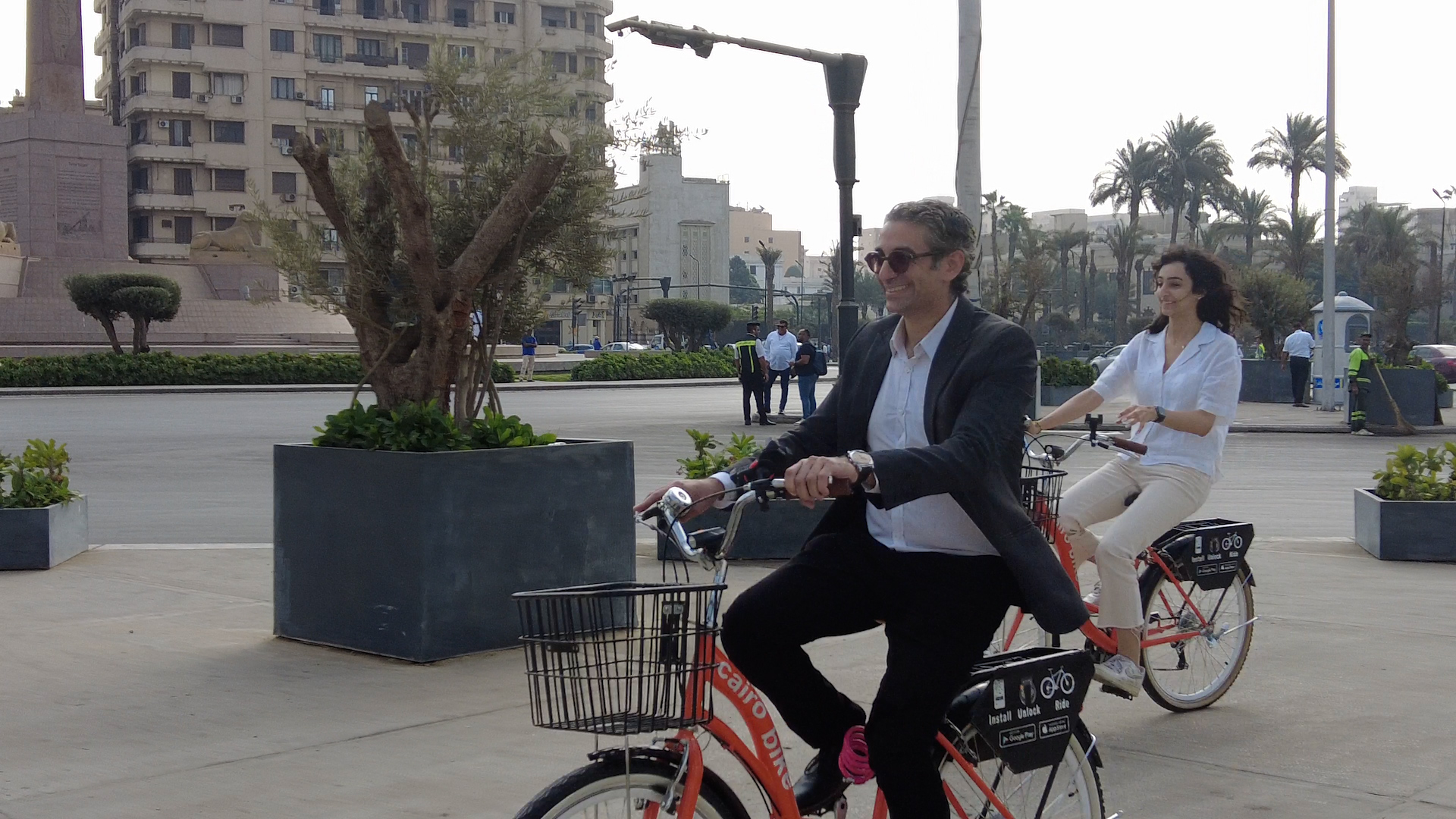
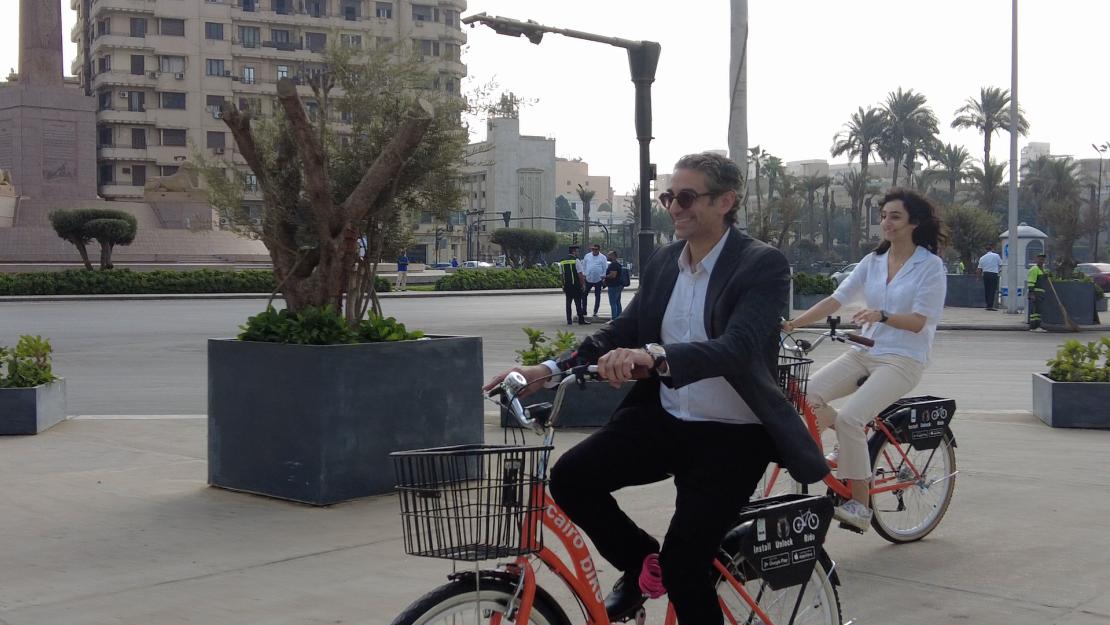
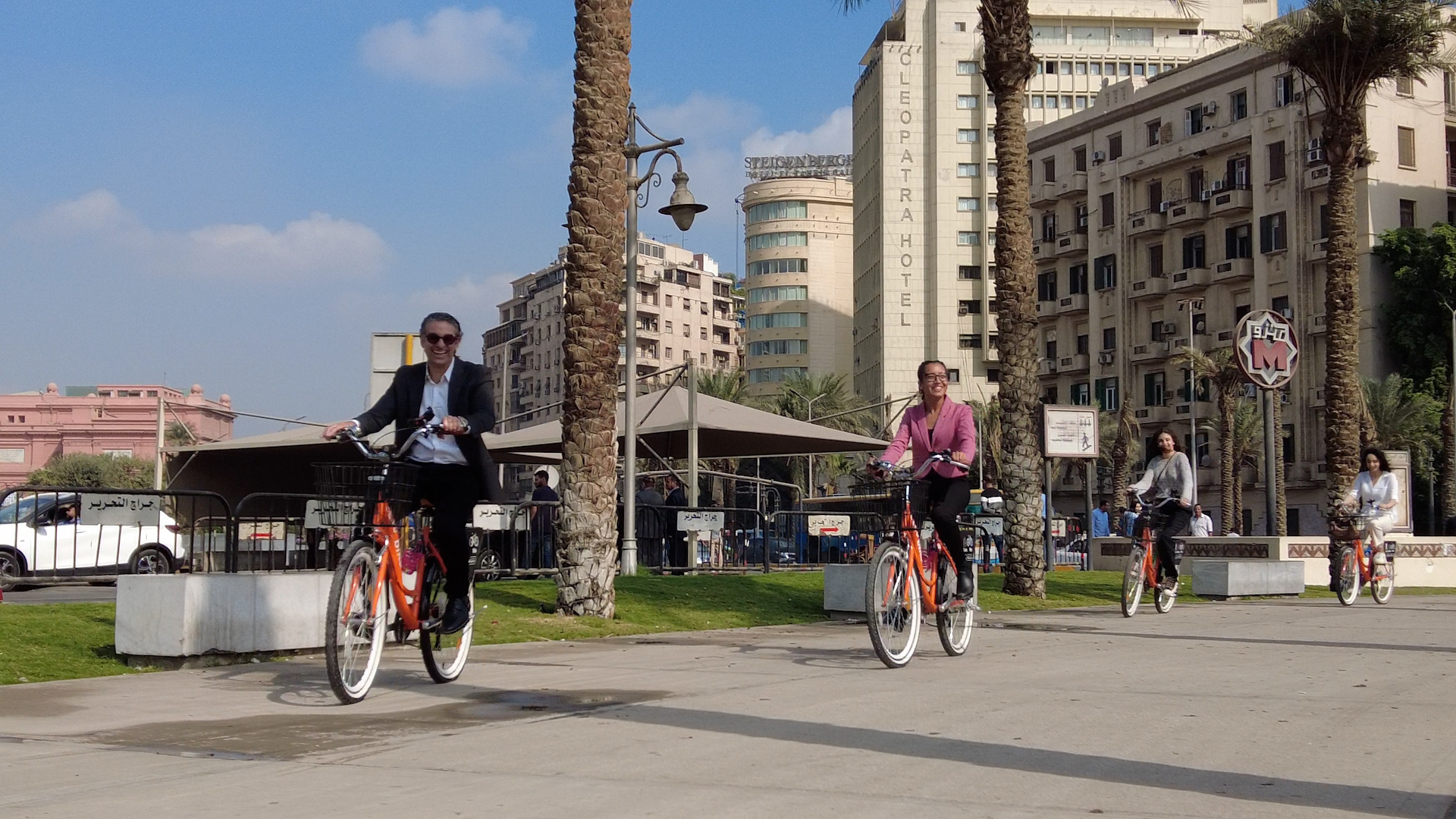
Momen El-Husseiny takes Cairo Bike for a spin in downtown Cairo
Devon Murray
November 20, 2022
Momen El-Husseiny takes Cairo Bike for a spin in downtown Cairo

Downtown Cairo is many things: a hub for Egyptian history, a home of historic and modern restaurants and shops, and the heart of a massive transportation network that extends all the way to the city’s desert suburbs.

It is not, however, a haven for cyclists. 


Momen El-Husseiny takes Cairo Bike for a spin in downtown Cairo
Cairo Bike is Egypt's first public bike sharing program

A major collaboration between AUC, UN-Habitat, the University of Sheffield, Sereira Creative Arts Academy and Cairo NGO Alwan-wa-Awtar is trying to change this.

Launched last month, Cairo Bike is Egypt’s first public bike share project organized by the Cairo governorate in collaboration with UN-Habitat and the Drosos Foundation. The bikes offer a low-cost alternative for commuters and joyriders alike, whether they are zipping through traffic to work or leisurely touring the area’s historic and cultural sights.

Cairo Bike is unique from other bike and scooter-sharing systems in Cairo because its launch has challenged the city to re-examine its infrastructure and make changes to reduce traffic and improve air quality. A stroll down one of the city’s main arterials, Talaat Harb, shows that such changes are happening: the street has a newly established bike lane.

With the city invested, the bikes on the ground and the lanes growing each day, the project appears to be a success. What still needs improvement, according to project owners, is critical buy-in from Cairenes that will increase the project’s longevity in comparison to other bikeshare programs in the MENA region. Cue AUC’s entrance, with students working to enhance the project’s impact, safety and inclusivity as part of an Urban Design course taught by Momen El-Husseiny, assistant professor in the Department of Architecture. This work included a weeklong international workshop developed by the University of Sheffield’s Live Projects program, with master’s students from Sheffield’s architecture program joining El-Husseiny’s students.

“We are examining how we can encourage more people to ride bikes, as well as how to create a judgment-free zone for women to comfortably use the bikes without experiencing harassment,”  said Nayer Salah, an architecture senior at AUC and student in El-Husseiny’s course.

Better Together

Using AUC Tahrir Square as a main hub, Salah took part in a three-day exploration of downtown Cairo alongside master’s students from the University of Sheffield and young people representing Alwan wa Awtar NGO. Together, the groups conducted interviews with local residents and shop owners to gather their input and insights on the bike share project.

The groups were guided by AUC’s Center for Learning and Teaching, which led pre- and post- sessions on design thinking, a creative problem-solving approach that seeks to effectively address complex issues.

“This is not just about bikes or bike stations; it is about community engagement, civic outreach and connection,” El-Husseiny explained. “We focus on developing areas that can become magnets for social and economic development, creating job opportunities and possibilities for the people. This is a city for all.”

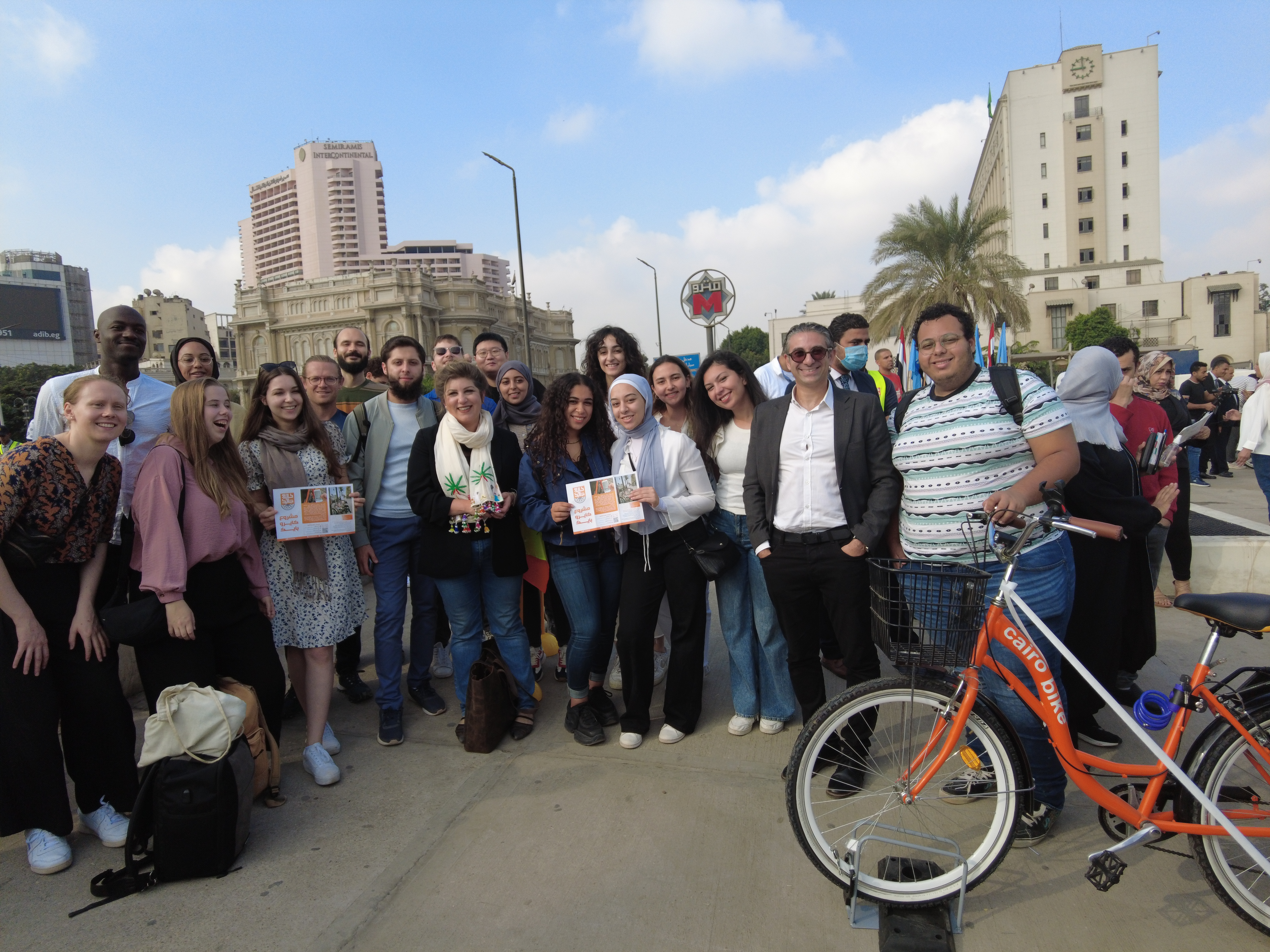
Students and professors from AUC and University of Sheffield at the launch of Cairo Bike in late October
Students and faculty from AUC and University of Sheffield at the launch of Cairo Bike

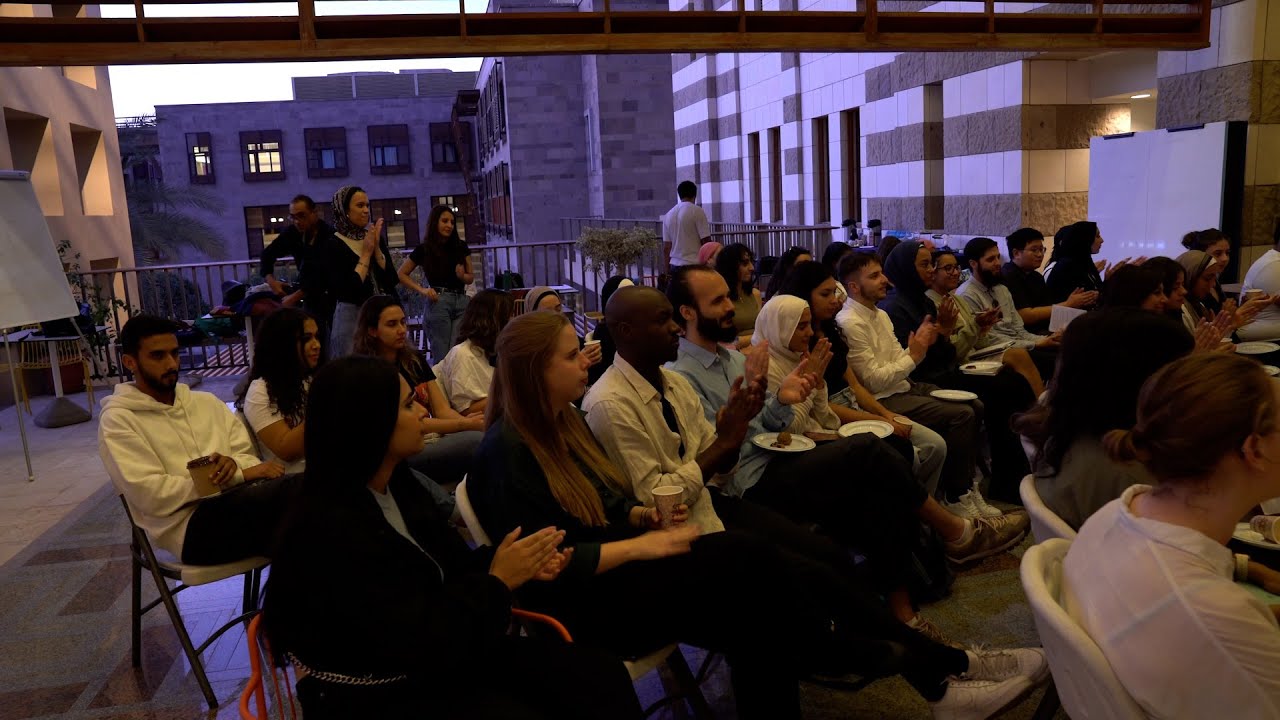
Later, at AUC New Cairo, the groups convened to reflect and make recommendations for convenient, inclusive and safe bike paths for users.

“This project is another example of how our AUC students are capable of confronting difficult situations and real life projects,” ElHusseiny said. “They're amazing, they're superb and their steadfastness is incredible. We are so proud that they are being upfront and taking the lead. This is how we aspire to make a change.”

The collaboration’s efforts were realized in late October at the official launch of Cairo Bike in Tahrir Square, where AUC and Sheffield students, along with their professors, took the orange bikes for a celebratory spin.

“Working on this was spectacular,” Salah said. “It was great to add to this project, and even better to see our effort and research pay off. It’s just a dream come true.

Share

Alumna Astronaut Sara Sabry Becomes First Egyptian to Reach Space

Abigail Flynn
November 14, 2022
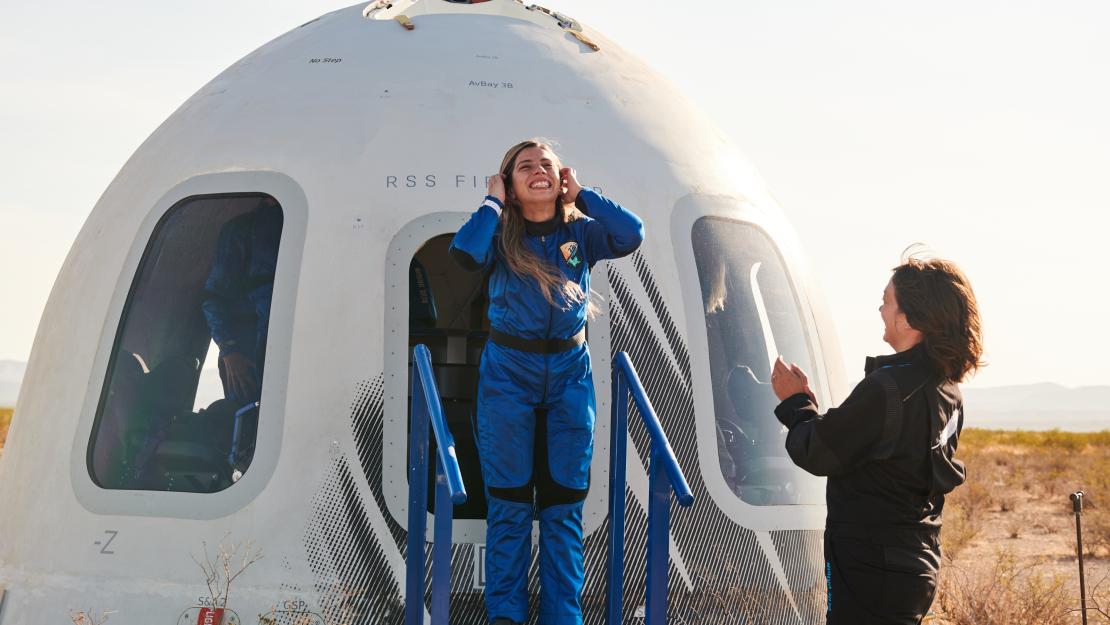
Sara Sabry Emerges From capsule after visiting space
Photo Courtesy of Blue Origin Media

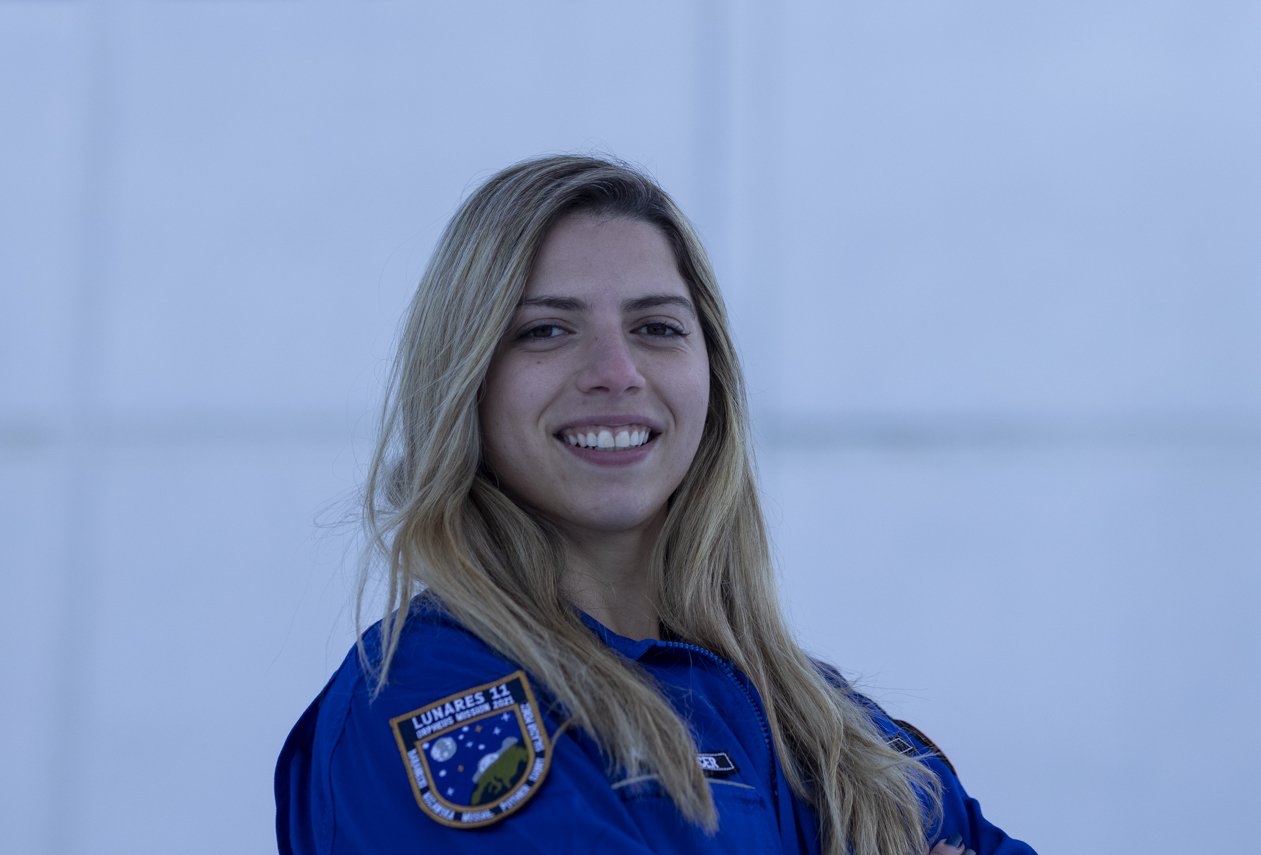
T-Minus 3…2…1… Prepare for liftoff with Sara Sabry ‘16, who became the first Egyptian Astronaut after flying to space on Blue Origin’s New Shepard rocket in August this year. This historical flight also makes her the first Arab woman and first African woman to launch into the obsidian sky, despite having not reached her 30th birthday.

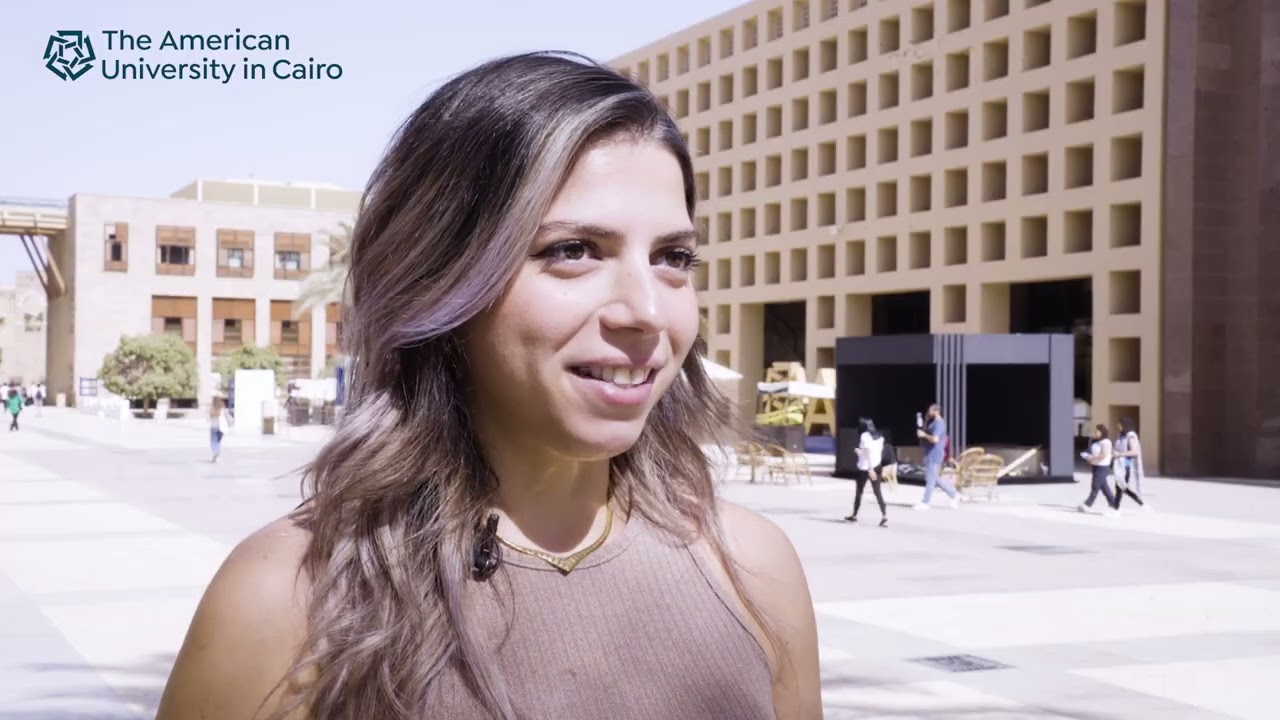
Sara sabry
Sara Sabry is the first Egyptian to go to space
​​​Photo courtesy of Blue Origin Media

Sabry’s trip to the stars allowed her to experience the “Overview Effect,” which is a shift in perspective that happens to astronauts when they leave the Earth and are able to see the planet from afar. “Seeing Earth from space was the most profound experience of my life,” Sabry recalls, describing the planet standing out brightly against the “vast darkness of space.” She continued: “I had seen pictures of Earth from space before, but seeing it in person was completely different. It totally changed how I view the world, my priorities, and most of all, the scale of everything.”

Up Up and Away

As Sabry saw Earth floating in the vastness of space for the first time, she recalls feeling confused. “I think the human brain struggles to process such a view in real life - and if you think about it, it makes sense because we have not biologically evolved to see it with our own eyes,” she said. 

When asked about pre-takeoff nerves, Sabry responded, “To be honest, I wasn’t afraid when I was in my seat at takeoff. Sitting on top of a rocket for the first time, I felt excited, ready, and calm. Preparation is key, but in the back of my mind, I also felt like all of Egypt was coming with me.”

Sabry says the experience made her realize that the idea that there is “Earth” as a separate entity from “space” is flawed. “As you lift off, there’s a reflection of fire on the window, you feel the rocket move beneath you, you watch the sky turn from blue to purple to black and suddenly, you’re in space,” Sabry states. “But you didn't really leave anything. Space and Earth, it’s all interconnected.”

Her goal is to extend this opportunity to as many people as possible. “How am I one of only 621 people from all of humanity to have seen this?” Sabry said, describing her emotions upon returning to Earth. “The first thing I said when I came back to Earth was that everyone has to experience this — the universe belongs to all of us.”

Preparing to Launch

With a bachelor’s from AUC in mechanical engineering and a master’s in biomedical engineering from Politecnico di Milano, Sabry was selected among 7000 applicants from all over the world for the citizen astronaut program by Space for Humanity, an organization which offers spaceflights to expand the horizons of leaders who show potential for enacting global change. The program trained Sabry for the experience, highlighting the potential physical dangers and psychological stressors. 

“They trained me mentally for this. I knew it wasn’t without risk; sitting on a rocket is inherently dangerous, so the crew members and I needed to accept any and all potential outcomes,” she explains.

Sabry’s training as an astronaut began long before Space for Humanity, however. In 2021 she became Egypt’s first female analog astronaut after a two-week moon mission simulation. She has also completed the IIAS astronaut training program at FloridaTech, making her the first Egyptian woman qualified to conduct research in suborbital space. Initially finding it difficult to get her foot in the door of the space world, Sabry clocked in several hours before and after her full-time job in Berlin to pursue her dream. “I would wake up at 4 am, get my workout done by 5:30 am, work on my bioastronautics research from 6 am to 9 am and then go to work. At 6 pm, I would have dinner and then quickly jump on international calls for a couple of hours before heading to bed at 8 pm. This lifestyle is not for everyone, but it was necessary. Founding a company while holding a full-time job is not easy, but if you believe in the cause, anything is possible.”

Wanting to remove the barriers that she herself experienced, Sabry founded Deep Space Initiative, a non-profit company that aims to increase accessibility in the space field by providing opportunities in research and education.  

In addition to being an astronaut, engineer, CEO and founder, Sabry is currently conducting her PhD research on planetary spacesuits at the University of North Dakota and is co-founder of The Egyptian Space Agency's Ambassador program. Since coming back from space, Sabry has also been working on projects that could potentially have large scale impact in Egypt, which she will be announcing soon. 

Glowing with passion for paving the way for future space explorers, she said: “It’s not about being the first one in space, it’s about opening the door for others to follow,” Sabry explains. “We need more people with different perspectives, training and backgrounds to work on the issues that are stopping us from becoming a multi-planetary species. That’s why I’m committed to making this field more accessible. I hope people can finally see themselves represented in space, and know that no matter where they are from, they belong here too.”

Share

Hassan Azzazy Receives Multiple Awards and Recognitions for Biochemistry Research

Abigail Flynn
November 9, 2022
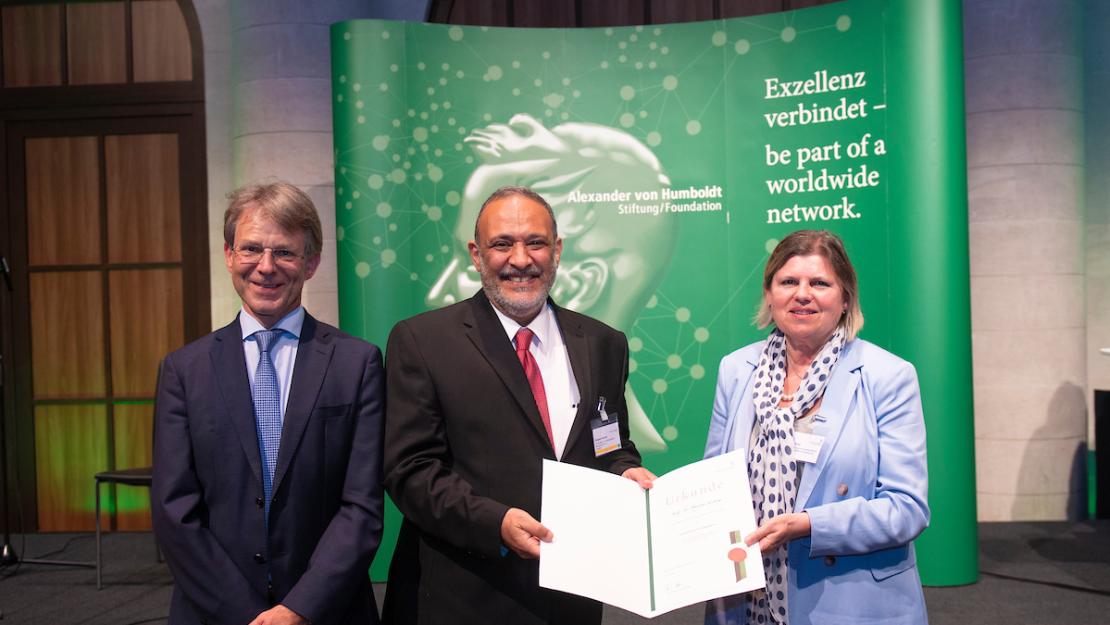
Azzazy receiving Humboldt Award
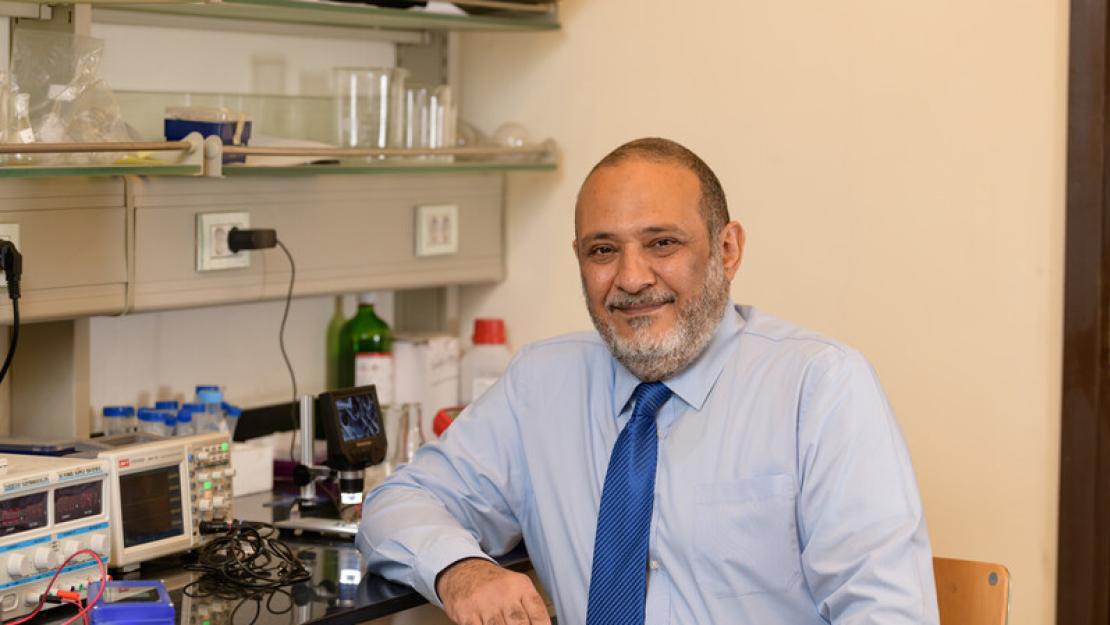
Hassan Azzazy

Hassan Azzazy, distinguished University professor and chair of the Department of Chemistry, has been honored for his extensive work in the field of biochemistry with the Distinguished Research Award from the Alexander von Humboldt Foundation and a Doctor of Science from Alexandria University, in addition to being elected chair of the National Committee of Biochemistry and Molecular Biology of the Academy of Scientific Research and Technology in Egypt. 

The highly prestigious award from the Alexander von Humboldt Foundation includes a one-year invitation and grant to conduct research at the Leibniz Institute for Photonic Technologies in Jena, Germany. Azzazy’s research addresses a wide array of global health and environmental challenges by creating diagnostic tests and biosensors for disease detection, developing new medicines, designing chemosensors for monitoring heavy metals and improving wound care. 

Azzazy was also awarded a Doctor of Science from his alma mater, Alexandria University, in recognition of his overall research productivity and scientific contributions made since he received his PhD from the University of North Texas Health Science Center in biomedical sciences.

In his position as chair of the National Committee of Biochemistry and Molecular Biology of the Academy of Scientific Research and Technology in Egypt, Azzazy works with a committee to lead national efforts in developing research and teaching activities in biochemistry, molecular biology and related disciplines. 

He also coordinates collaborations with similar regional and international societies, such as a recent symposium on “drug delivery nanocarriers,” which was attended by 200 participants from research institutions from all over Egypt.

Share

Forging Futures: PhD Students' Eco-Friendly Research on Concrete and Green Hydrogen

Abigail Flynn
October 24, 2022
Visual representation of green hydrogen

Whether in the lab synthesizing new formulas for concrete, tackling the challenges of renewable energy or igniting a passion for learning in their students, PhD students Heba Zaky and Rawnaa Yassin are fostering the values of AUC’s academic mission. 

Zaky, a graduate student in the Department of Construction and Engineering, is conducting her PhD research on a new type of concrete that aims to minimize construction’s carbon footprint.

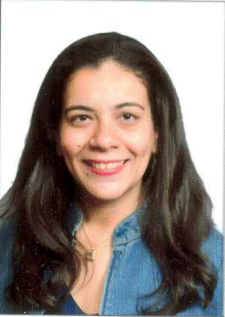
Heba Zaky“It’s a lot of experimental work,” Zaky states. “My research is actually split between two departments. In the chemistry department, I test how to synthesize the material for the concrete. In the construction department, I study how viable it is for building.”
With this interdisciplinary approach, Zaky aims to create a new type of concrete formula that produces less carbon dioxide. A major component of concrete is cement, which contains calcium carbonate in its traditional formula. When calcium carbonate decomposes, it emits carbon dioxide. There has been an international movement to decrease carbon dioxide emissions due to its impact on the environment, which is a major component of AUC’s Climate Change Initiative. 

“Instead of calcium carbonate, my formula uses a silica base,” Zaky explains. “So when it decomposes, it won’t produce carbon dioxide, making it a more environmentally friendly choice.” 

Zaky began exploring eco-friendly engineering while pursuing a Master’s degree at AUC. While she started with a more management-focused approach, she quickly found her passion for experimenting with construction materials.

“That’s what inspired me to look for this totally new type of material that hasn’t been explored yet,” Zaky recalls. “This material has been researched in different ways and countries before, but not how to synthesize it or use it in concrete.” 

After completing her PhD, Zaky hopes to continue her research, explaining that there are many areas left to explore. While in her graduate study program, Zaky has also had the chance to explore her passion for teaching through the new PhD Teacher Training Program. This program, which began last spring as a collaboration between the Center for Learning and Teaching, Office of Graduate Studies and the School of Science and Engineering, allows PhD students to teach their own classes while conducting their graduate research.  

Zaky was particularly interested in working with (CLT) to develop the skills that would push her from being a TA to an instructor. “The center gave us a new perspective about teaching,” Zaky states. “It’s not just about the information. It's about how you can convey that information, how you make students believe that they belong to the classroom and establish a real connection with them.”

Rawnaa Yassin

Yassin, who researches renewable energy for her PhD, is also a member of the program’s first cohort and is enjoying the challenge of leading classes herself after being a teaching assistant (TA) during her Master’s program. This program offers Yassin the ability to follow her passion for teaching while continuing to conduct her research on green hydrogen, a form of renewable energy.

“Green hydrogen is simply hydrogen produced from renewable sources of energy,” Yassin explains. “One way is through electrolysis, which uses electricity to split water molecules, H2O, into their individual hydrogen and oxygen components. Using water and electricity to produce hydrogen is more eco-friendly than using natural gas, coal or oil. My goal is to make green hydrogen less expensive to produce.”

While Yassin enjoyed her Master’s research, she also wanted the opportunity to be a stand-alone instructor by crafting her own lessons and facilitating her own classes.

“This program is totally different from being a TA,” Yassin says. “PhD students feel they aren’t as young as TA’s anymore, but they still aren’t professors. When I heard about the teaching program, I thought, ‘This is what I’m looking for, it sounds like a perfect fit.’ I was right, this program equipped me with all the new and innovative ways of effective teaching, it was a really unique experience.

Yassin and Zaky are great examples of the AUC’s academic mission to provide excellent education for their students by training stellar instructors and important contributors to the climate change initiative through their research on sustainability. 

Share