Home page
ع Search AUC

Gender and Climate: The Importance of Intersectionality

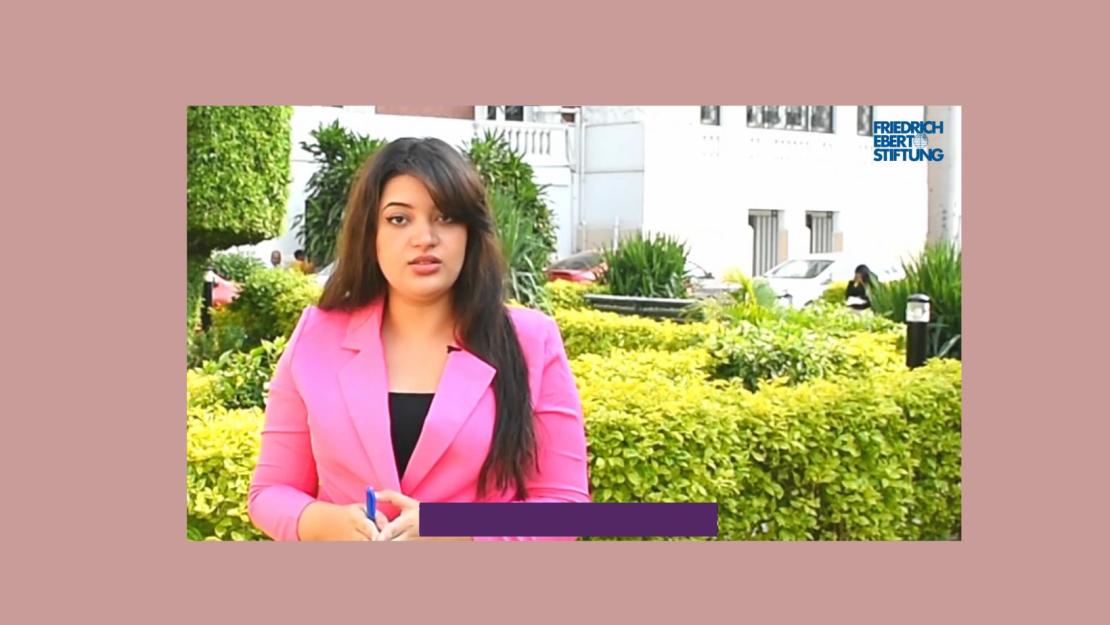
Abd El-Megid in her feature video
Abigail Flynn
December 20, 2022
Abd El-Megid in her feature video

As climate change continues to degrade the environment, disrupt people’s livelihoods and threaten social stability, it has become increasingly important to analyze its impacts and solutions through an intersectional lens. Examining gender, generation, class and more, AUC master’s student Nayrose Abd El-Megid advocates for a nuanced approach to climate justice, which she discussed in her keynote speech in a video campaign hosted by the  Friedrich-Ebert-Stiftung Foundation (FES) which was circulated at COP27.

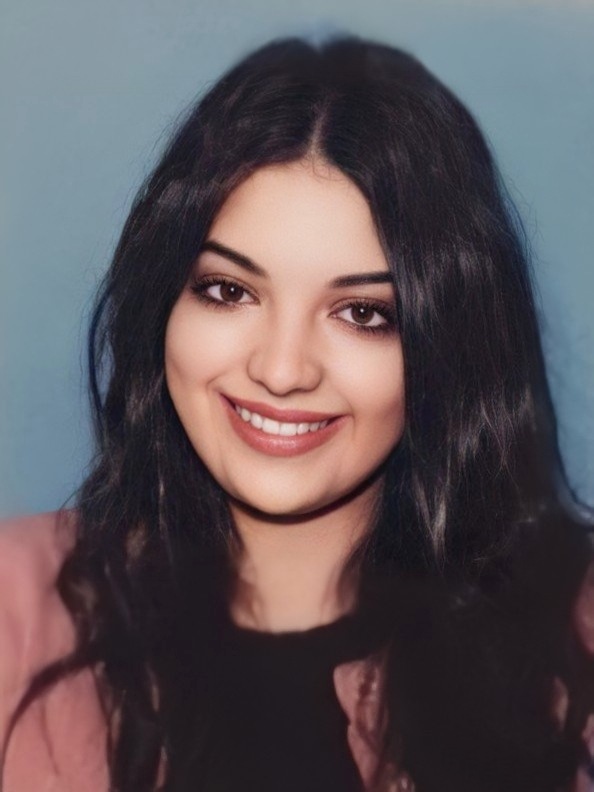
Photo of Abd El-MegidDuring her speech and panel discussions on gender equality at the conference, Abd El-Megid utilized her academic background from AUC. As a current master’s degree student in the University’s Cynthia Nelson Institute for Gender and Women’s Studies, she is working on a thesis incorporating intersectional identities. Her research interests focus on gender, development work, the refugee crisis, climate justice and communication. Her studies explore how a person’s background may alter the way climate change affects them. 

“The consequences of the climate crisis are related to power dynamics that affect more marginalized and vulnerable individuals, including women. So, women face heightened vulnerability, as they are more likely to have smaller incomes and depend more on natural resources,” Abd El-Megid explained. “The power dynamics of gender affect decision making within a family, opportunities, needs and access to the land and public spaces. Thus, gender inequality affects a woman’s ability to adapt to climate-induced emergencies.”

Abd El-Megid was selected by FES to represent Egypt for their video campaign series, during which she gave a speech on climate justice. Additionally, she attended COP27 and provided insight during panel discussions about how gender, other factors of an individual’s identity may impact their experience of the climate crisis, such as physical location, age, socioeconomic status and nationality. For instance, economically disadvantaged women who contribute to the agricultural workforce face a unique challenge in balancing their roles as breadwinners and household managers.

“Additional pressures on girls force them to leave education in order to help their families in facing these burdens. In some communities, factors such as early and forced marriage, street harassment and disease and malnutrition decrease attendance rate in schools,” Abd El-Megid states. “These sociocultural norms and lack of access and time for education and training resources leave women less able to face crises.”

Abd El-Megid emphasizes that the climate crisis does not only affect women, but that women’s disadvantaged position in society means their struggles must be addressed when creating solutions. This intersectional and holistic approach would account for these aspects of identity like class and gender. 

“We can't achieve climate justice without gender equality. Governments need gender transformative adaptation tactics and national plans to mitigate these challenges and risks, including violence against women,” Abd El-Megid said. “Institutions need to be held accountable and governments need to introduce legislation that encourages adaptive, appropriate and sustainable behavior, as well as a mindset change.”

In addition to the legislative level, personal activism is also needed for this social transformation. “Women's full and equal participation in climate issues empowers society as a whole. Youth-led climate action and showing transparency, accountability and agency must be an individual commitment. ” Abd El-Megid stated. 

Abd El-Megid developed her passion for climate justice and gender equality at AUC. “My undergraduate research concentrated on gender analysis for television ads and my master’s degree is specialized in gender and women’s studies in the Middle East and North Africa,” Abd El-Megid explained. “My studies allowed me to dive deep into contemporary gender transnational perspectives, and how they are encoded in social, cultural and political quotidian practices. I am dedicated to combining the knowledge gained from the program and my professional experience to contribute to the AUC community and Egypt’s 2030 vision as an alumna.”

In the future, Abd El-Megid plans to work as a gender communication expert in the development and humanitarian field. She intends to begin research projects that will help lead her community towards positive change, in addition to continuing to attend international events, campaigns and webinars.

Share

AUC Receives $86 Million USAID Grant, Largest in University History, for Scholarships and Training

December 19, 2022
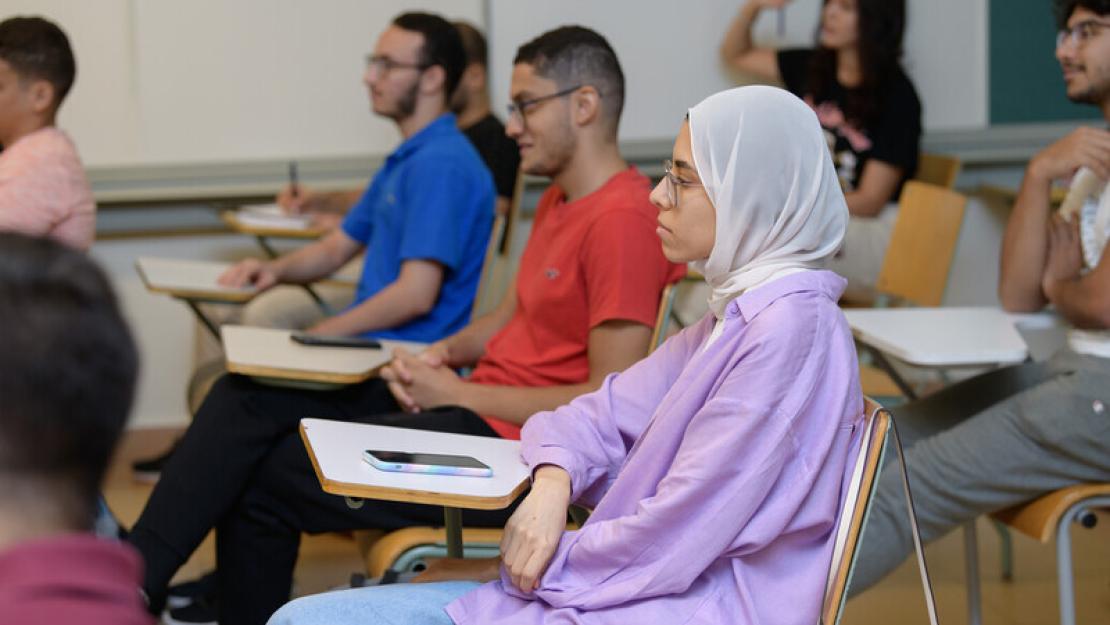
A student in class

The U.S. Agency for International Development (USAID) has awarded The American University in Cairo (AUC) $86 million for USAID Egyptian Pioneers, a new program that provides scholarships and training to Egyptian students with emphasis on sectors that can advance Egypt’s climate goals. Through a nine-year cooperative agreement, AUC will administer the program in coordination with the Ministry of Higher Education and Scientific Research, the Ministry of International Cooperation, and private and public sector institutions. Prioritizing women’s empowerment, diversity, inclusion and climate resilience, the USAID Egyptian Pioneers will build and develop the capacity of a cross-disciplinary network of public, private and academic entities. The program includes:

  • Scholarships for at least 700 young Egyptians (50% women) from underserved communities to obtain undergraduate degrees in Egypt
  • Scholarships for at least 60 midcareer government professionals to obtain master’s degrees in the United States or Egypt
  • Scholarships for at least 50 midcareer government professionals to pursue postdoctoral studies in the United States
  • U.S. and Egypt-based technical training for at least 280 midcareer Egyptian government professionals and at least 220 mid-career professionals from non-public entities
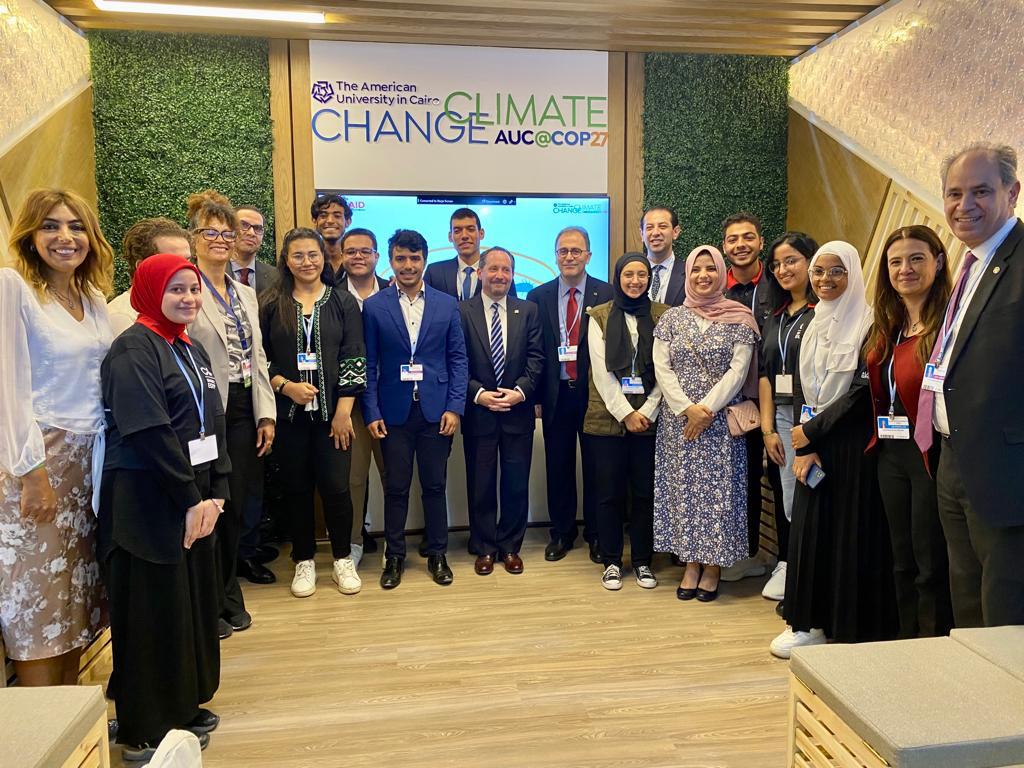
AUC President Dallal with USAID delegation at COP27
AUC President Ahmad Dallal and USAID delegation celebrate signing at COP27


Accordingly, more than 500 Egyptian women will engage in leadership and professional training, undergraduate and postgraduate scholarships, and study-abroad programs in the United States.

AUC President Ahmad Dallal said, “Leading the USAID Egyptian Pioneers program is a great honor for AUC. We commit to extending our longstanding leadership and excellence in education, capacity development and training to ensure the sustainable integration of the public, private and academic sectors. Egyptian Pioneers will surely leave an enduring impact on Egyptian society, advancing Egypt’s economic development and progress toward its Vision 2030. We thank the U.S. government and the Ministry of Higher Education and Scientific Research as we endeavor together on this partnership journey,” 

USAID Deputy Mission Director Margaret Sancho stated, “Climate change is an enormous challenge for all people, all over the world. But we also know that women and girls bear a disproportionate burden of its impact. Despite this, women and girls are leading climate change solutions in their communities. That is why USAID’s Egyptian Pioneers program will include leadership and professional training, undergraduate and postgraduate scholarships, and study-abroad programs in the United States for more than 500 Egyptian women."

Share

Qatar on the Global Stage: Faculty Insight into the FIFA World Cup 2022

Claire Davenport
December 6, 2022
World cup trophy on a football field
Photo Credit: History Of Soccer

Qatar is the first Arab country to host the FIFA World Cup, thrusting it into the global spotlight. Hosting has given Qatar the opportunity to grow its influence in the region and build a reputation internationally, but it has also brought criticism and controversy.

We spoke with Khaled Ezzelarab, associate professor of practice in the Department of Journalism and Mass Communication, to understand the significance of Qatar hosting the World Cup and the impact it’s had on the region.

What does it mean for Egypt and other countries in the region that the World Cup is being hosted in MENA for the first time?

Generally, there is a feeling of excitement that such a big event that is so closely followed by millions is being held for the first time in an Arab country. And politics aside, the World Cup is obviously about football, so the fact that three of the Arab teams that are playing in the World Cup have performed well has also contributed to this excitement.

What impact has Qatar hosting this World Cup had on the region so far?

I think it has contributed to the reconciliation between Qatar and Egypt, Saudi Arabia, the UAE and Bahrain, who have been boycotting Qatar since 2017. Last year, a reconciliation effort started to yield results, but the pace of this improvement has increased significantly over the last few months. And I think this is partially because Qatar was eager to have these issues resolved before the World Cup.

Economically, there has also been a significant impact, especially for the UAE – Dubai is hosting around 1 million additional visitors this month because Qatar is a small country with limited accommodations. And there are other ways the World Cup has affected the region. For instance, you have Saudi Arabia now floating the idea of presenting a joint bid with Egypt and Greece to host the 2030 World Cup.

Qatar has made internal reforms in the 12 years leading up to this event, such as abolishing the “kafala” system. Do you think such reforms will stick once international attention shifts away?

In terms of migrant workers, I think it will be difficult to undo these reforms. According to the International Labour Organization, there have been significant improvements, yet there are still many challenges in this area. But once you’ve done reforms, a significant segment of society has been affected by them. It would be difficult to take that away. And Qatar’s policy since at least 1995 has been to punch above its weight, and part of that is to maintain a good image globally. It would tarnish Qatar’s image significantly if it was to go back on these reforms. 

Many in the region feel that some of the criticisms and controversies in the media surrounding the World Cup have been unfair. Could you tell us more?

Social issues, such as the lack of availability of alcohol at the World Cup, touch a nerve in the region. There is always some coverage of political issues, internal politics, and social issues in host countries – we would expect that from any event on this scale. But my impression – and I can’t speak with absolute confidence until it is qualitatively assessed – is that there is an over-emphasis in Western media on these issues and that it is more than the norm. So, I think there is a feeling that it isn’t fair that the media is focusing so much on these problems.

How do you think the World Cup being hosted in Qatar will affect international perception of the Arab world?

If my impression is correct that negative coverage of the event is significantly higher than usual, then I think that international perceptions will be inadvertently affected. I wonder if Qatar has come to regret hosting the World Cup because of that. Earlier, I said there might be a bid by Saudi, Egypt, and Greece to host the 2030 World Cup, and I also wonder whether the international coverage of this World Cup will make them take pause.

Between the World Cup and COP27 last month, there seems to be a trend of more international events being hosted in the region. Do you think this trend will last?

I don’t know the answer, honestly. There are obvious benefits in playing host to some of these international events, but there is also this downside. The balance of power globally is changing, and countries outside of Europe and the US are becoming more assertive in the role they would like to play on the international stage. But it’s difficult to see where the cost-benefit analysis plays out at the end. Saudi Arabia has been hosting events that are not on the scale of the World Cup, but smaller-scale events such as golf tournaments and wrestling. Other countries in the region could host more of these types of events – an arrangement that minimizes the risk of negative coverage.

Share

War in Ukraine: Are Peace Negotiations on the Horizon?

December 4, 2022
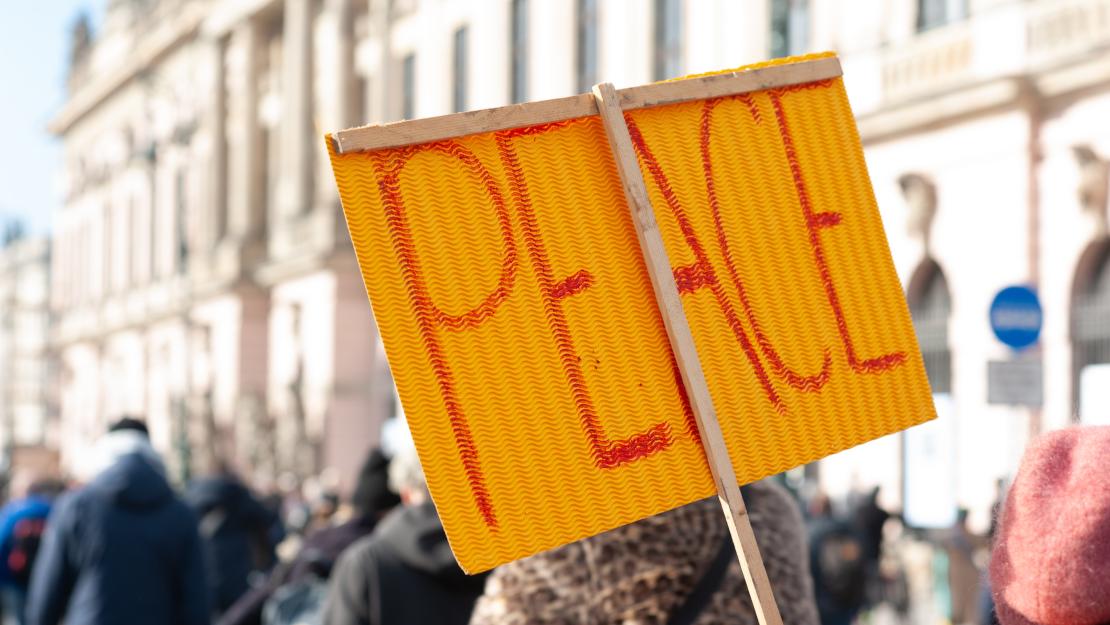
Peace written on a sign held up in a crowd

As the Russia-Ukraine war continues to decimate Ukrainian cities and the lives of people on both sides of the conflict, as well as the global economy, News@AUC spoke to Ibrahim Awad, professor of practice of global affairs and director of AUC’s Center for Migration and Refugee Studies, about the latest developments, recent calls for negotiations and ultimately, the way forward.

It’s been nearly a year since Russia invaded Ukraine. How have global attitudes changed since the start of the war?

Globally, attitudes toward the war have not changed in any significant way. You’ll find that the United States, European Union member states and states within NATO all support Ukraine as they have since the invasion of Ukrainian territory by Russia. 

In the Global South, you’ll find more complexity in attitudes toward the invasion. The majority of states reject the invasion because it is flagrantly against international law and because this part of the world has witnessed multiple attacks and annexations throughout history. They believe that their silence can open the door for them becoming the victims of invasion or annexation tomorrow. At the same time, some of these countries are unable to completely align themselves with NATO. This is due to the fact that they have interests with both parties.

What other factors determine attitudes toward the war?

History plays an important role in determining attitudes. These states have memories of past colonialism from some states of the North Atlantic Alliance, prompting them to wonder why Russia’s invasion of Ukraine is rejected so categorically without any prospect of possible settlements, while some states of the North Atlantic Alliance have previously conducted similar invasions without the same repercussions. There also is the question of double standards. In the Middle East, de jure and de facto annexations have not been met with the same vehement rejection by the North Atlantic Alliance.  

What has been the most significant change in U.S. rhetoric toward the war?

What has changed in the past few weeks are references from U.S. President Joe Biden to possible talks with Russia. This, of course, will open possibilities for reaching a settlement. A settlement of sorts is important to avoid extending further detriment to the Ukrainians, first and foremost, and also to the rest of the world, which has been affected by disruptions in international production and trade.

What might have prompted this change?

There are a few possibilities, the first being global inflation and the subsequent increase in costs of living putting pressure on world leaders to push for a settlement. This is made more urgent by the rise of populist movements in Western countries. An increase in living costs could result in more popularity for the movements, which reject ideas of the liberal party systems in Europe and whose victory could lead to tremendous repercussions — something leaders are likely taking into account. Change is possible when those in power in the world’s largest countries realize that their attitudes may result in detrimental or dangerous consequences. 

How has Egypt been affected by the ongoing war?

Egypt is the largest importer of wheat; 80 percent of the country’s supply comes from Russia and Ukraine. Therefore, at the onset of the war, the price of wheat and other products, such as fertilizer, increased tremendously. They have since fallen.

There is also the impact in terms of tourism, which is very vital to Egypt’s economy. With Russia and Ukraine both as large sources of tourism for Egypt, the lack of tourists has negatively impacted the economy. 

Finally, the ongoing war has directly impacted inflation in the global economy, which has further damaged the country, as well as others. There are indeed other factors that have contributed to the situation Egypt is in today, but the war in Ukraine certainly hasn’t helped.

Does this have the potential to turn into a world war?

No one is interested in starting a world war, and Russia is taking good care to not provoke a reaction under NATO’s Article 5. This is evident when you look at the military support from the United States to Ukraine. Generous as it may be, not all weapons are allowed to enter the country in order to avoid open hostility. I don’t think there is currently a possibility of NATO countries mobilizing against Russia. However, if you ask me six months from now, perhaps things will have changed. But hopefully by then, there would have been talks and the hostility would have come to an end.

Will negotiations happen? What is the way forward? 

Can Ukraine prevail? I don’t think so. Russia is not using all of its military might, and provoking it to do so is in no one’s interest. Can Russia prevail over Ukraine? As long as it continues to stay within the limits of the military force it has thus employed, it cannot.

Therefore, it's not a matter of whether negotiations will happen or not. The question is when will they happen. I don’t know if there is any other solution.

We may also wonder whether Russia, with its latest military action in Ukraine, is putting pressure in order to have Ukraine join negotiations. It is difficult to say for certain, but I don’t believe Ukraine will make a decision alone on whether to sit at the table for negotiations.

Overall, negotiations will not be easy — especially after Russia annexed four areas of Ukraine, which is unacceptable. I do believe, however, that there can be a way to overcome this conflict and find an avenue of coexistence between Russia and Ukraine.
Share

Twitter Troubles: Faculty Insight

Abigail Flynn
November 20, 2022
Twitter Logo with glitch effect

Fake, verified Twitter accounts caused chaos after Elon Musk, who purchased the platform in October for $44 billion, allowed users to purchase verification marks without confirming their identities. Rasha Abdulla, professor in the Department of Journalism and Mass Communication, examines the impact of this decision on freedom of speech, misinformation and the future of one of the world’s biggest social media platforms.Rasha Abdulla

What has happened since Musk bought Twitter?

The first couple of weeks since Elon Musk took over Twitter have certainly witnessed quite a few alarming decisions. The firing of so many Twitter staff, particularly those concerned with human rights and the ethical use of AI, is quite the red flag and has gotten digital rights advocates very concerned about the future of Twitter.

What is the future of free speech on Twitter?

While I'm personally for pushing the limits of freedom of expression, having no regulations whatsoever on a platform of Twitter's scope and magnitude makes it prone to misuse and privy to hate speech and misinformation. Musk has announced that he is forming some kind of a council to come up with proper regulations, and we are yet to see how this council comes along and what they come up with. 

What could happen if this problem goes unchecked?

We have seen from the misuse of Facebook in Myanmar, for example, that major social media platforms can be severely misused and such misuse can lead to loss of life. Platforms have a responsibility to not let that happen and we, the civic society, should also stay vigilant in this regard.

How does Musk’s decision to charge for verification impact this situation?

I think Musk's decision to monetize the blue mark on Twitter is a huge mistake. Originally, having a blue mark basically meant that Twitter has confirmed the owner of the account is who they claim they are. It was reserved for celebrities and/or people of a certain academic, social or scientific status. Unfortunately, now anyone who pays $8 a month will be able to get a blue mark under any name, which defies the whole point of verification. 

What are some potential problems with the new verification system?

This will inevitably lead to a plethora of fake "verified" accounts. This is a huge disaster and could lead to much misinformation that could be life-threatening. Think of a World Health Organization fake verified account telling people vaccinations are dangerous during a pandemic! Think of a fake verified United Nations agency account tweeting about the Russian invasion of Ukraine! Such examples could lead to actual disasters long before Twitter gets a chance to deal with the fake accounts. 

Should Musk rescind the new system? 

We've already seen several problems in the few days that this "service" has been available, most notably a fake Eli Lilly account promising free insulin. I think Twitter really needs to take this back.It defies the whole point of verification and can cause much potential harm of the worst kind. It also takes away from the credibility of the whole platform.

It appears that Musk has temporarily halted the system. Is this a good thing?

I think it's coming back in a couple of weeks. So my comments stand unless any major developments take place.

What is the future of Twitter?

As a result of all these actions, I see scores of Twitter users, including myself, already migrating to other platforms such as Mastodon, which is a decentralized version of Twitter. We'll see how things play out in the days to come.

Share