Home page
ع

AUC Students Win First Place in the Engineering and Commerce Case Competition

engcomm

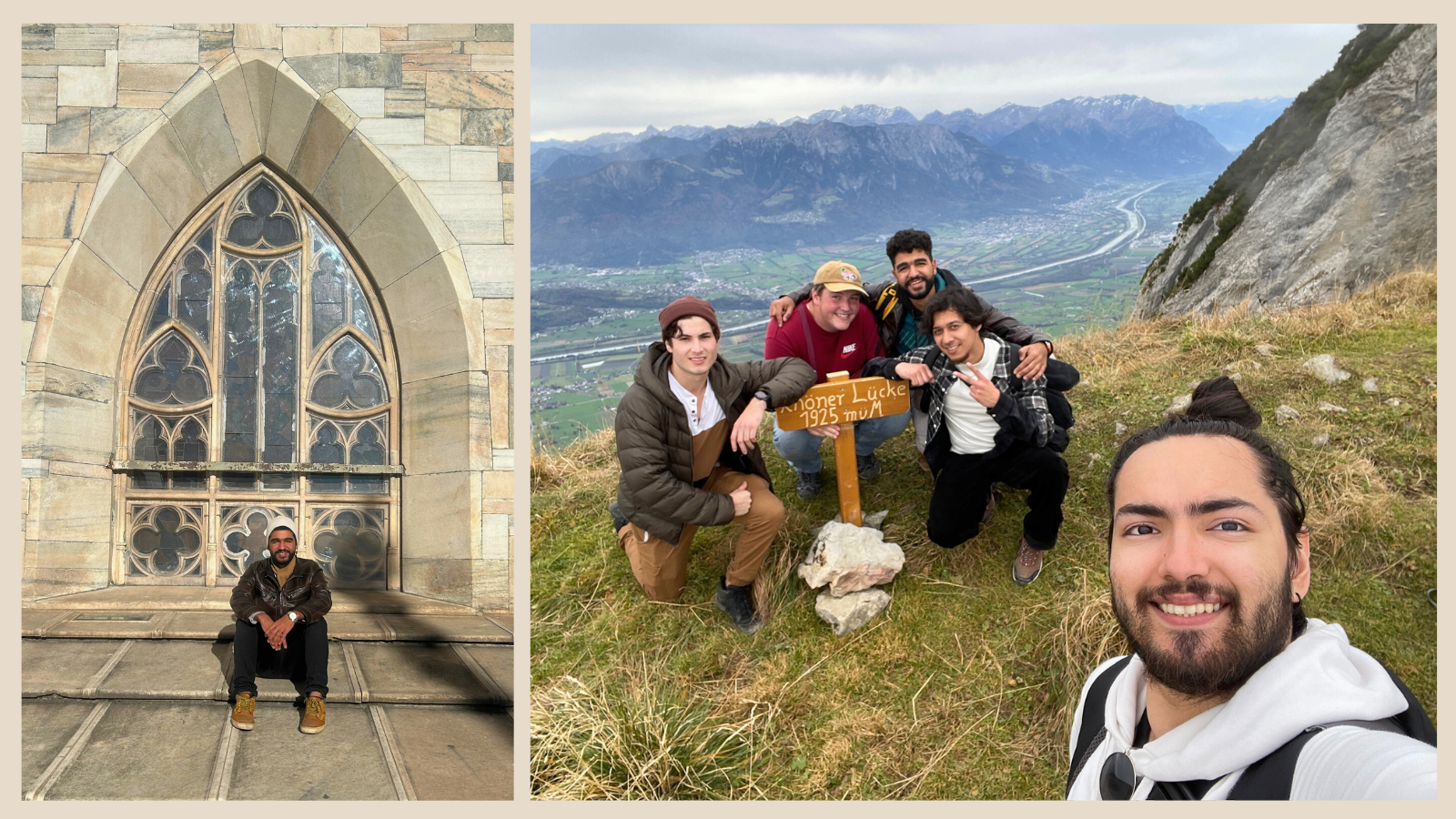
An AUC team made up of four students from the School of Business and the School of Sciences and Engineering won first place in the Engineering and Commerce Case Competition (EngComm) in Montreal, Canada.

"EngComm provided me with the greatest opportunity to network with leaders from various industries such as General Electric, Bombardier, and Revision Military. Presenting in front of members from these great firms was truly an opportunity of a lifetime," said Noor Sorour, a business and finance major.

Neveen Ahmed, assistant professor of finance, has been the faculty coach for the EngComm competition for the last four years. The team won first place for displaying the highest standard in all matters of business and engineering, the Dr. Thomas McLaughlin Award for the Best International Team, Best Business Solution and Best Team Spirit. 

"Spending twelve hours straight in a closed room to come up with a winning multidisciplinary solution was definitely a one of a kind test," said Ayah Hani, a mechanical engineering major. "One that makes your proud of your teammates as much as your self. All in all, it was definitely an eye-opener and a life-changing experience."  

The competition was held in Montreal from February 19 to 23, 2019 and was comprised of teams from 16 internationally recognized academic institutions, consisting of engineering and commerce students. Since 2013, EngComm has been championing a worldwide effort to foster interdisciplinary communication and collaboration before students start their professional careers. The competition focuses on combining the technical field of engineering with the interactive field of commerce. 

"Our reaction towards getting the first place was priceless, feeling like each and every minute of effort we put as a team paid off," said Walid Abou El Nour, a business and finance major.

"By the end of EngComm we had grown so much both individually and as a collective; we have seen each other under a lot of different conditions, and in new situations," said Zeina Hesham Abdeldayem, an architectural engineering major. "I can confidentially say that the EngComm experience is irreplaceable and that everyone who participated in it is a winner." 

Share

Entrepreneurial Roadmap in Egypt

Nahla El Gendy
a

While Egypt’s entrepreneurship ecosystem still ranks low compared to global averages, there is a positive improvement trend, albeit slow. This was clear in the sixth country Global Entrepreneurship Monitor (GEM) National report for 2017 and 2018 produced by the AUC’s School of Business for the third year.

The report presents a detailed analysis of the behaviors, motivations and attitudes towards entrepreneurship in Egypt as well as different aspects of the entrepreneurship ecosystem, making it a valuable resource for informing policies and programs. Most measures have shown noticeable improvements between 2015, 2016 and 2017.

Egypt participated in GEM cycles along with many other countries to monitor its entrepreneurial performance. This year’s report marks the sixth country report for Egypt and it was developed by AUC team, led by Ayman Ismail, Abdul Latif Jameel endowed chair of entrepreneurship and assistant professor; Ahmed Tolba, associate provost for strategic enrollment management; Shima Barakat, entrepreneurship education advisor, University of Cambridge; Hakim Meshreki, visiting associate professor of marketing and Seham Ghalwash, researcher, GEM Egypt. 

Overall, the report affirms a positive trend for entrepreneurship in Egypt that started off in 2016, where early-stage entrepreneurship remains high; entrepreneurial intentions are also high; and overall societal perceptions of entrepreneurship continues to be highly favorable.

“We need to expand entrepreneurial education among youth and strengthen the entrepreneurial ecosystem through programs and policies, in order to position Egypt as a regional hub for entrepreneurship and innovation,” said Ismail.

Societal perceptions of entrepreneurship showed that 75.9 percent of Egyptians perceive entrepreneurship as a good career choice, ranking seventh among GEM countries. Opportunity-recognition is at the heart of the entrepreneurial process; playing an important role in shaping individuals’ decisions to start new businesses. The report also found that 43.5 percent of the non-entrepreneurs perceived an opportunity to start a new venture, ranking twenty-ninth. Entrepreneurial intention remains high, with 55.5 percent of Egyptian non-entrepreneurs surveyed indicating interest or intentions to start a business within the next three years.

“Over the past 3 years, we were able to track the key entrepreneurship trends in Egypt, benchmark our results against other countries,” said Tolba. “A key observation is that entrepreneurial activity has significantly increased since 2016.”

Total early-stage entrepreneurial activity (TEA) is the primary metric used by GEM to measure and compare entrepreneurial activities among countries, indicating the percentage of the 18 to 64-year-old population that is involved in starting a business. In 2017, the TEA rate in Egypt was 13.3 percent, ranking nineteenth, slightly higher than the global average of 12.3 percent. However, the rate of business discontinuation in Egypt has alarmingly increased over the past years, from 2.7 percent in 2010 to 10.2 percent in 2017, ranking first.

 “While the entrepreneurial ecosystem has improved in supporting start-ups; yet the business environment, particularly entrepreneurial education, is still behind most countries,” added Tolba. “I am hopeful that tracking GEM data and sharing the findings with relevant stakeholders will have a significant impact on growing entrepreneurial activity and optimizing the impact of the ecosystem."


For the full list of Egypt GEM reports, follow the link:  

https://www.gemconsortium.org/country-profile/58

Share

AUC Venture Lab Celebrates Graduation of 11th Cycle of Startups

Nahla El Gendy
V-lab graduates

The AUC Venture Lab at the School of Business celebrated the graduation of the 11th cycle of the Startup Acceleration Program and the fifth cycle of the FinTech Acceleration Program.

"This Demo Day, we graduate a new cycle of innovative and impactful startups that contribute to different industries in our ecosystem, including energy, education, e-commerce, health care and fintech," said Ayman Ismail, Abdul Latif Jameel Endowed Chair of Entrepreneurship and AUC Venture Lab director. "As AUC V-Lab moves past its five-year marker, we continue to celebrate dedicated work and creative business ideas to support the growing impact of entrepreneurial mindsets.”

As Egypt’s first University-based accelerator, AUC Venture Lab provides acceleration services to startups, leveraging AUC’s intellectual capital, world-class facilities and research capacities. It connects entrepreneurs with a wide network of alumni, faculty, mentors and investors. Over five years, AUC V-Lab has graduated more than 120 startups.

Through its Startup Accelerator, AUC V-Lab offers a 16-week program providing business support for innovative startups to grow their business and boost the Egyptian economy.

AUC V-Lab also houses the FinTech Accelerator, which offers a 16-week customized program for FinTech startups providing entrepreneurs with specialized business finance and technology support, where startups gain valuable insights from some of the smartest minds in the startup and fintech worlds.

Startup Acceleration Program

Health Care

The Startup Accelerator cycle incubated startups across a myriad of sectors. Focusing on health care, CDOC is a medical consultation app for patients to connect, chat and consult with physicians. The service is provided by specialized doctors who are legally registered at the Egyptian Medical Syndicate in different specialties.

There is also MoDo, a local healthcare directory with more than 44,000 service providers, which enables users to locate the best nearest service provider. It gives them the option to filter providers using insurance network, as well as rate the service and share their experiences in just a few clicks.

Also incubated in this cycle is Instadiet, a web and mobile app that connects users with certified dietitians to address diet challenges. It allows dietitians to maximize their patient capacity while offering patients a hassle-free journey as they can select their dietician, receive tailored meal plans and track their progress, all online. 

“AUC V-Lab added value to my startup in two key areas," said Ahmed Tawfik, founder of Instadiet. "First, they introduced me to their network of partners and mentors who helped me close B2B deals that I hadn’t considered before. Second, they introduced me to a network of high-caliber fellow founders with a complementary set of skills that helped push my startup even further."

Sustainability 

The cycle also hosts Bio Life, provider of an affordable alternative source of energy for sustainable rural development, as it offers a biogas digester that is easily installed at homes and is both cost- and energy-efficient.

Fintech Acceleration Program

Facilitating Procedures

As for the FinTech Acceleration Program, it incubated Gigaaa, an intelligent personal assistant platform that provides users access to all range of products and services through voice command and automatically processes user payments through the Gigaaa wallet while continuously gathering data through machine learning for a more personalized experience.

To ease the routine and red tape, Egr2atk offers a platform to connect individuals with licensed offices to issue governmental documents, to minimize time and effort for users while increasing the capacity of licensed governmental offices. “Being part of the AUC Venture Lab for such a small time helped me build a stronger network as well as discover new opportunities I did not know were available," said Ayman Mostafa, founder of Egr2atk. "Also, I am now equipped with strong tools that will enable me to move forward with my business."

Other startups are FINSOFT SWITCH, a middleware between banks' host and offline delivery channels (POS, E-Commerce and MPOS) supporting banks' payment gateway system and XPay, a digital platform facilitating cashless payments within communities. Through its secure portal and app, XPay works to swiftly manage payments and financial transactions ruling out weak financial controls and time consuming cash-based operations.

Mohamed Abdelmottaleb, co-founder of X Pay, said: “One clear value we gained from the Venture Lab is that we’ve learnt how to challenge our business model and our impact model. We have also been introduced to a good selection of mentors.” 


Share

Remembering Galal Amin: Honoring the Life of a Legend

Claire Davenport
November 13, 2018
Galal Amin

“To quote Shakespeare’s ‘Hamlet,’ I shall not look upon his like again,” said Soreya Altorki, professor of anthropology, in the Department of Sociology, Egyptology and Anthropology at the memorial service for Professor Emeritus Galal Amin.

The memorial service for the visionary educator was a chance for those who knew him to reflect on his life and accomplishments, and to share some words about his impact on their lives.

Nabil Elaraby, chairman of the Board of Trustees for Cairo Regional Centre for International Commercial Arbitration and former secretary-general of the League of Arab States, talked about how Amin went above and beyond as a teacher and as an economist. “Galal was a visionary professor of economics,” Elaraby said. “My three children were at one point his students, and they benefited greatly -- not only from his teaching, but from the way he looked at life.”

Besides teaching in AUC’s Department of Economics for 44 years, Amin was also an award-winning economist, prominent writer and commentator, and AUC Press author. However, to those who got the opportunity to meet him, he was more than just a distinguished academic and encyclopedic thinker. He was a mentor, an advocate for Egypt and, most importantly, an inspiration. The speakers painted a picture of a rare type of man –– someone who could captivate a room simply with his words and laughter.

“He could make even perennially dry subjects like microeconomics exciting,” laughed Mona Said ’89, ’91, associate professor and chair of AUC’s Department of Economics.

“He gave sufficient weight to qualitative areas, including the impact of economics on ordinary people, the impact of economics on quality of life and the impact of economics on communities at large,” said Walid Abdelnasser, director of the Regional Bureau for Arab countries, World Intellectual Property Organization, describing how Amin stood out within his field.

And just about everyone talked about how funny he was. Sherif Kamel ’88, ’90, ’13, dean of AUC’s School of Business, recounted how Amin –– author of Whatever Happened to the Egyptians –– once joked about writing a book titled, What More Can Happen to the Egyptians? 

During the ceremony, speakers shared their cherished memories with the professor -- attending one of his lectures, reading one of his books or simply sitting down with him for a talk and some Turkish coffee. All speakers emphasized how lucky they were to know Amin and how universally beloved he was. 

Amin was well known at the University for being incredibly popular with students and offering a unique class experience. “There was no PowerPoint, no screen and no computer. It was just Dr. Galal, a board, a marker and us,” described Yasmine Kamar '11, business director at KAPO Group and one of Amin’s former students. She related her decision to register for his 8 am microeconomics class. Despite the early hour, her mother, also an AUC alumna, encouraged Kamar to sign up for a class with Amin, and she was not disappointed by her decision. “I’m very blessed to have gotten to take part in that class. I was encouraged to minor in economics, and I took three or four classes of the whole minor with him.”

Kamar was not the only student whose major and future trajectory was strongly influenced by Amin. Both Kamel and Said also affirmed that their interactions with Amin changed their career paths. “It was microeconomics and the stylized way he portrayed it that ultimately convinced me to change to economics,” noted Said.

Kamal recounted how he went to Amin as a senior, unsure of whether he wanted to continue as an economics major. He confessed to Amin that he wanted to switch his major to business. “He said go to business, and we’ll see what happens,” Kamal remembered. “And I think that five minutes in his office actually changed my career.”

According to Danya Amin, Galal Amin’s daughter, this sort of support and encouragement was nothing out of the ordinary. “He never made me feel bad about myself,” said reflected. “He never told me what to do, and he never said I told you so.”

Indeed, one of the topics the speakers touched on most was how Amin was a source of kindness and support. Kamar described how when she asked him to write her a recommendation letter, that he took the time to write it by hand and in pencil. “And that’s just professor Amin,” she smiled. “It’s something no one else would do, to be honest. I kept that letter, and it’s something I want to hang in my house one day.”

Like Kamar, other speakers emphasized Amin’s dedication and generosity. “He was a gentleman and a brilliant scholar, but in addition he was generous, kind and devoted to freedom of thought,” related Altorki.

At times heartwarming, at times heartbreaking, the memorial service was a testament to how Amin was an inspiration to his students, friends and Egypt at large. “Some people count themselves lucky or honored to have been in one of his classes or to have been one of his colleagues. How honored am I to have had him by my side for half a century?” said Danya Amin tearfully.

As dedicated as he was to AUC, Said believes that Amin embodied the vision of AUC’s Department of Economics –– to be a hub of inspirational teaching and creative research with regional expertise and global impact. “Given who he was and what he meant to all of us, we could have simply stated that our vision was carried on by the legacy of Galal Amin,” shared Said.

Share

Making Cents of the Economy

Tess Santorelli
tarekselim

Egypt has moved from being in a “crisis zone” only two years ago to an “investor haven” now, according to Bloomberg.

Tarek Selim ’92, ’95, economics professor and most recently a research fellow in emerging markets at the Massachusetts Institute of Technology, explains why the Egyptian economy is on the rise and what it can do to continue to improve.

What exactly does “floatation” mean?

In economic terms, the recent floatation of the Egyptian pound is called a "shock," which implies the economy takes several years to absorb it. Historically in similar countries, it takes up to five to seven years to fully absorb such a shock. The first three years after the shock are the most critical, and the next few years tend to be minor. Egypt’s economy has almost passed three of the critical years with inflationary pressures on the quality of life.

The floatation of the pound has been costly to the average citizen in terms of inflation. The wage rate did not increase in proportion to the increase in prices. This caused a decline in the quality of life and the people’s purchasing power of goods and services, which is a critical challenge moving forward.

Why did the Central Bank of Egypt (CBE) choose to float the Egyptian pound?

The floatation policy basically creates an incentive to export because the currency becomes cheaper relative to other currencies abroad. For example, suppose Egypt is producing a product costing EGP 100. If the exchange rate is $1 to EGP 1 and Egypt exports the product, then it will cost $100 to the receiver abroad. However, when the exchange rate changes dramatically to EGP 10 per dollar, the value of the same EGP 100 decreases to $10, so it should be cheaper to export. One of the major benefits after the flotation of the pound is export potential, and this is not yet realized. But I am optimistic. However, the potential to increase exports for Egypt has many constraints, including scale, infrastructure, and bureaucracy.

What if the CBE had not decided to float the Egyptian pound?

The country’s reserves would have been depleted fast, rather than increasing the way they are right now. Egypt doesn't have the resources to sustain such a depletion, so I think the “shock” was needed. However, complementary policies should have been put into place to make sure that quality of life was not affected in a very drastic way. This includes wage adjustments, anti-monopoly policies, scale incentives, and less bureaucracy. Right now, this should be one of the government’s priorities.

Can you explain why the floatation of the Egyptian pound put Egypt in a “crisis zone?”

The Egyptian economy has gone through a lot in the past couple of years. Especially after the revolution — all the turbulence, all the uncertainty. Uncertainty is a risk factor, especially for international investors who are looking for emerging markets. Countries are competing in the world market, quite similar to companies in domestic markets, hence a competitive advantage for Egypt must be strategized. The local market is the global market now.

Why do you think Egypt is becoming an “investor haven?”

The term “investor haven” might be an over-statement. If I'm an investor and I consider my options, the first thing I look for is the rate of return — which is the yield. Egypt has one of the highest yields on consumption-driven investments due to its market size. Also, Egypt’s yield on certificates on investment, which are considered a safe investment, is around 18 percent. The second thing is the risk factor. Egypt’s risk ratings have been improving, and the currency risk factor has been stable. The exchange rate has been stabilized over the past year, contrary to expectations. In the past one or two years, a lot of people expected the currency to devalue and continue to devalue. I think now it has stabilized, but there is a risk of such stabilization not to be maintained. Although there has been a stable political environment, yet an improvement in the economic returns of critical sectors, such as tourism and the Suez canal, in addition to a needed surge in manufacturing scale exports, are of high importance. Natural gas is helping the economy move forward, which is very good but not sufficient in the long run.

What can Egypt do to keep improving investor confidence?

Egypt has a lot of natural resources in addition to energy, like cement, marble, granite, aluminum and fertilizers. There are a lot of industries that could actually flourish and expand into the international market, and I think this should be our next step economically. It's not really the number or amount of investments alone; it’s the quality of investments that we should focus on. Egypt is in need of labor-intensive investments –– investments that absorb a lot of labor. When investments absorb more labor, this solves the unemployment problem. Also, local innovation is needed, such as in digital manufacturing. In the latest World Economic Forum’s Global Competitiveness Index, Egypt has jumped 15 ranks upwards, yet its level is still low at 100th place out of around 140 countries. Egypt can do better. There is huge, yet unrealized, potential. Quality of the labor force, government bureaucracy, education-work matching, and huge public debt are major challenges to improve the country’s competitiveness.

Are there any additional factors that make Egypt an investor haven?

Egypt is a consumption-driven economy, and local investors tend to be family businesses. That's why the sectors that are low-risk and high-return tend to be food, clothing and real estate. In Egypt, 90 percent of our income is spent, when the world average is around 77 percent. This, by itself, is an indicator to attract investments in certain sectors. Social economic behavior has consumption ripple effects. Once you start investments in Egypt, the supply in your investments will be enough to attract as much demand as possible. What is needed is local innovation, better governance, scale enhancement for export-led investments, and successful Egyptian brand penetration into the world market.

Is it likely that Egypt will stay an investor haven?  

Egypt has huge but unrealized potential, and we need to plan for realizing such potential. Having investments is important, but not sufficient. We need to complement it with other things — labor-intensiveness, local innovation, human capital mapping, technology transfers, competitiveness and bold strategies to enhance the overall efficiency for each of the different sectors. Policies play an important role. In the past, the priority was more on the infrastructure, physical capital and mega projects. Now, the focus should be on human capital and quality and scale of investments, which I think is the right shift of policy that will result in long-term economic success.

Share

Back to Business with Dean Sherif Kamel

Tess Santorelli

Sherif Kamel ‘88, ‘90, ‘13 recalls with amusement the time a faculty member approached him to ask him what he was doing sitting in her class.

“I’m a student,” he said. Kamel was dean of the School of Business, and at the same time, was on his way to receiving his third degree from AUC: a Master of Arts in Islamic art and architecture. Kamel had received his bachelor’s and master’s degrees in business administration years before, but this degree took a total of nine years to complete.

“The thing is, whatever I do, I get extremely passionate about,” said Kamel. “People finish that degree in one year. I finished it in nine years because of one thing: If I’m going to do it, given all my professional and academic obligations and commitments, I’m going to attend every single class.”

Kamel has brought that same level of passion and energy to his return as dean of the School of Business, which he assumed in January 2018.

"In my mind, I never left AUC," said Kamel, reflecting on the 35-year journey with AUC that includes three degrees, two decades of teaching, multiple administrative positions including the founding deanship of the School of Business and, finally, his return as dean of the School of Business.

Returning to the Roots

When Kamel first arrived at AUC back in 1983, the School of Business did not exist. That changed when he transitioned from associate dean of executive education of the School of Business, Economics and Communication to founding dean of the School of Business back in 2009.

In 2014, Kamel had accumulated about two years of sabbatical and decided to take a break to spend time with his family, who had moved to Canada. He had planned to return to AUC as a faculty member, but a year later, Kamel received a call with a job offer to come back as vice president for information management, during which he served as part of the University administration for one year. This was followed by another year as senior adviser to the University president for strategic planning, working closely with different constituents across campus in formulating the University's centennial strategy 2019-2022. Upon finishing this assignment, he received another call to return to the School of Business as dean.

At first, Kamel was hesitant.

"My immediate reaction was, 'I've never seen part two of a movie that is better than part one — except The Godfather,'" he joked.

Kamel decided that if he were going to take the deanship, he would need a plan of how he can take the school to the “next level.”

Looking back at what the school has achieved so far, Kamel said he is most proud of the school landing the triple crown accreditation. But now, he said, “it is time to think beyond accreditation."

Since first receiving the triple crown accreditation four years ago, AUC's School of Business became the first in the Middle East and third in Africa to obtain all three renowned recognitions from the three most prestigious international business and management education associations: the Association to Advance Collegiate Schools of Business (AACSB), the Association of MBAs (AMBA) and the EFMD Quality Improvement System (EQUIS). Today, only 90 business schools — representing 1 percent of leading business institutions worldwide — received the three distinguished accreditations.

Last year, the school's accreditation was reaffirmed. While Kamel is "extremely proud” of the accreditation, he said he doesn't want it to be the highest achievement for the School of Business.

“[Receiving the triple crown accreditation] means a lot, but that has to be optimally used,” said Kamel. “Doing something right is good, but doing something right and scaling it up and realizing maximum impact is a totally different ballgame — and that should be our focus moving forward.”

Maximizing the Impact

Kamel wants AUC's School of Business to keep moving, to keep pushing, and to keep growing — and he has a plan.

“[My plan is] innovation [specifically], the AUC Venture Lab," he said. "We have come a long way in five years. ... I want to take that to the next level.”

The AUC Venture Lab is the first University-based incubator in Egypt and is among the top five most promising university incubators in Africa, ranked by Sweden-based UBI-Index. In the last five years, the AUC Venture Lab has accelerated 115 startups that generated EGP 220 million in investments, EGP 88.5 million in revenue and created more than 500 jobs.

Kamel said he wants to start expanding the idea of the AUC Venture Lab outside of the University. The impact should be scaled-up, and the experience should be shared with other higher education institutions, he noted.

“The future of Egypt is in the private sector,” said Kamel. “Historically, [young people] were risk-averse. Now, they're willing to take risks. They are tech-savvy and they are willing to venture into new endeavors more than ever — and we need to capitalize on that. We've seen that going through the cycles of the AUC Venture Lab. ... So how can we scale that and make it sustainable?"

Kamel’s idea is to start implementing startups similar to the AUC Venture Lab at other universities in Egypt. “We built the know-how over the last five years,” he said. “We have the mentors, we have the passion, and the business school is all about impact. I think we've created that impact, but it’s limited to the campus and our surrounding network. I would love to maximize that impact.”

“Of course, this is business as usual for the business school,” said Kamel. “But these are the highlights and I’ve put them beyond the accreditation phase. You reach a plateau, and then you want to take it to the next level.”

Another primary focus would be to work with different constituents on and off campus, including faculty, staff, students, alumni and employers, to revamp the curriculum to cater for the changing needs of the marketplace, both locally and globally. This includes the content covered, teaching approach utilized, technology deployed, class dynamics introduced and internship opportunities created. Moreover, the notions of entrepreneurship, leadership, responsible business, artificial intelligence, business ethics, innovation, the shared economy and more, coupled with effectively and expeditiously embedding experiential learning approaches, should be some of the elements that characterize the next generation curriculum introduced as the school welcomes the centennial year.

Business as Usual

While planning for the future achievements of the School of Business, Kamel has been making some accomplishments on his own. In February, Kamel was recognized as one of the 2018 AACSB Influential Leaders Challenge Honoree as a business leader influencing business education. Most recently, Kamel was selected and appointed as a board member on the American Chamber (AmCham) of Commerce in Egypt's Board of Governors.

AUC President Francis Ricciardone congratulated Kamel on the achievement, saying “AmCham-Egypt is recognized in America and throughout the MENA region as a highly influential public service organization exemplifying the best of shared Egyptian-American values. I congratulate AmCham for its wise selection of Dean Kamel."

Now that he has assumed “phase 2.0” of his role as dean, Kamel says he is most excited to serve the main priority and primary focus of the School of Business — the students. “Obviously, we have a fantastic team of faculty and staff here, and at the end of the day, we are all here to serve one core constituent — the students," he affirmed. "Over the years, [they] have been proving themselves in different domains: in the private sector, in civil service and in civil society. They represent the history, the present and the future of the school. They are the school’s best ambassadors.”

As Kamel plans for the future of the School of Business, he makes sure to stick to his philosophy on life: “Anything you do in life, you have to believe in it, be passionate about it and give it your best all the way. Otherwise, why would you do it?”

It's time to see where that passion will take him next.

Share

Forbes Names Alumnae Among Region's Most Influential Women of 2018

Claire Davenport
October 29, 2018

Working in diverse fields, from banking and trade to business management and telecommunications, 13 AUC alumnae are named by Forbes Middle East among The Middle East's Most Influential Women of 2018. Focusing on women in executive business and finance positions, as well as women in government departments, this annual list considers the title, scope and impact of the women's work, as well as the revenues of the companies they lead. AUC alumnae continually impress, making important contributions in a variety of sectors and fields within Egypt and abroad. 

Read about these women, their jobs and how they got to where they are today:

#3

Lobna Helal

LOBNA HELAL '83, '89

Deputy Governor, of Central Bank of Egypt 

Graduating from AUC with a Bachelor of Arts in political science and a Master of Arts in economics, Lobna Helal is the first woman ever appointed deputy governor of the Central Bank of Egypt. 


#16

 ELHAM MAHFOUZ '84

Chief Executive Officer, Commercial Bank of Kuwait 

Graduating from AUC with a Bachelor of Arts in business administration, Elham Mahfouz first worked as a credit manager and deputy chief executive officer at the Commercial Bank of Kuwait before becoming its CEO. 


#20

DALIA EL BAZ '95

Deputy Chair, National Bank of Egypt 

Graduating from AUC with a Bachelor of Arts in business administration, Dalia El Baz has been a member of the National Bank of Egypt's executive committee since 2016. She supervised the deployment of the new core banking systems and the centralization of banking operations. El Baz started her banking career at Barclays Bank Egypt.


#23

SAHAR EL DAMATI '76, '79

Managing Director, Union Capital

After graduating from AUC with a Bachelor of Arts in economics and Master of Arts in business administration, Sahar El Damati worked in a number of organizations in the banking sector such as the International Monetary Fund (IMF), commercial International Bank (CIB) and the World Bank. She went on to be head of the Credit and Portfolio Management department at the Social development fund, deputy managing director, chief risk officer and board member of HSBC Bank followed by deputy chairman and board member at Banque Misr. She is currently holding the position of managing director of Union Capital credit funds, an Egypt-based private equity firm focused on small and medium enterprises.


#24

RAWAN AHMED AL SAID '88

Chief Executive Officer, Takaful Oman 
Chairperson, National Bank of Oman

Graduating from AUC with a Bachelor of Arts in economics, Rawan Ahmed has been the chairperson of the National Bank of Oman since 2005. She is also on the board of five other companies. Before her time at the National Bank of Oman, she held the position of non-executive director at ONIC Holding and deputy chief executive officer of the State General Reserve Fund of Oman.


#31

MERVAT ZOHDY SOLTAN '83, '89

Chief Executive Officer, Export Development Bank of Egypt

Graduating from AUC with a Bachelor of Arts in business administration, Mervat Soltan worked as the vice president of Deutsche Bank Cairo, as the director of HSBC and as the general manager at Ahli United Bank Egypt before her time at the Export Development Bank of Egypt. 


#45

RASHA EL-AZHARY '97 

Chief Financial Officer, Vodafone Egypt

Graduating from AUC with a Bachelor of Arts in economics and a Master of Business Administration, Rasha El Azhary previously served as the development director for Vodafone Qatar, leading the launch of fiber and LTE services. She joined Vodafone in 2003 after working as a senior associate at EFG Hermes. 


#46

HANIA MOHAMED SADEK '82, '90

Chief Executive Officer and Executive Director, HSBC Egypt

Graduating from AUC with a Bachelor of Arts in economics and a Master of Arts in economics, Hania Sadek has more than 30 years of banking experience. She has worked as the head of the IT Department, head of the Internal Audit Department and head of Operations and Systems at HSBC. 


#47

MARWA EL AYOUTI '98

Chief Financial Officer, Orange Egypt

Graduating from AUC with a Bachelor of Arts in economics and a Master of Business Administration from the Maastricht School of Management, Marwa El Ayouti got her start working at Vodafone, taking on her position at Orange Egypt this past April.


#66

HALLA SHAKER SAKR '84

Managing Director, Attijariwafa Bank Egypt

Graduating from AUC with a Bachelor of Arts in business administration, Halla Shaker went on to serve as the deputy chief officer of HSBC Egypt before taking on her current position as managing director of Attijariwafa Bank Egypt.


#86

SHAHIRA MAGDI ZEID '83

Co-Founder, Maridive Group
Vice Chair, MZ Investments

Shahira Magdi Zeid graduated from AUC with a Bachelor of Arts in business administration. She co-founded the Maridive Group, the largest company providing off-shore marine and oil support services in Egypt. She also is the Vice Chair for MZ investments, a company that provides financial and investment advice to both insitutional and private investors. 


#89

RANA ADAWI '93

Managing Director, Acumen Asset Management

Graduating from AUC with a Bachelor of Arts in economics, Rana Adawi co-founded Acumen Holding. Bringing more than 22 years of experience in the financial services industry, her previous roles include head of research in Fleming CIIC Securities.  


#96

SOHA EL TURKY '94, '98 

Chief Financial Officer. Banque du Caire

Graduating from AUC with a Bachelor of Arts in business administration and a Master of Business Administration, Soha El Turky has experience spanning corporate and retail banking. Before taking on her position at Banque du Caire, she worked as the chief financial officer for Abu Dhabi Islamic Bank and as the chief financial officer at Citibank.

Share

AUC Venture Lab: Five Years of Changing Egypt's Entrepreneurial Landscape

Aliah Salih
auc_venture_lab_celebration

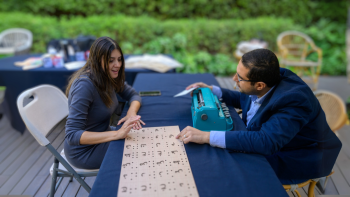
The AUC Venture Lab, Egypt’s first University-based startup incubator and accelerator, recently celebrated its fifth anniversary. During those five years, the V-Lab incubated 115 startups that generated EGP 88 million in revenues, raised more than EGP 220 million in investments and created more than 500 new jobs. V-Lab was also recognized as a top university business incubator in Africa and high-impact incubator in the Middle East and North Africa region by UBI-Global.

“AUC Venture Lab had a distinctive impact on Egypt’s entrepreneurial ecosystem,” said Ayman Ismail ’95, ’97, director of the AUC V-Lab and the Abdul Latif Jameel Endowed Chair in Entrepreneurship. “[This impact is] not only by supporting innovative, high-growth startups, but also by connecting them with AUC’s educational mission through experiential learning, where students and entrepreneurs work together and collaborate to create value for the startups.”

Since its launch in 2013, AUC Venture Lab has provided more than 1,500 hours of mentoring and training to its entrepreneurs. These V-Lab graduates, driven by creativity and determination, went on to provide life-changing services and experiences, contributing to facilitating lives across Egypt and the region.

Since its founding, the AUC Ventura Lab Startup Accelerator was supported by several corporate partners, including the Arab African International Bank (AAIB), a corporate leadership co-founder, as well as SODIC, Shell and General Electric. “The collaboration between AAIB and AUC Venture Lab marks a unique alignment between financial and academic institutions for the interest of entrepreneurs,” said Hassan Abdalla, chief executive officer of the AAIB. “As a main driver in the Egyptian economic scene, the financial sector must play a role in empowering the entrepreneurship ecosystem in the country.”
FinTech Future

People are constantly trying to find ways to better manage their money and time, and financial technology (FinTech) is helping the world move in that direction, with the AUC V-Lab becoming a regional and local hub for this transformation. In Fall 2016, V-Lab launched the AUC Venture Lab FinTech Accelerator in partnership with the Commercial International Bank (CIB). Since then, the V-Lab FinTech Accelerator has graduated 18 FinTech startups, contributing to the growth of the FinTech ecosystem in Egypt.

With the FinTech field growing in Egypt, both financial and non-financial institutions are becoming more open to these innovations, and entrepreneurs are finding more ways to stand out when they enter the world of FinTech. Q-Less, founded by AUC student Walid Wael Abou ElNour, Saeed Talaat ’16, Hashim Ibrahim ’16 and Youssef Galal, is a startup that’s out to tackle one of the country’s most frustrating experiences: being in queues and hoping to not waste your day while trying to make a payment. Q-Less is an online platform built on a system that facilitates transactions between customers and service providers. It allows customers to make everyday payments, renew subscriptions and pay tuition without having to stand in endless queues.

Abou ElNour, finance and accounting major at AUC and financial analyst of Q-Less, said that the startup joined the AUC Venture Lab at a mature stage, with a developed prototype and business model. Nonetheless, the lab played the role of a mentor and supporter. “The V-Lab was more of validation,” Abou ElNour explained. “We had access to different mentors with high expertise in their fields who were able either to validate and support what we did or guide us to more efficient and profitable alternatives,” he said. “Both were beneficial for all of us. They greatly expanded our knowledge and understanding.”

The process of entering the V-Lab takes startups through several stages. It starts with applications, screening, mentoring and judging, then it becomes serious business, where startups go through the acceleration process, where they receive intensive training. Then on Demo Day, startups are presented, and finally, there is incubation, where startups are granted an extended amount of time to use the V-Lab’s services.
“It gave us more trust in our startup,” said Abou ElNour. “As entrepreneurs, we are always on a ride in an emotional rollercoaster of doubts, hope, success and failure. However, having your idea mentored and supported by people with very high expertise, knowledge and impact in the entrepreneurship field at the V-Lab gave us a boost and assurance that we are on the right track.”

Startups Serving Society

Swvl

Startups who graduate from the V-Lab all have one thing in common: serving different communities and sects of societies. One of them is Egypt’s most recent and useful transportation options: Swvl – a mobile app that organizes convenient transportation routes around Egypt at reasonable prices. Co-founding CEO Mostafa Kandil ’15 and his team are alumni of the AUC Venture Lab. Today, Swvl has raised $8 million in its first round of venture capital financing, which is the largest round of funding for a tech startup in Egypt and one of the largest in the Middle East.



“V-Lab was instrumental in Swvl's early days,” Kandil affirmed. “The team's mentorship and constant feedback on how to take Swvl from zero to one was key in how we shaped our marketing, operations and other key functions. Being a V-Lab graduate was a stamp of confidence when we started fundraising.”

With its entrepreneurial support and the knowledge and guidance of mentors, the team was able to launch the application before graduating from the cycle. Kandil confirms that Swvl is on a mission to create 5,000 micro-entrepreneurs who own their vehicles to make a better living.

“What we’re doing is building public transportation for emerging markets,” said Kandil. “Often, people outside of emerging markets don’t understand the magnitude of this global issue. In these markets, the middle class doesn’t have affordable ways to commute. We’re going to these markets and building the infrastructure for them.”

La Reina

Many may have seen ads around Facebook about wearing their favorite designers’ sartorial masterpieces at an affordable price — it’s the unique V-Lab graduate, La Reina, founded by Ghada ElTanawy and Amr Diab. La Reina, which is based in a platform that allows customers to rent formal gowns, recently raised $1 million in a first round of investment from Algebra Ventures and 500 Startups.

La Reina’s service is targeted at women, with 75 percent of the team behind it being women. The couture service allows customers to rent gowns according to their occasion — whether it’s a formal evening or their wedding. In return, it allows others to make use of gowns that were bought and worn once, but are in great condition ready to be reused.

In the two years since its launch, La Reina brought in more than EGP 3.5 million in total for gown owners. “The AUC V-Lab was my first window to the startup ecosystem,” said ElTanawy. “After I joined, I was mentored by many entrepreneurs and got to know them, and they who helped me in my journey. They encouraged me to apply in competitions, one of which was RiseUp Explorer, where we were named one of six most promising startups in the Middle East and went to Silicon Valley.”

With a growing team of talented and determined individuals, La Reina is looking forward to creating a “humble boost for the local economy,” through increasing the number of items to 5,000. This will result in an increased revenue — up to 8 million for dress owners — as well as expansion to the regional market.

ElTanawy noted that V-Lab has been there every step of the way, and she expects it to always be there for support as her business grows. “The AUC V- Lab was a supporting partner all the way,” she explained. “I have always reached them for advice, and the mentors are mentors for life — not for a three-month cycle.”

She added, “When I am faced with challenges or different opportunities and I need guidance, I always reach out to them — specifically Professor Ayman Ismail. They follow up with me along the way and warn me if I have a blind spot in my business. I advise future entrepreneurs to get the most out the AUC V-Lab because it really can change your life. Consider them family because they are willing to go above and beyond for your success.”


Share

Economics Senior: Liberal Arts is the Road to Self-Discovery

Katherine Pollock
Ahmed Sharafeldin recounts his experience at AUC as part of the fifth annual welcome and recognition ceremony for new and returning scholarship students

For Ahmed Sharafeldin, a graduating senior and recipient of the May ‘87 and Ahmed Heikal Endowed Public School Scholarship, AUC's liberal arts education has allowed him to discover his greatest passion: economics. Although Sharafeldin now has plans to work in consulting, finance and, eventually, politics after graduation, he did not always have such a clearly defined path.

“My family wanted me to become an engineer, but I always knew that I didn’t want to do that,” said Sharafeldin. “However, I was not so sure what I wanted to study. I’ve long had an interest in public affairs since 2011 when, as I was simultaneously going from being a teenager to an adult, I started to take much more interest in what was happening in Egypt and the world around me.”

Despite these inclinations, Sharafeldin did not immediately find his passion upon entering AUC, yet the opportunity for academic and intellectual exploration quickly allowed him to do so.  “During my first semester, I studied engineering," he recalled. "I did well, but I didn’t love it. Then, during my second semester, I decided to change majors. The Core Curriculum and liberal arts education allowed me to take two political science classes and two economics classes, and I decided immediately that economics was definitely the thing for me.”

As Sharafeldin noted, the liberty and encouragement he received in developing his academic interests “wouldn't have been possible at any other university in the country except AUC. The liberal arts education helped me know what I am really passionate about,” he affirmed.

An intellectually curious student, Sharafeldin has a love for philosophy, reading and, thanks to the opportunities he was afforded at AUC, classical music. He has taken a variety of classes outside of his major, citing History of Western Music as one of his favorites. He also had the opportunity to participate in –– and lead –– numerous student organizations. “I joined the Arabic section of AUC Times magazine, and it was really an instantly perfect fit," he said. "I really liked the culture and [being with] other students, who have very similar interests. I eventually became the managing editor of the section. However, by my junior year, I realized that I also want to do something related to my major."

Sharafeldin then joined the Finance and Economics Club, which he now heads. "It’s an academic club, so we have a range of activities, from networking sessions with job professionals in the field to national research competitions to different finance games. We’ve also recently been working on a publication,” said Sharafeldin, who also helped organize the first Annual Conference of Egyptian Economics Students [ACEES], which aims at fostering undergraduate economic research.  

Building on a passion for economics that he first developed at AUC, Sharafeldin also studied abroad at the University of Chicago for a year through the Sawiris Scholars Exchange Program, an experience that allowed him to take classes with and learn directly from some of the world’s leading economists.

Moving forward, Sharafeldin hopes to work at a consulting firm and then obtain his Master of Business Administration, eventually focusing his professional career on finance or investing. He is particular interested in private equity, a field in which his scholarship donor, Citadel Capital Chairman and Founder Ahmed Heikal, is coincidentally a regional leader. “It’s a sign!” said Sharafeldin, as an optimistic smile emerged on his face.

Despite this particular focus, however, Sharafeldin emphasized that “as I graduate this fall with a degree in economics, I'm not just going into the world as this young man in a suit with knowledge of supply, demand and financial investments. I'm also an aspiring fiction writer. I'm also a classical music connoisseur, who makes sure he attends the Cairo Orchestra concerts every Saturday night, ever since being inspired by a wonderful professor and playing for AUC's classical guitar ensemble. I'm also a keen film follower, who became a novice critic of modern cinema after he took an introduction to film class as part of his Core Curriculum requirements."

As Sharafeldin reiterated time and time again, none of these important self-discoveries would have been possible without the liberal arts education he received at AUC.

For incoming undergraduates who are struggling to decide their major, Sharafeldin advises, “Use your freshman year to take advantage of the Core Curriculum, investigate your options, get in touch with seniors for advice and talk to the Career Center about the job prospects of what you’re interested in. Make the freshman year one of exploration; don’t just dive into one thing immediately.”

Even to say that Ahmed Sharafeldin has taken full advantage of his time at AUC is an understatement. From economics to fiction writing and Arabic literature to classical music, he has cultivated a plethora of interests that will, without a doubt, ensure his future success. “I feel so lucky,” he said. “I feel like I’ve done everything I could possibly do as an undergraduate student, and now I’m just looking forward to what’s next.”

Share

Sherif Kamel: Keeping Pace with New Tech Trends, Bringing People Together

February 8, 2016
Sherif Kamel, professor of management and former founding dean of the School of Business, is the new vice president for information management

From apps for student life, course registration, grades and sports tournaments to the creation of blended learning spaces combining in-class seminars with online resources, AUC’s new Office of Information Management, headed by Sherif Kamel, management professor and former founding dean of the School of Business, aims to bring together people and technology in innovative ways that reflect the continuous and changing academic needs in today’s digital world.

“There’s a growing trend toward on-the-go apps, and AUC should be there,” affirmed Kamel. “There are a variety of emerging learning tools and applications, and not all of them are web-based platforms. [In fact], the web is seen as the classical approach, not the most innovative and creative anymore.”

Interactivity and collaborative technologies are the way forward, Kamel noted. “I want to see more interactive communication and more apps offering a variety of services,” he said. “Some can be directly related to the learning experience, and some can be related to services and community life on campus.”

Laying the Groundwork

During this first year, Kamel will be primarily focused on conducting an overall assessment of the technology space at AUC. “This is a collective effort and should lead to the development of a strategy for information management for the next three to five years –– where we are, where we are heading and how to get there,” he said, adding that the office will always amend its strategy based on emerging and changing needs. “But we need to have something that is integrated and complements the AUC strategy,” he emphasized.   

The initial step in developing a strategy is gathering feedback from the community. “It is always important to first understand the environment by talking to different stakeholders, including students, faculty, staff and alumni, and getting their views and thoughts,” said Kamel. “We need to know what issues and challenges they’re facing. It is a community effort, and engaging different stakeholders will help bridge whatever gaps exist between what people have and what they are looking for.”

Kamel added that, as former dean of the School of Business, he had regular discussions with faculty, staff and students to understand their concerns, listen to their ideas and explore ways to improve the school. 

“I see this happening again in my new position,” said Kamel, who also met with student leaders on campus to listen to their ideas and needs.“Just a couple of days after I took on my new responsibility, I was approached by a group of students who proposed to me an app for navigating the campus. They even had an initial version built. It’s s a great suggestion and is just one example of how we hope to facilitate services offered through technology.”  

Embedded Blended Learning

A key component of Kamel’s vision for the office is revisiting technology utilization on campus, specifically, how technology is embedded in the learning experience. “It’s one thing to update the technology infrastructure and train students, faculty and staff to use it,” Kamel said,“but how are we actually embedding technology in the whole cycle?”  

A major trend in higher education, according to Kamel, is the creation of blending learning spaces. “Blended learning is the mixture of in-class seminars with online resources and webinars,” he explained. “With that combination, we can render the learning experience much more effective because after 20 years of web and online platforms, there is a huge knowledge depository out there. It’s definitely one of the things we’ll be looking at.”  

With this forward-looking vision, Kamel is exploring the different venues where existing technology on campus can be improved. This includes identifying avenues for the community to access campus services through various technology devices, expanding the way students and faculty members use technology in the classroom and offering staff members the opportunity to capitalize on the use of technology in their administrative and managerial responsibilities.

Campus Collaboration  

To accomplish all these goals, Kamel emphasized the importance of campus collaboration. A significant amount of technology infrastructure at AUC already exists, but Kamel sees an opportunity to work with different stakeholders to identify how the available resources can best benefit the University community. The office will be working with the information technology infrastructure at large and University library –– utilizing its technology tools, applications and emerging digital platforms–– to investigate the role of technology and innovative methods in the learning process, as well as explore different venues for information creation, dissemination and knowledge sharing for the AUC community. The office will also work with the academic schools, Center for Learning and Teaching, as well as the various research centers on campus.

“Coordination and collaboration will render the operation more efficient and avoid redundancy or duplication,” Kamel explained. “We should collectively be looking at how to best serve the AUC community, whether on or off campus, through technology platforms, tools and applications to meet the University’s mission.”  

For Kamel, the creation of the office is only the first step forward in a continuous effort to develop new initiatives. “I personally believe in continuous improvement and that such a process is a journey and never a destination,” he said. “This is a collective effort, and I look forward to working with different stakeholders to continuously improve students’ learning experiences, where technology is absolutely invaluable and a critical element in the learning process. With the support of the intellectual human capital on campus and with the proper and collective efforts of all, we will regularly improve the learning environment, reflecting what the different constituents want to be able to realize the positive impact on society we all desire.”

Even as Kamel discusses the technological aspects of his new position, he makes a point to never lose sight of where technology comes from and who it is for. “The most important element and building block in that space is the people; they make all the difference,” he said.

Share