“Port Said, Siwa, Upper Egypt — we learn about the cultures and dance traditions from Egypt’s different regions,” said Amira ElKouny ’18. “This event in Tahrir also has diversity in all the activities and even the audience.”
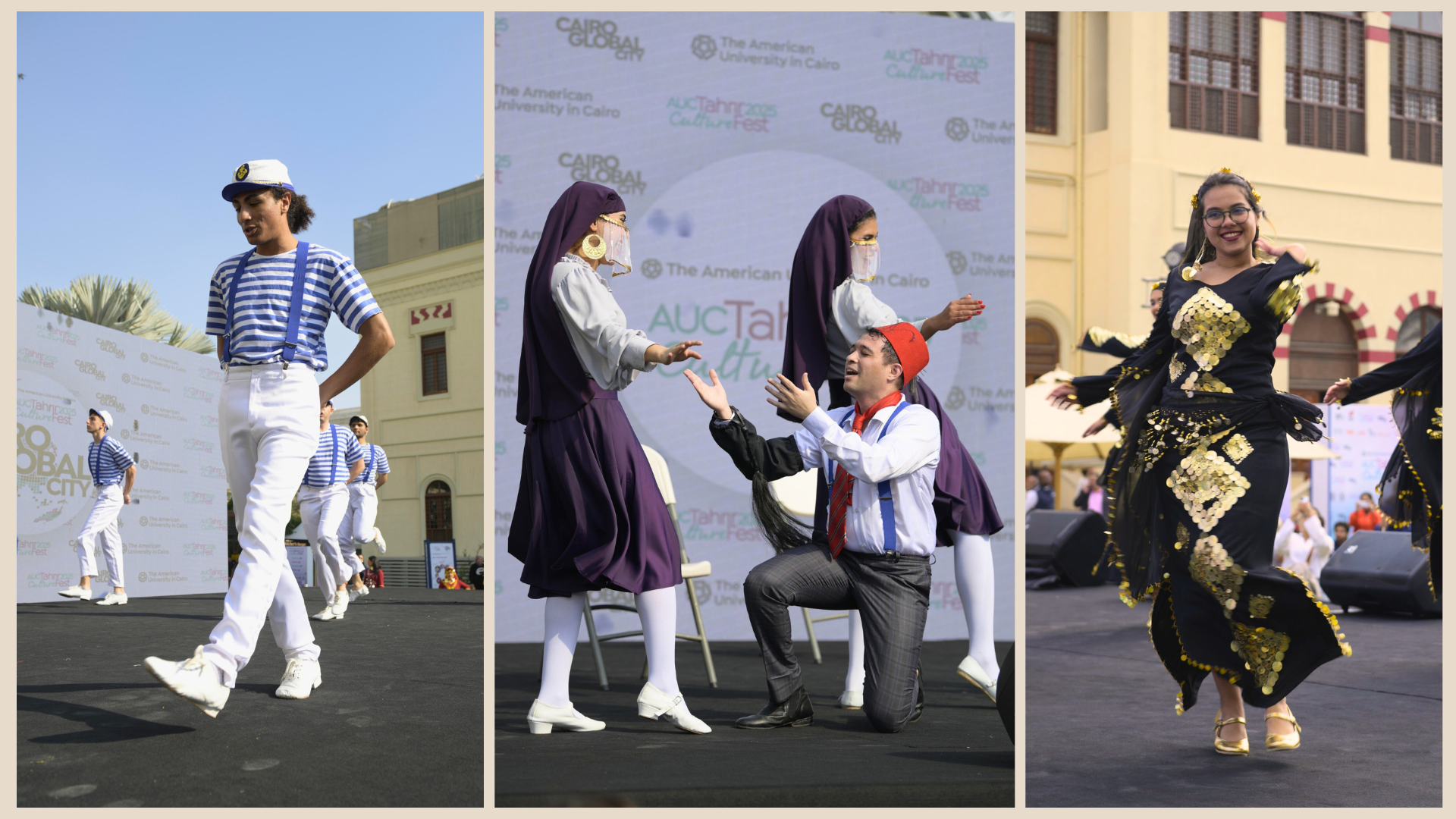
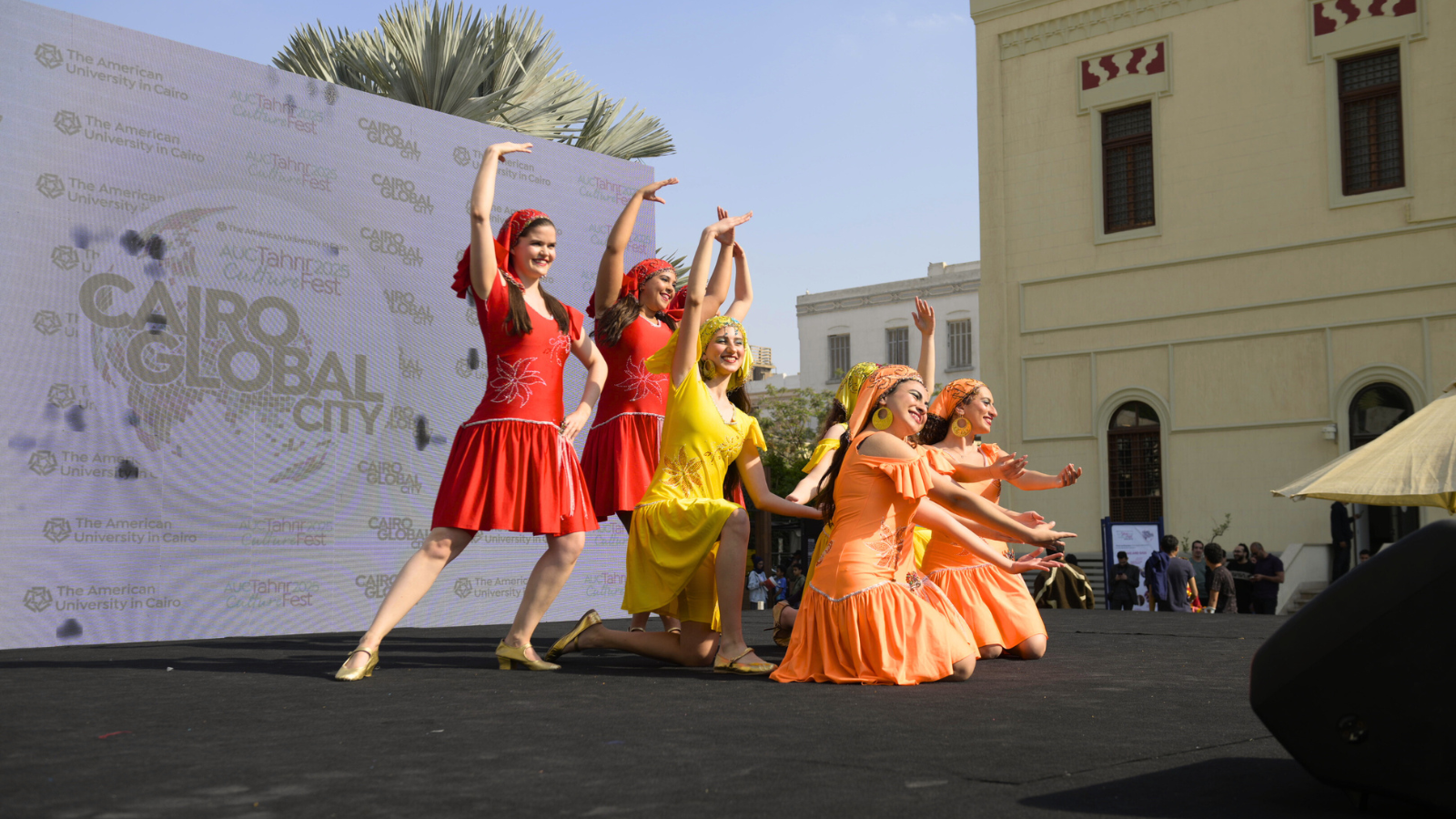
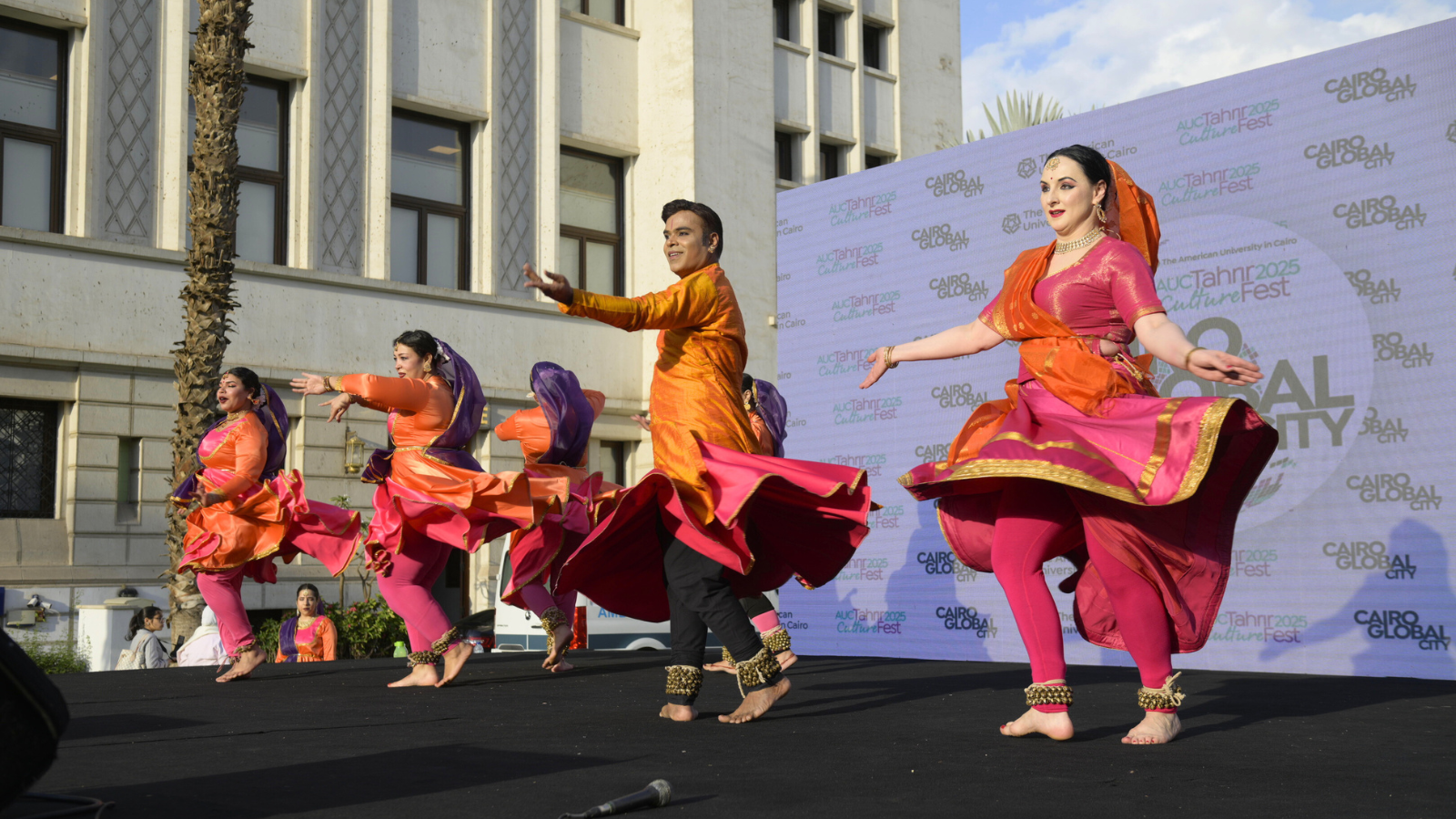
ElKouny trains and performs with the student group AUC Folklore, a dance troupe that performed on campus on Saturday, April 12, at the Tahrir CultureFest.
“We’ve been training very hard for this event every single day, usually from 10 am to 4 pm, to correct any mistakes and perform perfectly,” said electronics freshman Omar Mohsen, who performed in three out of four male dances at the fest.
AUC Folklore: ‘Like a Family’
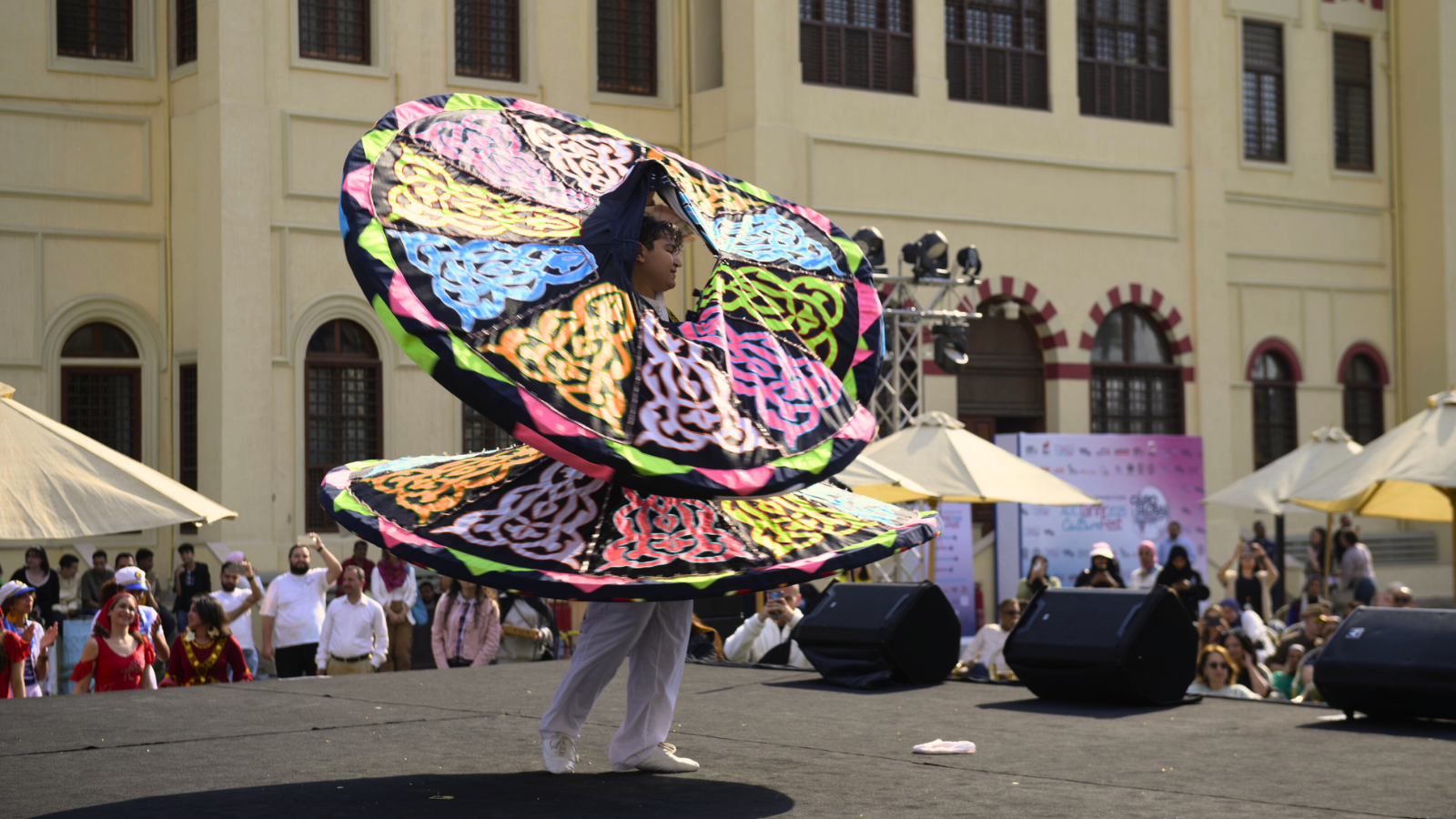
Film senior Mohamed El Khatib participated in the majority of dances in addition to his tanoura routine, a traditional Sufi dance style that consists of rotating around oneself while wearing a colorful weighted skirt. “I love tanoura because it’s related to Turkish and Sufi culture, which I wanted to learn more about,” he said.
El Khatib officially rehearses tanoura twice a week, revolving around himself for anywhere from one to eight minutes at a time. At home, he continues practicing spinning without the costumes to perfect his technique. “Outdoor tanoura is more difficult than indoor because of the sun,” he said.
“We’ve been training very hard for this event, every single day, usually from 10 am to 4 pm, to correct any mistakes and perform perfectly.”
The troupe practices 2-3 times per week, depending on whether they have a performance coming up. “It’s more than just an undergrad activity; it’s a safe and comfort zone away from stress at work,” Nadine Ezzeldine ’21, who occasionally practices and performs with the troupe. Ezzeldine fondly remembers staying past the end of rehearsal with her troupemates to improvise and have fun: “It’s like a family.”
Like many members, Ezzeldine had no previous dance experience when she first joined the troupe. El Khatib, who first began dancing tanoura four years ago when he became a member of the troupe, said, “I had never practiced any dances before joining AUC.”
Dancing for Egypt
The troupe spent two weeks at a festival in France last summer, performing nearly daily during the trip. This summer, the troupe will spend 10 days in Greece. “We have two or three new dances we’re preparing for Greece,” said Hana Abdelsalam, biology and theater sophomore.
Abroad, the troupe represents Egypt in all its diversity of culture, including the Eskandaroni dance, performed in blue-and-white sailor costumes, a nod to the country’s coastal cities. “Luxor’s style is diverse, unique and uplifting as well,” said Ezzeldine.
Abdelsalam was first inspired to join the team because she was interested in folklore’s unique songs, costumes and dance styles. The fully funded trips attracted her too.
“The audience here definitely had more people and they were super engaged and fun to perform for.”
At Tahrir, the troupe got to show off Egypt’s rich culture right at home. “It’s my first time performing in Tahrir, and this event was so well organized,” said El Khatib, who was excited to perform an exclusive, new version of his tanoura routine at the CultureFest.
The venue presented new challenges that the team had to work around: “The costume changes were super fast, and that was difficult,” Abdelsalam shared. The outdoor stage was a lot smaller than what the troupe is used to and featured a makeshift tent as backstage. “We had to adapt for this performance. We had to squeeze in on the stage and be careful not to fall.”
Despite the challenges, the team found a supportive and enthusiastic audience in the heart of Cairo. “The audience here definitely had more people. They were super engaged and fun to perform for,” Abdelsalam said.
With big smiles on their faces, the student performers just seemed happy to dance for their country that they love.