Home page
ع Search AUC

Leveling Up

Leveling Up

By Kara Fitzgerald Elgarhy

The video game industry is booming across the Middle East and North Africa. Playing on a console, PC or smartphone, there were more than 65.3 million gamers in the region in 2021, with revenues reaching $1.76 billion in Saudi Arabia, the United Arab Emirates and Egypt alone, according to a 2022 report by Niko Partners. As the industry continues to ascend the leader boards, more opportunities arise every day for local talent to find their place in the game.

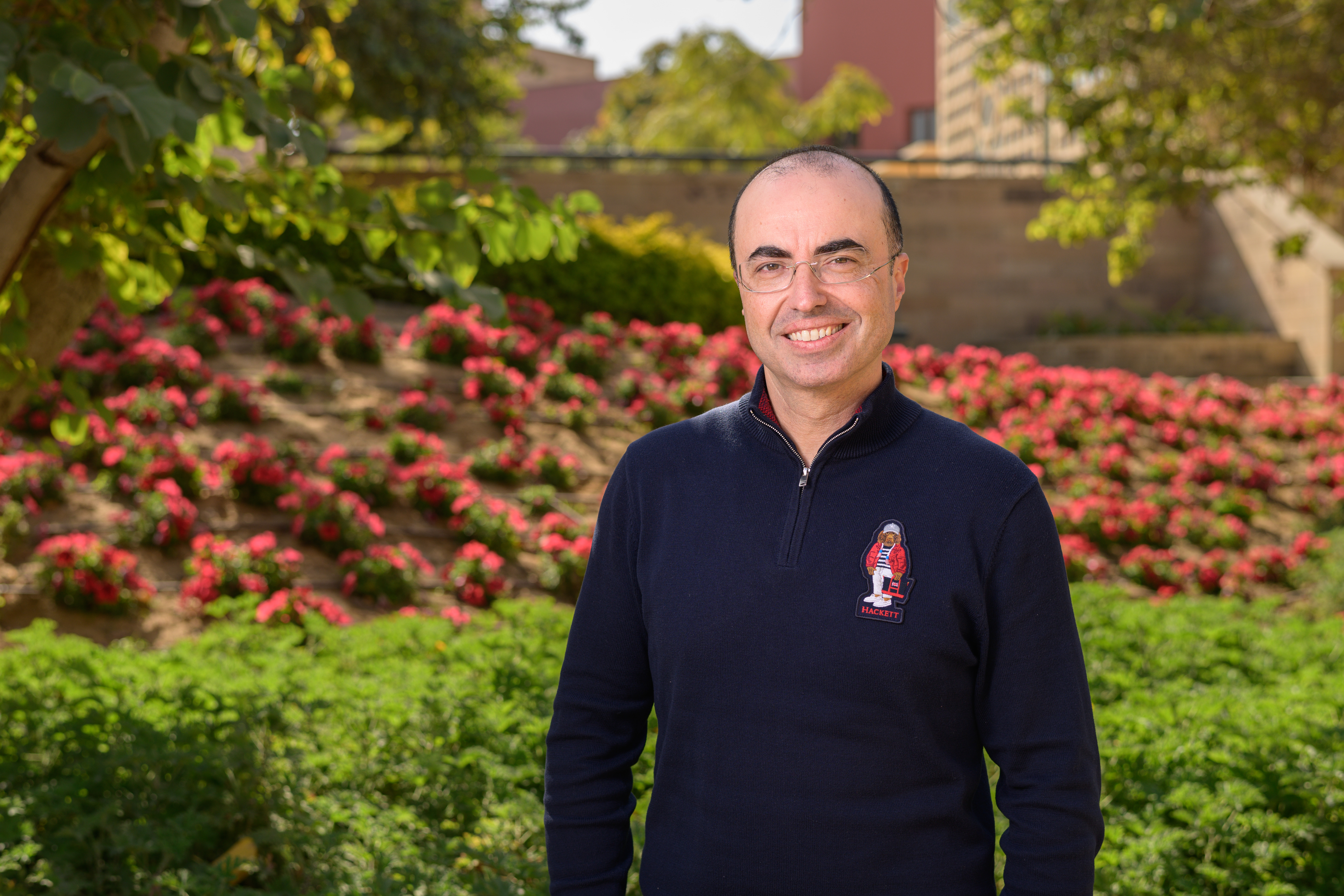
There's just one glitch in the code, observes Ahmad Saqfalhait, associate professor of practice and associate chair of AUC's Department of the Arts. "Most game design professionals in the industry are self-taught," he explains. "Because their training is primarily either technical or visual, they compensate for the design aspect of game development by wearing multiple hats."

To support the development process, AUC introduced a new game design minor in Fall 2022, bringing together students from different disciplines to learn the role of a designer in game development. A collaboration between AUC's graphic design program and Department of Computer Science and Engineering, the minor will equip students to join a flourishing industry that has surpassed three of the biggest entertainment-related industries combined: music, film and sports, according to Saqfalhait.

The perks don't stop there. "In addition to their economic value, game applications have expanded and evolved to cover various purposes, from educational and social to medical and psychological -- all playing on our need to have fun and engage," Saqfalhait said.

Communicating Culture

Much like the industry, the program is fast on the rise. Saqfalhait and students are working to further spread awareness and interest by holding gaming activities on campus, such as hosting group Nintendo Switch sessions. "Not only do students enjoy playing, they also reflect on Nintendo's success in the gaming industry," Saqfalhait explained. "Nintendo is a school of design. It maintains a DNA and philosophy in its offerings. I want to channel this in the minor."

Moreover, Saqfalhait believes that Nintendo's work offers important lessons for AUC students about cultural expression and identity.

"If Nintendo, a Japanese company, borrows ideas from the outside, it reinterprets them and makes them its own, with mutual respect for both cultures," he said. "This concept of thinking locally and regionally is emphasized throughout the semesters of the game design minor so that students are not just making copies of existing games."

For instance, Nintendo's famous Animal Crossing video game introduced many international players to Japanese culture. Originally developed for a limited audience in 2001, the playful village- building game now features an array of international flavors, from bamboo baskets and cherry blossoms to Arabian thobes and Moroccan dresses.

"Nintendo is a school of design. It maintains a DNA and philosophy in its offerings. I want to channel this in the minor."

Sophomore Tarek Kassab, a longtime gamer and fan, was drawn to the minor for this very reason. "I started to notice that such a powerful entertainment tool can be used to push forward political and cultural messages," he reflected. "For example, games made in Japan tend to portray Japanese society -- traditions, food, celebrations and culture. And because video games are highly interactive, these small additions naturally resonate with players. I wanted to learn game design to create games that are entertaining while also spreading my Egyptian and Arab culture."

The locally grounded character of game design at AUC was always intentional, according to Saqfalhait. However, one unexpected outcome has been the resulting buy-in and support from the Egyptian community. Outside of their coursework, game design students have had the opportunity to work directly with community and creative partners on the design and development of games for local impact.

Last semester, students worked with UNICEF and Karim Aboul-Enein of Largelabs game development studio on an arcade game prototype that makes children indirectly associate healthy snacks with fun activities through play. A separate student group has been working since July 2022 in collaboration with Megawra - BEC to create a game for children that will strengthen their sense of neighborhood ownership and connection to their communities by presenting them with their rich culture and history.

These extracurricular projects reflect a guiding principle of AUC's approach to game design: integration within the industry. "It's difficult to gain hands-on experience in game design in Egypt because the industry is not yet thriving here. AUC's practical approach is a substitute source for direct experience in the field," said Kassab.

Still, AUC's game design project is far from final. The pioneering minor program, itself an organic result of feedback and learning from a smaller seed, is poised to blossom into a fully fledged major -- addressing more skills, reaching more students, and building more industry and community connections.

"A few years from now, AUC will graduate students who are equipped and ready to join and reinforce game design in Egypt," Saqfalhait affirmed.

Explore AUC's Game Design minor.

Share

50 Years Later

50 Years Later
<?xml encoding="UTF-8">

By Devon Murray

Step back in time to 1973, when, in the midst of the Arab-Israeli conflict, Egypt and Syria launched an attack on Israel on October 6, catching the world off guard. Known as the October War, this conflict and its results signaled a major shift across the region's political landscape and United States foreign policy in the Middle East.

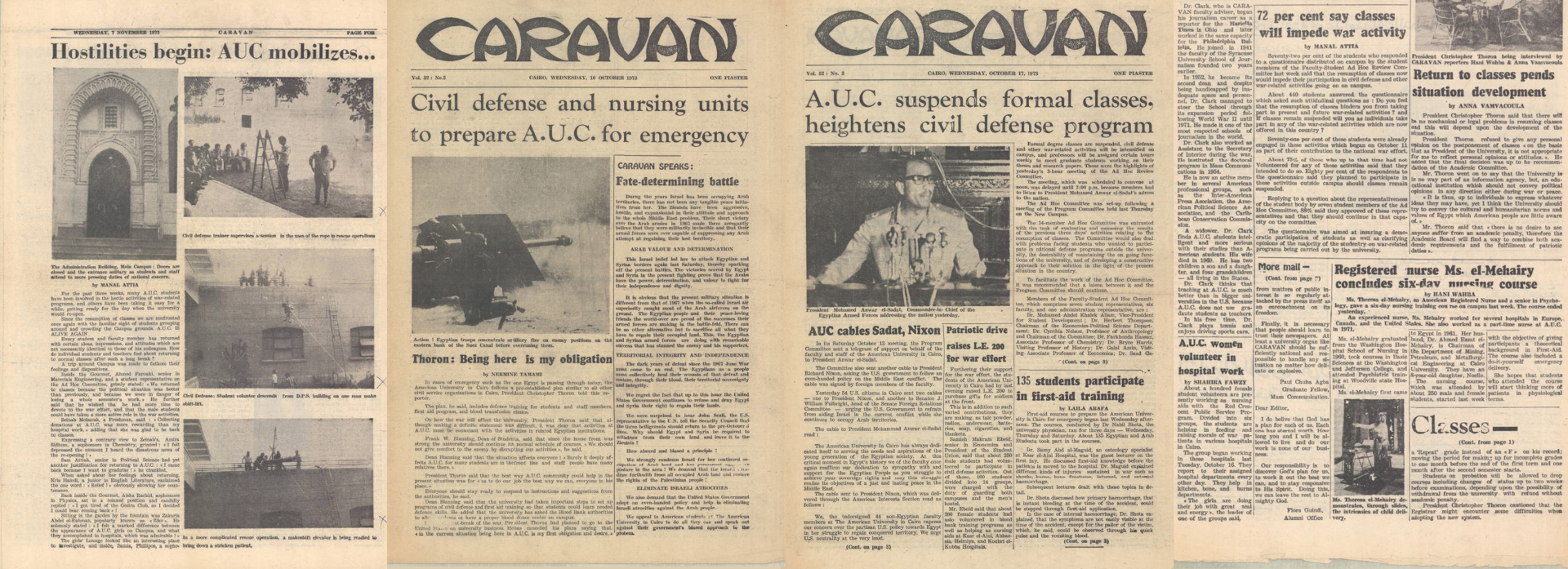
Today, on the war's 50th anniversary, we look back not on the battlefield, but on Cairo -- and AUC -- to understand what life was like for AUCians in wartime. Drawing from a series of oral histories and clippings from The Caravan found in the University Archives, we explore the varied experiences of students, faculty and staff in October 1973.

Whispers of War

What are the signs a country is headed toward war? Tim Sullivan, provost emeritus and former professor of political science, who landed in Cairo just before October 1973, sets the scene.

We arrived on September 16, 1973, which is obviously 20 days before the war. So we didn't have much time to get adjusted to Egypt before that. Most places had windows painted blue. That would mean you could have the light on at night, and it couldn't be seen by a plane that might drop a bomb on you. There were sandbags everywhere. ... The Sheikh Rihan entrance to AUC had a barricade in front of it..

Of course, we didn't plan to arrive in a war zone. You know, obviously, the Arab-Israeli conflict had been going on since the establishment of Israel. And one knew you were going into a place where conflict was, in a sense, endemic. But there was no inkling that war was imminent. It looked like something of a stalemate, actually.

For Jayme Spencer, librarian emerita who served as the director of public services at the AUC Library for more than 43 years, October 6, 1973 began as any other day.

It's a Sunday. And we are invited out. In those days, we did not work on Sunday.

She recalls going to a barbecue at the home of a colleague who lived by the Pyramids.

And at some point toward the evening, we got ... a knock on the door. The sun had already pretty much gone down. And some army people came in, and all started talking. ... Apparently, as it was translated to us, you know, "How can you be doing this? A day that you, your country is at war! And you have foreigners with you!" ... And they said, "Pack everything up and get out of here immediately. Go to your home."

I think they painted the headlights of the cars blue so that they wouldn't show ... because all of a sudden we were of course in curfew and darkness.

According to Spencer, the University remained open the following day, though not everyone showed up.

People were waiting for the University to make an official announcement. And we didn't know how long [this was] going to happen. Were we going to, you know, be defeated immediately, and that would be the end of it? But as it turned out of course, it lasted much longer.

Classes Canceled

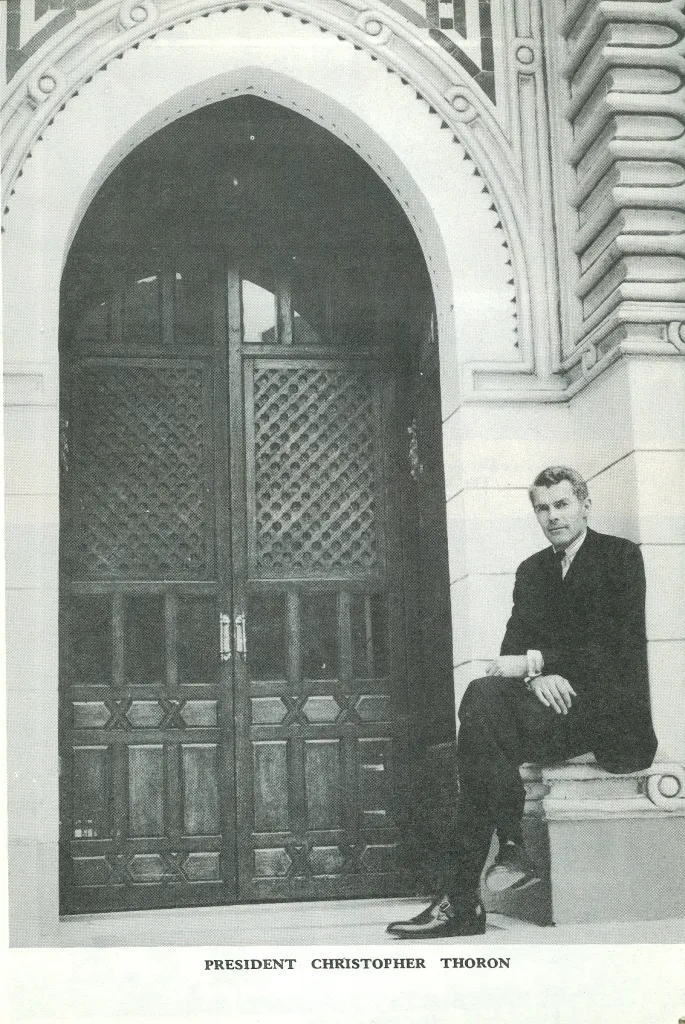
Thoron at AUC Tahrir Square

Walid Kazziha, political science professor who has been with AUC since 1972, describes the community's initial reaction to the war.

In 1973, when the war broke out, students were up in arms, faculty were very much fired up with what was happening. And then we get this statement from the Vice President... [Ahmed Abdel Ghaffar] Saleh or something, who says, "Classes will be held as usual."

The faculty called for a meeting, and we met. [President] Thoron came personally to that meeting.

Thoron laid it out and said, "We're fully in support of Egyptian efforts to regain its land in Sinai, and the University cannot be opened as usual, you know. Now we will have to think of a way to support Egypt in its war effort. And the students are proposing [to] do some medical service ... and support here.

Of course we didn't have classes. We were listening to what was on the radio, and no one at that point could go and give a lecture. Let's face it. And then after the war, we came back and that was it.

Helping Hands

Spencer recalls students immediately organizing to support the war.

[The students] quickly mobilized themselves, the ones who could, to support the war. I know I went in two or three days and rolled bandages.

Farkhonda Hassan (MSc '67), professor emerita in the School of Sciences and Engineering, took her students to Kasr El Aini Hospital to help with cleaning and gathering supplies.

We took four big wards in Kasr El Aini. ... The students were running around bringing sheets from the factories -- clean ones, clean sheets, pillowcases.

While at the hospital, Hassan ran into a number of celebrities, including Tahiya Carioca, an Egyptian belly dancer and film actress, whom she asked to bring a food processor to prepare meals for patients who were having difficulty eating.

I used to put the rice and the vegetables and the meat and have [the patients] drink it. ... This made them more healthy. And [the hospital] used to have visitors coming to us and reporters from all over the world to see. This [is] where AUC is. And [these were] the students, girls and boys. And teachers. So I was very happy. We stayed there for about two months.

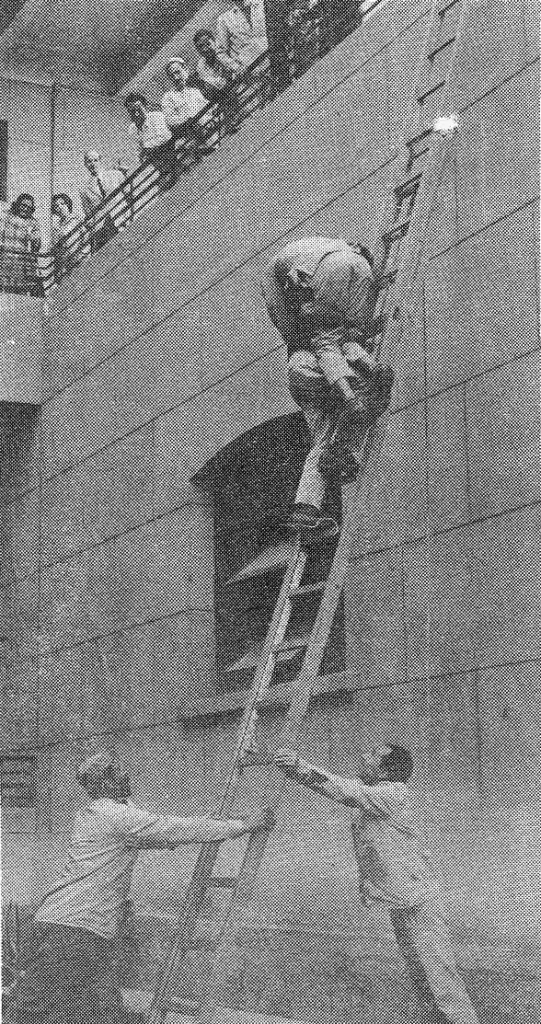
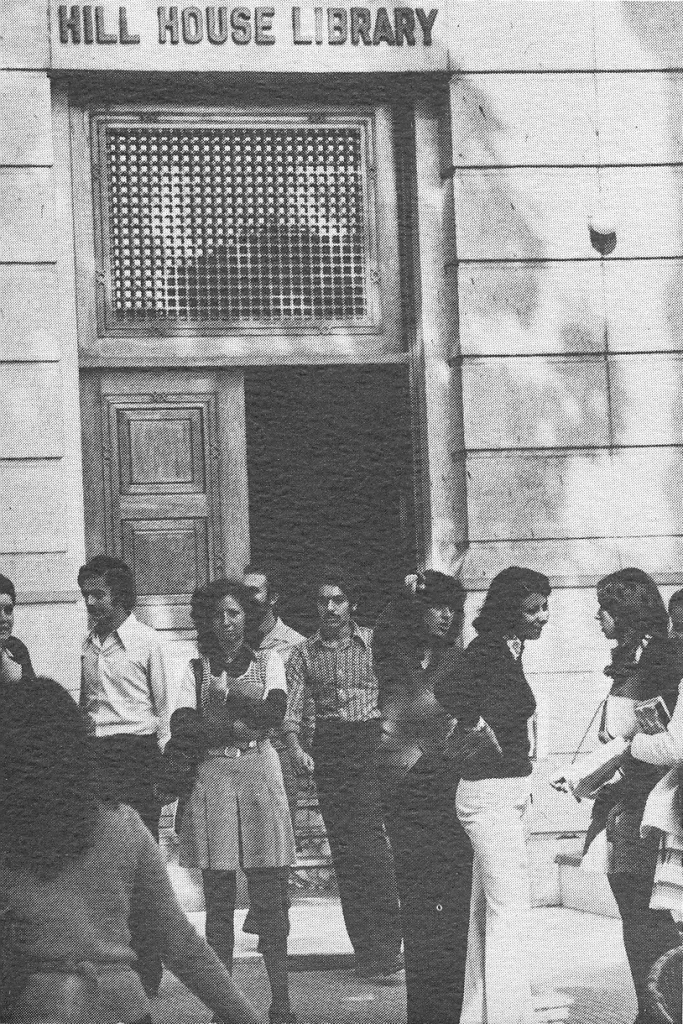
man climbs down a ladder carrying another manRescue team practices as part of custodians' civil defense trainingStudents standing outside a doorway labeled Hill House Library at AUC Tahrir Square1970s shot of Hill House, which at the time was AUC's main library

War Stories

Sullivan describes how Cairenes got their news about the battlefront during the war.

[At AUC], we had meetings during the war, no classes, and [I would] come in on the train. And people are excited, they're talking. I didn't know what the heck they're saying, but they've all got newspapers and they're pointing to stories and there are pictures. I can't read Arabic at the time, but they've got pictures of stuff that's going on in the war.

During the war, something happened [that] I was immediately made aware was unusual. ... Egyptians were getting news from Egyptian news sources. Now, let me explain what I mean by that. Up to that time, if, you know, the Egyptian, I will have to call it upper middle class or even elite -- they would have access to what was going on in the world and in Egypt by listening to the BBC [British Broadcasting Corporation] or the VOA [Voice of America] or Radio Monte Carlo. Radio Monte Carlo was a big hit, and the reason was simple: It was news that was actually news. It wasn't censored. It wasn't interpreted through some political screen. So if they want to know how their troops were doing, how the war was going, they would listen to Monte Carlo, they would listen to the BBC. They would also listen to or watch television news, what little there was. And if they found the BBC and Egyptian news were saying the same thing, they were thrilled. Because it [means] the government is telling us the truth.

Life Goes On

Despite the war, many living in Cairo in October 1973 were able to enjoy hobbies and make connections with others. Spencer reflects on social life during this time.

We didn't have a curfew during the day, so if I didn't go roll bandages or do whatever else it was I was doing with the students and other faculty members, I had a group of people that I went out horseback riding [with].

And then as it started to get toward dark, we'd always make [our way] back home. However, within every quarter, I would say, Zamalek, Garden City, Maadi, people violated the curfew as they wished. Some of my closest friends happened to live just a block and a half away from me on Tolombat [Street]. We spent many a night till about 9:00 or 10:00, playing cards and just sitting around talking.

While out and about, Spencer and a friend discovered a group of stranded American tourists who were meeting at the Hilton in Zamalek every night. Most of them had been vacationing in Cairo when the war broke out and were now waiting to be evacuated safely from Egypt.

Because of course the embassy was trying to get them out. And I think they ended up going out through ... a boat from Libya. And they had to pay for it.

Spencer and her friend were invited for breakfast with a Catholic family one morning.

They noticed that we were taking the sugar out of the container at the table and they said "Why is that?" And I said, "Well, sugar is being rationed right now, and we don't have any." And so they started saving their sugar. I think it was about three, four days before they actually got away. So we had a huge stash of sugar from them, from the Hilton.

And for about the next two years, this family used to send like a little care package back to

Cairo. It would take months, several months to get here, and be full of sugar and just, candy, and well wishes, and maybe a book or two. I lost track of 'em many, many years ago, but it was just one of those kinds of things -- you bond with people in a certain way, you know, in a catastrophe, where you're swept up by the circumstances. But what was important for me was the fact that they were so positive about Egypt. And they had enjoyed their time here. They really didn't have an agenda ... They were curious to see how it was going to turn out.

For Sullivan, adjusting to life in Cairo during this tense period was a great way to get to know Egyptians.

It was actually a good introduction to the country and the people. A better introduction than AUC could have possibly organized because ... you could see people under stress. My father always said there are a couple of ways to really understand what people are like. ... So one test is what happens when you get in the wilderness? It's a Hobbesian test. What do you do when there is no law, when there is no order, when there is no government? How do people behave? And another one is when you're under great stress. Well, the whole country was under great stress. And they behaved well.

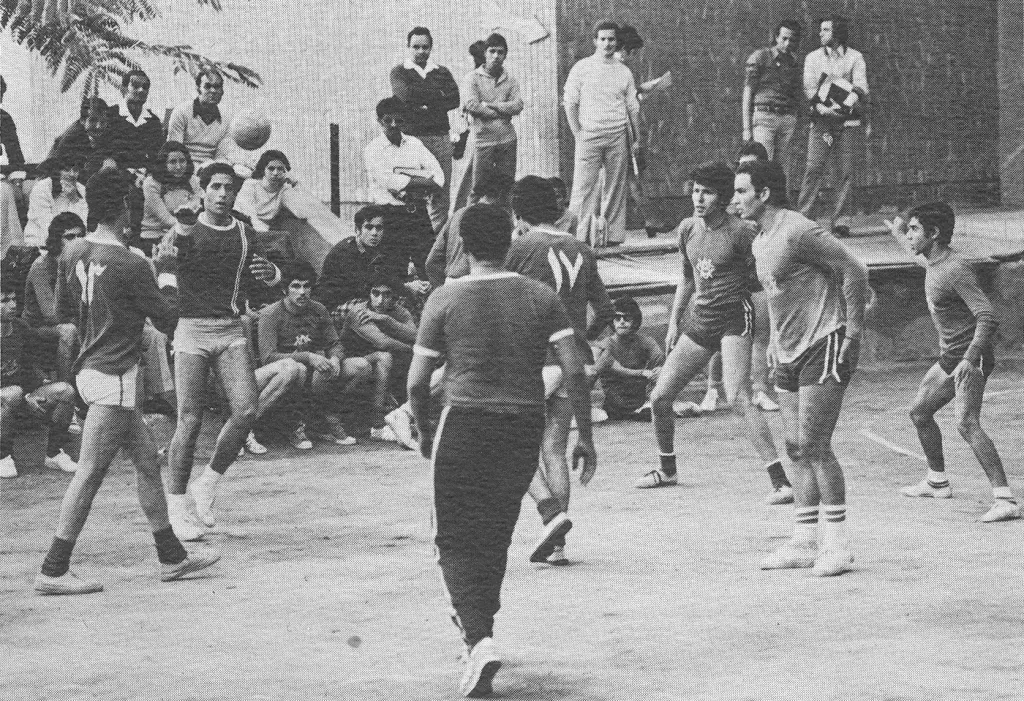
group of men playing football AUCians play football on campus, early 1970s 
Share

Winter on the Nile

Winter on the Nile
<?xml encoding="UTF-8">

Tracing the past between dust- covered buildings from the Fatimid dynasty, inspecting 50 million-year-old whale bones in the middle of the desert, putting smiles on the faces of underserved children in one of Cairo's poorest neighborhoods -- these are just a few of the activities that nearly 100 international students took part in during AUC's faculty-led programs last winter.

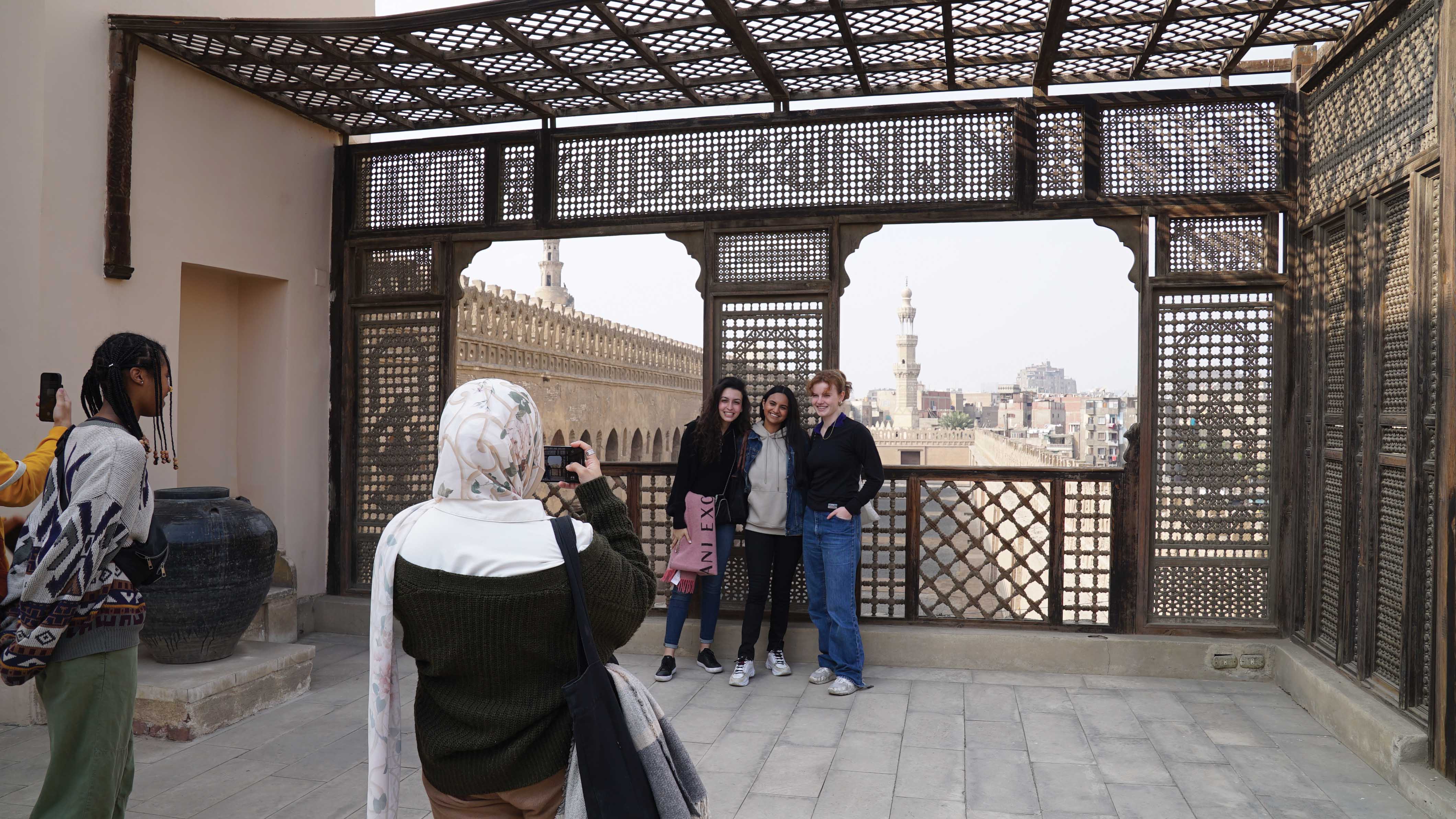
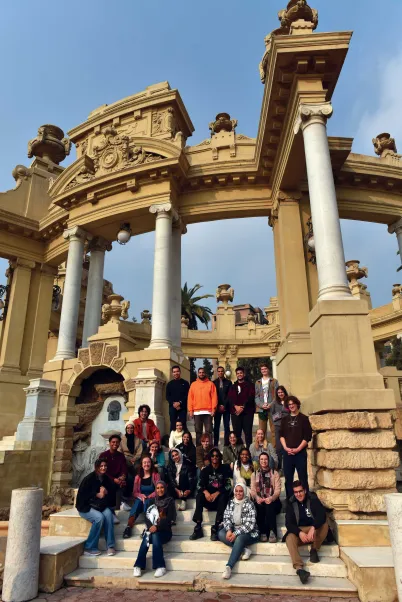
Oberlin students at Abdeen Palace. Photo by Omar Mohsen

The short-term, customized programs are designed to introduce students to AUC and Egyptian culture under the guidance of a faculty leader. With more than 20 years at the University, faculty- led programs have relied on Egypt's rich history to help students sharpen their understanding of a variety of topics.

This year, AUC hosted students from Oberlin, George Washington, Utica and Westmont. Each course covered a different topic, from history and political science to healthcare ecosystems and intensive Arabic.

Cultural Connections

Alongside AUC students, a group from Oberlin took the Museums, Historical Memory and Politics in Egypt course, during which they made daily visits to Cairo's numerous museums and discovered other historical hotspots around the city.

For Nikki Keating, an Oberlin student majoring in Africana studies, the post-museum excursions were just as valuable as the museum visits.

"After the museum, we'd go get food somewhere in the middle of Cairo," she said. "On top of learning so much about Cairo's history, I learned so much about the culture and people. Working with AUC students gave me more of a perspective about how Cairo and Egypt as a whole really are."

Zeinab Abul-Magd, professor of Middle Eastern history at Oberlin, described the constant cultural exchange that took place between AUC and Oberlin students throughout the course. "This program is unique because, for the first time, it brought Oberlin and AUC students together to take the same course, go on the same field visits, do the same activities and sit together in the same classroom," she said.

Watch: AUC, Oberlin students explore Cairo Museums

Inside Institutions

Diving headfirst into Egypt's state institutions, a class from The George Washington University led by AUC Trustee Nathan Brown (CASA '84) convened with Amr Adly, assistant professor in AUC's Department of Political Science, and AUC students for a course examining the country's legal and religious establishments and how they interact with Egyptian society.

The monthlong course included lectures on Egyptian law, economy and history as well as visits to key official institutions in Cairo, including the Egyptian Parliament, Al-Azhar, Coptic Patriarchate, Supreme Constitutional Court and Economic Courts."Through these visits, the students got to interact firsthand with senior officials, politicians and judges," Adly explained. "Additionally, class discussions between GW and AUC students about historical and current matters in Egypt added some invaluable insights to both groups, allowing them to compare views and bring new ideas into circulation."

A History of Healing

Utica students traveled back in time with a course covering the vast history of medicine and healthcare in Egypt, from Pharaonic herbalism to recent mental health awareness campaigns.

"Incorporating Egypt's historical sites into the course brings home how culture and tradition play a very important role in Middle East healthcare," said Hassan El-Fawal, professor of biomedical sciences and founding director of AUC's Institute of Global Health and Human Ecology.

The group also engaged with the local community, spending a day with underserved children at Resala Charity Organization. "My favorite part was going to Resala," said Utica student Madealyn Frankovic. "Not only did I see what kind of therapeutic interventions I could be doing as a future occupational therapist, but I was also able to laugh and smile with the children. That can be just as healing."

Watch: AUC, Utica students explore history of medicine throughout Egypt 
Share

Water Wise

Water Wise
<?xml encoding="UTF-8">

By Devon Murray

H2O Woes

While water covers around 71% of the Earth's surface, the lion's share of this precious resource lies in the oceans (97%) and is too salty to be used for agriculture, drinking water and industry. Moreover, pollution, waste and the unequal distribution of resources have put a strain on the planet's freshwater supply, with areas on each continent experiencing water scarcity, according to UN-Water.

Egypt is particularly hard hit when it comes to water scarcity due to rising temperatures, a drier climate and a growing population driving up water demand.

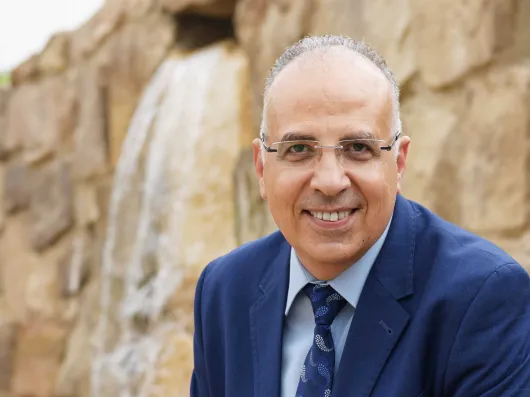
"In Egypt, the annual water share per person is 540-560 cubic meters. The water poverty line, however, rests at 1,000 cubic meters per person per year, meaning that Egypt is missing almost 50% of its needed water supply," said Egypt's Minister of Water Resources and Irrigation Hani Sewilam, AUC professor and founding director of the University's Center for Applied Research on the Environment and Sustainability (CARES).

And the problem extends beyond H2O.

"This is a multifaceted issue," Sewilam said. "You cannot work on water scarcity without considering food and energy."

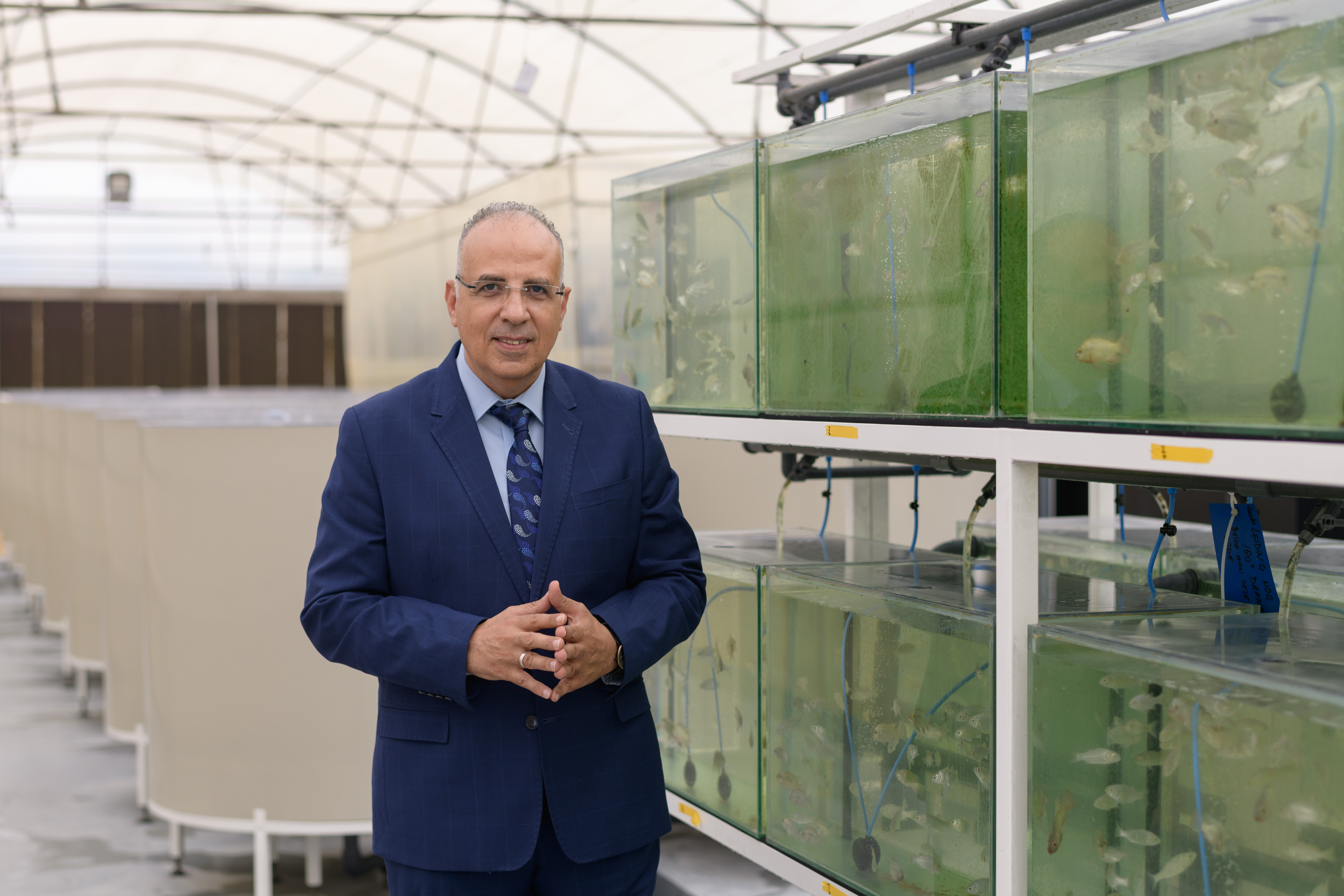
Sewilam: "The sky is the limit. This could be the next food production revolution." Photo by Ahmad El-Nemr

Like most countries in the Middle East, Egypt consumes 80% of its water for food production and agriculture. Adding another layer, agriculture requires energy -- whether it be for irrigation, processing, storage or transportation. Considering the intricate and dynamic relationship between water, energy and food is known as the water-energy-food nexus. It is within this nexus that Sewilam, CARES and student researchers operate, working to find a solution that considers all three sectors.

(Aqueous) Solutions: The Three S's

Desalination -- the removal of salts and minerals from a substance -- has been around for ages in theory and practice. However, it is not seen as a "green option," according to Sewilam, because it uses a lot of energy and creates brine, a highly concentrated salt solution that occasionally contains chemical residue.

"With the existing technology, brine is disposed of in the sea or thrown in the desert," he said.

Harnessing the three S's of Egypt's abundant resources -- sun, sand and salty water [seawater and brackish water] -- Sewilam's Water-Energy-Food (WEF) Nexus Model uses solar panels to power reverse-osmosis desalination. This technique sends water through a synthetic lining to purge the water of unwanted molecules and impurities, like salt and dirt.

"After desalination, we work to get more out of each drop of water," Sewilam said. "The freshwater will be used to produce fish. The waste from the fish can be used as fertilizer for crops, while the excess cleaned water from the crops can be given back to the fish."

As for the brine, it can be used to produce small crustaceans for feeding the fish and algae, which have become a major component in producing biodiesel, he explained.

At COP27, Sewilam will receive the 2022 Water-Energy-Food Ecosystem Nexus Award from the European Union's Partnership for Research and Innovation in the Mediterranean Area, known as PRIMA, for his WEF Nexus Model.

More Crops Per Drop

At AUC, the model is already in use on a limited scale at CARES, with preparations to upscale for commercial use in motion. On the state level, it is slated to be used in some of Egypt's major green development projects, such as the 1.5 Million Feddan Project, New Delta Project and buildout of the Sinai Peninsula.

For now, Sewilam and his team have turned their attention to fine-tuning the model by increasing crop yield to make the model even more economically viable and working toward zero waste to make the model more sustainable.

CARES, which is part of AUC's Institute of Global Health and Human Ecology, is sharing its knowledge with the community. Last fall, the center launched its Water-Energy-Food Technologies Diploma, which combines expertise in engineering, hydrology, irrigation and solar technology to prepare students for facing Egypt's climate challenges. CARES also partners with the International Desalination & Water Treatment Group, transferring research findings and know-how directly to the market in Egypt and the region.

Sewilam believes that implementing the WEF Nexus Model will not only be a major first step toward solving the water (and food) crisis in Egypt and the region, but will also create a ripple effect globally, causing a major shift in world food security.

"The sky is the limit," he said. "This could be the next food production revolution."

 
Share

One Man's Trash is Another Man's Treasure

One Man's Trash is Another Man's Treasure
<?xml encoding="UTF-8">

By Abigail Flynn

Ibrahim Abougendy '14

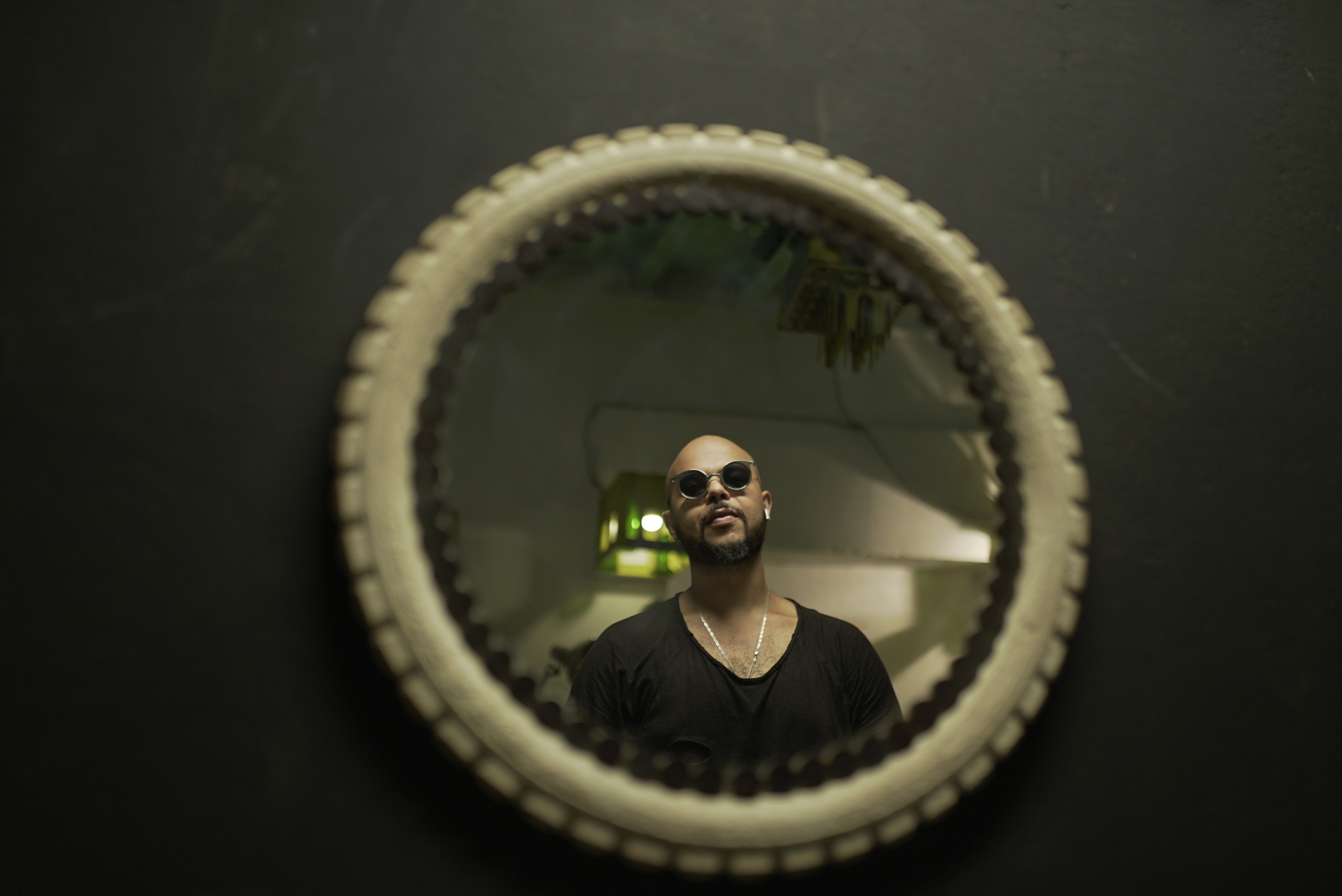
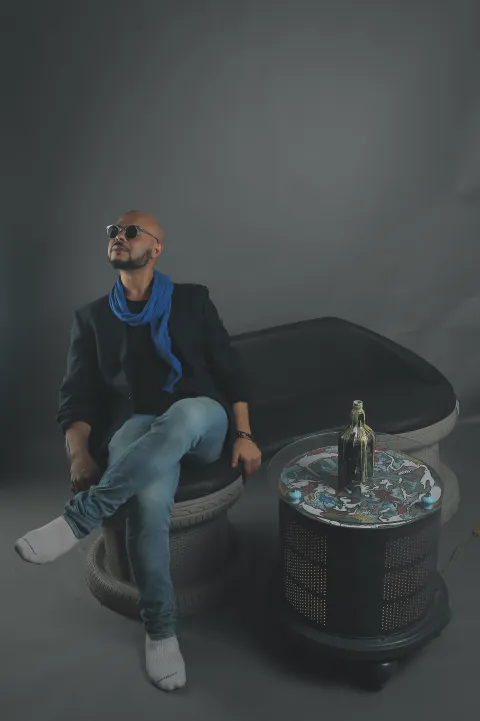
Transforming abandoned tires and old washing machine drums into living room furniture, Ibrahim Abougendy '14 turns trash into treasure with the startup he co-founded, Mobikya. Abougendy upcycles waste materials into colorful and comfortable handmade furniture, such as chairs, mirrors and couches.

Abougendy also co-founded two other startups that utilize eco-friendly and biodegradable designs. His water bottle line, Qarura, uses a special clay mix "pottery" that boosts the alkaline content in water and requires less energy in production, while his pottery-based coffee brewing tools from his company Gahawena require less energy than traditional copper.

Outside of the home, Abougendy's work supports local animals. He helped design shelters out of tires, or "Sheltires," which optimize the heat-trapping capacity of rubber tires to offer a warm retreat for stray cats.

"Waste is actually raw material," Abougendy said. "What keeps me persistent against all odds is my passion to be an accelerator for a paradigm shift to happen."

 
Share

Hop, Skip and a Jump

Hop, Skip and a Jump
<?xml encoding="UTF-8">

By Yasmin El-Beih

Today, more than 180,000 users in Egypt have replaced their short-distance car, cab or ride-hailing trip with an electric scooter or electric bike at least once, thanks to Rabbit Mobility, a clean-tech startup with the ambition to revolutionize how we take short-distance trips while bettering the planet in the process.

Co-founders Kamal ElSoueni '13 and Mohamed Mansoury '14 came up with the idea in 2019 after working for a couple of years in global management consulting firms based in Dubai and London, respectively. Returning to Egypt for vacation, they both noticed an increasing reliance on cars, even for short-distance trips.

Mansoury and ElSoueni hope to expand Rabbit's operations outside of Egypt

"When you're traveling a lot and you come back home, you really feel the difference," ElSoueni described. "We started to notice a grayish black cloud forming over the city, which we had never noticed when we lived in Egypt, and we were always complaining about traffic. In 2018, while visiting the United States, I came across a massive electric scooter company, and that's when we started thinking about applying similar solutions in Egypt."

ElSoueni and Mansoury held focus groups through their own networks to tackle transportation-related inquiries that might aid their blossoming business idea. They found that regular cycling wasn't highly popular given the hot weather for much of the calendar year in Egypt, making it an uncomfortable option for commuters. "I myself used to cycle to AUC for a semester or two as a student, but I always had to shower once arriving to campus before heading to class, so I was able to relate to the feedback we got from the focus groups," said ElSoueni. "We thought that if we removed the element of effort, it would make life easier. We also learned through some of the ride-hailing apps operating in Egypt that around 50% of the trips are for a distance less than 3 kilometers, while 70% are for a trip that is less than 8 kilometers."

The data posed a tremendous opportunity for a business idea -- and for the environment. By mid-2019, ElSoueni and Mansoury had both quit their management consulting jobs to make Rabbit a reality.

"By replacing car rides with electric scooters or electric bikes, you're relying on electricity instead of fossil fuels," Mansoury said. "From this simple shift, you save a lot of carbon dioxide emissions. We estimate that we've saved more than 50,000 kilograms of carbon dioxide emissions just this year."

Although their fast-growing userbase is mostly comprised of riders under 40 years of age, a reflection of the growing youth population in Egypt, up to 10% of their customers are over 45.

User segments also differ in every governorate or city where Rabbit operates. In Tanta, they found that nurses at the public hospital were taking a couple of rides every day between 1 and 2 pm. Through making a few feedback calls, the Rabbit team realized that the nurses were not only using Rabbit bikes and scooters for their daily commutes, they were also going back home for lunch using the eco-friendly vehicles, as they found them safer, faster and more cost-effective than taking a taxi.

Besides a relentless vision to become the go-to solution for any trip under eight kilometers, be it commutes, first-mile/last-mile or delivery services, Rabbit has other audacious goals on the horizon.

"For us to achieve this vision, it's going to require a lot of expansion into many locations, as well as development to our tech," said Mansoury. "Right now, we only have electric scooters and electric bikes, but our short-term plan is to also introduce electric mopeds. We've already brought in our first prototypes and are working on this."

The co-founders have shortlisted potential countries for expansion, with urban issues and infrastructure similar to Egypt. Rwanda, Morocco, Saudi Arabia and South Africa are new markets Rabbit has set its eyes on. In many of these locations, Rabbit has already begun securing international partners to support their process.

Mansoury and ElSoueni credit the milestones they have achieved to their supporters and mentors, a tight-knit community of fellow startup founders. From Ayman Ismail '85, '87, associate professor in the Department of Management and AUC Venture Lab founding director, to former AUC President Lisa Anderson, there are many who have assisted in their journey, along with the networks, resources, global experts, advisers, research papers and reports at their disposal -- much of which came through their access as former management consultants.

They also have a third co-founder, Bassem Magued, whom they call a "borderline genius." Magued helped in restructuring Rabbit as it took off and in nailing the app's geographic accuracy.

"We see a lot happening, with the potential for much more, not only in clean transportation but also clean tech across the Middle East and North Africa," asserted ElSoueni.

 
Share

Health and Happiness

Health and Happiness
August 13, 2024

By Dalia Al Nimr

In his book, Age Is Just a Number, the late Charles Eugster recounted his experiences as a retired dental surgeon. He revived his passion for competitive rowing at age 63, ventured into bodybuilding at 87 and embraced sprinting for the first time at 95. His remarkable achievements include securing 40 gold medals in World Masters Rowing, claiming world championship titles in 200-meter indoor and 400-meter outdoor races, and setting world records for his age group in various sports. Eugster died in 2017 at age 97.

While not everybody can be record- breaking athletes at an older age, it's up to each individual to make the most of their time in this life. "Age is really just a number," said Mohamed Salama, professor at AUC's Institute of Global Health and Human Ecology. "Healthy aging is all in the mindset."

This year, Salama is launching "AL- SEHA [Health]: A Longitudinal Study of Egyptian Healthy Aging," the first nationally representative panel study on aging in Egypt. The first of its kind in the Middle East, the study aims to fill knowledge gaps to help set policies and effective healthcare strategies that improve the lives of the country's elderly population.

AUCToday spoke with Salama on AL-SEHA and what it takes to be happy and healthy.

What is healthy aging?

The word "health" in itself does not connote the absence of disease. Healthy elderly people still have illnesses. The true definition of health is improving one's quality of life. This notion of health is becoming correlated with the term "happy aging," whereby as people age, they are content, independent and engaged in community activities while maintaining a good physical quality of life.

A 2023 paper published in Cell journal argues that aging is a reversible process, based on experiments with mice. Can aging be reversed? Can the body "reset itself?"

Reverse aging is too ambitious. Such experiments have been successful with reverse aging in mice through gene manipulation in a controlled experimental setting. However, humans have different exposures and ways of living. So theoretically yes, the body can reset itself in a controlled environment, but realistically, this can't happen because you can't control all of the variables around you. This is the problem with basic research: oversimplification.

What's a more realistic approach?

Applied research, which is more accurate and aims to improve quality of life while postponing or slowing down the aging process. It's normal to have a decline in cognitive and other functions as you get older. Our role as scientists is to postpone this to 80 or 90 years of age, especially since life expectancy is increasing. So we're looking at a gradual, not sharp, decline that can be accommodated and doesn't hit elderly people hard.

How does that happen?

There are two tracks to study aging: purely biological, which ignores the complexity of human beings, and a social science path, where scientists study human experiences throughout life. The best approach merges both tracks, and this is where longitudinal studies come in.

How does the AL-SEHA study work?

Before getting into the aging phase, which begins at around 45 or 50 years of age, we follow up with individuals who are in good physical and mental health. We do this every couple of years for a decade or two. At age 60, we examine when the decline happens and identify possible contributing factors: Is it specific experiences they went through, such as work, diet, sports or marriage? Is it where they live or how much education they have completed? Embracing the complexity of human beings is a main pillar in longitudinal studies, and such determinants provide us with real-time data to analyze.

"We need to embrace aging and understand its determinants. It's a normal process."

How do you use this data to assess cognitive aging?

We identify modifiable risk factors. So far, there are 12: lower levels of education, physical inactivity, air pollution, excessive alcohol, smoking, head injury, infrequent social contact, obesity, hypertension, diabetes, depression and hearing impairment. If we can control them, we'll probably be able to postpone, decrease, slow down and, in some cases, eliminate the risk by up to 40%. We basically match each of these lifestyle aspects with biological factors.

Can you illustrate this from everyday life?

Take education, for example. The number of years of education is directly proportional to cognitive functions. The more educated you are, the lesser the chance of cognitive decline. Continuing education and graduate studies are even better. Also, people who are skilled in memorization have a high cognitive reserve, meaning their brains are resilient to new demands and damage and are therefore less likely to develop cognitive diseases later on. Family coherence, or the degree of love from primary caregivers, also affects cognitive functions among the elderly. Even coffee can protect against neurological diseases and cognitive decline. Studies have shown that four cups of coffee a day could help prevent Parkinson's and dementia. On the other hand, stress, trauma and pollution can negatively affect cognitive processes.

Why are aging studies important?

There has been a growing global interest in healthy aging studies because they reveal the challenges and opportunities that will face the world in the future, especially in low- and middle-income countries that suffer from a lack of data in this field. Aging studies can help prevent the development of major diseases, such as cancer and dementia, including Alzheimer's.

What is different about the study you're conducting?

AL-SEHA is the first to apply the U.S.- based health and retirement survey, which has been implemented on a global scale, to the Middle East. With longitudinal studies, it's important

to understand the human condition in one's own country versus others. For example, a study conducted in a war-torn country will be different from one where there is no conflict because human experiences and exposures stand in stark contrast.

Why start with Egypt?

Egypt is the most populated country in the Middle East and the third in Africa. Although the country's population is relatively young, the number of elderly people is rising. Egypt is in an ideal position to prepare its population for healthy aging to help reduce access inequities and age-based discrimination while facilitating the evaluation of current health policies.

How big is the project?

It started in 2021 with a pilot study in coordination with AUC's Social Research Center and will expand to include about 20,000 participants aged over 50, representing all of Egypt's governorates. The study will span at least 10 years, with researchers following up with participants every two years to track changes in their health. We will collaborate with government agencies, civil society and nonprofit organizations in Egypt, in addition to the SHARE project, which researches the connection between policy and quality of life for European citizens and beyond.

What's the main message you wish to convey through this research?

Aging is not a disease. If people view aging as a biological problem or illness, their life expectancy falls back four years. There is still a misconception that the elderly should retire and stay at home. On the contrary, working reduces the chances of a sharp decline in health and cognitive functions. We shouldn't make the elderly feel like they have a problem. There will be some decline, of course, but one can remain healthy at 70, 80 and even 90 years of age. We need to embrace aging and understand its determinants. It's a normal process and shouldn't be accompanied by major morbidities or lethal diseases.

Share

It Runs in the Family

It Runs in the Family
February 3, 2019
Old lady smiling
<?xml encoding="UTF-8">

By Tess Santorelli
 

For Farkhonda Hassan (MSc '67), the phrase "mother knows best" takes on an entirely new meaning. 

Hassan, professor emerita in the School of Sciences and Engineering, has been teaching at AUC for 55 years. Her extensive list of students includes Her Majesty Queen Rania Al Abdullah of Jordan '91 and Nabil Fahmy '74, '77, Egypt's former foreign minister and founding dean of the School of Global Affairs and Public Policy. Yet, she has some particular students she especially enjoyed teaching at AUC -- her children and grandchildren.
 

Hassan's daughter, Wegdan Lotfi '79, '91, was previously an adjunct faculty member at AUC's Department of Chemistry and had taught her own children as well, including Omar Khalifa '08. "He got a B minus in my class," Lotfi said jokingly. 
 

Khalifa also reflected, laughing, "Most of the people I meet say, 'Oh, your mother is Wegdan; your grandmother is Farkhonda. She taught me; she taught me!'"
 

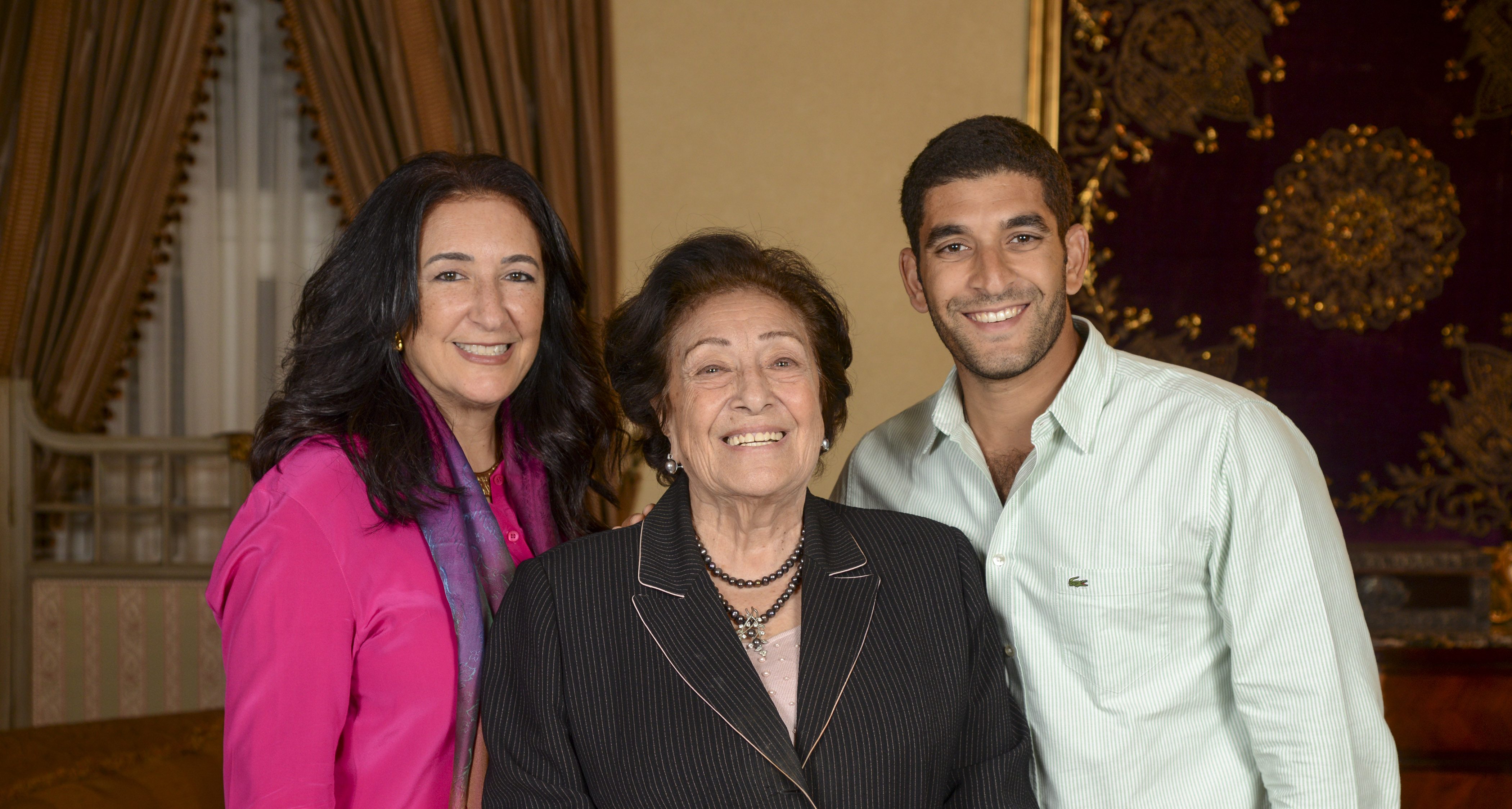
As AUC's centennial approaches, Hassan, Lotfi and Khalifa sat together in the living room of Hassan's home, surrounded by photographs and family mementos, and reflected on what this centennial means to them as a multigenerational family of AUCians.
 

Hassan, who was present for the University's 75th anniversary in 1994, said she can't believe the centennial is this year. "I have been at AUC for more than half a century. I never imagined that I would make it to the centennial, but I really feel happy to be here," Hassan said. "I feel like I am part of AUC and AUC is part of me."
 

The Start of a Legacy

Hassan, who first joined AUC as a graduate student to study solid-state science in the Department of Chemistry, still finds herself happiest when she is teaching. "I'm a little bit tired of walking across the new campus between classes," she said with a smile. "But still, I find myself in the classroom."
 

In 1964, only a year into graduate school, Hassan was appointed assistant instructor. "Maybe I was a good teacher or something. Omar knows," she laughed, gesturing to Khalifa.
 

When she graduated two years later, Hassan left Egypt to earn her PhD in geology from the University of Pittsburg, after which she returned to teach geology at AUC. In addition to being a celebrated scientist and prominent professor, Hassan is also co-chair of the Gender Advisory Board of the United Nations Commission on Science and Technology for Development, as well as secretary-general and a member of Egypt's National Council for Women since 2000. Elected to the Egyptian Parliament in 1979 and serving there until 1984, Hassan is currently chair of the Commission on Human Development and Local Administration in parliament. She was also named an honorary life member of the International Parliamentary Union. In Hassan's years of teaching, she has not only taught her own children and grandchildren, but her friends' children and grandchildren as well. She recounted with amusement the number of times students in her class, who were children and grandchildren of her friends, were too shy to introduce themselves as relatives of her friends. "I feel very happy when I teach the generations of my students," said Hassan. "I'm very proud of them."
 

Hassan said having her grandchildren in class taught her things she didn't previously know about them. "Like Omar, for example, he's very independent. I didn't know that before," Hassan said. "I learned that when he gets an idea, he will do it no matter what. He perseveres." 
 

Hassan recalled a time when Lotfi was in her class. She raised her hand and asked Hassan why she had received an incorrect mark on an exam when she believed she had answered every question correctly. 
 

"She came up to the podium and asked me to show her what was wrong on her exam," said Hassan. I told her, 'You see this? I couldn't read it.' When she turned to sit down, she said something, and the entire class laughed. Mother's Day was two days away, and, apparently, she mouthed to the class, 'I'm not getting her a Mother's Day gift.'"

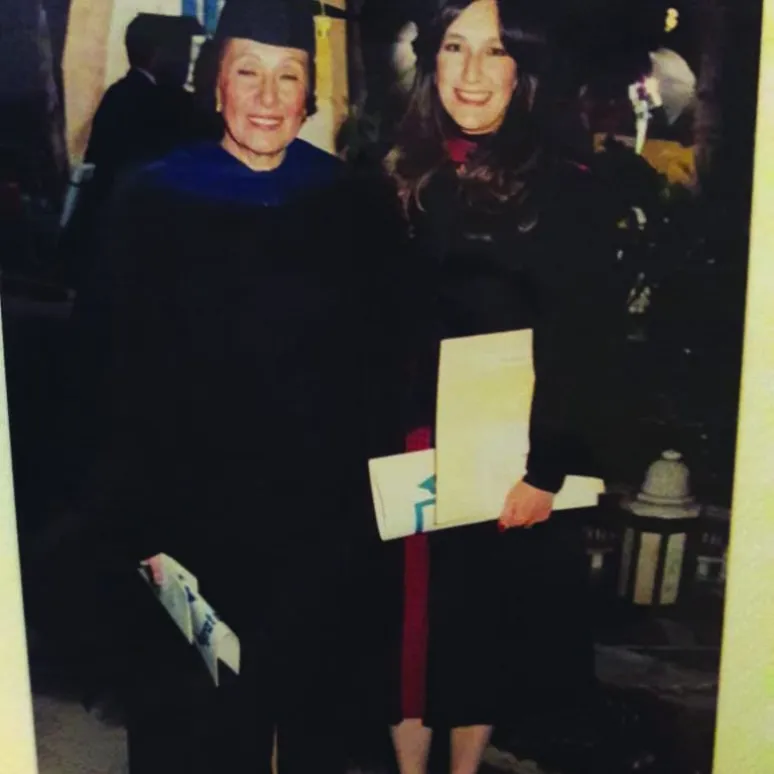
When she turned to sit down, she said something, and the entire class laughed. Mother's Day was two days away, and, apparently, she mouthed to the class, 'I'm not getting her a Mother's Day gift.'" 
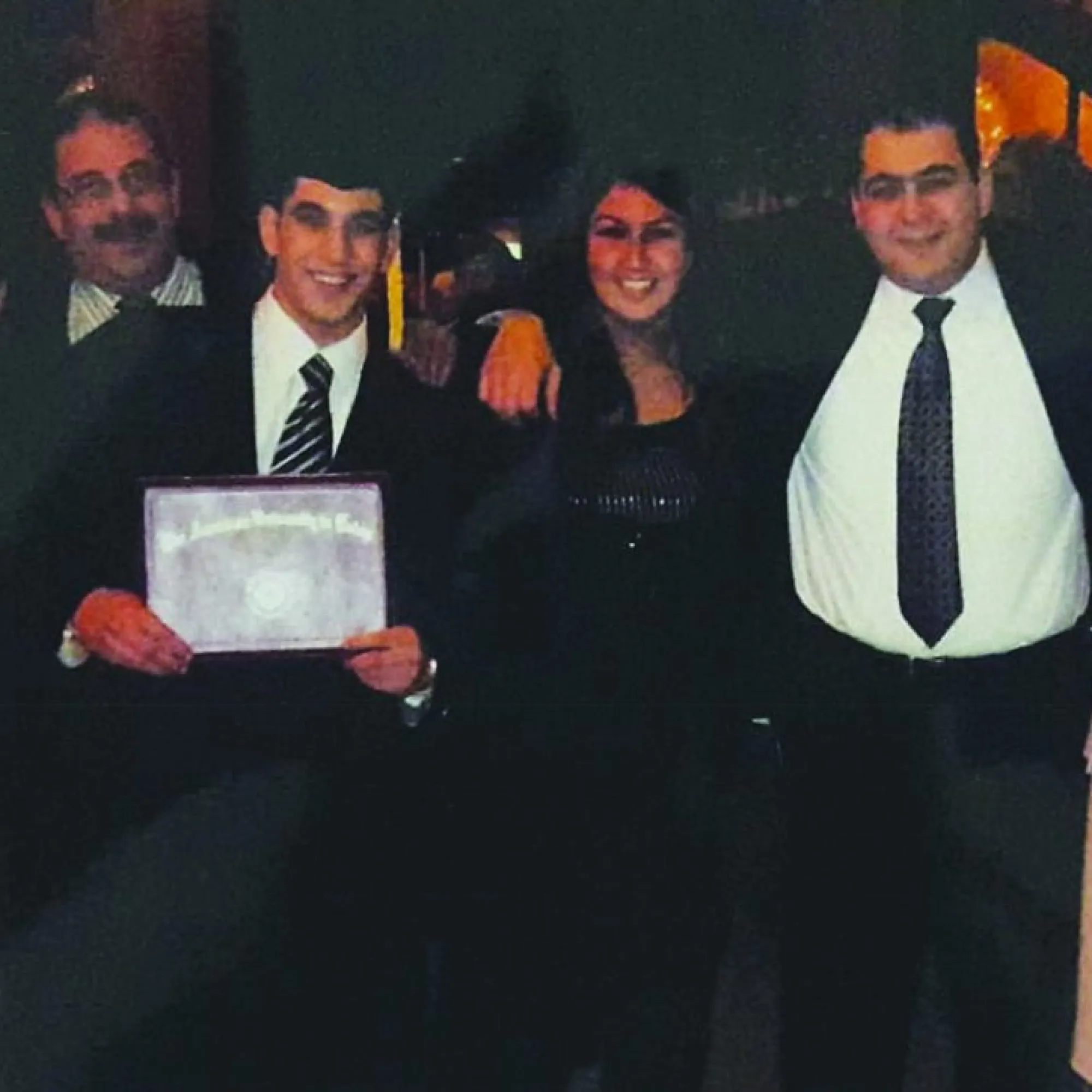
 

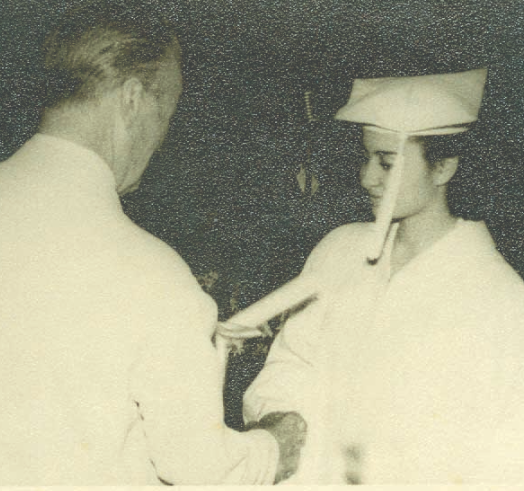
Professor Emerita Farkhonda Hassan (MSc '67) with her daughter Wegdan Lotfi '79, left; Lotfi with her father at her graduation; Omar Khalifa '09 at his graduation

Learning from the Best

After graduating from AUC's Department of Chemistry in 1979 and having her four children, Lotfi earned her master's in solid-state physics in 1991. A former member of the Suzanne Mubarak International Peace Movement and a former member of Egypt's International Economic Forum, Lotfi prides her family in their "respect for hard work." 
 

"I love teaching because it's in my blood," said Lotfi. "My kids appreciate work -- all of them. They all took courses with me, but they knew that they had to study." 
 

Lotfi tributes everything she learned about being a faculty member to her previous professors at AUC. "I remember any advice I was given," she reflected. "In all my life stages, I've had these beautiful professors. Everyone who taught me in the department helped me build character," said Lotfi. "I was shaped at AUC." 
 

Unlike their mother and grandmother, neither Omar Khalifa nor his two brothers, Khaled '04 and Youssef '17 chose the science route at AUC. At first, Lotfi insisted that her eldest son, Khaled, take science courses. To convince him, she arranged for him to meet with a particularly persuasive professor. 
 

"I left them together in her office for nearly an hour. When he came out, he told me, 'She's so kind. She convinced me to do what I want.'" Lotfi said, recalling her shock. "I asked him, 'What do you want?' and he said, 'I want to go into political science.' And that's what he did, and he started getting better grades and was happy." 
 

From that moment on, Lotfi decided to step back from her children's studies. "When it was Omar's turn, I told him, 'You do what you want,'" Lotfi said. 
 

As an active member of AUC's student body, Khalifa founded the Youth Alliance for Leadership and Development in Africa organization, was a member of the Student Union, served as the Master of Ceremonies for the Student Union Talk Show at Ewart Memorial Hall and was a top player for the University's water polo team. 
 

After graduating with a bachelor's in political science, specializing in international relations, Khalifa founded his own publishing and advertising company, Omedia, in 2009. Inspired by the employment fairs at AUC, Khalifa launched Shaghalni.com in 2015. He had a five-minute meeting to pitch the idea to the person who he says inspired him the most, Naguib Sawiris. The pitch resulted in Sawiris investing in the company. 
 

Though Khalifa describes himself as more business-oriented, he still took a class with his mother. He recalled in one of Lotfi's assignments, there was the option to either give a presentation on something small, write a paper or create a drawing. 
 

"I draw very well, so naturally, I picked drawing," said Khalifa. "I woke up in the morning before class, and in minutes, I drew a perfect solar eclipse. When I went to class and gave it to my mother, my friend told her, 'He just made that 10 minutes ago.' She knows I'm a good artist and told me I had to do the presentation instead. He ruined the plan," Khalifa said, as his mother laughed. 
 

Khalifa said the most important lesson learned after taking his grandmother's class was the meaning of integrity. "During lunch at her house, she wouldn't answer any of my questions regarding the course," Khalifa recalled. "Instead, she would tell me to visit her during office hours so I don't receive any extra treatment." 
 

A member of the Alumni Council and the AUC Fund committee, Khalifa hosts yearly employment fairs on the Tahrir Square campus as his way of "giving back" to AUC for fueling his ambition. "All of my ideas and dreams were created while studying at AUC," he said.
 

Making it Count

"Having a family of AUCians -- my son, my daughter, my in-laws and my grandchildren -- is really great," said Hassan. "I think we belong to the AUC culture. All of us."

As a faculty member, Hassan is most proud of her students because they learn how to navigate life while studying at AUC. "It is not just a degree. It is a way of thinking and living," said Hassan. 
 

Khalifa said AUC's impact on its students is evident throughout Egypt. "This is one of the oldest, most well-established universities in Egypt," he said. "Everywhere you go, even in the biggest companies you'll always find an AUCian on the decision-making team." 
 

"The University gives space for students to think out of the box," Lotfi agreed. "It encourages self-development and learning to the utmost." 
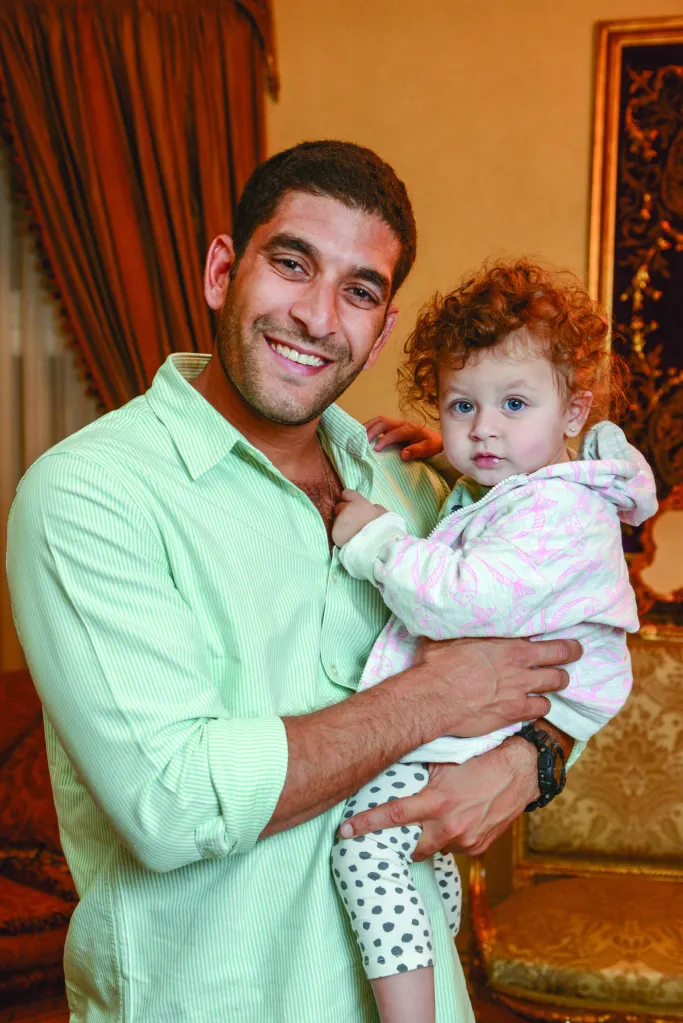
 

Omar Khalifa ('09) and daugther Carla, possibly a fourth generation AUCian?

Khalifa added that not everyone knows his family's relationship to AUC. "But when they know," chimed in Hassan, "They link everything," Khalifa finished. 
 

"Having a family of AUCians -- my son, my daughter, my in-laws and my grandchildren -- is really great," said Hassan. "I think we belong to the AUC culture. All of us." 
 

How would the family describe AUC? "Character-building," they agreed. 
 

"I see students entering as freshmen, and when I see them as seniors, they've grown into completely different people," said Lotfi. "It is really quite impressive. In four years, they change. They're more confident. They are better at everything -- all because of their time at AUC." 
 

As Lotfi spoke, Khalifa's 2-year-old daughter Carla wobbled from one chair to the next. "The fourth generation of AUCians!" Khalifa said jokingly, as everyone laughed. 
 

"AUC is in us. I mean, we are all AUCians," said Lotfi, while Carla steadied herself against her great-grandmother.

Three Generations of AUC Families
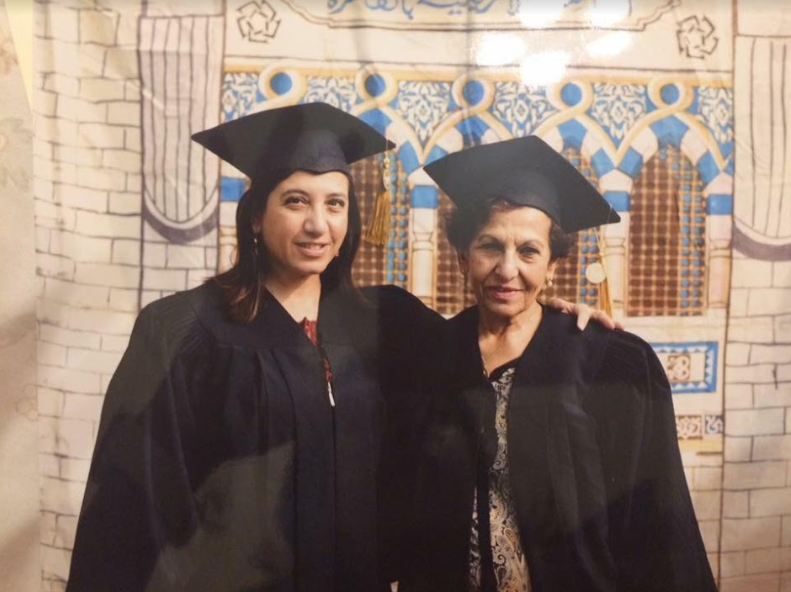
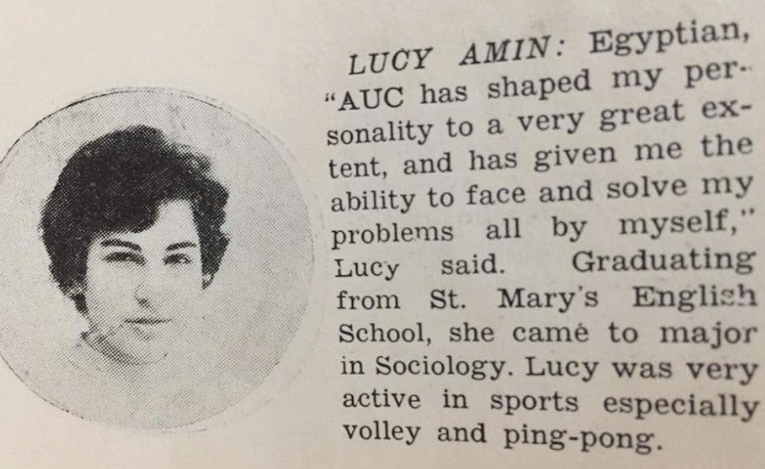
  • Lucy Amin '60 (right) with her daughter Nelly Ragai '89 at the 2016 homecoming in AUC Tahrir Square
  • Nelly Ragai '89
  • Ragai's late husband
    Teddy Tadros '88, '97
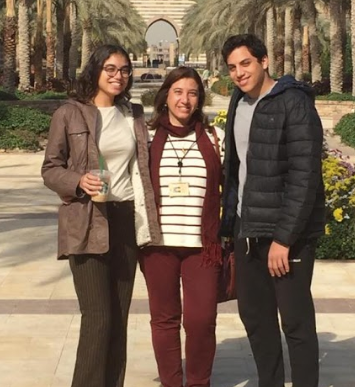
  • Ragai, manager at AUC's Yousef Jameel Science and Technology Research Center, with her son and daughter -- both AUC students
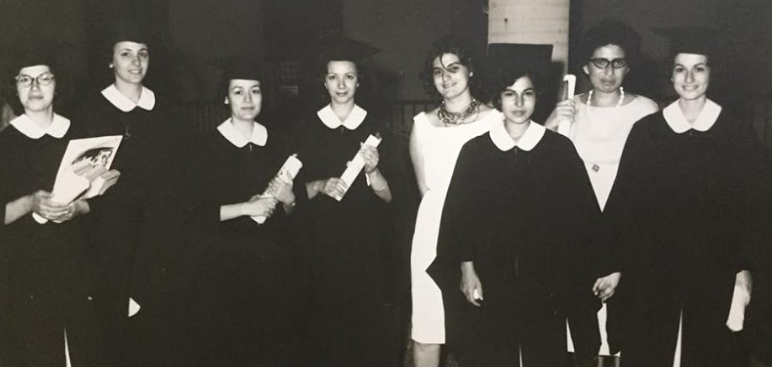
  • Lucy Amin '60 (third from right)

"We are a Jordanian-Saudi family that is proud of its AUCian roots, which go back to the year 1928, when our great uncle joined AUC. There are many more AUCian aunts, uncles and cousins in our family. It is the fond memories at AUC that our family takes back when we travel to our countries."

-- Rania Jabr (MA '90)
  • Grandmother Najwa
    Al Imam '58
  • Daughter
    Rania Jabr (MA '90),senior instructor II at
    AUC
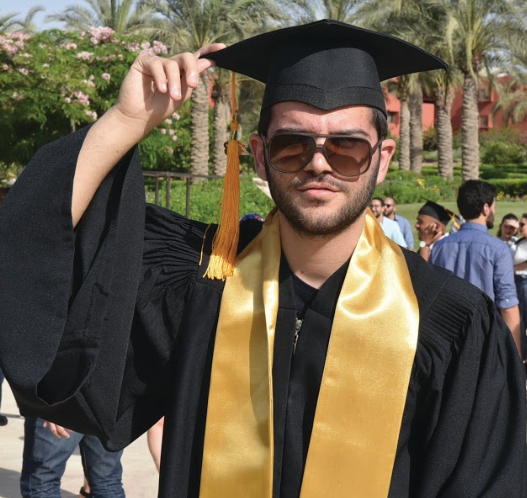
  • Grandson
    Bassel Al-Dabbagh '18

  • Grandfather Ahmed Shafic Abou Oaf (MA '77)
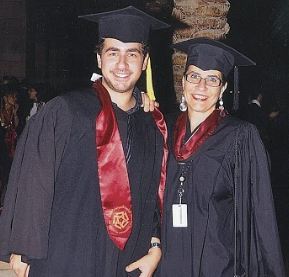
  • Daughter Mervat Shafic Abou Oaf '88, '02
    (right), professor of practice in the Department of Journalism and Mass Communication;
    with her son Adham Zidan '09, '14
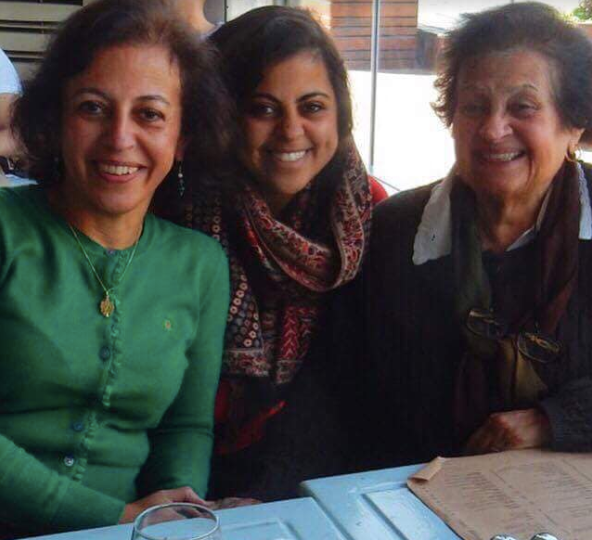
  • Grandmother Mary Dafashy '75 (right),
    mother Mona Makramalla '85 (left) and
    daughter Sara Meleika '11
 
Share

Commemorative Centennial Coin

Commemorative Centennial Coin
February 6, 2019
Students
<?xml encoding="UTF-8">

By Claire Davenport 

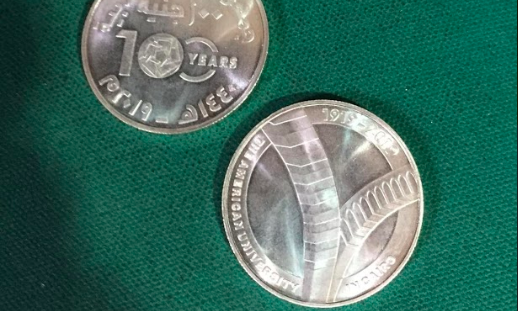
The Egyptian government has minted AUC's centennial coin, designed by five AUC students.
 

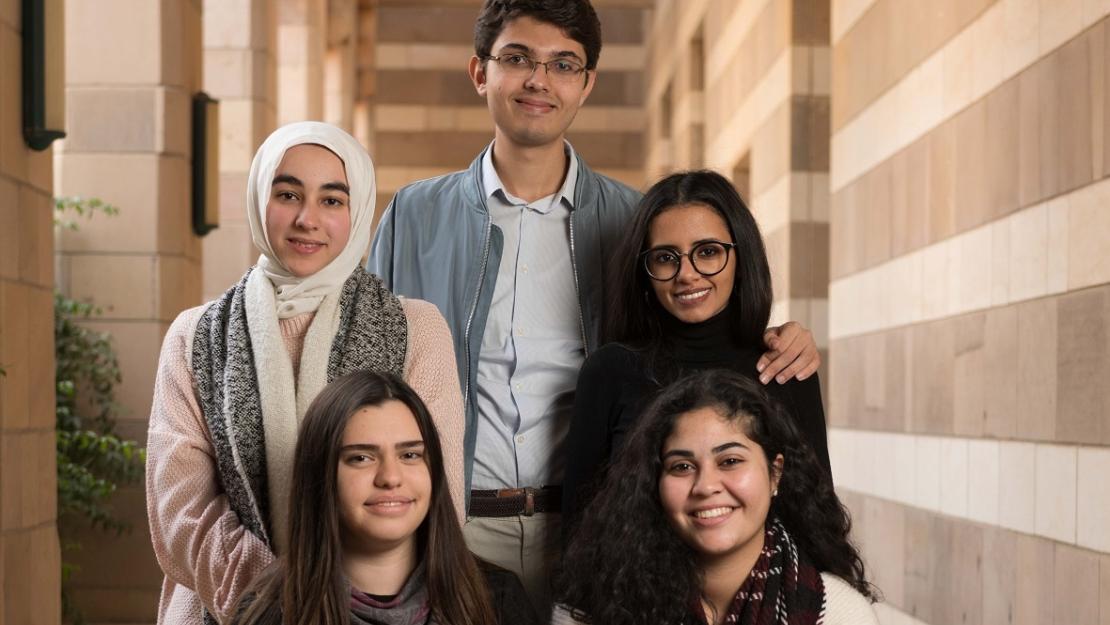
The student design team: Ahmad Khalil (back, center), Mariem Abutaleb (center, left), Mariam Ibrahim (center right), Lana Kurdi (bottom left) and Ingy Fawzy (bottom right)

This accomplishment was the culmination of a summer of work, research and brainstorming for graphic design students Ahmad Khalil, Ingy Fawzy, Lana Kurdi, Mariam Ibrahim and Mariem Abutaleb. Aiming to highlight the impact of the University's architecture on AUCians past and present, the minting of the coin finally made the group's vision a reality. 
 

To create a coin for AUC's centennial, the five students took part in a mentored workshop supervised by Nagla Samir, associate professor in the Department of the Arts and co-chair of the Materials and Collateral Taskforce for the centennial, and Ghalia ElSrakbi, instructor in the Department of the Arts. "They are the dream team," Samir exclaimed. "Ahmad and Mariam are seniors, Lana and Ingy are juniors and Mariem is a sophomore, so the team brought three-generation perspectives to the design." 
 

The team conducted extensive research before beginning the design process. Over the summer, they administered an online survey to determine what the campus meant to old and new AUCians. They then held multiple focus groups, narrowing down their designs until the two finalists were shown to President Francis Ricciardone. The final selection embodied what AUCians had expressed in the survey: that everyone related to AUC's architecture, specifically its idiosyncratic arches and portals. "We worked throughout the summer, mainly on research," explained Khalil, one of the student designers. "We went to the library and the archives, and this is where the design stemmed from. We wanted to base our design on AUC's architecture, so we looked at books about that and studied photos of the campus." 
 

For the students, it was very important that the coin would resonate with the AUC community. "This wasn't just a theoretical project; it was something that was going to be made," said Ibrahim, another student designer. "Your eyes and your professor's eyes are not the only ones that will see this. Everyone has to understand it, and it has to be of value for all. Architecture is the connecting dot between all the generations." 
 

Explaining what he hopes people would envision when they look at the coin, Khalil noted, "I hope they get a feel of the heritage of this institution and realize that's it's been there for a very long time."
 

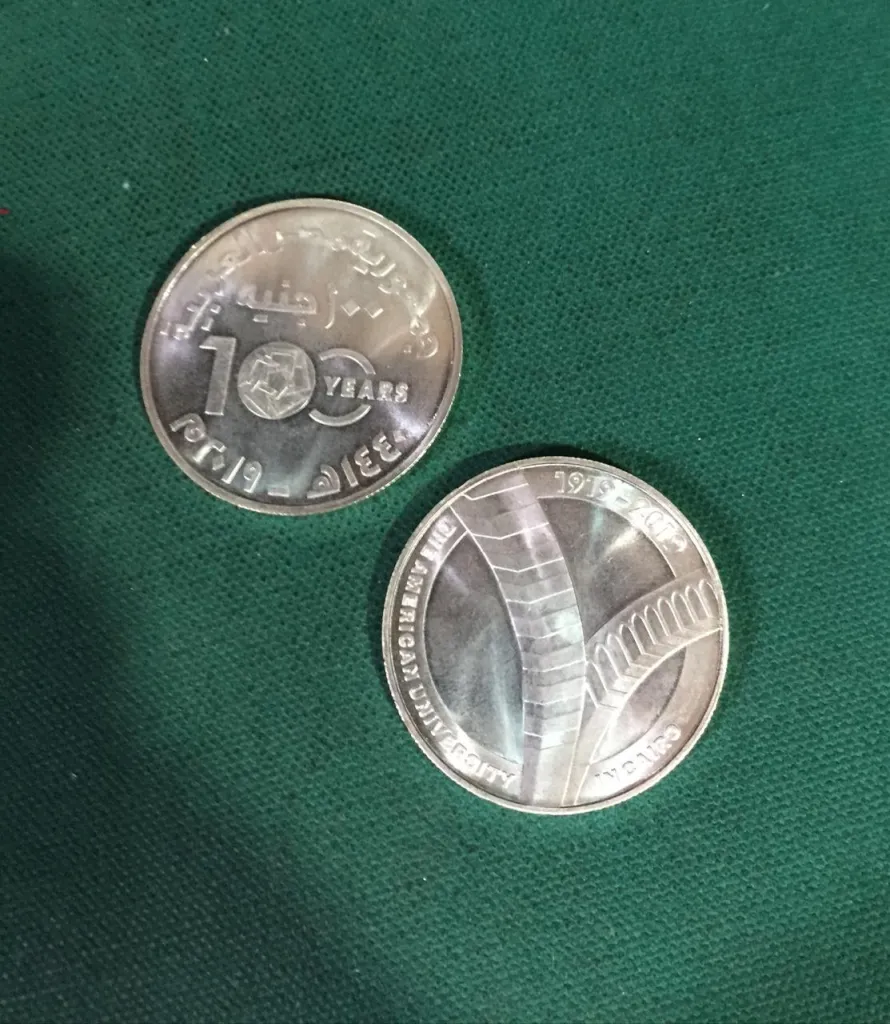
The final coin features two striped arches on one side, one slightly smaller than the other, bowing together to create an impossible bridge where they alluringly meet in the middle. "We picked the old and the new arches and morphed them together," Ibrahim said, explaining how they used a rendition of AUC's classic arch to connect the old with the new. It seemed fitting to ElSrakbi that the campus would be the inspiration behind the coin's design. "The campus is where everything happens, where people meet, where people study, and where faculty and students spend time together. The campus itself is a kind of time capsule," she said. 
 

Besides reflecting the values and history of AUC, the coin's design also carries symbolic weight. "The arches connect the past to the future, and the portals take on another meaning. They become a portal to the past, where 100 years ago, people walked through the first arched portal to AUC," Samir explained. 
 

Beyond the design, the five students who worked on the centennial coin also got exposure to the technical side of the design process. They had to make sure the coin's design -- including logo size, spacing and lettering -- all conformed to government standards. "Working on a coin is not something you get to do every day. It was cool because we got to see the technical part of it," said Kurdi, a student on the design team. Samir and ElSrakbi both believe that creating the coin and going through the minting process gave the students valuable real-world work experience. "It was the first time I produced something that would go out into the world; it's very meaningful," Khalil expressed. 
 

The students also designed a unique packaging for the coin. While it has not been finalized, the essential concept was to make the package interactive, with fold-out flaps containing information about AUC and 100 years of its events. "It's not designed to go into a drawer. It's designed to stand," Samir explained proudly. 
 

"The campus is where everything happens, where people meet, where people study, and where faculty and students spend time together. The campus itself is a kind of time capsule."

There will be both a silver and a gold coin for sale. The silver coins will be available for sale at the AUC Bookstores, while some of the gold coins will be given as gifts to donors and trustees. The rest will potentially be auctioned off. AUC ordered 1,000 silver coins and 20 gold coins. The coins will be sold for a bank set value. Samir hopes that AUC will always keep one gold coin, "perhaps in a time capsule or in the University Archives," she said. 
 

The coin is ultimately a celebration of AUC's 100 years of learning, growth and service in and outside of the University walls. "As well as commemorating this important occasion, these coins will help raise money for student-related causes and scholarships," explained Lamia Eid '82, '92, head of the Materials and Collateral Taskforce for the centennial.
 

"One hundred years is a big thing, so commemorating this event is really important," added Fawzy, a student on the team. 
 

As ElSrakbi explained, the coin is a perfect vehicle because it withstands time. "The coin as a medium has been there for so long, as an object to preserve the memory of an event that happens," speculated ElSrakbi. "By collecting it, you preserve this event for the future, but you are also trying to talk about the past."


Share

A Tale of Two Alums

A Tale of Two Alums
Dalia Al Nimr&nbsp;
January 1, 2017
Black and White Alums
<?xml encoding="UTF-8">

By Dalia Al Nimr | This story appeared in the July 2017 edition of AUC Today.

Born in 1946 in Ramleh/Jaffa on the Mediterranean shores of Palestine, Souhail El Farouki '68 immigrated to Egypt in 1948, when the Arab-Israeli war broke out. In 1963, he graduated from Victoria College in Alexandria, then moved to the United Kingdom to complete his A-levels. For El Farouki, things in life did not come easy.

"Having been forced to leave my homeland in Palestine, I can relate to the refugee crisis plaguing our world today," reflected El Farouki. "When I went to the UK, I worked there during my holidays -- as a farmer; as a wheelbarrow porter transporting luggage and cargo at Folkestone Harbour Railway Station; and as a kitchen helper in restaurants. Being exposed to all these different types of jobs motivated me to do well in my studies."

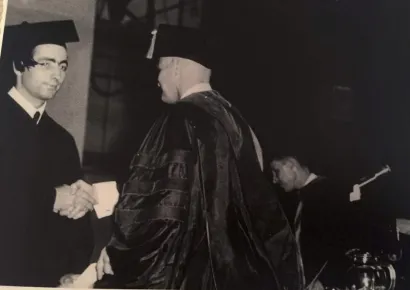
El Farouki receiving his diploma, shaking hands, in black and whiteEl Farouki graduated from AUC in 1968 with a bachelor's in chemistry.
 

Following in the footsteps of his father, Ghaleb El Farouki '33, Souhail El Farouki attended AUC, where he met his life partner Abla Leheta '69, who is originally from Port Said.

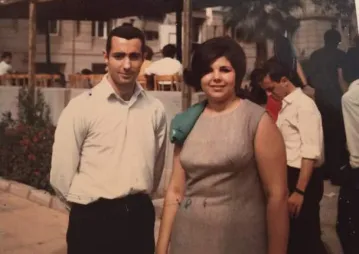
"I still remember the year -- 1964," recalled El Farouki. "We were on a freshman trip to Al Qanater Al Khayria. My camera ran out of film, but I pretended to take pictures of the scenic environment whereas my focus was to talk to Abla. When she asked me later about the photos, I never lied; I admitted that I had run out of film. There was and continues to be a lot of mutual respect between us."

For both El Farouki and Leheta, their University years were all about hard work and perseverance. With the close-down of her father's business in Port Said and Suez, Leheta found herself obliged to work as a part-timer at AUC's mail office and at an airline travel office to partially help support herself and finish her studies. Similarly, El Farouki overloaded himself with credit hours and took summer classes to graduate quickly in order to join the workforce and help his father. "AUC instilled in us the motivation and desire to work hard, make our lives worthwhile and be the least burden on our families," said El Farouki.

"AUC inspired us and opened our eyes to the fact that there are no privileges except through hard work and knowledge acquisition, whether you own a Ferrari or commute using a second-class bus ticket, whether you dine at posh restaurants or eat foul and ta'meya, whether you wear the same or different clothes every day. All students are equal at AUC, independent of background, social class or status. AUC gave us a different outlook on life and taught us not to be distracted by petty issues."

AUC was a home away from home for both El Farouki and Leheta. Not only did their siblings and relatives join AUC, but the University carried special memories for both of them: from Am Abdou who greeted them every day at the University gate to their favorite campus spots such as the cafeteria, Ewart and Oriental halls, the library and hostel to entertaining activities such as theatre performances, sports games and social events.

A couple stands smiling at the camera in a vintage photo.El Farouki and Leheta first met at AUC in 1964, and have been together ever since.
Even the "demanding professors, the tough graders," whom El Farouki and Leheta described as their favorite because they learned the most from them, were an unforgettable part of AUC. And of course, there are the extracurricular activities, which were not only fun, but a fertile learning ground outside of the classroom. These included El Farouki serving as a sports manager for the freshman class and as a social manager for sophomores, and running for the position of head of the AUC student body. Leheta was also chosen as one of the finalists in the Miss AUC competition. "Each of these activities taught us something new," said El Farouki. On one occasion, during an AUC trip to the American University of Beirut, their travel was partially funded by carrying items with them that were later sold in Lebanon.

After graduation, armed with their degrees -- a bachelor's in chemistry for El Farouki and a bachelor's in economics and political science for Leheta -- the two alumni were ready to venture into the real world. "AUC prepared us for the real world and equipped us with an eagerness to learn, which gave us the courage to get married and apply for graduate studies abroad," El Farouki noted.

Soon enough, El Farouki received an assistantship to pursue graduate studies at the University of Nebraska-Lincoln, where he received his PhD in chemistry in 1976. Leheta worked as a full-time librarian at the same university until she acquired her master's in educational administration. "We lived in low-income housing and used Salvation Army furniture," El Farouki said. "I used to hitchhike to the university until we were able to buy a second-hand car. I distinctly remember receiving a Teaching Assistant Award -- a $25 check -- in 1975 and taking my wife and young daughter, Roba, to a pizza parlor where I used to work for extra money."

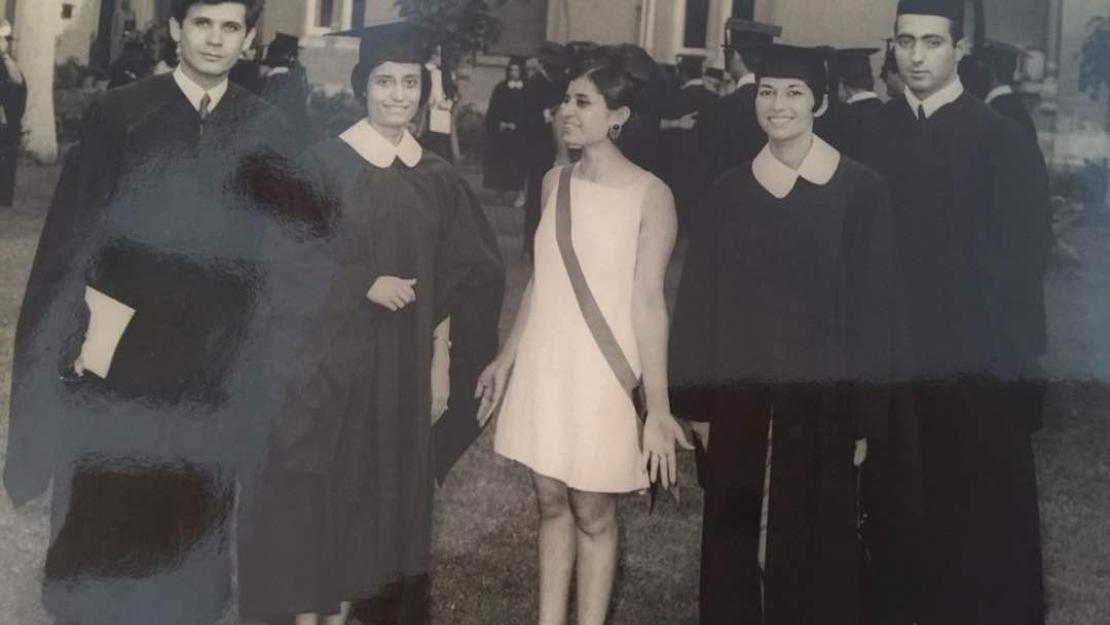
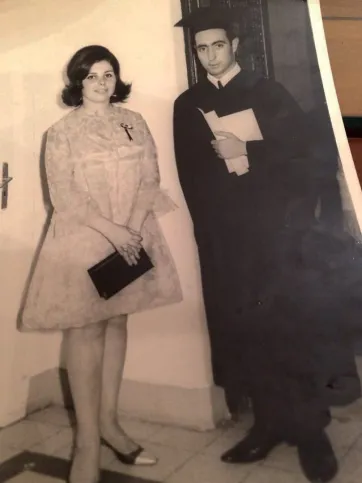
A young couple stands smiling at the camera in black and white. The man is in a graduation cap and gown, the woman in a nice dress.Leheta and El Farouki at his graduation in 1968, four years after they first met.
After graduating from the University of Nebraska-Lincoln, the married couple moved to Saudi Arabia, where El Farouki joined the Juffali family business. The group's managing partner, the late Sheikh Ahmed Juffali, husband of the renowned philanthropist and AUC Advisory Trustee Suad Al-Husseini Juffali, had plans to add Dow Chemical Company to the organization's diverse business activities. El Farouki was offered a job as a salesman to introduce Dow Chemical products into the market. Over the next four decades, El Farouki helped develop the Juffali chemical business into one of the largest, most diversified private sector chemical operations in the region. His achievements were cited in numerous publications, such as Growth Company: Dow Chemical's First Century and the late Ahmed Juffali's biography, Ahmed Juffali: A Life in Business.

Both El-Farouki and Leheta actively give back to their communities, be it contributing to local and regional charitable organizations, serving on the boards of trustees of local international schools, and developing a passion for the culinary arts by heading the International Chaine Des Rotisseurs Jeddah Chapter and the Gourmet Club Saudi Chapter

Although El Farouki recently left the Juffali group, he is still active in developing his family's coffee and roasted nuts wholesale and retail business and building a personal chemicals platform in Jordan.

Throughout their life journey, El Farouki and Leheta were keen to pass on a valuable lesson to their three children and nine grandchildren. "We have tried to implant in them the importance of working hard -- daily and over a period of many long years -- and contributing to others," said El Farouki. "All our children have been encouraged to have part-time jobs while studying at university. Even our grandchildren are active in fundraising, charity calls and serving in refugee camps. It is through both hard work and contributions to others that people, looking back, can appreciate and value all they have achieved."

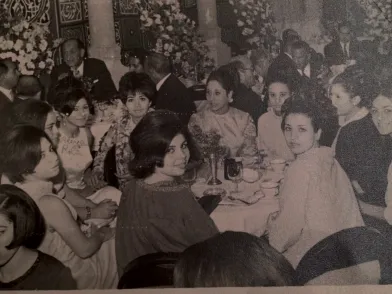
a group of smiling women at a dining table, dressed up, in black and white.Leheta with AUC classmates at a friend's wedding.

Recognizing their accomplishments, AUC presented El Farouki with a Distinguished Alumni Award in 1999 and Leheta with a Distinguished Alumni Volunteer Award in 2004. Becoming forever a part of the New Cairo campus, the married couple named the Abla Leheta '69 and Souhail El-Taji El-Farouki '68 Courtyard.

"When we look back at our beautiful journey, we are grateful for what we have achieved," said El Farouki. "AUC was a stepping stone for us and helped us get to where we are now. We hope today's students who pass through this courtyard will have an even better journey than ours."

He added, "Giving to AUC was also part of my father's legacy, when he established the Ghaleb El Farouki '33 Endowed Scholarship in 1985 to support Palestinian students. I am very touched by the notes I receive from the scholarship recipients and want to do more for this University. AUC has a great snowball effect: It teaches us to excel in everything we do, and employers look specifically for AUC graduates because they have proven themselves in the job market. Then these employers, many of them big corporations, give back to AUC because of their gratefulness to it for producing such fine graduates."

To these fine graduates, El Farouki and Leheta advise: "Life is short. Live every moment. Work hard. Stay in touch with your classmates. Treat people with kindness, modesty and respect, no matter how much knowledge you have. This is the secret recipe for success."


Share