Home page
ع Search AUC

AUC Students Win in Mechanical Engineering Competition

team
May 22, 2023

Two AUC students won an Elevator Pitch competition at the American Society of Mechanical Engineers EFx (e-fest) Cairo 2023, which took place at the New Cairo campus. Mechanical engineering majors Zahwa Kortam and Abdallah Sabah placed first and second, respectively.

The competition required contestants to imagine themselves as a lead researcher in a prestigious engineering department who needs to convince an investor in less than 90 seconds to fund their project on reducing carbon dioxide emissions. 

“I learned that life really does give you 90 seconds and that’s it,” said Kortam. “No one has time for the 20-minute presentations we would perform in school. We must be able to build our communication skills and technical understanding enough to sell in just two minutes. Through this experience, I got the chance to attempt that firsthand and it definitely won’t be my last time.”

Describing the competition as “exhilarating,” Sabah said, "I had the privilege to connect and network with like-minded individuals from around Egypt and felt proud to be part of the hosting University. It was definitely challenging to have a purely technical pitch in 90 seconds, but the support of the ASME team overall helped me develop this new key skill."

The first in Africa and largest in the MENA region, ASME EFx brought together young and aspiring engineers across Egypt to learn, compete and network with their peers and industry leaders under the theme of "climate crisis and sustainable development." Salah El Haggar, professor in the Department of Mechanical Engineering, presented a keynote speech on sustainable development. The conference also hosted panel discussions and other competitions, such as the Green Energy Spirit contest, which required teams to design and build remote-controlled vehicles powered by solar and wind energy.

group of people
Share

Shark Attacks: Causes and Concerns

shark

A recent shark attack in Hurghada, Egypt, that resulted in the death of a Russian national has prompted widespread safety concerns among Egyptians and tourists alike. News@AUC spoke with Rania Siam, professor in the Department of Biology, and Lina El Sayed Aly, marine biology student and Red Sea researcher, about why these attacks happen and what can be done to prevent them. 

Abigail Flynn
June 21, 2023

Do we know why this attack happened?

Siam: Shark attacks can either be provoked or unprovoked by humans. The provoked shark attack occurs when the human attempts to touch the shark in some way. I have limited information about this particular incident besides the circulating videos, but it appears as an unprovoked shark attack on a swimmer.

Are unprovoked attacks common?

Siam: According to the 2022 Florida Museum of Natural History’s International Shark Attack File report, unprovoked shark attacks in swimmers are more common than provoked attacks, yet are declining worldwide.

Why would a shark attack a human if we aren’t a part of their natural diet?

Siam: The reason for a provoked shark attack is simple: The shark is using an aggressive self-defense response to a perceived human attack. The reasons behind unprovoked shark attacks are still not totally understood, but one theory is mistaken identity. 

What is mistaken identity theory?

Siam: According to this theory, sharks may occasionally mistake humans for their natural prey, such as pinnipeds (seals or sea lions). This misidentification can occur due to factors like visual similarities or the way humans move in the water, particularly when engaging in activities like surfing. Surfers, for example, are known to be at a higher risk of shark attacks by certain species, such as white sharks, due to their resemblance to pinnipeds in the water. 

Do humans have any influence on shark behavior?

Siam: Overfishing significantly impacts shark-human interaction because it can lead to a decline in shark populations, cause changes in the behavior and distribution patterns of sharks, deplete the populations of their prey species, and reduce habitat quality and overall ecological degradation. These combined lead to an imbalance in the food chain and ecosystem disruption and an increase in the likelihood of shark-human interactions, including instances of accidental or mistaken encounters. Additionally, discarding food in the water can cause problems. 

How does discarding food affect the sharks?

El Sayed Aly: Research has shown that sewage and organic matter dumped from boats can trigger the sharks' feeding behavior. The sharks seem to think of divers nearby as competing with them for this potential meal. 

Siam: This article discusses discarding food in a marine ecosystem which can create a concentrated food source in the water, which may lure sharks closer to human-populated areas. Note that when sharks encounter an abundant and easily accessible food source, they may exhibit changes in their natural behavior. 

Why was the shark from the Hurghada attack embalmed?

El Sayed Aly: From what I understand, the shark was embalmed and the organs were conserved in order to do more research on the specimen as there is a severe lack of research on sharks in the Red Sea. 

This is the second shark attack in Hurghada in the last year. Are these attacks a sign of a growing trend or just isolated tragedies?

Siam: It is difficult to make the assumption that there's a growing trend without appropriate studies. It is likely that more studies and more reporting and publicity on shark attacks are occurring.  It is reported that the average number of unprovoked shark attacks is less than 80 worldwide, so it is quite small when you compare this to the number of swimmers or divers. 

How many deaths are shark attacks responsible for?

Siam: Shark attacks are responsible for only one in over 4 million deaths annually, compared to death from heart disease, one in five; or car accidents, one in 84. Yet, when it happens it is a tragedy and hence causes such a panic.

Is there anything we can do to  prevent these attacks?

Siam: The International Shark Attack File published by Florida Museum has advice for swimmers, such as not swimming with a bleeding wound, and advice for divers, such as backing up against reefs and avoiding highly contrasting swimwear to reduce shark attacks. 

Governments can work to improve their shark management. 

What do you mean by shark management?

Siam: The idea behind shark management is to decrease shark-human interaction, and hence shark attacks, while protecting sharks and other marine animals. Surveillance and detection, education and community awareness, professional deployment of nets and shark listening stations are different management strategies to minimize such incidents.     

Could you give me an example of one of these strategies?

Siam: In New South Wales, Australia they have implemented a "shark meshing" program, where nets were placed on more than 50 beaches to reduce the chances of shark-human interaction. This measure has been proven to decrease the incidence of shark-human interaction (attacks) in Australia. Another option is establishing a “Coastal Shark Management Zone.”

El Sayed Aly: Training for boat captains and skippers working in shark sites about proper sewage disposal and fishing techniques can help reduce the human impact on shark feeding behavior.

What is a coastal shark management zone?

Siam: It is a type of human-wildlife conflict mitigation, where designating areas and measures are put in place to minimize shark-human interactions, particularly in areas with high tourism or recreational activities. This may involve as described above monitoring and surveillance programs, public awareness campaigns, or implementing exclusion zones. For sharks, this would be considered a coastal shark management zone. 

Could these measures stop shark attacks completely?

Siam: There are no programs that can eliminate shark-human interaction, but these measures will reduce the risk of an interaction.

Share

AUC Student to Join First Cohort of Landmark Scholarship Program in Canada

May 8, 2023
Headshot of a smiling female

Mechanical engineering undergraduate student Reem Mahmoud is one of 30 global recipients of the McCall MacBain Scholarships at McGill University in Montreal, Canada. The scholarships are the result of a landmark C$200 million gift (about E£4,4 billion) in 2019 by John and Marcy McCall MacBain, the second-largest single donation in Canadian history.

Designed to encourage purposeful leadership, the McCall MacBain Scholarships enable students to pursue a fully funded master’s or professional degree at McGill, while participating in mentorship, coaching and a leadership development program.

“I was overwhelmed with joy, gratitude and disbelief,” said Mahmoud. “They had to repeat the announcement twice as I couldn’t believe it. I was in my university’s dorms so I called my mom and ran up to my friends to tell them. Everyone was cheering loudly.”

Mahmoud is the first student from Egypt to earn this award. She underwent a rigorous seven-month selection process, including a final round of interviews in Montreal.

“The whole experience was very rich and surreal. I had an amazing chance to get to meet each of the finalists and each was very inspirational in their own way,” said Mahmoud. “It’s amazing how much this experience immersed us in the McCall MacBain Scholars community and Montreal as a whole. I’m very grateful for how supportive and warm everyone was, including the McCall MacBain scholars, from the very moment we landed in the airport.”

Each scholar was chosen based on their character, community engagement, leadership potential, entrepreneurial spirit, academic strength and intellectual curiosity.

Mahmoud is studying mechanical engineering, an unusual choice for women in her hometown, at the American University of Cairo. She organizes campus-wide events for the student life office, oversees marketing for a charity club, and helps run weekly activities for children at local orphanages. Mahmoud also served as the human resources executive of the Institute for Electrical and Electronic Engineers student chapter and, as an engineering intern and project leader at a manufacturing plant, worked with her team to reduce line stops and interventions. Her academic interests include aerospace mechatronics and drone technology and she will pursue a master’s degree in mechanical engineering at McGill.

“The scholarship represents hope and a wide-open floor for enabling change,” she added. “It gives sincere guidance to help each one of us navigate their own unique pathways. I wouldn’t have been able to pursue my dream of graduate studies without the generous support provided by the McCall MacBain Scholarships. And with its leadership focus, I’m sure I’ll better apply what I learn with a community-oriented perspective and a keen eye for global impact.

“Reem’s selection is a tribute to the time and energy she has put into improving the lives of others,” said Natasha Sawh, dean of the McCall MacBain Scholarships. “Our volunteers looked not only for academic strength, but for leadership qualities like integrity, kindness, grit and an ability to motivate a team to address tough challenges.”

To recognize additional talent, the McCall MacBain Scholarships and McGill University also offered 96 entrance awards ranging from $5,000 to $20,000 each to top candidates who were not selected for the cohort. Altogether, this year’s 126 scholarships represent an estimated commitment of nearly $3.3 million in tuition and living costs alone, which will be complemented by mentorship and leadership development programming. Applications will open in June 2023 for September 2024 admission.

Share

Supporting Startups: AUC Hosts First Afretec Entrepreneurship Conference

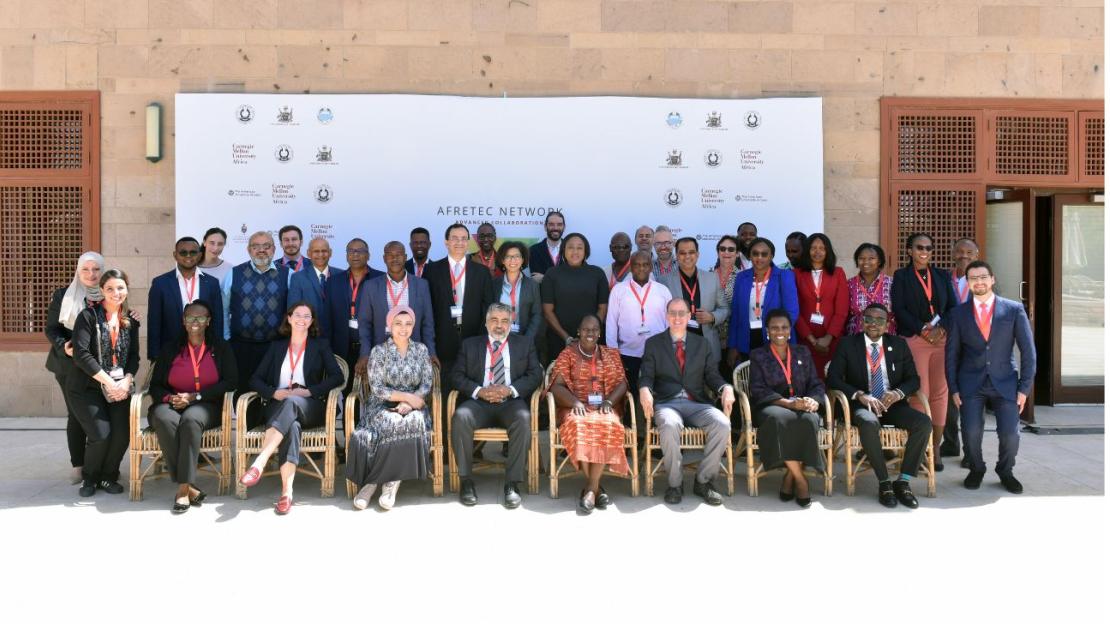
The attendees of the conference pose in a group shot on campus.
Abigail Flynn
May 8, 2023
The attendees of the conference pose in a group shot on campus.

Entrepreneurship is a key component of Africa’s economic progress, but gaps between research, investing and implementation may hinder a startup’s success. AUC assisted in filling these gaps by hosting the first entrepreneurship workshop of the Afretec Network, an international organization that aims to encourage digital growth through the collaboration of higher education and the private and public sectors throughout Africa. 

The event brought together the six member universities, business owners and policymakers to develop a plan to support digital transformation through innovative startups.

“The workshop’s objective is to support programs that will improve inclusion, alleviate poverty, create startups and jobs and generally improve the economy,” stated Yehea Ismail, chair of the conference and professor and chair of the Department of Electronics and Communications Engineering. “We are trying to create a new and dynamic Africa.” 

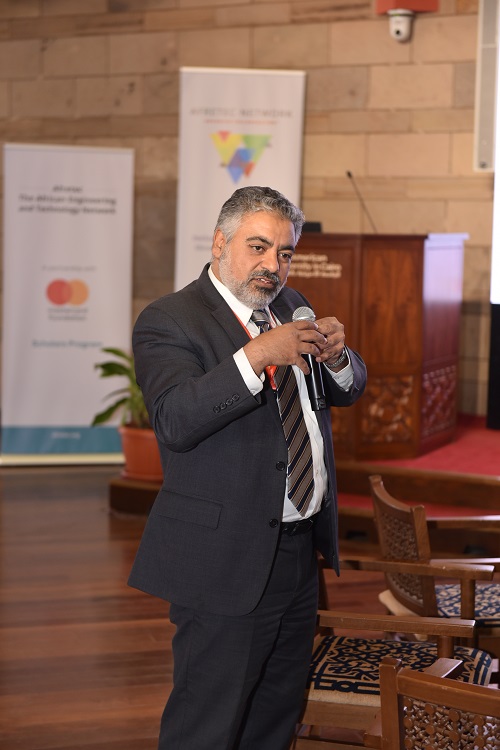
Professor Ismail stands and presents at the conference, speaking into a microphone and gesturing with his other hand

The Afretec Network, founded by Carnegie Mellon, features three pillars: teaching and learning, knowledge creation and entrepreneurship. As a member university, AUC is involved in all three pillars of digitalization. Under Ismail’s guidance, the workshop aimed to develop the entrepreneurship pillar’s action plan for the coming years, including the budget for proposed projects, with funding provided by the Mastercard Foundation.

Venture capital leaders, government officials, United Nations representatives, thought leaders from six African countries and prominent successful entrepreneurs came together during the event to share unique insights on the ways universities can become more involved in the creation of startups.  

“Entrepreneurship is a tricky phase for a university,” explains Tim Brown, director of research and professor of engineering and public policy and electrical and computer engineering at Carnegie Mellon University Africa. “Universities know how to teach and how to research, but their role in incubating startups and accelerators is less clear. We want to help universities identify where they can be most impactful, in addition to funding innovative products.” 


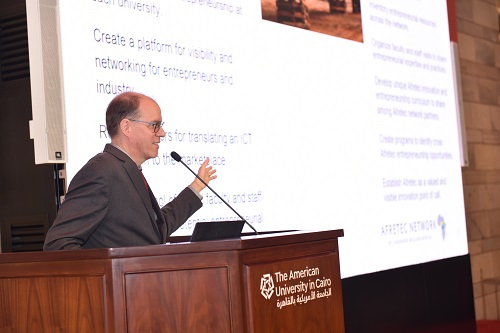
Tim Brown presents on stage, standing behind a podium with a presentation screen behind him to his left.

Africa faces unique economic and structural challenges, which this workshop aims to address by encouraging digital transformation. According to Ismail, most investment projects in Africa focus on high-tech projects, which are typically software apps that offer quick solutions using pre-existing systems, like a food delivery app collaborating with pre-existing restaurants. These high-tech projects are attractive to investors because they require less research and offer quicker returns, but Ismail suggests that Africa needs deeper technological developments. 

“A high-tech application could monitor your water quality and tell you if you’re at risk for disease, but a deep-tech project could fix the water processing and distribution system at the source,” Ismail says. “High-tech projects treat the symptom; deep-tech projects treat the cause.”

Deep-tech projects develop slowly, requiring significantly more research and time before the investments start paying off. While Afretec will fund both high-tech and deep-tech projects, the emphasis on deep-tech will allow leading research universities like AUC to contribute to both the science and business sides of these startups on a more feasible timeline. 

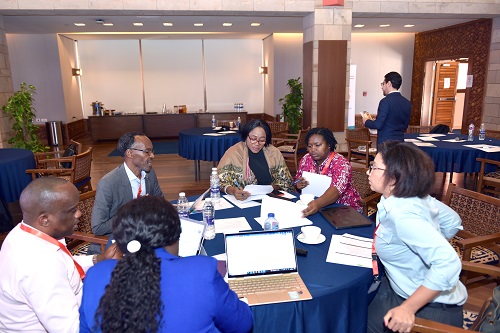
A group of workshop attendees collaborate at a table at the conference.

In addition to research and development, the workshop also invited speakers from the private sector to offer their perspective. Deji Macaulay is the CEO of Truthware Solutions, which offers assistance in digital transformation for the Nigerian government, including the insurance, transport and health industries. As an investor from the private sector, Macaulay offered an important connection between academic and private organizations.

“My goal was to show how universities can become more involved in the ecosystem of the private sector,” Macaulay states. “Universities are very good at inventing things, but true innovation requires these creations to be implemented in the market, which is why connections to the private sector are key.” 

AUC is well-positioned to facilitate this connection due to its longstanding relationship with research, business and government. 


“AUC is a leading institution in entrepreneurship in Africa because there is a broad environment of support and interest from the highest levels of the government and the institution,” says Nithaya Chetty, dean of the Faculty of Science and professor of theoretical and computational physics at the University of the Witwatersrand, Johannesburg. “Egypt is facing difficult conditions for development, but I believe this has spurred the Egyptian people and government to be more innovative.” 

Each country in Africa faces a unique set of challenges in its development, and Afretec aims to provide the platform for these countries to collaborate, from Egypt to South Africa. 

“Entrepreneurship has been considered as one of the most essential solutions to the three-pronged challenges, poverty, unemployment and inequality, of most African countries,” explains Karim Seddik, AUC’s Afretec network coordinator and professor and associate dean for graduate studies and research in the School of Sciences and Engineering. “The intelligence, creativity, knowledge and technological skills of African entrepreneurs are crucial to meet the continent’s development objectives of a sustainable and more equal future.”

Share