Home page
ع Search AUC

Transforming Dirty Water into Clean Energy
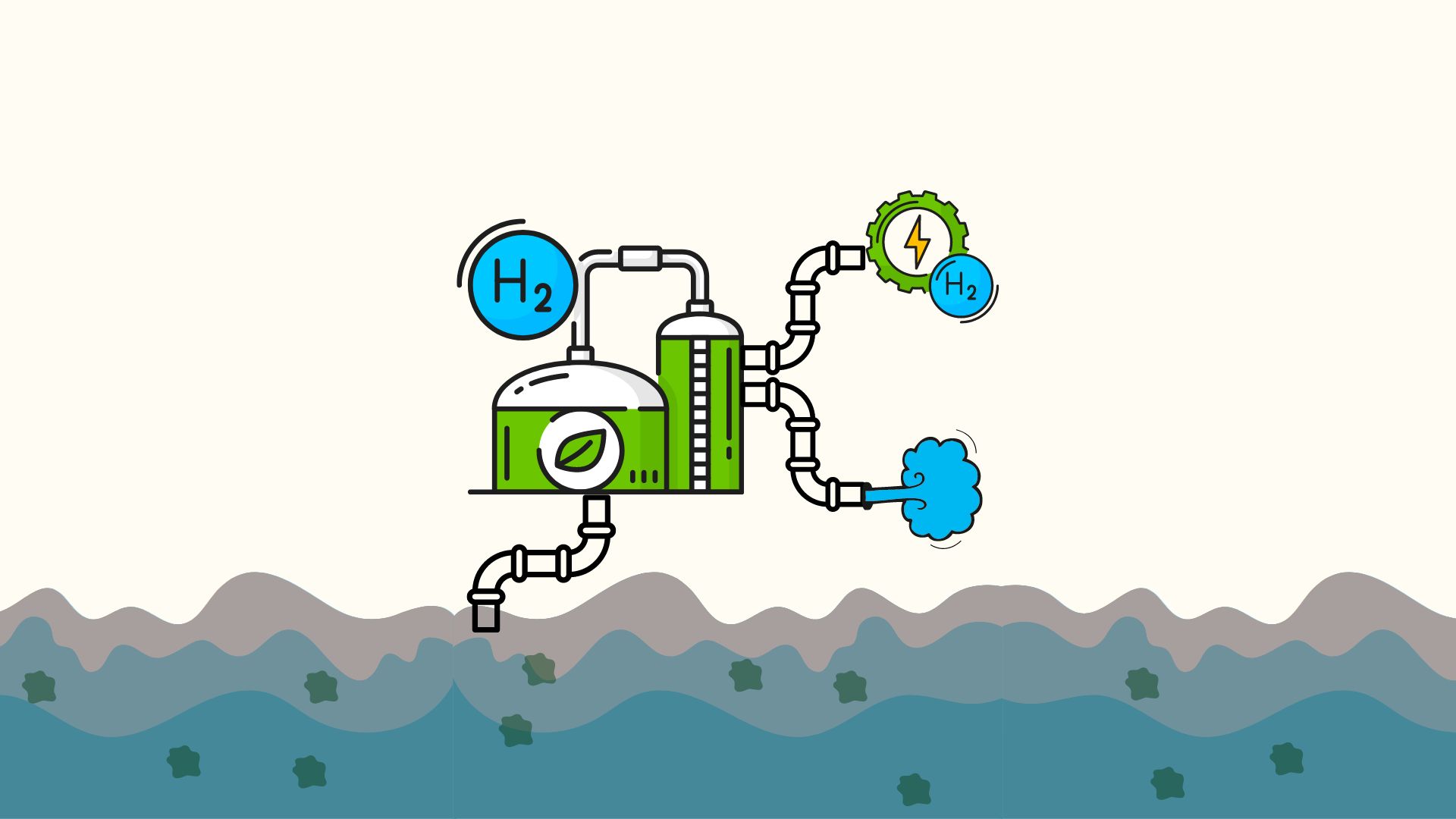
A graphic showing how electrolysis works. On the bottom, a graphic of water, tinted brown with green spots. The water is pulled up through a pipe to two green buildings representing the electrolysis. Two pipes connected to the building pipe out green hydrogen, shown as green lightning with a blue H, and bright blue, clean water.
Abigail Flynn
May 2, 2023
A graphic showing how electrolysis works. On the bottom, a graphic of water, tinted brown with green spots. The water is pulled up through a pipe to two green buildings representing the electrolysis. Two pipes connected to the building pipe out green hydrogen, shown as green lightning with a blue H, and bright blue, clean water.

A bolt of energy rattles the bonds of a water molecule: H2O. The links between the molecule begin to snap as the oxygen and hydrogen particles are pulled to separate compartments. The hydrogen molecules are collected and pressurized until their gaseous form transforms into a liquid, the process guiding these powerful particles to their new life: green energy. This process, called electrolysis, has existed for several years; now the goal is to expand its application by producing green hydrogen and clean water simultaneously.
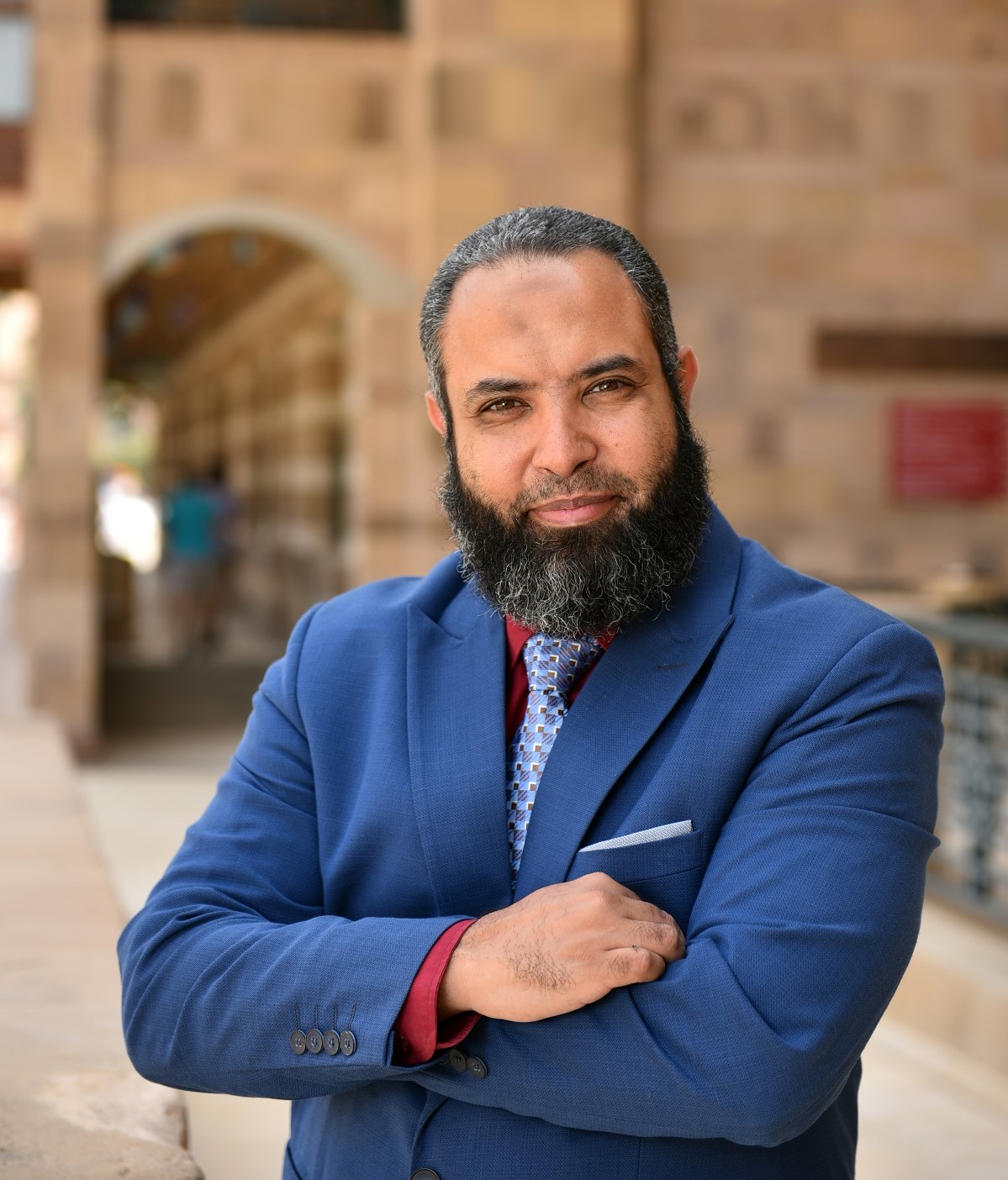
El Sawy stands with his arms crossed on campus, looking at the camera while slightly smiling. Ehab El Sawy, assistant professor in the Department of Chemistry, recently received funding from Egypt’s Academy of Scientific Research and Technology to pursue this endeavor. 

“Traditional forms of green hydrogen production utilize clean water in their process. This is more expensive and inefficient; clean water should be prioritized for necessities like drinking,” El Sawy explains. “Our proposal is to utilize wastewater and salt water to produce the hydrogen energy in a way that generates clean water as a byproduct.”

This solution is a two-for-one deal. A small village with a contaminated lake could use this new technology both as an energy supplier and as a way to make its water safe for drinking. 

But why green hydrogen?

“It has local and global benefits,” El Sawy says. “Right now, most of our energy comes from fossil fuels that produce toxic gasses like carbon dioxide, sulfur oxides and nitrogen oxides — all of which are an environmental disaster. Green hydrogen requires energy to create, so making it ‘green’ means ensuring the source of energy for the electrolysis is renewable, like wind, solar, geothermal, or tidal sources.”

Green hydrogen has become a popular alternative to fossil fuels internationally over the past two decades, with buses, trains and cars running on this climate-friendly alternative from the United States to Japan. In addition to its liquid form, which can be pumped like traditional gas, green hydrogen can also be put into fuel cells, similar to batteries. In the future, these fuel cells may be able to power houses and buildings as a replacement for power grids. 

This climate-friendly energy is perfect for Egypt. “Here, we don’t have an abundance of fossil fuels like the Gulf region or lithium for lithium-based batteries like Australia,” El Sawy explains. “What we do have is plenty of sun and salt water.”

This project is interdisciplinary: El Sawy along with Nageh Allam, professor in the Department of Physics, use their expertise in electrochemistry and materials design to refine the compartments that produce the hydrogen through electrolysis so they can function at max efficiency. Meanwhile other AUC faculty, like Ahmed El-Gendy, professor and director of the environmental engineering graduate program, and Anwar Abd ElNaser, assistant professor in the Department of Chemistry, study the water treatment and desalination system. El-Gendy and Abd ElNaser monitor bacterial growth on electrodes, desalination efficiency and the physics of the molecular movements, in addition to exploring the benefits of this new technology on public health. 

AUC students are also involved in the process. Undergraduate and graduate research assistants help develop the materials in the lab throughout the school year and summer. Recent PhD graduates are also funded in the lab, offering them the opportunity to conduct research while attending international conferences and workshops.

“It has been a privilege to work with such a collaborative team,” El Sawy says. “Our project is still in the initial stages, but with more funding and research, I believe we can turn this design into a reality.


Share

Ramadan from the Heart of Cairo

Abigail Flynn
April 3, 2023
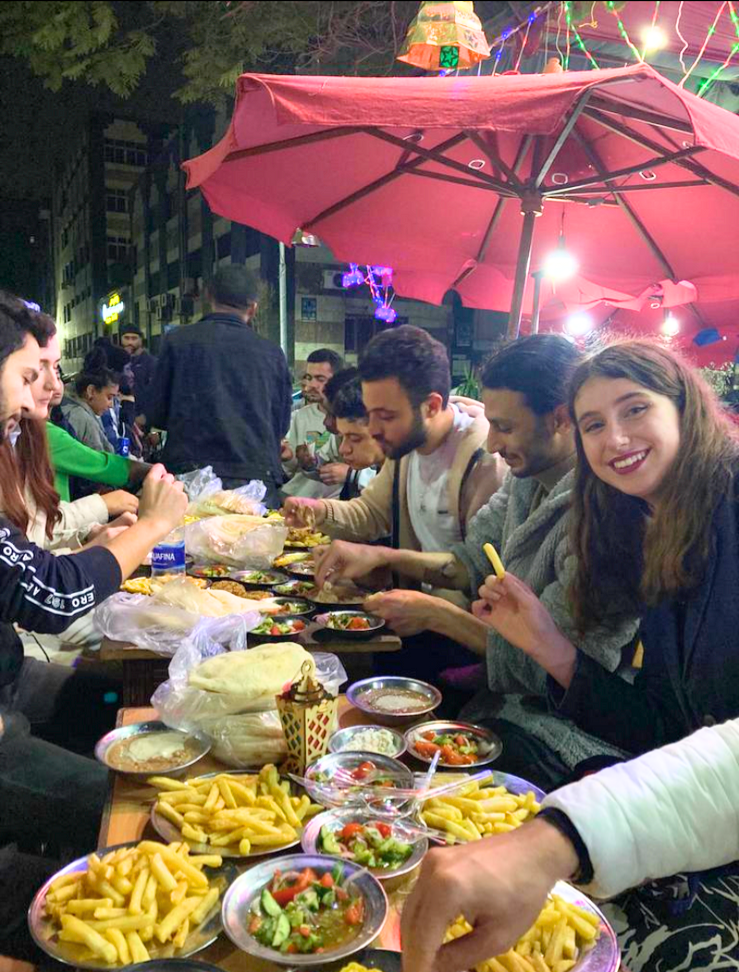
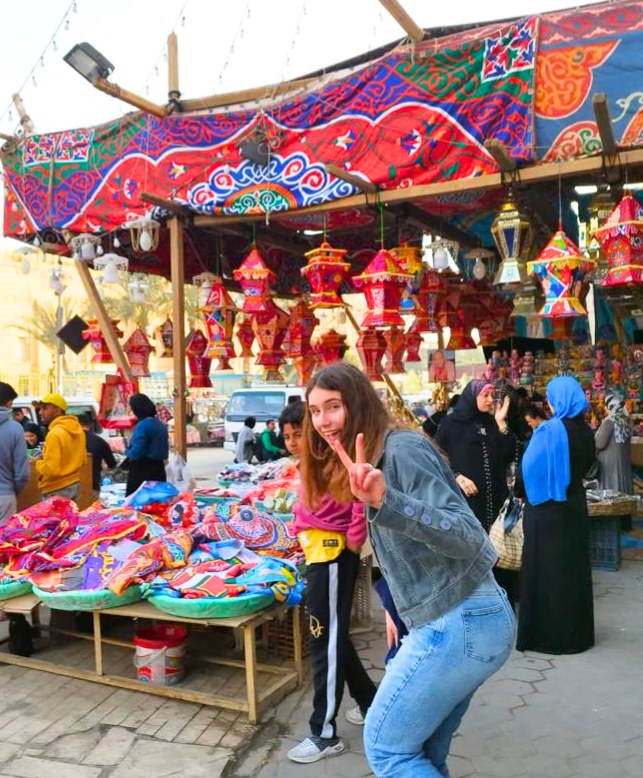
Three photos of Carere placed in a line. Carere sits at a table in the street with Egyptian food in front of her, sharing suhoor with her neighbors. Carere smiles and poses with a peace-sign in front of a shop selling lanterns in downtown Cairo. Carere smiles and stands next to a mascot of a Ramadan character near Talaat Harb, holding fresh strawberry juice.

International student Sara Carere has never experienced a month quite like Ramadan in Egypt. Living in wust el balad, or downtown Cairo, Carere has fasted with friends from Assiut, eaten suhoor on the street with her neighbors and watched hours of musalsalat (Ramadan TV series). 


Carere sits at a table in the street with Egyptian food in front of her, sharing suhoor with her neighbors
Carere shares suhoor 
with her
neighbors 

“I was most surprised by how special and collective fasting feels,” Carere says. “Back home in the Netherlands I had some Muslim friends who fasted, but seeing Ramadan on a country-wide scale is incredible.”

Carere smiles and poses with a peace-sign in front of a shop selling lanterns in downtown Cairo
Carere visits a
lantern shop
​​​​​in Sayeda Zaynab

Carere fasted the first two days of Ramadan to understand what her Muslim friends and neighbors were feeling firsthand. “It was really hard for me,” Carere recalls. “Maybe it's because I haven’t done it before, but not drinking water was so tough. That first iftar was incredible, though; water and dates have never tasted so good.” 

As a Middle Eastern studies student from the University of Groningen, Carere has spent her study abroad year at AUC making friends from all over the world. Her iftars have included traditional Egyptian foods and sweets, like molokhia, mahshi, kunafa and atayef, in addition to international foods, like Spanish omelets and pasta bolognese.


“I’ve really enjoyed this month because my roommates and I always have dinner together at iftar. Planning the meals, going grocery shopping and visiting the local market in Sayeda Zaynab to see the lanterns has been a lot of fun,” Carere says. “The fresh fruit juice from the street vendors is so good. My favorite is the coconut drink, sobia.” 


Carere smiles and stands next to a mascot of a Ramadan character near Talaat Harb, holding fresh strawberry juice.
Carere with
a Ramadan
character mascot
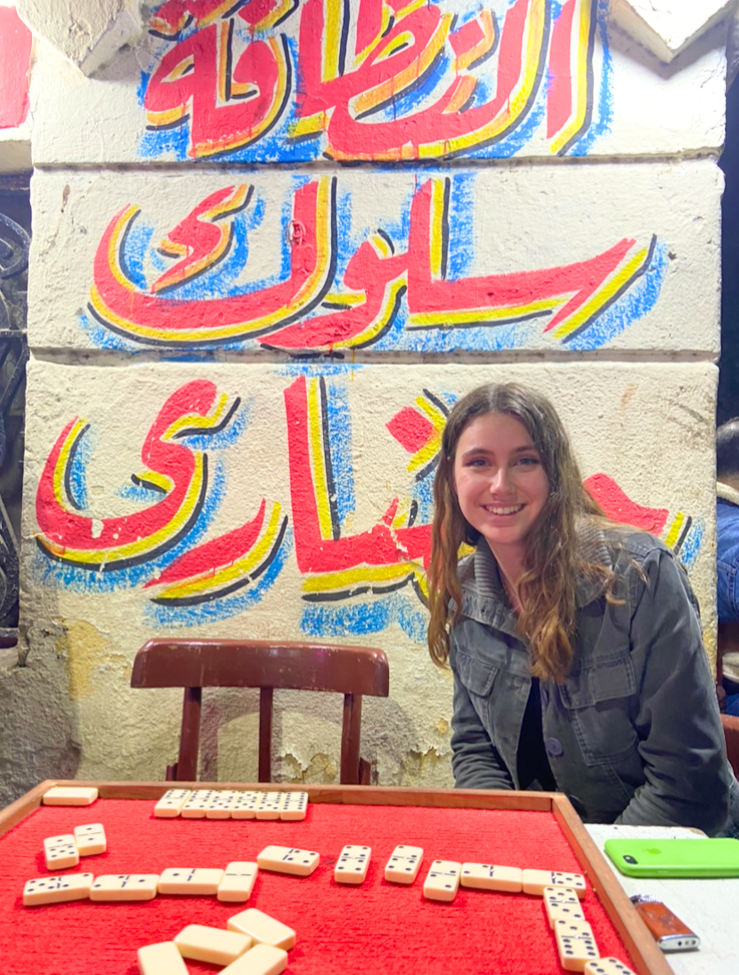
Carere sits at a coffeeshop and looks down intently at a board of dominos. There is a glass of tea and a pink hair clip on the table next to the board.
Carere plays
a game of
dominos with
friends

Living in downtown Cairo has immersed Carere in the Ramadan spirit. “The first night we walked around downtown until suhoor. Everyone seemed so happy and energetic,” Carere recalls. “We spent the night playing dominoes at an awha (local coffee shop) and drinking tea. It’s been a great chance to practice my Arabic.”

Ramadan has also highlighted some amusing cultural differences between the Netherlands and Egypt, particularly with regard to watching musalsalat. “In the Netherlands, we usually watch a show in silence and discuss it after,” Carere explains. “Watching the shows here with my Egyptian friends involves a lot more commenting and asking questions. I like it; it's more engaging. My favorite shows so far are Al Maddah and Al Soffara.”


At other times, the month feels bittersweet for Carere. “Seeing everyone breaking fast with their families and spending so much time together does make me a little homesick,” Carere says. “Thankfully, my dad is coming to visit next month, and I am so excited to show him how special Egypt is during Ramadan.”

Share

AUC Students Craft Sustainable Fishing Nets to Revive Local Village Economy

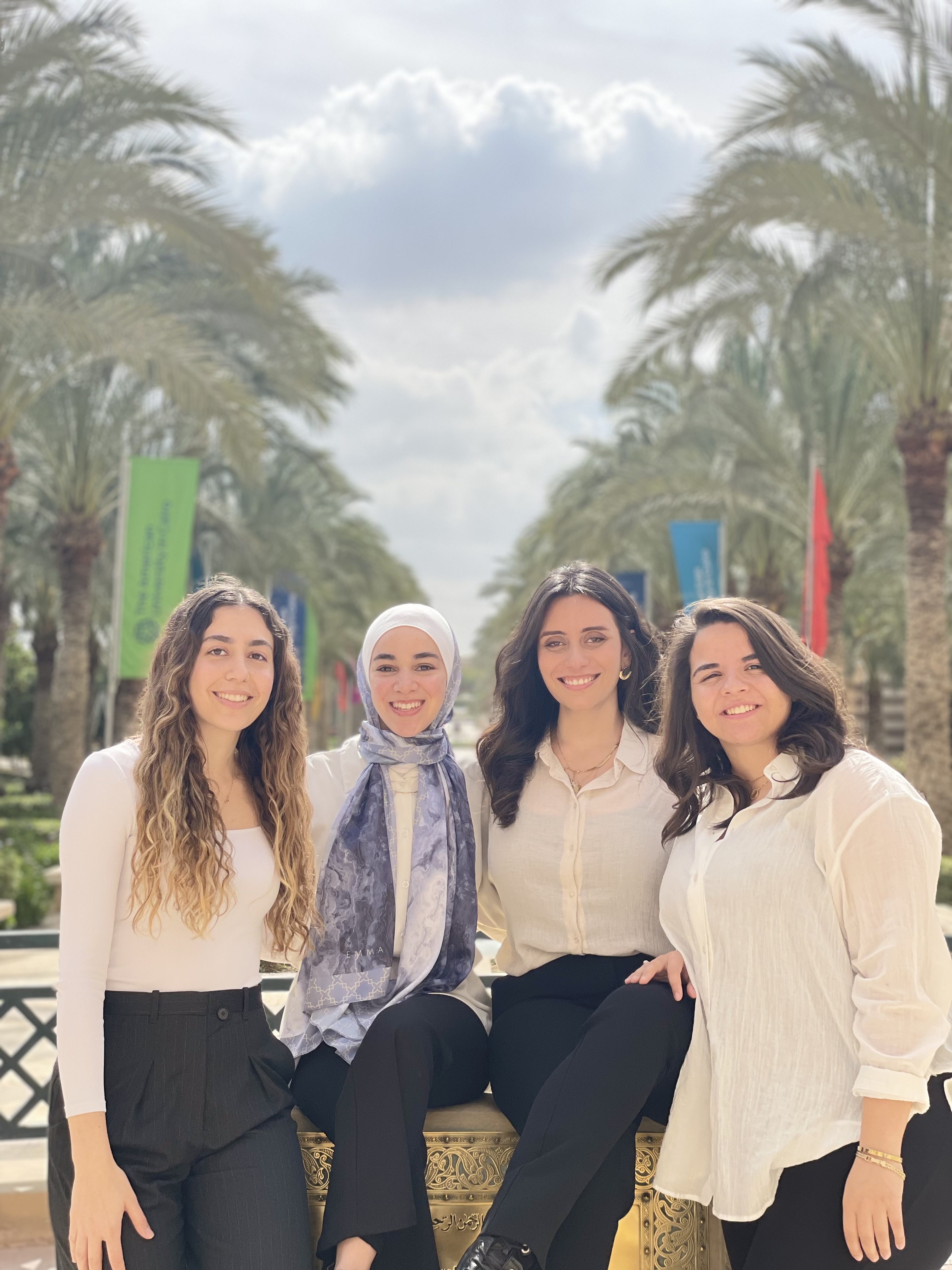
four women in the AUC gardens
Devon Murray
March 28, 2023
four women in the AUC gardens

Armed with fruit and a desire to help the small Egyptian village of El Bahtiny in Ismailia, seniors Yara Yousry, Heidi Mahmoud, Aliaa Moussa and Mariam El-Halabi are working to fashion biodegradable fishing nets out of locally sourced, cost-effective banana fibers in order to revive the village’s ailing economy.

The four AUC students will be setting sail in Norway this fall after being selected among 15 teams for the World Federation of United Nations Associations (WFUNA) program, Under the Starry Sky. The project also placed second in this year’s Student Union Real Life Competition at AUC.

The nine-month WFUNA program aims to empower young people who want to help promote the United Nations Sustainable Development Goals (SDGs) by helping them implement an innovative and impactful project. 

“El Bahtiny village is beautiful but underprivileged. Our project aims to revive the village’s fishing community,” Mahmoud said.

Traditionally, fishing nets are made from nylon and silk — costly materials that recently, due in large part to the devaluation of the Egyptian pound, have become too expensive for the local community to purchase and use. “Sixty percent of the biomass of a banana tree goes to waste. It's locally available and a great solution to Egypt’s import and export issue,” said Moussa. 

Transforming a Village

Beyond developing the nets, the quartet is handling the logistics of sourcing banana fibers from the city of Sohag in Upper Egypt, as well as providing training for men and women alike in weaving the nets. “We especially want to incorporate women into our project,” Moussa said. “The village is very conservative, so teaching women how to make the nets at home will allow them to join the economy without breaking social norms.”

Down the road, the women hope that El Bahtiny will become an eco-tourism hotspot, similar to Fayoum’s Tunis Village. “We want it to become a place where people can spend the day fishing and getting to know the hospitable local community,” Moussa said.

With Mahmoud, Moussa and El-Halabi representing AUC’s mechanical engineering program and Yousry hailing from architecture, the group has received support from AUC faculty from both disciplines on the project, including Sherif Goubran, Momen El-Husseiny, Salah El Haggar and Hanadi Salem. Additionally, the program itself held an intensive four-day training in January to boost the team’s project management skills. 

“When I found out that we were selected, it felt like my future had just started – like this is what I'm gonna be doing for the rest of my life,” Moussa said.

Currently in the design and testing phase, the team will present the project at sea in Norway this September, with plans to create different types of nets for different fish down the line. 

“Working on this project has made me feel more ambitious in enacting change and impact within my community as an Egyptian,” Mahmoud added. “I am eager to seek more opportunities."


Share

Future Fuel

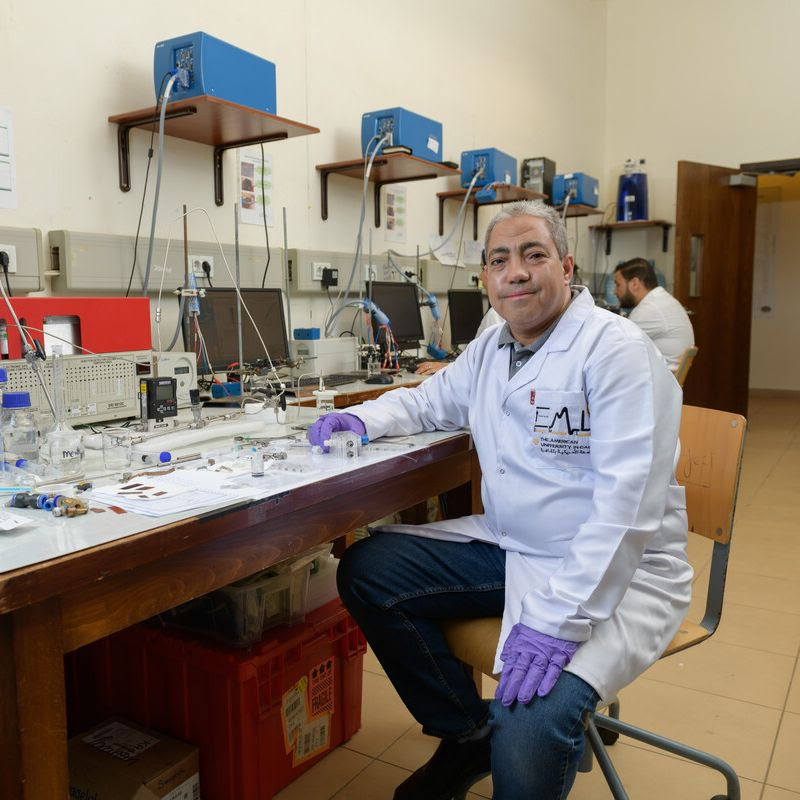
A scientist sitting in a lab
Katie Marie
November 4, 2022
Solar panels and greenery

An AUC team is working to produce green hydrogen at low cost without the use of fossil fuels.

Why Hydrogen?

Hydrogen can replace fossil fuels in essentially any area. It can be processed into fuel for airplanes and ships. It can be burned to generate electricity, power cars or facilitate industrial processes that require a large amount of heat. Factors related to the storage, transport and safety of hydrogen, as well as how it compares economically with other fossil fuel replacements, will determine where it becomes common.

Like natural gas and oil products, hydrogen can be burned to produce heat or electricity. Unlike other fuels that produce CO2 when they combust, hydrogen reacts with oxygen in the air to produce H2O — good old water. 

For hydrogen to serve as a climate solution rather than a problem, it must be produced using renewable energy or fossil fuels offset by carbon capture and storage systems. At present, producing green hydrogen from renewable energy sources is expensive, which is why 95% of hydrogen globally is produced from non-renewable fossil sources.

To read full article, click here.

Share