Talking Translation at Tahrir Square
Two classes brought undergraduates and CASA@AUC students to talk about what they lose and find in translation
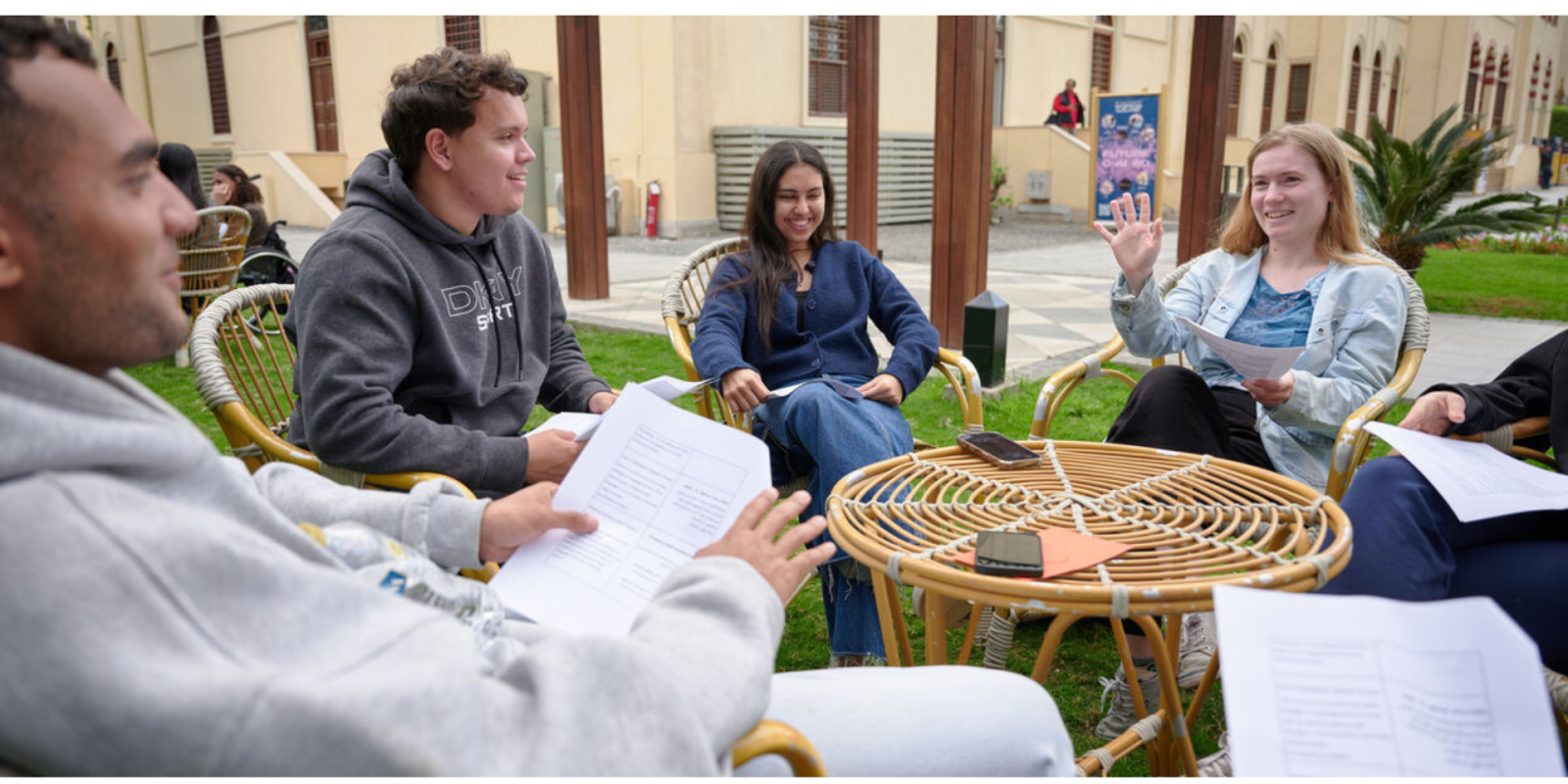
Under the shade of the AUC Tahrir Square gardens, students from Sudan, Egypt, the United Kingdom and beyond shared proverbs in their native languages. The exercise brought together undergraduates from the Core Curriculum Global Studies course — Digital Literacies, AI Literacy and Intercultural Learning — and CASA@AUC fellows studying Translation in the Age of AI to explore sociolinguistics, translation and cross-cultural meaning in Arabic.
Niobe Tsoutsouris studies Arabic in the CASA@program, a rigorous, yearlong Arabic-language program designed for advanced Arabic learners; she called the chance to speak with peers her age incredible. “There’s no other way to learn the Arabic I should be speaking as a 22 year old,” Tsoutsouris said.
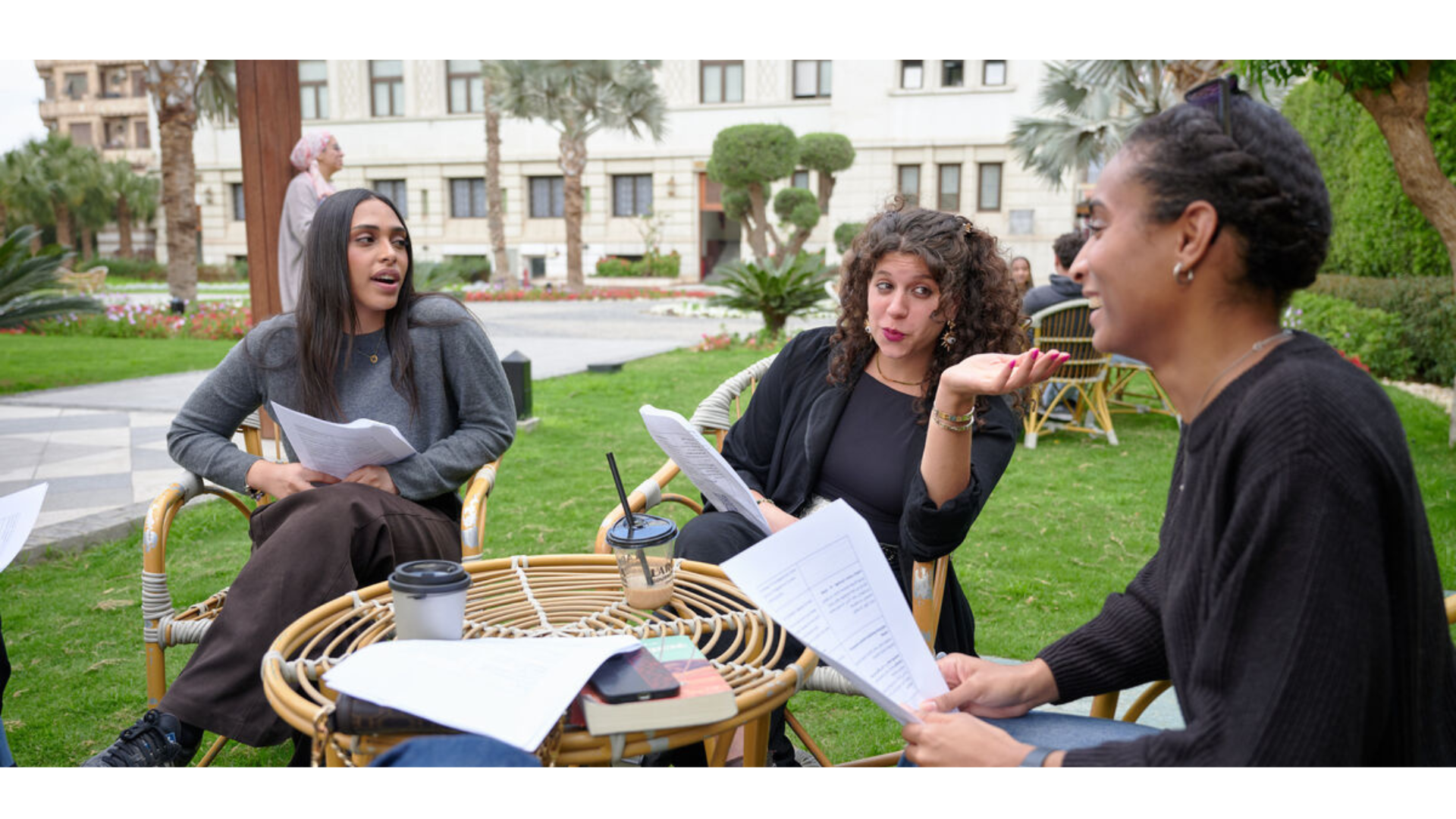
The collaboration is part of the Tuesdays in Tahrir initiative, which supports leveraging the historic AUC Tahrir Square campus for hands-on learning experiences.
“During this intercultural encounter, students met for cross-cultural insight building around language and translation,” said Maha Bali ’01, professor of practice at the Center for Learning and Teaching and the Core Curriculum course instructor. Shereen El Ezabi is a senior instructor II in the Department of Arabic Language Instruction and teaches the CASA@AUC course. El Ezabi said the collaboration helped her students "come away with new, nuanced Arabic words and idioms to experiment with, over and above the intercultural understanding they gained and the social interaction they enjoyed."
Undergraduate students who hailed from across the Arabic-speaking world were eager to speak with CASA@AUC international fellows, whose advanced Arabic skills enriched the exchange. “I enjoyed just the very different experience of talking to someone from a whole other country and background, yet talking my native language. It was such an unfamiliar experience but in a good way,” said Global Studies student Zeina Mostafa.
Bali has taught the Digital Literacies, AI Literacy and Intercultural Learning course since 2017. Her students typically spend part of the semester interacting in English with peers from international universities. Last year, her class connected with an American university in English, “but in this case, it's reversed, since the interaction is with students who are fluent Arabic speakers,” Bali said.
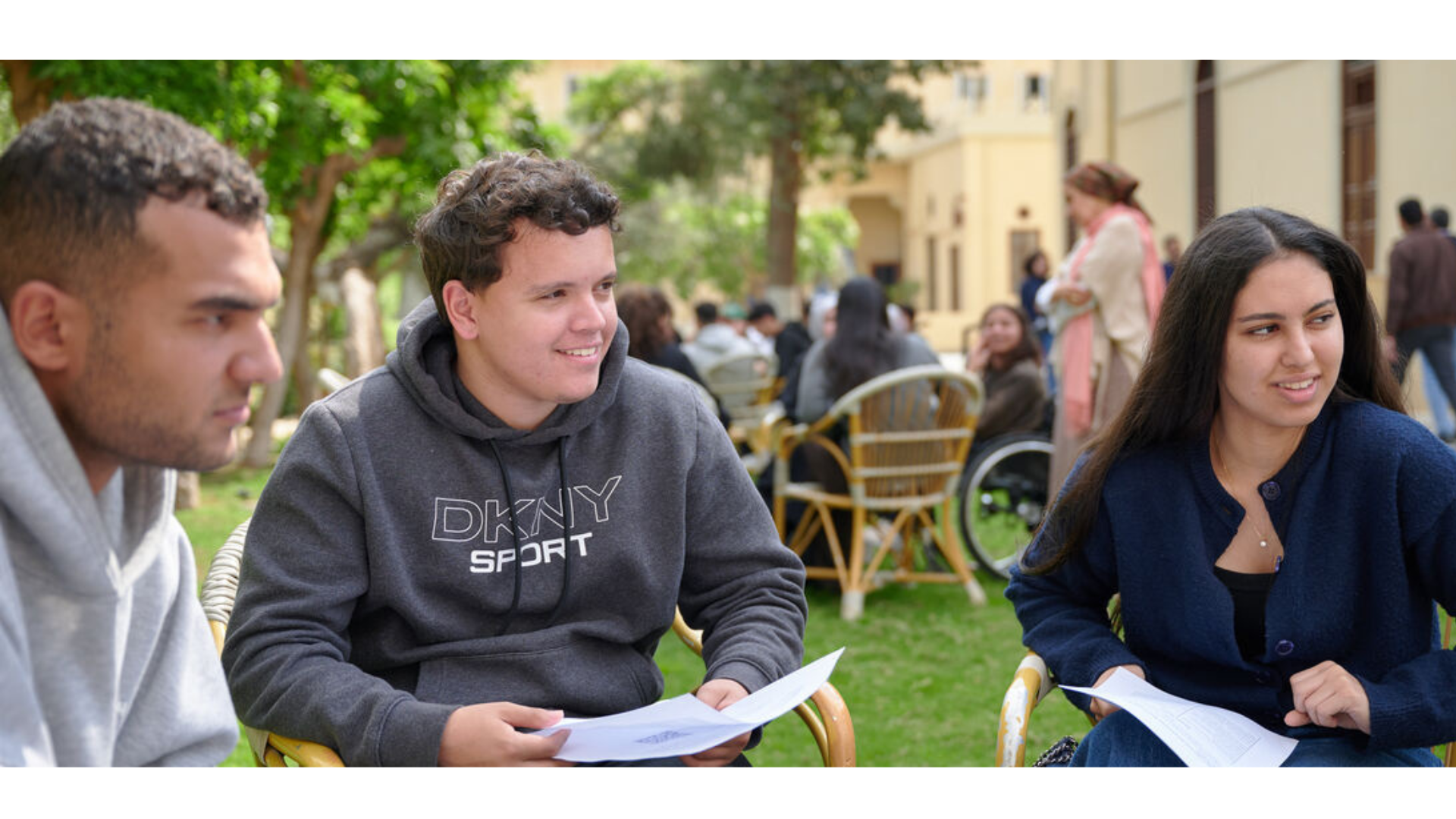
In several activities, undergraduate students and CASA@AUC fellows discussed sociolinguistics, sharing cultural expressions difficult to translate into Arabic and explaining how each represents different aspects of their cultures. The activity revealed phrases that AUC student Omar Ibrahim didn’t expect to have in common with foreigners. “We found that there are proverbs in Poland and the U.S. similar to the ones we grew up hearing in Egypt. I could feel the hybridity because we were all speaking the same language even though we all came from different places,” Ibrahim said.
For student Ismail Tolba, the experience broke down his preconceived notions of Arabic. “I went in assuming a kind of natural ownership over my own language, and I left humbled. Hearing foreigners speak Arabic at a level that surpassed my own familiarity with the classical roots of the language forced me to question an assumption I hadn’t realized I was carrying — that native speakers are automatically the most competent custodians of their tongue,” Tolba said.
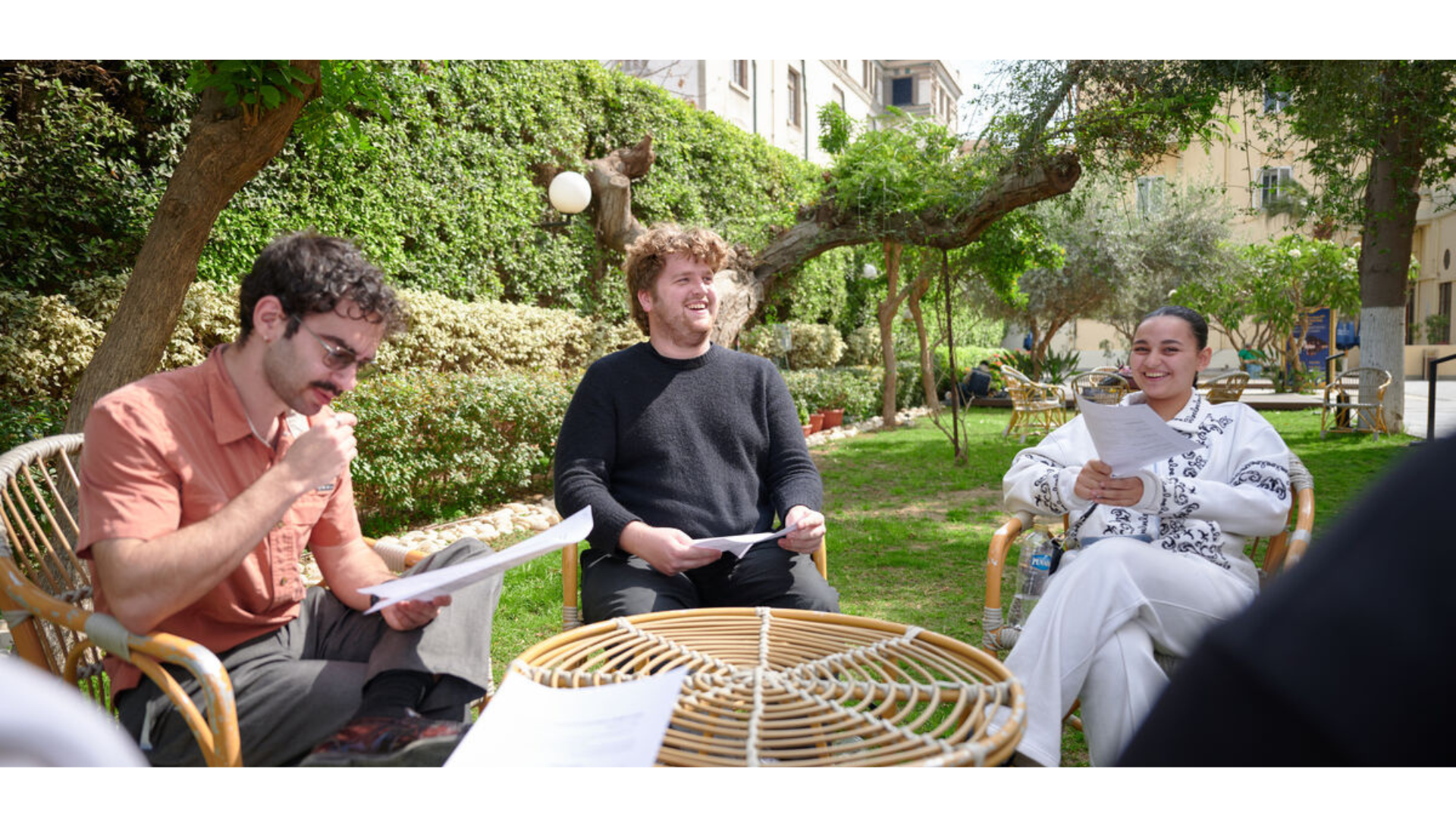
Yet even for advanced learners, adapting to the accents of native Arabic speakers was a new challenge. Tsoutsouris remembers adjusting to the accent of a Sudanese student. “It was cool listening to her,” she said. “I could understand her just fine, but I had to shift my brain a little bit to stay attuned to what she was saying.”
CASA@AUC fellow Eli Siegel-Bernstein spoke with AUC students about how they approach pursuing a liberal arts education in Egypt. “This characterized my own educational experience at Wesleyan University, which is a classic American liberal arts school,” he said.
El Ezabi also said a number of undergraduate students asked if similar advanced Arabic courses were offered on New Cairo’s campus.
“I was very glad to see how the Egyptian and Arab undergraduate students seemed thrilled to see their own language so actively sought and so highly valued by others,” El Ezabi said. “Many expressed that this rekindled their interest in their own language which has been largely overshadowed by English, especially in their academic and professional pursuits.”
