Crossing Borders to Understand Them: Inside the DiaMiGo Winter School
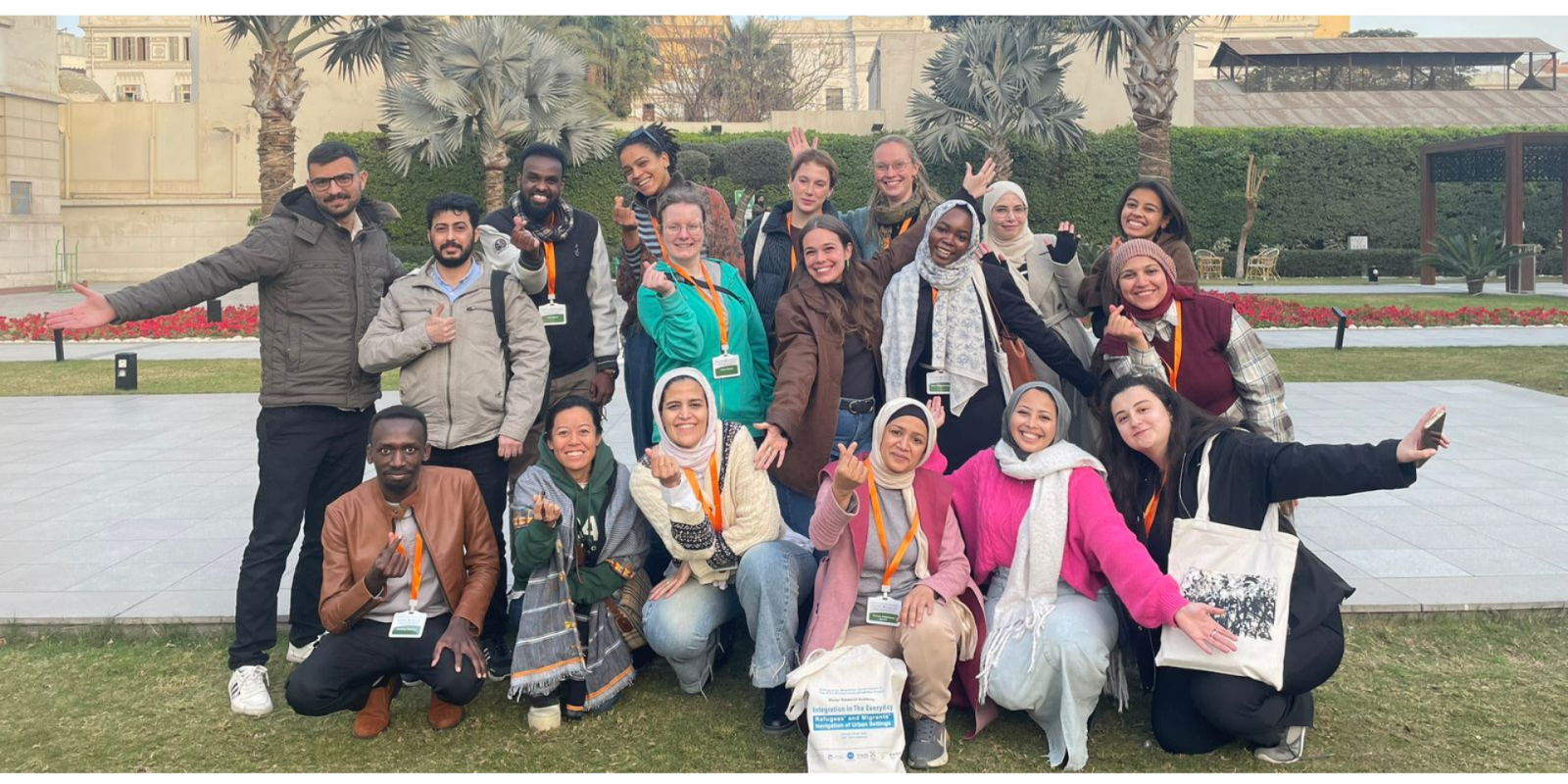
Students from the University of Cologne traveled to AUC to discuss migration alongside the Center for Migration and Refugee Studies.
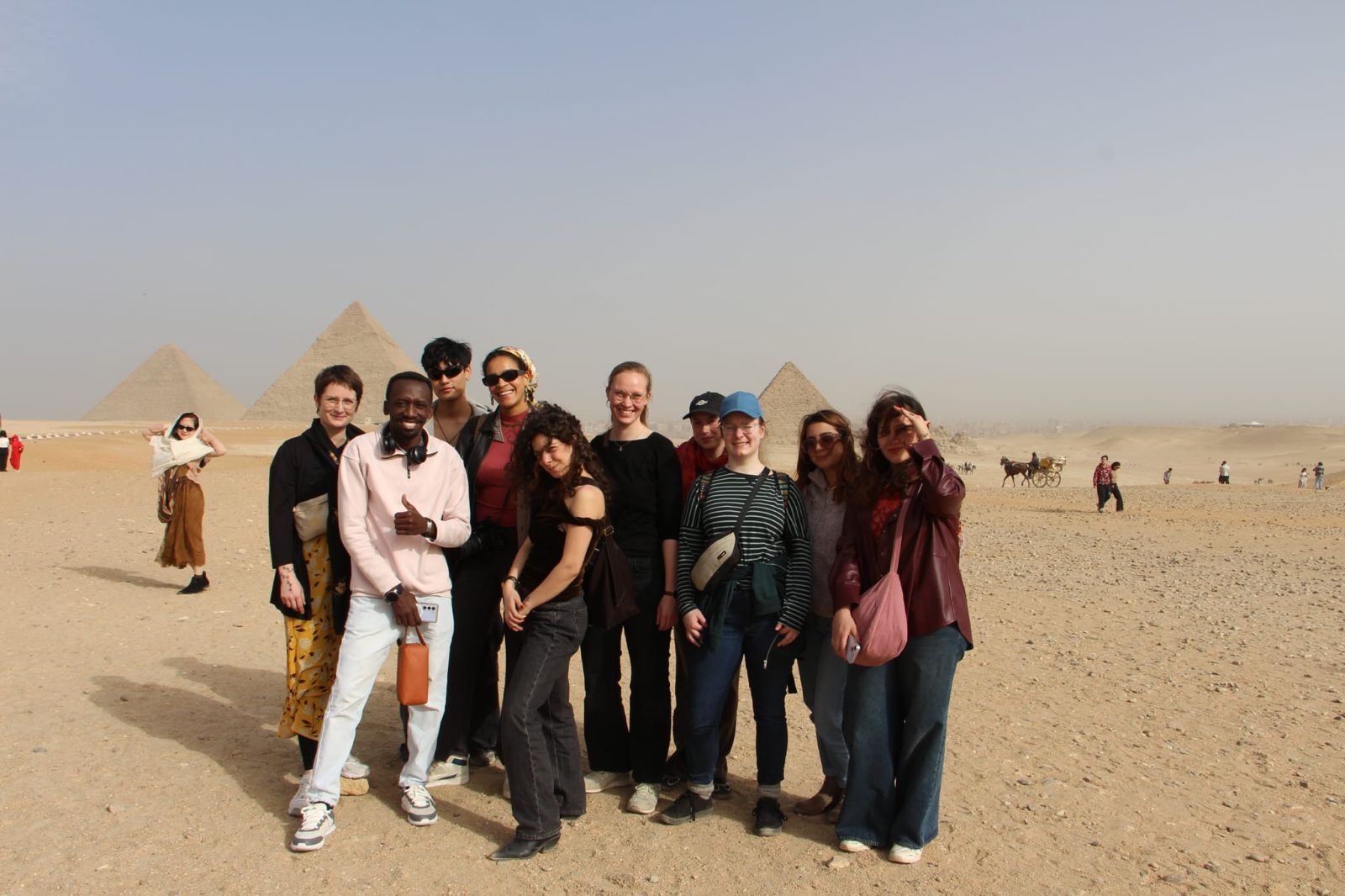
For the banks of the Rhine to the Nile’s corniche, students have crossed borders to discuss border crossings. University of Cologne students spent the final week of their winter course alongside AUC students, studying migration within the Global South.
The Dialogue on Migration Governance in the Euro-Mediterranean (DiaMiGo), now in its third year, has brought Egyptian students to Germany and German students to Egypt, allowing them to discuss the transitory nature of migration across the Mediterranean. With migration rooted across the world, students analyzed Egypt as a gateway, a hub and a home.
“The experience was impactful for not just the students visiting from Cologne, but also the AUC students who came from not just a CMRS [Center for Migration and Refugee Studies] program, but multiple different programs,” shared Emma Stotlemyer, CMRS graduate student and research assistant. Stotlemyer coordinated DiaMiGo’s winter session alongside fellow research assistant Alaa Kasmo and Fatima Salah, Reem Adel and Hiba A.aseem M.Sharif. “We're able to bring their expertise, perspectives and experience to the program, and they were able to learn a lot more about refugees in Cairo.”
DiaMiGo encouraged participants to focus on integration in the everyday — dissecting Egypt’s role as host and transit hub for migrants, as well as the intersection of heritage, labor, health, activism and local governance on integration.
Students attended lectures at AUC Tahrir Square, led by CMRS and SEA faculty Amira Ahmed and Gerda Heck, discussing the Egyptian social context, the role of media, culinary connections to migration and musical heritage. Dialogue encouraged participants to analyze what makes a place a home, and how they can expand these lessons into place-making for migrants and refugees.
“The DiaMiGo Winter School was a truly enriching experience for our AUC scholars and students, as well as for the students from University of Cologne,” shared Ahmed, assistant professor in the Department of Sociology, Egyptology and Anthropology. “It created a dynamic and engaging environment where participants could delve into the key issues affecting migrants and refugees in both Egypt and Germany.”
While the lectures were an important facet of the winter school, what was perhaps more impactful was the dialogue between the German and Egyptian students as well as the refugee fellows who participated. Ahmed added, “One of the highlights of the school was the incredible diversity of backgrounds and experiences, thanks to the refugee fellowships, which offered a unique opportunity for refugees from Sudan, South Sudan, Syria, Somalia and Eritrea to present their perspectives and insights.”
One CMRS student, Rya Hammuod Hamuod Alhosin, described how important it has been for her to share her migrant background in an academic setting. “Writing my thesis on my experience as a Syrian refugee put me on a journey to find my own voice,” she said. Participants in DiaMiGo uncovered the ways that centering migrant history, culture and heritage in integration can be both successful and empowering.
Narratives around migration often revolve around the Global North. Engaging in migration dialogues while being based in the Global South helped reframe the field for students and decolonize migration perspectives. “Egypt is one of the most important actors in the region to understand global migration routes,” shared Hannah Walsken, a student from the University of Cologne. “Talking to students and refugees in Egypt gives an important perspective. It’s not theory alone, but also the everyday lives of people.”
The variety of perspectives from refugees based in Cairo displayed how important the Egyptian context is as a case study for global migration. The refugee fellows got to share their stories with both AUCians and German students, lending their perspectives and humanizing otherwise abstract concepts.
“It was impactful because the narratives around integration often focus on how refugees can change themselves in order to fit into a community or society,” said Stotlemyer. “Speaking with the refugee fellows and scholars allowed us to see how refugees are continuing to integrate within their new society in a way that involves their skills, talents, experiences, traditions, customs, food, language, dialects — how they make a place for themselves.”
Partnerships like DiaMiGo lend perspectives between the Global South and Global North, which is essential in an inherently international field like migration studies. Egyptian and German students will continue building global conversations when they meet up for DiaMiGo III this summer in Cologne. Until then, they will continue unpacking the important lessons they learned from engaging in dialogue with one another.
“Being able to unpack and learn how refugees engage in place-making in Cairo is incredibly important for migration studies, for refugee studies and for anybody who engages with any sort of migrant and refugee population — so that we can continue to de-center the narratives of the Global North and re-center narratives coming from the Global South and the refugee community. This allows refugees to create those narratives themselves,” affirmed Stotlemyer.
