Between the Written Word and the Ancient World
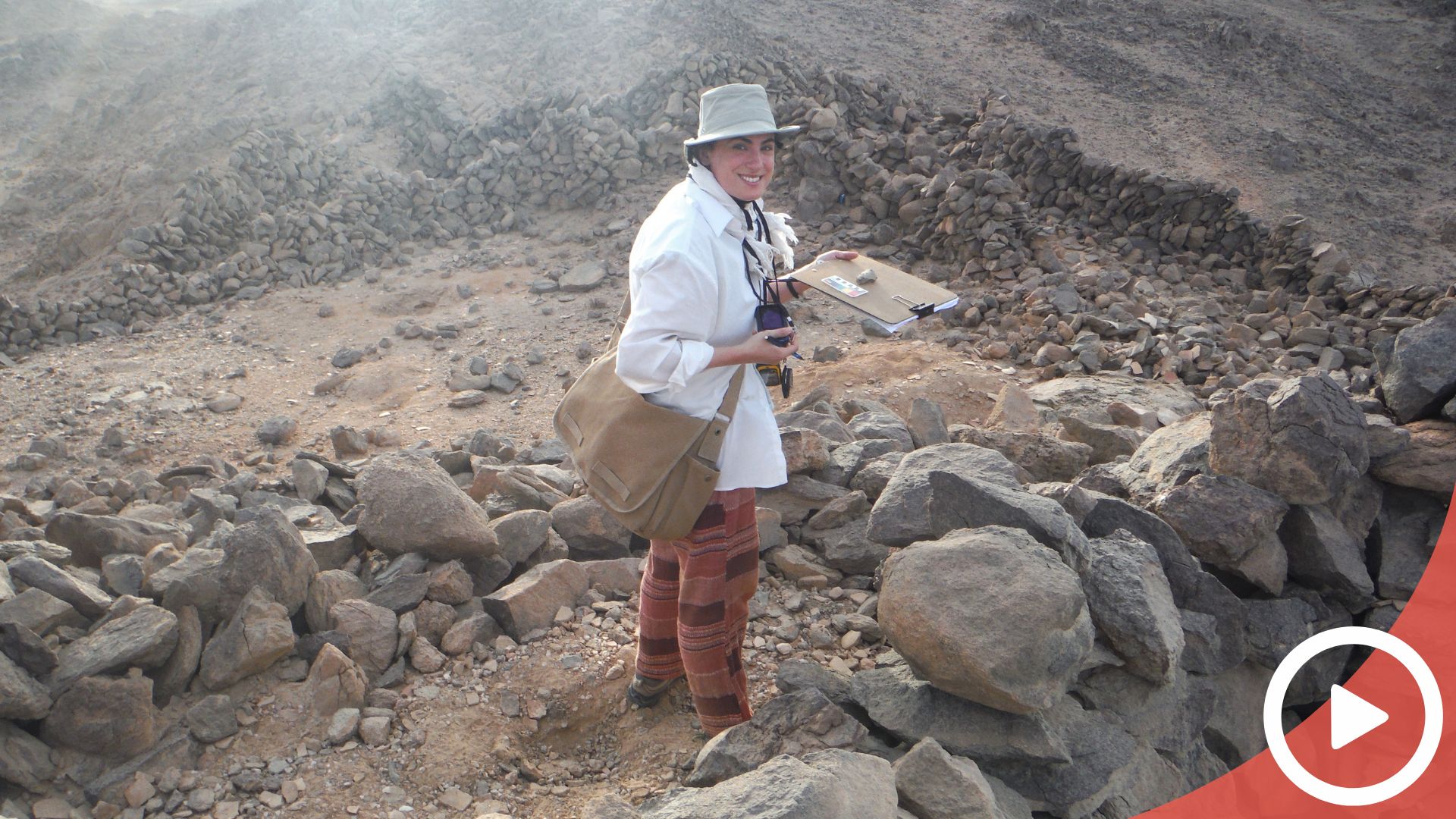
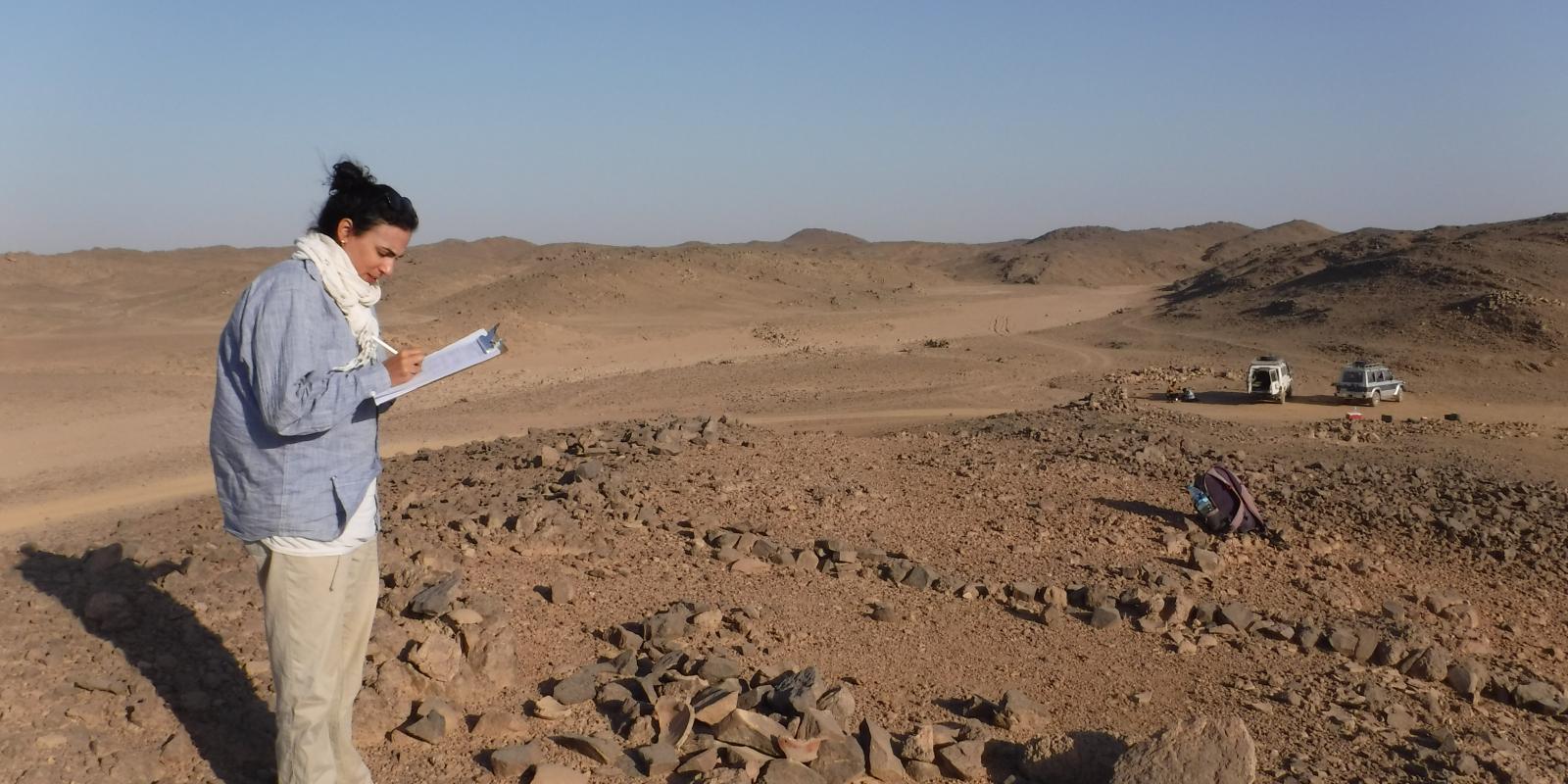
Meredith Brand ’06 is a rhetoric and composition senior instructor, an archaeologist and an Egyptology alumna who is currently a co-director director of the Wadi el-Hudi Expedition: an archaeological dig and survey documenting the remains of amethyst mines and traces of life in Egypt’s Eastern Desert since 2014.
Bridging Archaeology and Academic Writing
As a rhetoric and composition faculty member, Brand breaks down the work that goes on before you even step into the desert.
“I talk to the students a lot about the importance of being able to put your research into writing and communicate it to different audiences because just sitting in a lab and conducting research is very limiting,” Brand said. “People need to understand what’s going on and why it's important.”
Analyzing data, evaluating an artifact and writing grant proposals are all forms of persuasive academic writing needed in an archaeological excavation. Making these questions relevant to the public is another equally valued skill in archaeology. As a science communicator, Brand has made frequent contributions to National Geographic, Discovery Channel, BBC and HISTORY TV network.
“It's been fantastic to be able to have this wide-ranging skill in communication, writing and research, and to share it with students,” said Brand. “When I’m writing articles, I show them, ‘This is what peer review looks like.’ I share the feedback and comments so they get to see that I'm writing and people are commenting on my work, just like I comment on theirs.”
Unearthing the Stories of Ancient Workers
The Wadi el-Hudi Expedition has uncovered details about the lives of regular working people mining amethyst in the Middle Kingdom: who they were, what they ate and how their work may have been structured.
“I think we’re often obsessed with kings and queens and the elite figures of history, but I want to understand what regular Egyptians’ lives were like. Their lives were meaningful, but they’re lost to history unless someone excavates their towns, houses and garbage – uncovering their stories,” said Brand, who received her master’s and PhD in Egyptian archaeology from the University of Toronto.
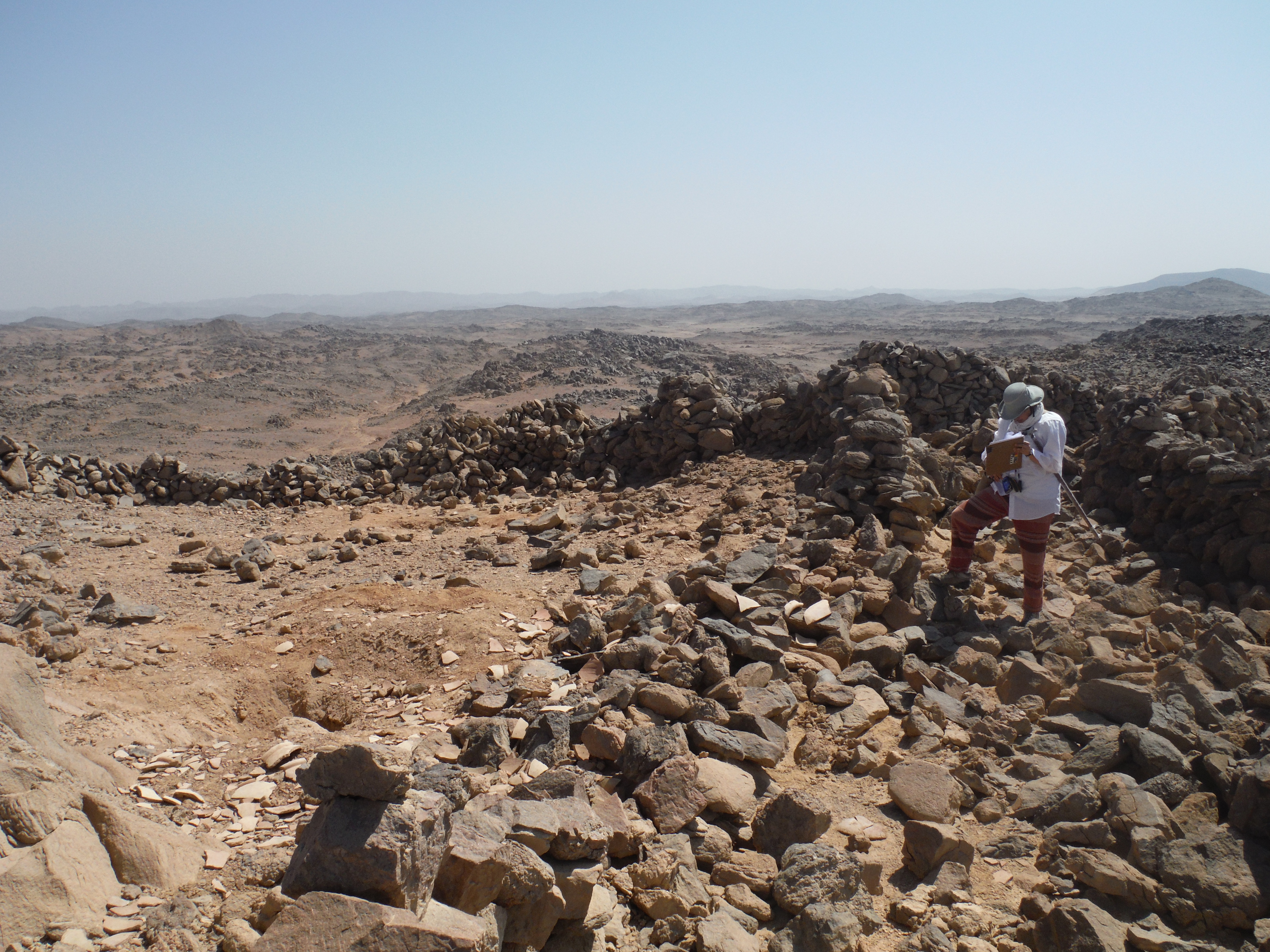
Wadi el-Hudi is an area located around 35 kilometers southeast of Aswan containing archaeological sites ranging from the Paleolithic to Islamic periods. Known for its amethyst mines dating back to the Middle Kingdom between c. 2055 - 1650 BCE, the area is well-preserved. It features the remains of housing and administrative buildings used by officials at the mine, amethyst refinement sites and inscriptions carved into rocks depicting images of cattle, ibexes, soldiers and more.
The team uses satellite imagery to first identify areas to inspect on the ground, then meticulously record, map, photograph and collect artifacts before starting to excavate. “We have a strong sense of responsibility to make sure everything in that little pocket of the Eastern Desert is well recorded because you never know what can happen to it,” said Brand, who is co-author of the forthcoming scholarly volume, Survey of Wadi el-Hudi, Volume 1.
“I think we’re often obsessed with kings and queens and the elite figures of history, but I want to understand what regular Egyptians’ lives were like."
One of the central questions for the Wadi el-Hudi expedition is understanding the power relationships behind gemstone mining in Egypt. “We have written records of people being sent to work in the desert and mines as a sort of punishment. Yet we haven’t excavated anything in Wadi el-Hudi that would indicate to us that people there were some kind of prisoners,” Brand said.
Evidence shows that the workers in these amethyst mines were well supplied and relatively well taken care of. For example, excavations revealed that miners did not live in separate barracks, with some living in rooms opening onto courtyards, Brand explained. There was access to high-protein foods, suggesting a more equitable living situation. Teams would mine in short expeditions, but the work was still difficult and back-breaking in the hot desert mines.
“It fits in with our larger understanding of the way that labor was organized in ancient Egypt, the way the people worked and lived. They were well fed and well supplied, but they were still doing this work for the state. They weren’t out there mining for their own profit.”
To answer questions about the rights of workers in a society a few millennia ago, archaeologists turn to historical context clues— geography, nearby sites and pottery.
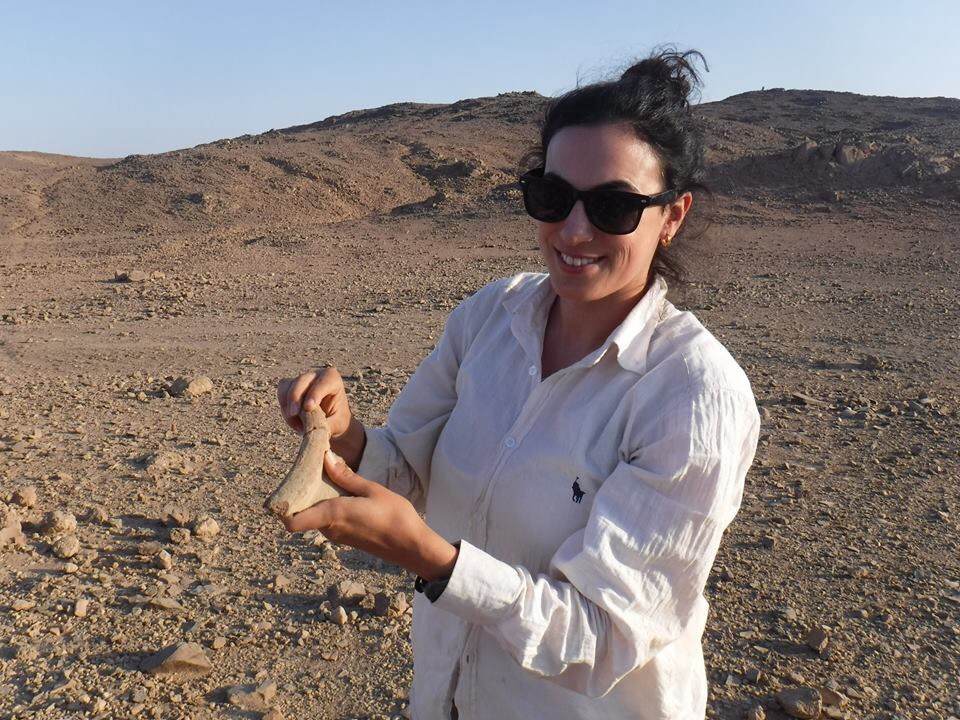
Pottery is Brand’s speciality. As a durable material, she explained, pottery is a gold mine of information for archaeologists. Its longevity allows archaeologists to learn what people ate and date archaeological sites. By determining the type of clay used to make pottery, archaeologists can also trace where ancient pottery traveled to understand trade and the economy of Egypt’s Eastern Desert. At Wadi el-Hudi, pottery has provided further evidence of the material culture of nomad communities in Egypt’s desert.
“If you study plastic and shipping containers, you could learn so much about our modern society — where things are manufactured, where they go and what people use. A lot of the economy could be revealed through them, and that’s what I do. That’s what pottery was in ancient Egypt. It was used for everything,” Brand said.
Since beginning the project, the Wadi el-Hudi team has identified more than 45 new sites. The excavation still has more questions to answer about the role of labor in ancient Egypt as more artifacts are uncovered. As Brand says, “Archaeology takes as much time as you can get.”
