Home page
ع

Caring for Our Children

Caring for Our Children
<?xml encoding="UTF-8">

Training Social workers to respond to children in crisis


CARIE FORDEN
PROFESSOR OF PSYCHOLOGY
DEPARTMENT OF PSYCHOLOGY

The Inspiration

How do we protect children from neglect and abuse? That's a critical question in Egypt and around the world. I'm collaborating with UNICEF and Egypt's Ministry of Social Solidarity to answer it. We're trying to enhance the skills and capabilities of professional social workers -- the people who often have the best chance of improving the lives of children in these situations.

The Process

The team at AUC includes Yasmine Saleh '91, associate professor of practice in the Department of Psychology, and many students who have worked as interns and research assistants. Here's what we do: We conduct assessments to determine the kinds of training that social workers need to be effective in serving children -- for example, training in gender-based violence, alternative care, positive parenting and psychosocial support for trauma. Then we develop training courses with lots of hands-on activities, produce the materials to support them and lead the courses. We conduct evaluations of the training sessions to help ensure they are effective and improving social work practice. We also train new trainers so the work can spread far beyond us.

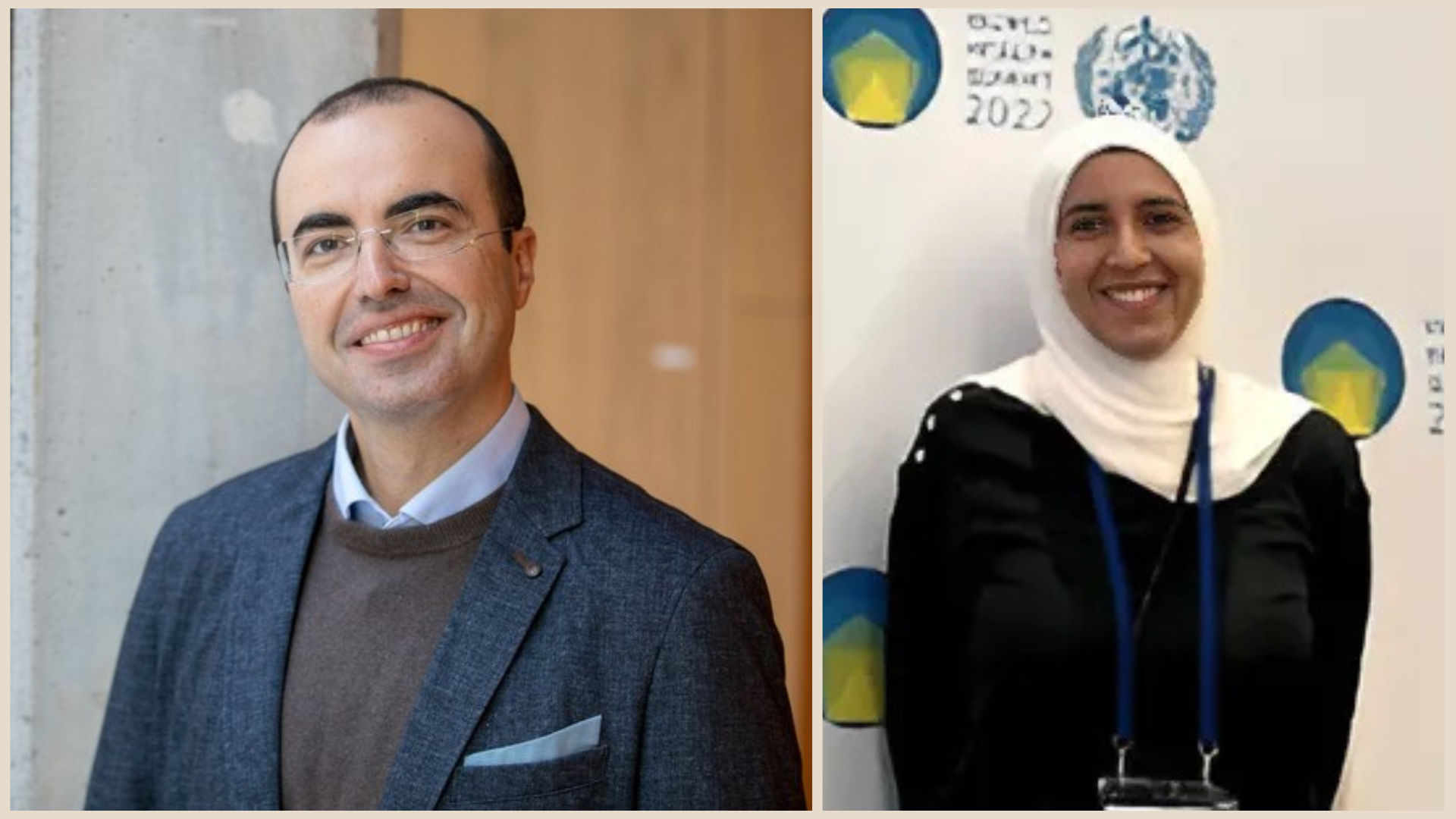
Saleh (left) and Forden engaging with social workers

The IMPACT

We've trained more than 400 social workers in Cairo, Alexandria, Assiut, Sharqiya and North Sinai; developed 33 days of training curricula; and certified nine local trainers. If we can sustain this approach, the potential impact of the project is huge: Social workers across Egypt will be better able to protect and support children, youth and families, and the changes that UNICEF and the Ministry of Social Solidarity are trying to implement will be embedded into the national system of social work training and practice.

93% of children aged 1 to 14 have been exposed to violent disciplinary practices by their parents or caregivers, including psychological and physical violence.

UNICEF, citing the 2014 Egypt Demographic and Health Survey, published by the Ministry of Health

The Next Steps

In the next two years, we plan to train and certify an additional 500 social workers. The chances of success are high. A recent call for a training of trainers on gender-based violence drew more than 300 applicants. We're also supporting the ministry's efforts to move from placing children in orphanages to placing them in alternative parental care and helping them create a new system to certify child protection social workers.

The Future

AUC is the ideal place to do this work. Our community psychology program -- focusing on collaboration with community partners, creating positive social change and building professional practice skills -- is unique in the region. We're able to attract high-caliber students; they're true partners in this project. AUC's reputation for excellence means that our community partners welcome the chance to work with us, and trainees see our programs as prestigious. And the University is truly committed to community engagement. Work like ours is valued and sustained, which then helps us ensure that social workers and the children they serve are valued and sustained.

 
Share

OVARcoming Cancer

OVARcoming Cancer
<?xml encoding="UTF-8">

ASMA AMLEH
ASSOCIATE PROFESSOR OF BIOLOGY
DEPARTMENT OF BIOLOGY

Developing a more effective screening test for ovarian cancer


The Inspiration

Ovarian cancer is the most lethal gynecological cancer. The symptoms are ambiguous, the disease has a high worldwide rate of mortality and morbidity, and the majority of women aren't diagnosed until the disease has reached its last stages. Yet the screening tests are limited, especially at the early stages. So we need to find new approaches to early diagnosis. With breast cancer, there's a lot of research and data available, and survival rates are higher. There is a lot to be done with ovarian cancer.

8th most common CANCER among women WORLDWIDE


The Process


This is a two-year research program, supported by AUC's Bartlett Fund for Critical Challenges. My initial research in this area began at AUC in September 2013 as part of a collaborative project with a researcher from Canada. After winning the Bartlett grant, I became the principal investigator, along with co-investigator Terri Ginsberg, assistant professor of film in AUC's Department of the Arts, for an interdisciplinary team that includes graduate and undergraduate students at AUC, a gynecologist from Mansoura University, a biostatistician in AUC's Department of Biology and a filmmaking instructor in AUC's Film Program. We're collecting and analyzing specimens from both healthy and diseased patients, and extracting RNA and sending them to be sequenced. At the end of the day, diseases affect gene expression. So we need to understand the specific expressions that indicate ovarian cancer.

5th most common CANCER among EGYPTIAN women

The IMPACT

Our goal is to develop a screening method to detect ovarian cancer in its earliest stages. Our method would be cost-effective, noninvasive -- based on a blood sample -- and derived from microRNA sequencing, the most specific and sensitive data marker available. This work is urgently needed. The impact would be immediate and powerful.

The Next Steps

Part of our project is to empower women with the knowledge that regular checks for ovarian cancer are crucial. Anecdotal evidence suggests that women in Egypt are hesitant to discuss ovarian cancer. We want to normalize that conversation, so we're making a video to spread knowledge about ovarian cancer. Research is about discovery, but it's also about raising awareness.

The Future

This is a multidisciplinary, multi-institutional project, where researchers from around the world bring their own expertise to the table. At AUC, we have a smart, hard-working research team, supported by all the resources and facilities we need: dedicated labs for cell culture, genomics and bioinformatics; technological support; an Academic Data Center and a tremendous library. By working together, we produce something beautiful and necessary.

 
Share

Ethical by Design

Ethical by Design
<?xml encoding="UTF-8">

By Em Mills and Devon Murray

If you can't imagine a future without AI, you're not alone. AI has transformed countless aspects of daily life and will only get more influential, leading some to ask, "Is AI going to take over the world?"

Fears of robot overlords aside, a more pressing concern lies in whether AI can learn to address the systemic inequalities that shape our society and inform our data sets. Left unchecked, AI is doomed to replicate and amplify the prejudice reflected in dominant culture. What needs to happen to set AI on the right path?

We spoke with AI experts Mona Diab '92, director of Carnegie Mellon University's Language Technologies Institute, and Aliah Yacoub '18, AI philosopher at Synapse Analytics and founder of the publication techQualia, to understand the latest developments and challenges in the realm of AI and why it's important to incorporate ethics into tech.

Diab and Yacoub

Mona, you've been working with AI for more than two decades. How have things changed over the years?

MD: Our field used to be a bit of a hidden secret until the boom in 2017 when we started seeing far more large language model technologies hitting the market. Now, with things like ChatGPT, those technologies have really taken over the narrative and are much more mainstream.

What are some of the challenges accompanying the AI boom?

AY: The most critical challenges that we're facing today are of an ethical and social nature. Instead of focusing too heavily on questions about AI displacing workers or killer robots taking over the world, we should direct our attention to the pressing issues of feminist AI, geopolitical exclusion, regulation issues, bias and more.

We also face particular sociopolitical obstacles that make AI usage complicated: Countries can't create regulatory frameworks at the same pace that the technology itself advances or even at the same pace with each other. In Egypt, this is amplified by certain structures and governance issues that make the regulation of responsible AI a real challenge.

MD: Take things like Alexa, Siri, Google Assistant and machine translation. Many people blindly assume that they can always be trusted, which is very scary. In general, Google Translate does a phenomenal job. However, if you translate a language that has a limited digital presence -- meaning how much information about the language is accessible for AI to pull from online -- then your technology is less than perfect and you can run into a lot of trouble. With the growing accessibility and dependence on these technologies, from basic translation to courtrooms, it's imperative that they have a built-in notion of responsibility.

How can we build more responsible, culturally sensitive AI?

MD: It starts with building talent. We talk a lot about computational and critical thinking in computer science programs, but what I'd like to add to this conversation is responsible thinking. We want the people working with these new technologies to come in with social responsibility in mind, as opposed to adopting it later as a remedial or reactive attitude.

That's why I came back to the university; it's where people begin to study and work with these technologies. The idea is to start students out already understanding and grappling with these dynamics from the get-go.

AY: Because AI has become a fundamentally interdisciplinary field, it's vital for experts across specializations -- particularly the social sciences -- to have a voice and lend their personal skill sets to the field. That's how we can develop responsible AI.

Can you give us some examples of social responsibility in AI?

AY: One example of this is Data Feminism, a feminist AI approach which aims to address the issue of biased data sets that perpetuate inequalities. In the tech world, women are grossly underrepresented in every stage of production, from the theoretical to the technical. Feminist AI seeks to incorporate an analysis of contextual knowledge, power relations and marginalized perspectives, helping us understand who AI systems represent and who they ultimately serve.

Another example of social responsibility is localizing AI content to bridge regional literacy gaps. At techQalia, we approach this by writing in an accessible and exhaustive way, avoiding confusing academic jargon and releasing all of our publications in English and Arabic.

MD: Translating sciences into other languages so that people can study in their native language. It's not about dispelling English as a central language for scientific expression but rather enriching the scientific landscape by unlocking people's creativity in their native languages. This way, we create new algorithms, approaches and technologies. It comes with the territory of diversity.

Why is it important for Egypt and the Arab world to get involved with these technologies now?

MD: Facilitating scientific innovation in Egypt and the Arab world will enable local communities to flourish economically and enrich the scientific landscape as a whole, helping to balance out inequality in who gets a say in tech development. Right now, Silicon Valley predominantly defines the value systems of large language models because they're the ones with the means to build these technologies at scale. This creates a level of hegemony that we need to remain cognizant of, particularly in the context of colonialism and imperialism.

AY: Right now, Egypt struggles with severe AI illiteracy. We are rarely ever early adopters of new technologies, which means we miss out on the benefits of adopting generative AI across industries like healthcare and education. Aside from missed economic opportunities, the fact that algorithms are not trained on Arabic data can also have dangerous repercussions on our sense of identity, reproduction of knowledge and representation in data sets.

"We talk a lot about computational and critical thinking in computer science programs, but what I'd like to add to this conversation is responsible thinking."

Mona, a large portion of your work has focused on expanding the understanding of Arabic in large language models. Can you tell us more about this?

MD: My work came to fruition at Meta in the context of social media. People don't commonly speak in Modern Standard Arabic. On social media platforms, they use their own dialect and vernacular, so a reductionist understanding of Arabic like MSA renders translation ineffective and inaccurate. I challenged Meta to account for these variations, leading to more effective translations, better user experience and easier recognition of hate speech. Translating Arabic is a microcosm of exploring how to push the boundaries of computer science as a technology.

I want to get involved in AI. Where do I start?

AY: It's never too early and never too late to get involved with AI. Most importantly, it's never unrelated to your studies, no matter what they are. We actually recently published an excellent resource in English and Arabic for students called techQualia Career Guide, which offers insight into jobs in AI based on different fields of study.

MD: I highly encourage students to seek out ways of participating in global initiatives around AI. I have an initiative called 60-60 that I would really love for people to join. You don't have to travel to be able to participate in most initiatives. You can partake in events, courses, tutorials and programs online that will give you the opportunity to build a global network.

Any final thoughts?

MD: I'm actually an optimist when it comes to this technology because at the end of the day, it is human agency that controls it. As much as we are good, the technology will be good and will be put to good use.

AY: It's very difficult to think of an area of human life or human experience that AI hasn't already transformed or is plotting to transform. It's essential to start now, from the very beginning, focusing on ethical development.

___

Diab studied computer science at AUC and completed her master's in computer science at The George Washington University and her PhD in computational linguistics at the University of Maryland, moving on to conduct postdoctoral research at Stanford University and serve in leadership roles at companies like Amazon and Meta. Diab's work combines linguistics and computer science to make AI-powered tools effective and inclusive, focusing on responsible AI.

woman wearing black stands in front of a building

Yacoub studied philosophy and political science at AUC and completed her master's in philosophy at the University of Groningen. Her work focuses on the ethics, science and implementation of machine learning AI algorithms within a broader social context. She strives to explain, inform and critique the workings and implications of AI using a philosophical framework.

 
Share

Unwinding Egypt's Culture, Reel-to-Reel

Unwinding Egypt’s Culture, Reel-to-Reel
<?xml encoding="UTF-8">

By Ian Greer

What does an Umm Kulthum song mean when sung at a protest? Or the music of Sheikh Imam in the middle of a 21st-century digital revolution? These are some of the questions that puzzled a young AUC student during the turbulent 2010s and which he has answered in a new, groundbreaking book that traces the unwritten popular history of modern Egypt.

Andrew Simon (CASA '10) is a senior lecturer in the faculty of Middle Eastern studies at Dartmouth College in the United States and a graduate of the Center for Arabic Study Abroad @AUC (CASA@AUC). He is also the author of Media of the Masses: Cassette Culture in Modern Egypt (Stanford University Press, 2022), a book that delves deep into the modern history of Egyptian popular culture, spread through new technological mediums.

Andrew Simon

The story of Simon's book, the product of 10 years of work, begins during his time as CASA@AUC student in 2010.

"I arrived the summer prior to the revolution," recalls Simon. "The CASA program at the time was based in the downtown campus, right next to the midan (Tahrir Square). So we had mass demonstrations right outside of our classroom. I was living with a few friends in an apartment in Munira just up the street a few blocks away, and we attended demonstrations almost every day. It's something that I remember quite vividly, that would shape not only me personally but my academic interests going forward."

Outside of the classroom, Simon was struck above all by the "acoustic culture" of the protests: instruments, slogans, chants and songs by Egyptian singers old and new, deployed for political action sometimes beyond their original contexts. Simon returned to the United States to write on Egypt's soundscape.

The acoustic culture of Egypt's revolution had its roots in new cultural mediums of the late 20th century, Simon found. "When it came time to write a dissertation, the thing that I realized connects all these topics is cassette tapes. They were present in all of these stories. That's when I set out to write a history of cassette technology that became a history of Egypt."

An Unofficial History

In Media of the Masses, Simon calls cassettes "the internet before the internet." Using cheap cassette tapes, anyone could create culture, even culture opposed to the ruling regime. Among the most prominent adopters of the technology was Sheikh Imam, a singer and social critic popular in late 20th-century Egypt who figures prominently in Simon's book. Imam's 'Nixon Baba,' a witty critique of Anwar Sadat's welcome of the American President Richard Nixon in 1974, is among Simon's favorite Egyptian songs.

Focused on the music, ideas and concerns of everyday Egyptians over the decades, Media of the Masses is an unofficial history of modern Egypt, far from sweeping national narratives. Without sources available in the Egyptian National Archives, Simon relied on oral history, Egyptian films, and decades of local newspapers and magazines to construct his own popular history of the country.

Explore Simon's work

The history of the 1970s and 1980s in Egypt is typically focused on the period's major wars, governance and Islamic revival movements, not pop culture, Simon explains. "In this book, I tried to shift all of those things. So rather than looking at momentous events, I focus on more mundane things like music. Rather than looking at religion, I tried to look at secular, profane things. Rather than looking at the consolidation of power, I look at people who challenged political authority. I tried to offer a very different story and focus on people who were, frankly, written out of history."

The singer Sheikh Imam is a prime example; popular in his own time but practically absent from the mainstream Egyptian historical record. "I think he's someone whose songs really resonated with people and meant something to them, but scholars and historians haven't written about him because they probably don't deem him as a worthy subject matter," observes Simon. "That's something I tried to change in this book."

Decidedly light on academic theories, Media of the Masses is meant to be engaging and accessible, something anyone can understand, just like the popular music it documents. "My primary audience are Egyptians; I wrote this book to be read here in Cairo," says Simon, adding that the independent Egyptian publishing house Dar El Shorouk will release an Arabic translation of the book later this year. "It was a dream of mine for a long time to have an Arabic translation," Simon says. "It will hopefully be available at a future Cairo Book Fair."

Cairo Connections

Now an academic and fluent in Arabic, Simon fondly remembers how the CASA program boosted his Arabic-language skills and drew him irresistibly into Arab popular culture. "CASA was the first time I felt like I wasn't studying Arabic as a language," remarks Simon. "We weren't studying grammar. Instead, we studied subjects in Arabic. We would learn Arabic literature while immersed in Egyptian culture."

Simon's book is a testament to his enduring connection to Egypt and its people, first formed during his time as a CASA student at AUC more than 10 years ago. He spent years living in the country after finishing his undergraduate degree and has been coming back ever since. Despite Egypt's many changes since 2010, Simon says that the most important part of the country's culture -- its people -- are still the same.

"The man who sells aseer asab [sugarcane juice], the people working at the grocery store and laundromat -- all of those individuals are still there. And they recognize me," he says. "When I come back to Cairo, they tell me 'You look a little older. You didn't have as much gray hair when we first met 15 years ago.' So some things have changed, and other things have remained the same."

Main image: Abu Hamza Cassette Shop in Cairo. Photos courtesy of Andrew Simon

 
Share

On the Weekend

On the Weekend
<?xml encoding="UTF-8">

Professor, researcher, podcast queen -- these are a few of the many job titles you'll find in Kim Fox's email signature.

Since joining AUC in 2009, Fox has become a podcasting powerhouse, being named among Podcast Magazine's inaugural 40 Over 40 podcasters in 2022. Today, she is constantly on the move: flying to the United States to lead a meeting for the Broadcast Education Association, developing a new episode of her multi award-winning podcast Ehky ya Masr (Tell Your Story, Egypt) or delving into academic research across a number of current topics, from feminism in podcasting to teaching journalism online.

On the rare day that she isn't donning one of her professional hats, you can find her on the lush island of Zamalek, where she has lived since moving to Cairo.

I often spend weekends socializing and doing things in the city. Last semester, I went to the Art d'Egypte exhibit at the pyramids with a posse of friends, had a Thanksgiving potluck and took a Nile Taxi ride. Zamalek has been unraveling, you know. The cool places change.

I ride my bike around Zamalek on Friday and Saturday mornings. Living in Egypt, I often miss going to green spaces and just hanging out and walking around without the tension that one experiences while moving in Cairo. You have to seize the window when there isn't too much traffic or people out. On a tough morning, I get up before the rest of the city wakes up, get on my bike and am like, "Yeah. This is what I'm here for. More of this, please and thank you." Riding around warms my heart; it's a bit of freedom. There's nothing like it.

Cairo is a crazy place, so you definitely have to find your pocket of people who will help you out. The people I've met at AUC and in Cairo are amazing, and the list keeps growing. If we didn't have that kind of a support system, it would be really difficult to survive the antics of the city, work and life. Everyone's trying to look out in the best way. I try to encourage this in my classroom at AUC, building a community that cares about each other. I've also grown a global community, which is something I'm really proud of. Podcast scholars, creatives -- I've got pockets of people everywhere.

I've found that if you don't champion yourself, no one else will. As a creative scholar, I'm usually working in the realm of podcasts, but I also publish a lot of academic research in quality journals. My biggest achievement is being the first ever winner of two BEA Festival of Media Arts Awards in the same year for my podcast, which has no budget. My students have won more than 80 international awards. The length of my email signature is a testament to the work that I am doing. Let people know what you do.

Kim Fox is a professor of practice in AUC's Department of Journalism and Mass Communication.

woman on a bicycle rides away down a streetFox often rides her bicycle in Zamalek on weekend mornings. Photo by Rawan Ezzat. 
Share

The Essential Bond

The Essential Bond
<?xml encoding="UTF-8">

By Em Mills and Devon Murray

Do you ever ask yourself, "Why do I keep attracting the same kind of partner?" or "Why do I find myself in the same types of relationships -- which always seem to end -- over and over again?"

Getting to know your attachment style may answer some of these questions and help you break free from a seemingly endless cycle. Attachment theory explores the relationship, or emotional bond, between a child and their primary caregiver. Such a bond plays an integral part in developing a child's sense of security, which later affects their adult relationships, according to Nour Zaki, visiting assistant professor in AUC's Department of Psychology.

The theory includes four attachment styles that are defined by our perceptions of ourselves and others: secure, anxious, avoidant and disorganized. "Knowing your style can help you understand your needs in relationships, and how to express them in a healthy way," says Zaki, whose research focuses on attachment theory.

'Cradle to Grave'

The theory was initially developed by researchers John Bowlby and Mary Ainsworth in the mid-to-late 20th century. Before their work, the general consensus was that human and animal babies stayed close to their mothers because they associated them with nutrition.

"Bowlby started to think, 'There is something emotional here. It's not just about food; it's about seeking proximity,'" says Zaki. "Babies cannot survive on their own. They need to be close to an adult figure who is able to provide that sense of safety."

This adult is known as the "primary caregiver" in attachment theory. "Typically, this is a child's mother but not always," Zaki explains. "It can be the father, an adoptive mom, a grandparent or even an older sibling in some cultures."

At around six to nine months, a baby begins to differentiate between caregivers and strangers. "At this stage, we begin to see stranger anxiety and separation anxiety, displayed by a clear preference for certain caregivers. These are healthy signs of attachment," Zaki says.

Depending on the quality and consistency of care a child receives from their primary caregiver, their attachment will likely develop in line with one of the theory's four styles: "If a caregiver is attuned to their child's needs, the child learns that they are worthy of attention and that they can rely on others," Zaki says. "This usually leads to secure attachment -- the belief that we deserve love and can trust other people."

Bowlby has a famous saying: "Attachment stays with you from the cradle to the grave." Your relationship with your caregiver is a major player in developing your core beliefs, or "internal working models," which dictate how you see yourself and others, how comfortable you are setting boundaries as well as other aspects of relating to people.

The Four Styles of Adult Attachment

So, what are the characteristics of each attachment style? And what factors might lead to their development?

Secure

A secure attachment allows you to express vulnerability with your partner and engage in intimate relationships that feel safe and consistent.

"This person is able to express themself while maintaining a sense of reciprocity. They can support their partner but also ask for what they need. This includes setting healthy boundaries and having a grounded sense of who they are outside of the relationship."

Anxious

Anxious attachment (referred to as a "preoccupied attachment" in the context of adult relationships) often results when a primary caregiver is inconsistent in caring for their child; care is sometimes present and other times not. This unpredictability causes the child to question their own self-worth.

"Individuals with this attachment style need external reassurance and may have a fear of abandonment. They may need to hear 'I love you' very often or feel jealous easily if their partner is giving attention to other people."

Avoidant

Avoidant attachment (or "dismissive attachment" in adults) stems from a caretaker who is consistently absent, unavailable or unresponsive to their child. This dynamic pushes the child to develop a negative image of other people.

"Individuals with dismissive attachment have a sense of 'defensive independence.' They highly prioritize their space -- and actually feel very triggered -- if they feel that someone is too close."

Disorganized

The rarest type of attachment is referred to as disorganized attachment (or "fearful attachment" in adults). This most commonly occurs in cases of abuse, where the child experiences something called the "fear dilemma" -- the caregiver is the person they're supposed to go to when afraid, but is also the person they are afraid of.

Are We Doomed?

You may be wondering, "Will I always push people away then?" or "Am I stuck in this pattern forever?"

"No one's attachment style is fixed," Zaki affirms. While you may have a tendency to fall into a certain pattern, it can be different in each individual relationship depending on your dynamic with your partner.

"Understanding where your patterns come from can give you a sense of empowerment instead of feeling like you're on autopilot, because what we're used to in terms of relationship dynamics eventually becomes like autopilot, right?" says Zaki.

She is also quick to note that each attachment style has strengths and weaknesses. "It's not just about understanding our vulnerabilities, but also our strengths, because each attachment style has its own points of strength." For example, the independence that comes with avoidant behavior can be beneficial in the workplace, where one might be more inclined to push themselves and take the initiative before being asked to do something. It all depends on the ability to express your needs in a clear, healthy way.

"If you feel like you've had a challenging childhood experience or are facing relationship dynamics that aren't ideal or healthy, looking at these dynamics can help put you on the road to self-understanding from a developmental perspective." says Zaki.

Breaking the Cycle

Zaki's interest in attachment theory developed as she worked on her PhD dissertation at Universidad Catolica San Antonio de Murcia in Spain, where she explored the transition to motherhood and how a mother's attachment style relates to how she views herself as a future mom. She is interested in how attachment styles are passed across generations, and how such cycles are broken.

"We often hear people say that despite wanting to raise their children differently than their parents, they end up doing or echoing the very things they heard growing up," she says. "Identifying and understanding one's attachment style empowers us to work on our vulnerabilities and insecurities early on, so we can avoid becoming triggered while transitioning to parenthood. This developmental approach to parenting is very powerful."

Hoping to support the next generation, Zaki conducts workshops and lectures in Egypt and collaborates with a number of international organizations, including the Association for Prenatal and Perinatal Psychology and Health. She also teaches and conducts research related to developmental psychology and mother-infant attachment in her Attachment Lab at AUC, which recently received a research support grant from the University for her latest research project on the intergenerational transmission of attachment between mothers and their babies.

Her advice for readers? "It's never too late."

 
Share

Christmas Flashback

Christmas Flashback
<?xml encoding="UTF-8"><?xml encoding="UTF-8">

How have AUCians celebrated Christmas throughout last 80 years? We dug through the archives to find out.

1940s-1980s

  • black and white photo of a large group of people at a long table1940s
  • black and white photo of students posing for a photo with streamers 1960s
  • black and white photo of man wearing a santa costume with other people standing next to him 1960s
  • photo of man wearing glasses dancing at a party1980s
  • black and white photo of man wearing a santa costume standing over a table of food1960s
  • Dj standing behind a booth1980s
 

2000s-2022

Christmas tree made of used plastic bottles in Bartlett Plaza. 2000sAUC sign lit up by Christmas lights with wrapped presents scattered in the foreground

Photos 1940s-1980s courtesy of the University archives.

 
Share

Side Hustle

Side Hustle
Ian Greer
<?xml encoding="UTF-8">

While most students begin their working careers after graduation, some pursue their passions alongside their degrees and find inspiring success. Here, we profile AUCians who have launched their own homegrown Egyptian businesses.

Dalila Hassanein

Dalila Hassanein is an undergraduate visual arts junior who has been working as a professional artist in Cairo for two years. She presents her paintings at exhibitions and creates new pieces on commission.

Her work currently focuses on the "creative informality" of Egyptian street art. Some of her distinctive paintings are based on the hand-painted real estate ads created in public spaces in central Cairo. Selling these paintings brings in the revenue needed to make new ones, typically done on costly 1.5m by 1.5m canvases.

Managing expenses is just one part of the art business Hassanein has learned to handle. "I love every part of my career, even though the beginning is always the toughest. As a young emerging artist I've faced many difficulties and had to realize that the Egyptian art market does not always treat artists fairly," she says.

Hassanein complains of working for low rates, not being paid in full, and sometimes struggling to navigate professional relationships with different art curators. "I've definitely been taken advantage of due to not having enough knowledge on how the art market in Egypt truly works," she says. "However, experiences like these drive in clients, exposure and more exhibition opportunities, so no matter how tough it might be, there are always lessons to be learned."

  • Hassanein at her New Cairo studio.
 

Photos by Ahmad El-Nemr

Although balancing her time between studies and work has also proved challenging for Hassanein, there is a synergy between the two. "I've received a lot of support and input from my professors on my projects," she recalls. "Also, the courses in the visual arts program truly help me understand what it takes to be an artist and to create work that reaches its full potential."

Still, working in the art market as a student has taken a toll on her social life, sleep schedule and free time. It can be stressful, she says, "but I've found that as long as I am passionate about both, I will find a way to work everything out."

Hassanein's favorite part of her business is "the fact that not only what I'm doing is succeeding but that my work is making a change." She opines that the contemporary art scene in Egypt remains limited to incessant depictions of fellahin (farmers), pyramids and deserts. "While this is a part of our culture as Egyptians, constantly having this imagery just further orientalizes us, 'others' us and neglects Egypt's creative urban culture." In her artistic manifesto, she stresses the importance of "a new visual language" for Egyptian art -- something to which her own work directly contributes.

To her fellow students, Hassanein recommends getting into business even before graduation, provided they are ready for the workload. "Creating something you're passionate about is worth the struggle."

Dinah Harvey '22

Dinah Harvey '22 is a graduate of AUC's architecture program and founder of Clooper Studios, Egypt's first professional pet photography studio.

An animal lover, Harvey always wanted to take high-quality pictures of her dogs but was unable to find a local pet photographer in Cairo. "I realized this is lacking in Egypt and that no one has professional, if any, photos of their own pets," Harvey explains. She decided to change that.

After consulting with a pet photography studio in Canada, Floofy Studios, Harvey launched Clooper Studios -- named after her dogs, Cleo and Cooper. Although elevating her hobby into a professional enterprise has required some serious investments in a studio, equipment and a website, Harvey's project fills an underserved niche and provides a valued service for Egyptian animal lovers. "Our dogs don't remain with us forever, and this is just one special way of keeping their memory alive," she says.

  • Woman poses with two golden retrieversHarvey, Cleo and Cooper at Clooper Studios.
  • two women take a selfie with a golden retriever holding a tennis ball in her mouthHarvey and her sister pose with Cleo.
  • Golden retriever wearing a pink birthday hat with tongue out sitting on a blue backgroundCleo smiles for the camera.
 

Photos courtesy of Dinah Harvey

Like any business owner, she has faced her share of difficulties. "My experience so far has been a rollercoaster," says Harvey. Learning to set terms and conditions with clients, managing payments and bookings, and working without a full-time assistant have been some of her main challenges. Dogs, of course, are also sometimes less than cooperative with a photographer. "My friends and family are always helping out; this wouldn't be possible without them," she says.

Balancing her business plans with studies at AUC forced Harvey to delay Clooper's full launch until after graduation. However, it was all for the best, as the photo editing skills she learned in the last year of her architecture program have proved invaluable to her work as a photographer. Although running any business is tough, Harvey's is a labor of love, spending time with animals and giving clients priceless memories. She recalls how one woman, after receiving edited photos of her pet, sent a voice note screaming with happiness. At the end of the day, says Harvey, "the dogs always make it worthwhile!"

 
Share

The Steps

The Steps
<?xml encoding="UTF-8">

By Adham Radwan

At AUC New Cairo, anyone hurrying to class near Alwaleed Hall or the School of Sciences and Engineering who wants to grab a snack from Quick 24 must pass by the University's "walk of fame" -- also known as "the steps."

For some, the steps are a place to relax during their gap periods. "I think students sit there to be close to their classes," says Marwa Hussien, an AUC student.

Others experience more anxiety while passing by. "I don't like to sit on the steps because I fear being judged for not wearing a Louis Vuitton bag or Gucci belt, as those who sit there do," says another student who wishes to remain anonymous.

The steps have been a campus staple for decades, dating back to 1964 when the University purchased the Greek Campus to accommodate a growing student body. For years, it housed the library, Social Science building, Social Research Center, Jameel Center and School of Continuing Education (previously known as the Center for Adult and Continuing Education and Division of Public Service). Back then on the Tahrir campus, the steps were known as "the platform" or "the plat," extending from the library to the garden areas at the center of the campus.

  • students sit on the stairs at AUC's Greek campusSocial Science stairs on AUC's Greek Campus, 1990s-2000s. Courtesy of the University Archives
  • large set of stairs with students sitting on them in the middle of AUC's Greek campusThe Platform (Plat) on AUC's Greek Campus. Photo courtesy of the University Archives
  • a black and white photo of a large set of stairs with students sitting on them and table and chairs in the foregroundSocial Science stairs on AUC's Greek Campus, 1980s. Courtesy of the University Archives
  • a woman stands on a set of stairs in front of AUC's Sciences and Engineering Building, looking at her phoneThe steps in front of the School of Sciences and Engineering at AUC New Cairo. Photo by Ahmad El-Nemr
 

Many AUCians remember the platform as the cool spot to sit due to its close proximity to the famed "Gucci Corner," where students wearing designer clothes often hung out.

Emad Elba '07, a political science major, mentions Gucci Corner as she recalls the social division of AUC's downtown campus during her undergraduate years in the AUC Memories project. "[If] you wanted a study-abroad student, you went to the Fountain Area, the presidential gate or the rare books library. ... But if you wanted [to find them] with their semi-Egyptian friends, you'll find the gang sitting on the platform by the library gate. ... [If you] wanted an activities dude, you took a trip to the Student Lounge or the Greek booths area. ... [If you were] wondering what's the latest fashion, pass by the Gucci Corner down the platform by the Social [Science] building. ... And of course, for any technical 'scientific' assistance, you go straight [ahead] to the Falaki labs."

Years passed, and the University leased the Greek campus and opened a 260-acre campus in New Cairo. Working with a space more than 30 times larger than AUC Tahrir Square, the Campus Development Committee planned similar spaces to emulate Tahrir Square's intimate atmosphere loved by students, faculty and staff alike.

"It's all about the good view, great location and socializing."

Along with the steps, some institutional narratives were carried from Tahrir Square to New Cairo. Gucci Corner, for example, is now synonymous with the SSE steps, as highlighted in the 2013 Caravan feature "Around AUC in Five Days" by Mona Saleh.

"Arrive to the university and go directly to your favorite place, the SSE steps or as everyone calls it 'The Gucci Corner'. This is where you're going to spend your whole day unless you really want to attend your classes to check out that cute guy. Otherwise, just chill and enjoy the company of your friends."

Yet many who choose to sit on the steps there don't think of themselves as any different than other students. "People think that we are going to bite them, but we won't," said AUC student Salma El-Shamshergy, a familiar face on the steps who chooses to sit there for the sunshine and convenient proximity to any building on campus. "It's all about the good view, great location and socializing."

In a nutshell, the steps are not just a spot where new campus students hang out -- they are an essential part of the AUC journey.

Adham Radwan is an integrated marketing communication senior at AUC

 
Share

Is Hybrid the Future?

Is Hybrid the Future?

By Reem Abouemera

Will the future of education be online, hybrid or completely face to face? What will happen in the post-COVID-19 classroom? Even before the pandemic, Research and Markets had forecasted that the online education market would surge to at least $350 billion by 2025. What happens now, with the impact of COVID-19 becoming centric in education?

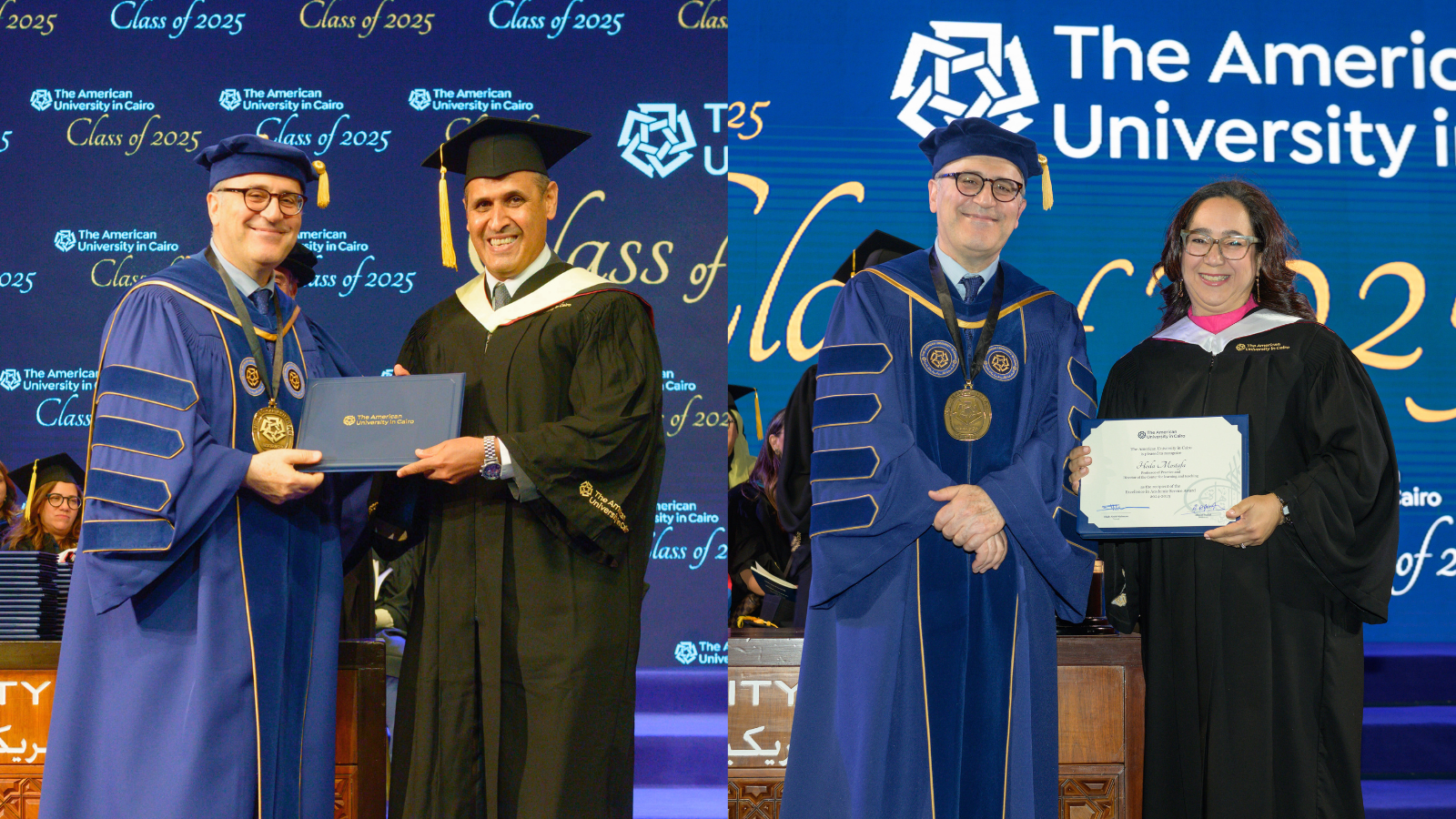
Hoda Mostafa, professor of practice and director of the Center for Learning and Teaching, and Maha Bali '01, associate professor of practice at CLT, believe it's all about the individuals using the tools rather than the tools themselves.

"The digital education space is rich with both pedagogical and technological innovations, and the decisions we take now can possibly open up new opportunities," said Mostafa. "I am personally a pedagogy-first proponent and see technology as the enabler."

"Nothing is ever really about the 'digital tools,' or at least, it shouldn't be," Bali affirmed.

"Sometimes, a tool can replace something you're doing in-person to allow you to do it the same way, supplement it or enhance it. Occasionally, a digital tool can help you do something you could not do before, but it's always about what it is you're trying to do and whether a tool exists that can be used -- or repurposed -- to fit your goals," Bali added.

For Bali, it's always about humans and social connections -- not tools, since there are almost no "new" tools that appeared during COVID-19. It's just that suddenly more people had to learn to use them and choose the ones that fit their needs.

"People are innovative, not tools," Bali emphasized. "You can use simple and straightforward tools every day, like Google Slides, in innovative ways. Digital literacy is more important than digital tools."

For instance, using Twitter isn't about learning how to tweet but about learning how to use it to create a campaign. Similarly, many people around the world use a tool like Zoom, but how many are using it to create engaging classes and meetings?

So is hybrid the future of education?

Mostafa perceives that in some contexts, traditional classrooms and even workplaces will no longer "work" after everyone has been exposed to studying and working in vastly different approaches than the usual, which is why hybrid models are here to stay.

Bali agrees that hybrid teaching will likely continue beyond the pandemic because it was already happening before it. "I'm sure that although many people were introduced to online learning at a time of trauma, some will realize the benefits of sometimes using non-traditional ways of teaching in the future," she stressed. "Whether it's for logistical reasons or because some tools enable equitable learning, each teacher will discover what works for them."

Despite that, Bali still believes that university education is much more than the cognitive learning component that happens in classrooms.

"Students gain so much from the social interaction, extracurricular activities, and other informal and less-structured learning that happens on campus. Universities will likely continue to offer and value such experiences," she affirmed.

For Mostafa, there seem to be more questions than answers at this point. "What will our learning spaces look like in the near and far future? Will we ever return to the face-to-face teaching we are accustomed to, or will we craft a new set of delivery methods, pedagogies and technologies that allow for fluid teaching and learning? What kind of support environment can centers for learning and teaching provide instructors as they drive this change and help navigate the array of digital tools that best support learning?" These are all questions yet to be answered, and the discussions continue.

"Many communities within institutions across the globe are responding to the pandemic by engaging in conversations around the future of higher education using an innovative mindset to challenge the status quo," she added.

As for Bali, while she's certain that hybrid learning isn't just a buzzword and is here for the long haul, she deems it vital to keep the issue of privilege front and center: Who has privileged access to technology, and who doesn't? What about access to high-quality devices? The internet? "Even some privileged neighborhoods don't have great internet access, and that is an issue that needs to be solved at the infrastructure level," she said.

But all in all, opportunities are evidently present, with digital tools paving the way for them.

"With this complexity comes opportunity when communities of practice look to others for guidance, draw from past experiences and, most importantly, listen with empathy and care to our learners," said Mostafa. "I hope that the higher education communities will embrace this crisis with innovation, accompanied by an openness to experimentation and learning -- one challenge at a time."

Share