Can data be sexist? Does artificial intelligence have the ability to discriminate?
As AI has developed rapidly over the past decade, researchers have discovered the real-world harm of potential bias in the data and the ways it disproportionately affects women and marginalized groups. Through the Access to Knowledge for Development Center (A2K4D) at the Onsi Sawiris School of Business, and its flagship initiative the MENA Observatory on Responsible AI, Nagla Rizk ’83, ’87, professor of economics and founding director of A2K4D, is leading the Feminist AI Research Network’s MENA hub. The network aims to develop AI systems and algorithms in a way that is inclusive, creating new opportunities and innovative solutions to correct inequalities.
So what is feminist AI? Rizk explained, “Feminist AI refers to the act of deconstructing oppressive systems, dismantling historic biases and engrained inequalities, then building inclusive AI structures that are based on principles of justice, transparency, agency, pluralism and more.” In short, it is the development and maintenance of artificial intelligence systems that ensure fairness across genders. AI has the potential to amplify biases and generate new ones. Feminist AI works to deconstruct these biases and create innovative solutions from within the data and algorithm design, addressing these inequalities.
Feminist AI is closely linked to the principle of “intersectionality” which refers to the “interconnected nature of social categorizations such as race, class and gender as they apply to a given individual or group, regarded as creating overlapping and interdependent systems discrimination or disadvantage.” Rizk added, “It is, in short, when oppression is linked.”
AI: Friend or Foe?
Humans have implicit biases, and when we create algorithms and AI models that rely on big data, those biases can unintentionally be amplified. Rizk seeks to find places where there may be data blur, data bias and data invisibility—and address these issues from the root.
“Technology has the potential to advance development, inclusion and achieving the Sustainable Development Goals. At the same time, there is also a peril,” Rizk stated. “As humans build AI models–with data and algorithms at their core—in every link of this chain lies a trigger for potential inequality. This could negatively impact women and marginalized groups. So it's important to think of inclusion when designing AI models.”
Data can be biased against women on both the micro and macro scales. For example, if you do an image search for the word ‘doctor’ on Google, 36% of results are women, whereas if you search up ‘domestic helper,’ 96% of results are women. Expanding out, Amazon’s AI hiring tools were more likely to prefer male candidates, as they were trained on male-dominated data from the tech industry. Apple-approved credit cards for candidates based on a biased data set would grant men 10-20 times higher credit than their wives. “These structural flaws in the data compound systemic issues that women already face, such as gender-based hiring, pay gaps and lack of financial security,” said Rizk.
Data also has ways of forgetting women. For example, the first iteration of Apple’s health app did not include women’s monthly health cycles. Additionally, there have been cases when diagnosing cardiovascular diseases, AI models have reproduced gender biases that exist in the real world and are less likely to take women’s symptoms seriously. “If women are invisible in the data, they will be invisible in the policy,” Rizk warned.
“If women are invisible in the data, they will be invisible in the policy."
“If we don't adopt a feminist sensitive approach to technology, we risk leaving behind a key part of the population. We also risk running into problems that will need to be fixed later after they’ve already caused damage,” explained Rizk. “The important point is that feminist AI is proactive. It is transformational.”
The Feminist AI MENA hub is working within the larger network now labelled as “Catalyzing Inclusive AI Research Network” with support from Canada’s International Development Research Centre (IDRC). Feminist AI research strives to take forward-looking steps that dismantle patriarchal structures, oppressive systems and historical inequalities inherent in technology and society in both the digital and analogue worlds. The hub’s work seeks to support the construction of inclusive systems that overcome biases, based on feminist principles, addressing intersectionality, and ensuring diversity in representation and justice in the building, deployment and impact of AI.
A MENA-Specific Approach to AI and Gender
From research to large scale collaborations with NGOs and government partners, the Feminist AI MENA hub is working to catalyze inclusive AI for development. Rizk emphasized the importance of looking at AI and gender inequality in the MENA-specific context, “The MENA region has its own nuances which require a region-specific response.”
One example of the work supported by the hub is research developing Arabic feminist data sets as part of a larger project to apply data feminism principles to assess bias in English and Arabic Natural Language processing. Another is work supported by the hub to develop an AI tutoring system to assist teachers to teach math in Arabic to girls of different ages in underprivileged community schools in Upper Egypt (Sa’eed). There, girls unfortunately do not receive the same schooling opportunities as boys and require additional support. In both examples, AI is used as a tool that, if properly controlled for potential biases, promotes equal opportunity between the genders.
Encouraging STEM education for women is crucial to increase the gender balance in the design of technology. In the MENA region, the gender gap is much more pronounced in the area of STEM work than it is in STEM education. This is termed “the gender paradox.” The absence of women in STEM work creates a “feedback loop” where the algorithm is not gender sensitive and ends up discriminating against women. This is both a product of the culture and cycles back into it.
“If we don't adopt a feminist sensitive approach to technology, we risk leaving behind a key part of the population."
Examples of algorithmic biases in MENA can be found in implicit biases in gig work app algorithms evidenced by the hub’s research on gig work, following earlier research on women in ride sharing in Egypt, and work with research partners in the region. In ride sharing apps, the fact that bonuses are determined by algorithms based on the number of hours of work automatically means that women will be discriminated against as they put in less work hours due to their home care responsibilities. To make up for that, women end up driving at odd surge hours, subjecting themselves to safety hazards, especially in remote areas with limited connectivity. Because they carry the labor of being care givers, women are likely to be punished by ride-sharing app algorithms. This compounds the challenges of this work, which is already precarious lacking job security, social protection and insurance. With the region experiencing the highest global female unemployment rate and the lowest global female labor participation rate, these women end up being stuck between a rock and a hard place.
Professor Nagla Rizk
By performing evidence-based research directly in the region, the Feminist AI MENA hub can better support transformational technology development and bring those findings to the international feminist AI network. “Technology is a product of society, and should respond to the needs of society. What we hope for is that technology is informed by what is going on in reality.” Therefore, added Rizk, “the technology for the MENA region has to speak to the needs of the MENA region.”
Rizk and her colleagues plan on continuing to develop region-sensitive research, and bringing their findings to policy makers, civil society, and the international research network. Outside of the hub, Rizk is taking these principles into the classroom through teaching the course Feminist AI: Technology, Gender and Development. “It gave students a different perspective on using technology,” Rizk said, describing the impact she saw in her students. “We had two male students conduct research on the need to use feminist AI principles in FinTech. To me, it was really fulfilling to have students be aware of how you could actually implement principles of responsible AI.”
“We want to raise awareness and deliver a message of fairness, justice and inclusion,” Rizk concluded. “To be a feminist, you must always be sympathetic to all marginalized communities, not just to women. Therefore, technology must be inclusive to all. We work towards that future.”
March 8 marks International Women’s Day, celebrating women’s achievements and highlighting the ways we can work together to improve the quality of life for women and girls worldwide. Helen Rizzo, associate professor of sociology in the Department of Sociology, Egyptology and Anthropology and the director of the Cynthia Nelson Institute for Gender and Women’s Studies, sat down with News@AUC to discuss the history of this holiday and the impact it has on feminism worldwide.
“The history of International Women’s Day is quite interesting, as it’s always been tied to women’s labor movements,” Rizzo explained.
The first International Women’s Day took place in 1909, hosted by the Socialist Party in the United States, celebrating women’s participation in the workforce. As an arm of first-wave feminism, these early women’s days were centered around ending gender discrimination in employment as well as women’s suffrage. The day was a way to highlight the issues facing women and celebrate the achievements that had been made. By 1914, March 8, which so happened to be the Sunday that year, spread across Europe as a day for women to raise their voices and be heard.
As time passed, International Women’s Day continued to evolve. “In the 1960s and 1970s, second-wave feminism caused a revival in celebrating March 8,” Rizzo continued. “The Women's History Center, which was an archive of the women's movement in Berkeley, went even further and established March as Women's History Month in the United States. Then, the United Nations began celebrating International Women's Day in 1975 to commemorate this day for women's rights and international peace. That’s when it truly became a global phenomenon.”
Having a globally focused women’s day allows for feminist scholars to engage with the transnational ways women’s issues affect each other. For gender practitioners, offering support across borders is incredibly important for gender parity worldwide. There are many ways to celebrate International Women’s Day, but a major part is analyzing how to improve the status of women globally. The United Nations declared the theme for the 2026 International Women’s Day to be ‘Rights. Justice. Action. For ALL Women and Girls,’ emphasizing the importance of a global perspective.
“The UN lists the areas where women are still unequal, which includes unemployment, the wage gap as well as violence in the workplace, the home and public spaces,” Rizzo explained. “There are still all kinds of issues where we need to make progress. The UN has a statistic that it will take over 200 years to close legal protection gaps. We’re facing the same issues we faced 100 years ago, which is why this day is still important.”
"We’re facing the same issues we faced 100 years ago, which is why this day is still important.”
Highlighting the areas she believes the international community must continue to focus on, Rizzo noted, “There are many critical issues that disproportionately affect women. Gender-based violence can be devastating for many women and girls. Armed conflict and wars, combined with political violence, disproportionately harm women.” .
With education, we’re still not there yet, Rizzo explained. “There has been a lot of improvement in women’s education. However, there are still areas, even in this region, where women face high barriers to education. We’re also seeing issues where women receive an education, but that doesn’t translate into employment or equal wages.”
Wage inequality is prevalent across the world and still heavily impacts Egypt, Rizzo said, adding that family law is still a topic in the region that needs reform in order to reach gender equality. “Without equal rights within marriages and family relations, women are more restricted and have fewer access to protections,” she said.
While these issues might feel overwhelming, Rizzo emphasized the power we as individuals have to make a difference. “Spreading information and performing research as a University is a critical step in helping women and girls,” she affirmed. “Having a public reminder to everyone that we still need to work on issues of inequality and discrimination is essential. It’s important to provide evidence that inequality is still there. The research we do at AUC can work in tandem with NGOs, social movements and international organizations that can translate into policy recommendations and social change.”
“Spreading information and performing research as a University is a critical step in helping women and girls."
In addition, Rizzo expressed that both men and women are critical parts of achieving gender equality. Men too are hurt by the standards set up by the patriarchy: They’re not encouraged to express a range of emotions, there is less room for them to explore “feminine” fields and they are often placed into societal boxes. While International Women’s Day focuses on women, achieving gender parity helps people of all sexes. “It’s critical to have men as allies in feminist spaces,” Rizzo stated. “Gender equality does not merely mean rights for women. It means equality overall, and that includes men.”
Looking toward the future of gender equality, Rizzo believes it's essential to have as many gender practitioners as possible. An engaged, active look into gender equality is now more important than ever before. There are growing attacks on academic freedom in the Global North, and funding toward women’s studies has been severely cut and departments and programs have been shut down in places like the United States, she stated.
“I went to a workshop in Morocco last year where they invited the directors of gender and women’s studies centers from across the Middle East and North Africa region. The goal was to try to map academic departments, research centers and NGOs focused on women’s rights across the region to form a support network,” Rizzo shared.
"Global gender equality must be based in all parts of the world, and there is plenty of action we can take from the Middle East."
The workshop was funded by the United Nations and the women’s section of the Arab League, and will lead to an official UN report. “Given what’s happening to gender studies programs in the United States, it’s time for our region to step up,” Rizzo concluded. “Global gender equality must be based in all parts of the world, and there is plenty of action we can take from the Middle East. International Women’s Day is a time where we can appreciate the action that’s been made and figure out how moving forward will benefit as many women as possible.”
Master’s students in the Governance and Development course immersed themselves in real-world governance during a field visit to the Badrashin district in the Giza countryside, witnessing firsthand how community-driven efforts advance sustainable agriculture and tourism.
“A field visit to a model farm in Badrashin helped me form a clear vision about the concept of governance and how to effectively apply it, which reinforced the principle that good governance is the way to sustainable development and building a better future,” said Noha Ragab, a public policy and administration student in the class.
Designed as an experiential learning course, students explored topics including good governance, public sector innovation in the age of AI, poverty alleviation, decentralization, climate change and barriers to achieving Sustainable Development Goals. They combined classroom learning with interactive, hands-on activities, such as analyzing a COVID-19 vaccine equity article, conducting a group case study on employment services, participating in guest lectures by international scholars, organizing a roundtable and visiting Dahshur, Badrashin to observe a co-governance initiative in sustainable agriculture and tourism implemented by the Dashur Tourism Development Association in support of the Greenish Foundation.
“The class was so engaging that all of us were motivated to join [this] completely optional field trip all the way out to Dahshur in the Giza countryside,” said Mohammad Badawi, another public policy and administration student in the course. “Stepping out of the classroom to interact with professionals applying these exact concepts in real life was incredible.”
Shahjahan Bhuiyan, professor in the Department of Public Policy and Administration and course instructor, explained the purpose of the visit. “It closely complemented the case study developed by students on co-production, allowing them to see theory translated into practice,” he said.
The course also featured several distinguished guest speakers. Faculty from Carleton University in Canada, New York University in the United States and the University of Cambridge in England delivered lectures on topics such as public sector innovation, urban governance, as well as decentralization and climate change. “Getting to interact with active professionals and world-recognized experts and hear such rich, on-the-ground information made the complex material really click,” said Badawi.
"This course was able to foster deep discussions about key issues and definitions in governance and development," shared Christiane Khouzam, who took the course as well. "It sparked conversations not only within the classroom but also with leaders and practitioners in the sector. Additionally, despite being a short semester, the course was able to hold a diverse pool of learning models. Dr. Shahjahan incorporated a roundtable discussion, site visit, research papers, and dynamic class debates. This diversity of formats kept the sessions engaging and allowed us to approach governance and development from multiple perspectives."
Students also organized a roundtable on the governance and development paradox, with faculty from the University of Dhaka in Bangladesh and professionals from the Sawiris Foundation for Social Development in Egypt providing practical insights and responding to student questions. Reflecting on both the conceptual frameworks and hands-on experiences, students learned that governance and development are mutually reinforcing forces and effective governance fosters sustainable development– contributing to the broader advancement of the human condition.
"Through a range of carefully designed exercises, this course equipped students with the knowledge and skills to concisely connect personal insights with academic concepts in analyzing real-life problems,” Bhuiyan noted. “Students engaged in practical case study analysis and, through a field visit, examined how theory and practice often diverge in everyday contexts. Altogether, these components enriched their practical understanding and strengthened competencies essential for both their personal development and professional careers."
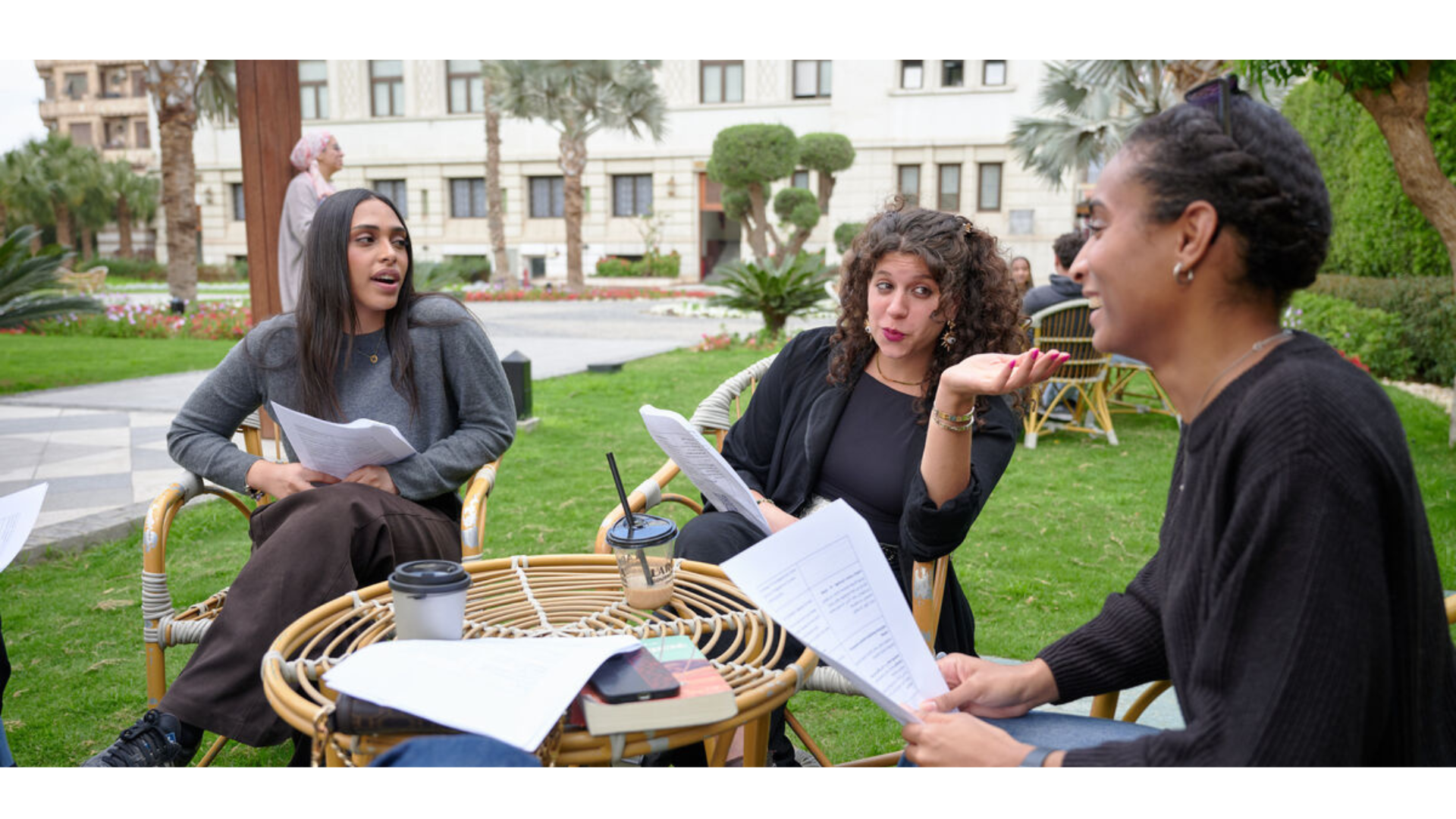
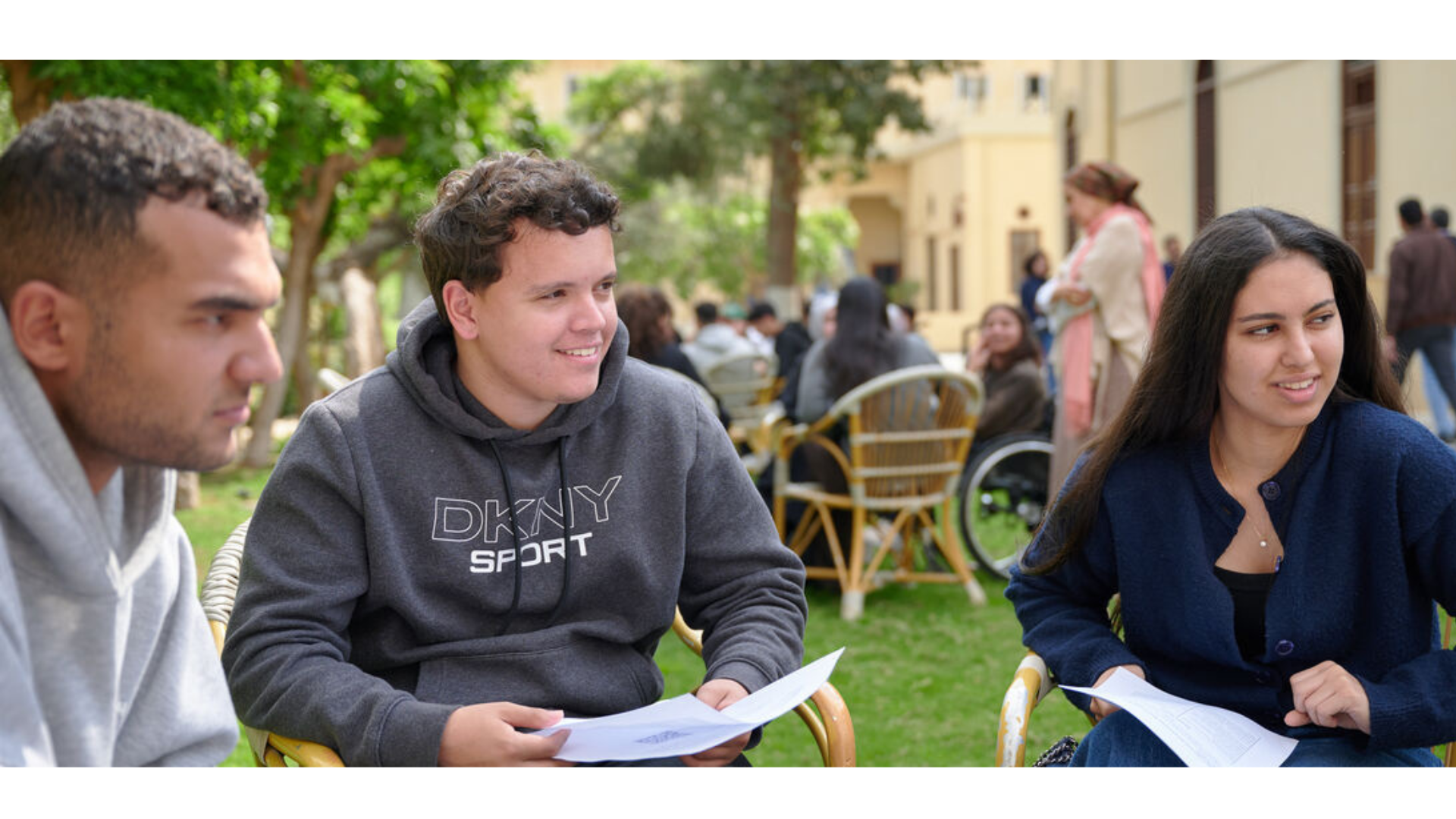
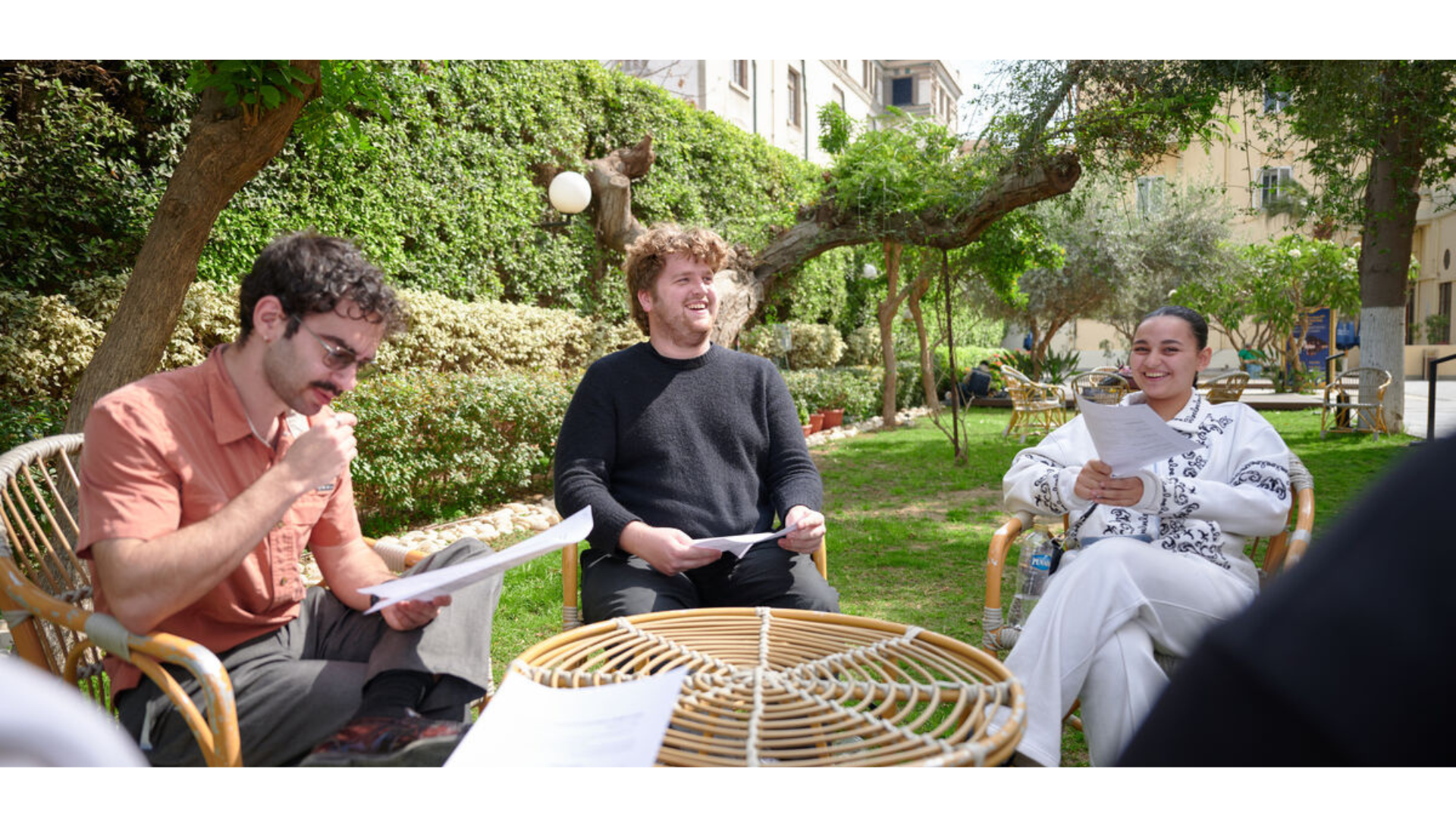
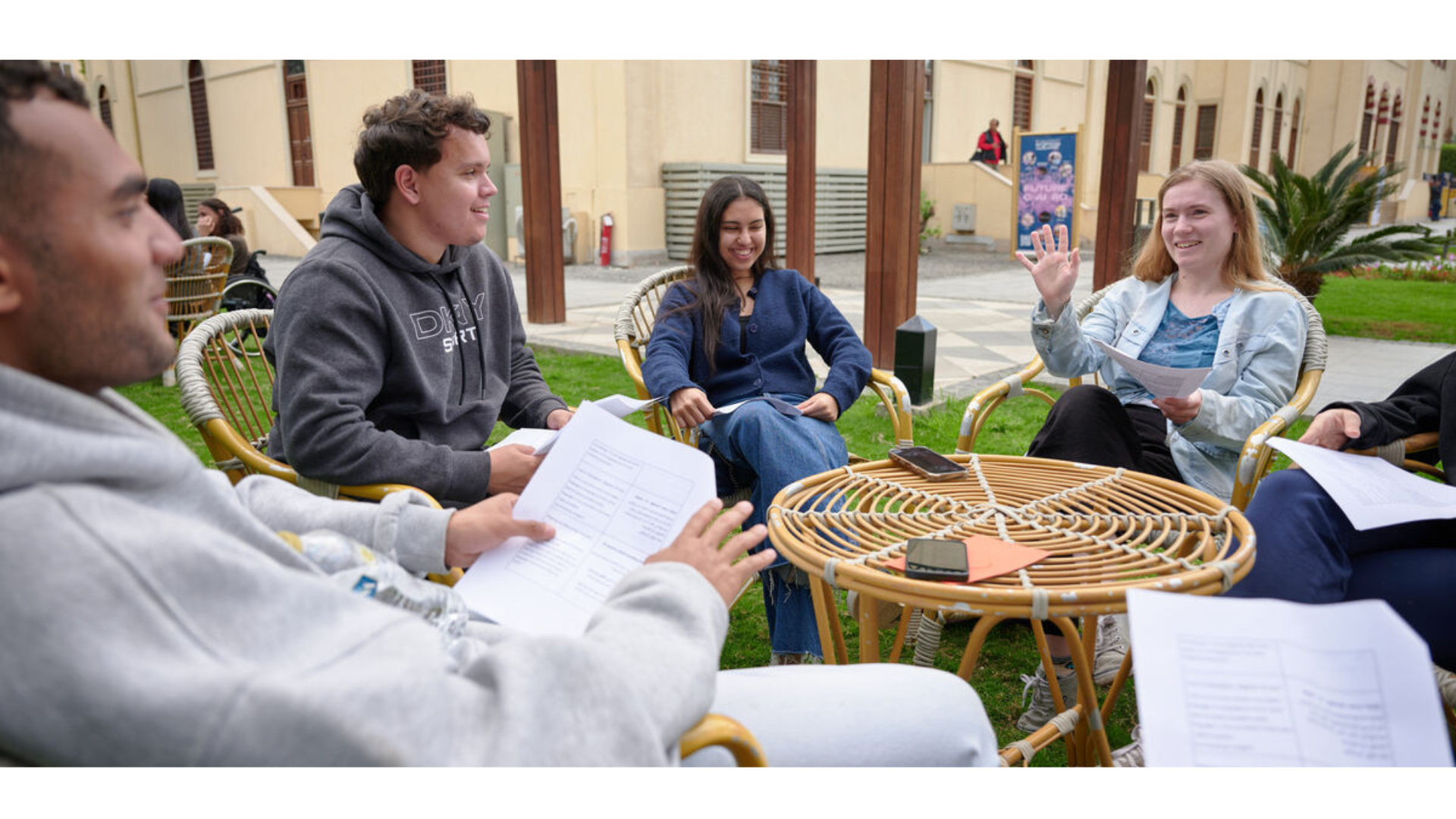
For the banks of the Rhine to the Nile’s corniche, students have crossed borders to discuss border crossings. University of Cologne students spent the final week of their winter course alongside AUC students, studying migration within the Global South.
The Dialogue on Migration Governance in the Euro-Mediterranean (DiaMiGo), now in its third year, has brought Egyptian students to Germany and German students to Egypt, allowing them to discuss the transitory nature of migration across the Mediterranean. With migration rooted across the world, students analyzed Egypt as a gateway, a hub and a home.
“The experience was impactful for not just the students visiting from Cologne, but also the AUC students who came from not just a CMRS [Center for Migration and Refugee Studies] program, but multiple different programs,” shared Emma Stotlemyer, CMRS graduate student and research assistant. Stotlemyer coordinated DiaMiGo’s winter session alongside fellow research assistant Alaa Kasmo and Fatima Salah, Reem Adel and Hiba A.aseem M.Sharif. “We're able to bring their expertise, perspectives and experience to the program, and they were able to learn a lot more about refugees in Cairo.”
DiaMiGo encouraged participants to focus on integration in the everyday — dissecting Egypt’s role as host and transit hub for migrants, as well as the intersection of heritage, labor, health, activism and local governance on integration.
Students attended lectures at AUC Tahrir Square, led by CMRS and SEA faculty Amira Ahmed and Gerda Heck, discussing the Egyptian social context, the role of media, culinary connections to migration and musical heritage. Dialogue encouraged participants to analyze what makes a place a home, and how they can expand these lessons into place-making for migrants and refugees.
“The DiaMiGo Winter School was a truly enriching experience for our AUC scholars and students, as well as for the students from University of Cologne,” shared Ahmed, assistant professor in the Department of Sociology, Egyptology and Anthropology. “It created a dynamic and engaging environment where participants could delve into the key issues affecting migrants and refugees in both Egypt and Germany.”
While the lectures were an important facet of the winter school, what was perhaps more impactful was the dialogue between the German and Egyptian students as well as the refugee fellows who participated. Ahmed added, “One of the highlights of the school was the incredible diversity of backgrounds and experiences, thanks to the refugee fellowships, which offered a unique opportunity for refugees from Sudan, South Sudan, Syria, Somalia and Eritrea to present their perspectives and insights.”
One CMRS student, Rya Hammuod Hamuod Alhosin, described how important it has been for her to share her migrant background in an academic setting. “Writing my thesis on my experience as a Syrian refugee put me on a journey to find my own voice,” she said. Participants in DiaMiGo uncovered the ways that centering migrant history, culture and heritage in integration can be both successful and empowering.
Narratives around migration often revolve around the Global North. Engaging in migration dialogues while being based in the Global South helped reframe the field for students and decolonize migration perspectives. “Egypt is one of the most important actors in the region to understand global migration routes,” shared Hannah Walsken, a student from the University of Cologne. “Talking to students and refugees in Egypt gives an important perspective. It’s not theory alone, but also the everyday lives of people.”
The variety of perspectives from refugees based in Cairo displayed how important the Egyptian context is as a case study for global migration. The refugee fellows got to share their stories with both AUCians and German students, lending their perspectives and humanizing otherwise abstract concepts.
“It was impactful because the narratives around integration often focus on how refugees can change themselves in order to fit into a community or society,” said Stotlemyer. “Speaking with the refugee fellows and scholars allowed us to see how refugees are continuing to integrate within their new society in a way that involves their skills, talents, experiences, traditions, customs, food, language, dialects — how they make a place for themselves.”
Partnerships like DiaMiGo lend perspectives between the Global South and Global North, which is essential in an inherently international field like migration studies. Egyptian and German students will continue building global conversations when they meet up for DiaMiGo III this summer in Cologne. Until then, they will continue unpacking the important lessons they learned from engaging in dialogue with one another.
“Being able to unpack and learn how refugees engage in place-making in Cairo is incredibly important for migration studies, for refugee studies and for anybody who engages with any sort of migrant and refugee population — so that we can continue to de-center the narratives of the Global North and re-center narratives coming from the Global South and the refugee community. This allows refugees to create those narratives themselves,” affirmed Stotlemyer.