Home page
ع Search AUC

Forbes Names Alumnae Among Region's Most Influential Women of 2018

Claire Davenport
October 29, 2018

Working in diverse fields, from banking and trade to business management and telecommunications, 13 AUC alumnae are named by Forbes Middle East among The Middle East's Most Influential Women of 2018. Focusing on women in executive business and finance positions, as well as women in government departments, this annual list considers the title, scope and impact of the women's work, as well as the revenues of the companies they lead. AUC alumnae continually impress, making important contributions in a variety of sectors and fields within Egypt and abroad. 

Read about these women, their jobs and how they got to where they are today:

#3
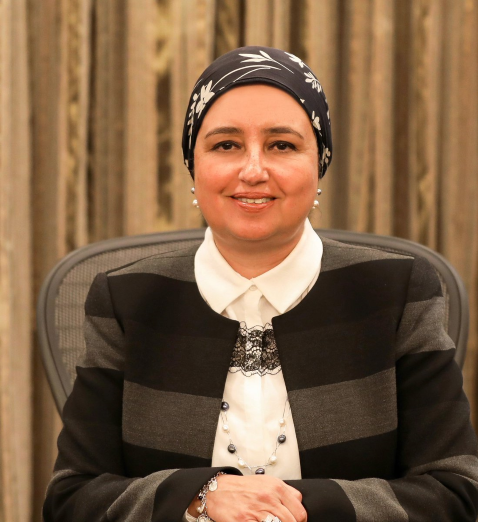
Lobna Helal

LOBNA HELAL '83, '89

Deputy Governor, of Central Bank of Egypt 

Graduating from AUC with a Bachelor of Arts in political science and a Master of Arts in economics, Lobna Helal is the first woman ever appointed deputy governor of the Central Bank of Egypt. 


#16

 ELHAM MAHFOUZ '84

Chief Executive Officer, Commercial Bank of Kuwait 

Graduating from AUC with a Bachelor of Arts in business administration, Elham Mahfouz first worked as a credit manager and deputy chief executive officer at the Commercial Bank of Kuwait before becoming its CEO. 


#20

DALIA EL BAZ '95

Deputy Chair, National Bank of Egypt 

Graduating from AUC with a Bachelor of Arts in business administration, Dalia El Baz has been a member of the National Bank of Egypt's executive committee since 2016. She supervised the deployment of the new core banking systems and the centralization of banking operations. El Baz started her banking career at Barclays Bank Egypt.


#23

SAHAR EL DAMATI '76, '79

Managing Director, Union Capital

After graduating from AUC with a Bachelor of Arts in economics and Master of Arts in business administration, Sahar El Damati worked in a number of organizations in the banking sector such as the International Monetary Fund (IMF), commercial International Bank (CIB) and the World Bank. She went on to be head of the Credit and Portfolio Management department at the Social development fund, deputy managing director, chief risk officer and board member of HSBC Bank followed by deputy chairman and board member at Banque Misr. She is currently holding the position of managing director of Union Capital credit funds, an Egypt-based private equity firm focused on small and medium enterprises.


#24

RAWAN AHMED AL SAID '88

Chief Executive Officer, Takaful Oman 
Chairperson, National Bank of Oman

Graduating from AUC with a Bachelor of Arts in economics, Rawan Ahmed has been the chairperson of the National Bank of Oman since 2005. She is also on the board of five other companies. Before her time at the National Bank of Oman, she held the position of non-executive director at ONIC Holding and deputy chief executive officer of the State General Reserve Fund of Oman.


#31

MERVAT ZOHDY SOLTAN '83, '89

Chief Executive Officer, Export Development Bank of Egypt

Graduating from AUC with a Bachelor of Arts in business administration, Mervat Soltan worked as the vice president of Deutsche Bank Cairo, as the director of HSBC and as the general manager at Ahli United Bank Egypt before her time at the Export Development Bank of Egypt. 


#45
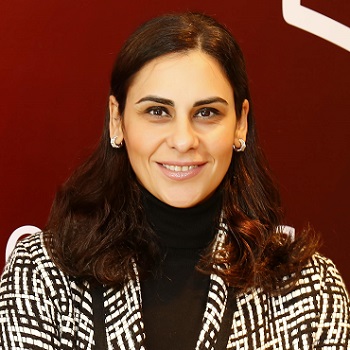
RASHA EL-AZHARY '97 

Chief Financial Officer, Vodafone Egypt

Graduating from AUC with a Bachelor of Arts in economics and a Master of Business Administration, Rasha El Azhary previously served as the development director for Vodafone Qatar, leading the launch of fiber and LTE services. She joined Vodafone in 2003 after working as a senior associate at EFG Hermes. 


#46

HANIA MOHAMED SADEK '82, '90

Chief Executive Officer and Executive Director, HSBC Egypt

Graduating from AUC with a Bachelor of Arts in economics and a Master of Arts in economics, Hania Sadek has more than 30 years of banking experience. She has worked as the head of the IT Department, head of the Internal Audit Department and head of Operations and Systems at HSBC. 


#47

MARWA EL AYOUTI '98

Chief Financial Officer, Orange Egypt

Graduating from AUC with a Bachelor of Arts in economics and a Master of Business Administration from the Maastricht School of Management, Marwa El Ayouti got her start working at Vodafone, taking on her position at Orange Egypt this past April.


#66

HALLA SHAKER SAKR '84

Managing Director, Attijariwafa Bank Egypt

Graduating from AUC with a Bachelor of Arts in business administration, Halla Shaker went on to serve as the deputy chief officer of HSBC Egypt before taking on her current position as managing director of Attijariwafa Bank Egypt.


#86

SHAHIRA MAGDI ZEID '83

Co-Founder, Maridive Group
Vice Chair, MZ Investments

Shahira Magdi Zeid graduated from AUC with a Bachelor of Arts in business administration. She co-founded the Maridive Group, the largest company providing off-shore marine and oil support services in Egypt. She also is the Vice Chair for MZ investments, a company that provides financial and investment advice to both insitutional and private investors. 


#89

RANA ADAWI '93

Managing Director, Acumen Asset Management

Graduating from AUC with a Bachelor of Arts in economics, Rana Adawi co-founded Acumen Holding. Bringing more than 22 years of experience in the financial services industry, her previous roles include head of research in Fleming CIIC Securities.  


#96

SOHA EL TURKY '94, '98 

Chief Financial Officer. Banque du Caire

Graduating from AUC with a Bachelor of Arts in business administration and a Master of Business Administration, Soha El Turky has experience spanning corporate and retail banking. Before taking on her position at Banque du Caire, she worked as the chief financial officer for Abu Dhabi Islamic Bank and as the chief financial officer at Citibank.

Share

AUC Venture Lab: Five Years of Changing Egypt's Entrepreneurial Landscape

Aliah Salih
auc_venture_lab_celebration

The AUC Venture Lab, Egypt’s first University-based startup incubator and accelerator, recently celebrated its fifth anniversary. During those five years, the V-Lab incubated 115 startups that generated EGP 88 million in revenues, raised more than EGP 220 million in investments and created more than 500 new jobs. V-Lab was also recognized as a top university business incubator in Africa and high-impact incubator in the Middle East and North Africa region by UBI-Global.

“AUC Venture Lab had a distinctive impact on Egypt’s entrepreneurial ecosystem,” said Ayman Ismail ’95, ’97, director of the AUC V-Lab and the Abdul Latif Jameel Endowed Chair in Entrepreneurship. “[This impact is] not only by supporting innovative, high-growth startups, but also by connecting them with AUC’s educational mission through experiential learning, where students and entrepreneurs work together and collaborate to create value for the startups.”

Since its launch in 2013, AUC Venture Lab has provided more than 1,500 hours of mentoring and training to its entrepreneurs. These V-Lab graduates, driven by creativity and determination, went on to provide life-changing services and experiences, contributing to facilitating lives across Egypt and the region.

Since its founding, the AUC Ventura Lab Startup Accelerator was supported by several corporate partners, including the Arab African International Bank (AAIB), a corporate leadership co-founder, as well as SODIC, Shell and General Electric. “The collaboration between AAIB and AUC Venture Lab marks a unique alignment between financial and academic institutions for the interest of entrepreneurs,” said Hassan Abdalla, chief executive officer of the AAIB. “As a main driver in the Egyptian economic scene, the financial sector must play a role in empowering the entrepreneurship ecosystem in the country.”

FinTech Future

People are constantly trying to find ways to better manage their money and time, and financial technology (FinTech) is helping the world move in that direction, with the AUC V-Lab becoming a regional and local hub for this transformation. In Fall 2016, V-Lab launched the AUC Venture Lab FinTech Accelerator in partnership with the Commercial International Bank (CIB). Since then, the V-Lab FinTech Accelerator has graduated 18 FinTech startups, contributing to the growth of the FinTech ecosystem in Egypt.

With the FinTech field growing in Egypt, both financial and non-financial institutions are becoming more open to these innovations, and entrepreneurs are finding more ways to stand out when they enter the world of FinTech. Q-Less, founded by AUC student Walid Wael Abou ElNour, Saeed Talaat ’16, Hashim Ibrahim ’16 and Youssef Galal, is a startup that’s out to tackle one of the country’s most frustrating experiences: being in queues and hoping to not waste your day while trying to make a payment. Q-Less is an online platform built on a system that facilitates transactions between customers and service providers. It allows customers to make everyday payments, renew subscriptions and pay tuition without having to stand in endless queues.

Abou ElNour, finance and accounting major at AUC and financial analyst of Q-Less, said that the startup joined the AUC Venture Lab at a mature stage, with a developed prototype and business model. Nonetheless, the lab played the role of a mentor and supporter. “The V-Lab was more of validation,” Abou ElNour explained. “We had access to different mentors with high expertise in their fields who were able either to validate and support what we did or guide us to more efficient and profitable alternatives,” he said. “Both were beneficial for all of us. They greatly expanded our knowledge and understanding.”

The process of entering the V-Lab takes startups through several stages. It starts with applications, screening, mentoring and judging, then it becomes serious business, where startups go through the acceleration process, where they receive intensive training. Then on Demo Day, startups are presented, and finally, there is incubation, where startups are granted an extended amount of time to use the V-Lab’s services.

“It gave us more trust in our startup,” said Abou ElNour. “As entrepreneurs, we are always on a ride in an emotional rollercoaster of doubts, hope, success and failure. However, having your idea mentored and supported by people with very high expertise, knowledge and impact in the entrepreneurship field at the V-Lab gave us a boost and assurance that we are on the right track.”

Startups Serving Society

Swvl

Startups who graduate from the V-Lab all have one thing in common: serving different communities and sects of societies. One of them is Egypt’s most recent and useful transportation options: Swvl – a mobile app that organizes convenient transportation routes around Egypt at reasonable prices. Co-founding CEO Mostafa Kandil ’15 and his team are alumni of the AUC Venture Lab. Today, Swvl has raised $8 million in its first round of venture capital financing, which is the largest round of funding for a tech startup in Egypt and one of the largest in the Middle East.

“V-Lab was instrumental in Swvl's early days,” Kandil affirmed. “The team's mentorship and constant feedback on how to take Swvl from zero to one was key in how we shaped our marketing, operations and other key functions. Being a V-Lab graduate was a stamp of confidence when we started fundraising.”

With its entrepreneurial support and the knowledge and guidance of mentors, the team was able to launch the application before graduating from the cycle. Kandil confirms that Swvl is on a mission to create 5,000 micro-entrepreneurs who own their vehicles to make a better living.

“What we’re doing is building public transportation for emerging markets,” said Kandil. “Often, people outside of emerging markets don’t understand the magnitude of this global issue. In these markets, the middle class doesn’t have affordable ways to commute. We’re going to these markets and building the infrastructure for them.”

La Reina

Many may have seen ads around Facebook about wearing their favorite designers’ sartorial masterpieces at an affordable price — it’s the unique V-Lab graduate, La Reina, founded by Ghada ElTanawy and Amr Diab. La Reina, which is based in a platform that allows customers to rent formal gowns, recently raised $1 million in a first round of investment from Algebra Ventures and 500 Startups.

La Reina’s service is targeted at women, with 75 percent of the team behind it being women. The couture service allows customers to rent gowns according to their occasion — whether it’s a formal evening or their wedding. In return, it allows others to make use of gowns that were bought and worn once, but are in great condition ready to be reused.

In the two years since its launch, La Reina brought in more than EGP 3.5 million in total for gown owners. “The AUC V-Lab was my first window to the startup ecosystem,” said ElTanawy. “After I joined, I was mentored by many entrepreneurs and got to know them, and they who helped me in my journey. They encouraged me to apply in competitions, one of which was RiseUp Explorer, where we were named one of six most promising startups in the Middle East and went to Silicon Valley.”

With a growing team of talented and determined individuals, La Reina is looking forward to creating a “humble boost for the local economy,” through increasing the number of items to 5,000. This will result in an increased revenue — up to 8 million for dress owners — as well as expansion to the regional market.

ElTanawy noted that V-Lab has been there every step of the way, and she expects it to always be there for support as her business grows. “The AUC V- Lab was a supporting partner all the way,” she explained. “I have always reached them for advice, and the mentors are mentors for life — not for a three-month cycle.”

She added, “When I am faced with challenges or different opportunities and I need guidance, I always reach out to them — specifically Professor Ayman Ismail. They follow up with me along the way and warn me if I have a blind spot in my business. I advise future entrepreneurs to get the most out the AUC V-Lab because it really can change your life. Consider them family because they are willing to go above and beyond for your success.”


Share

Economics Senior: Liberal Arts is the Road to Self-Discovery

Katherine Pollock
Ahmed Sharafeldin recounts his experience at AUC as part of the fifth annual welcome and recognition ceremony for new and returning scholarship students

For Ahmed Sharafeldin, a graduating senior and recipient of the May ‘87 and Ahmed Heikal Endowed Public School Scholarship, AUC's liberal arts education has allowed him to discover his greatest passion: economics. Although Sharafeldin now has plans to work in consulting, finance and, eventually, politics after graduation, he did not always have such a clearly defined path.

“My family wanted me to become an engineer, but I always knew that I didn’t want to do that,” said Sharafeldin. “However, I was not so sure what I wanted to study. I’ve long had an interest in public affairs since 2011 when, as I was simultaneously going from being a teenager to an adult, I started to take much more interest in what was happening in Egypt and the world around me.”

Despite these inclinations, Sharafeldin did not immediately find his passion upon entering AUC, yet the opportunity for academic and intellectual exploration quickly allowed him to do so.  “During my first semester, I studied engineering," he recalled. "I did well, but I didn’t love it. Then, during my second semester, I decided to change majors. The Core Curriculum and liberal arts education allowed me to take two political science classes and two economics classes, and I decided immediately that economics was definitely the thing for me.”

As Sharafeldin noted, the liberty and encouragement he received in developing his academic interests “wouldn't have been possible at any other university in the country except AUC. The liberal arts education helped me know what I am really passionate about,” he affirmed.

An intellectually curious student, Sharafeldin has a love for philosophy, reading and, thanks to the opportunities he was afforded at AUC, classical music. He has taken a variety of classes outside of his major, citing History of Western Music as one of his favorites. He also had the opportunity to participate in –– and lead –– numerous student organizations. “I joined the Arabic section of AUC Times magazine, and it was really an instantly perfect fit," he said. "I really liked the culture and [being with] other students, who have very similar interests. I eventually became the managing editor of the section. However, by my junior year, I realized that I also want to do something related to my major."

Sharafeldin then joined the Finance and Economics Club, which he now heads. "It’s an academic club, so we have a range of activities, from networking sessions with job professionals in the field to national research competitions to different finance games. We’ve also recently been working on a publication,” said Sharafeldin, who also helped organize the first Annual Conference of Egyptian Economics Students [ACEES], which aims at fostering undergraduate economic research.  

Building on a passion for economics that he first developed at AUC, Sharafeldin also studied abroad at the University of Chicago for a year through the Sawiris Scholars Exchange Program, an experience that allowed him to take classes with and learn directly from some of the world’s leading economists.

Moving forward, Sharafeldin hopes to work at a consulting firm and then obtain his Master of Business Administration, eventually focusing his professional career on finance or investing. He is particular interested in private equity, a field in which his scholarship donor, Citadel Capital Chairman and Founder Ahmed Heikal, is coincidentally a regional leader. “It’s a sign!” said Sharafeldin, as an optimistic smile emerged on his face.

Despite this particular focus, however, Sharafeldin emphasized that “as I graduate this fall with a degree in economics, I'm not just going into the world as this young man in a suit with knowledge of supply, demand and financial investments. I'm also an aspiring fiction writer. I'm also a classical music connoisseur, who makes sure he attends the Cairo Orchestra concerts every Saturday night, ever since being inspired by a wonderful professor and playing for AUC's classical guitar ensemble. I'm also a keen film follower, who became a novice critic of modern cinema after he took an introduction to film class as part of his Core Curriculum requirements."

As Sharafeldin reiterated time and time again, none of these important self-discoveries would have been possible without the liberal arts education he received at AUC.

For incoming undergraduates who are struggling to decide their major, Sharafeldin advises, “Use your freshman year to take advantage of the Core Curriculum, investigate your options, get in touch with seniors for advice and talk to the Career Center about the job prospects of what you’re interested in. Make the freshman year one of exploration; don’t just dive into one thing immediately.”

Even to say that Ahmed Sharafeldin has taken full advantage of his time at AUC is an understatement. From economics to fiction writing and Arabic literature to classical music, he has cultivated a plethora of interests that will, without a doubt, ensure his future success. “I feel so lucky,” he said. “I feel like I’ve done everything I could possibly do as an undergraduate student, and now I’m just looking forward to what’s next.”

Share

Sherif Kamel: Keeping Pace with New Tech Trends, Bringing People Together

February 8, 2016
Sherif Kamel, professor of management and former founding dean of the School of Business, is the new vice president for information management

From apps for student life, course registration, grades and sports tournaments to the creation of blended learning spaces combining in-class seminars with online resources, AUC’s new Office of Information Management, headed by Sherif Kamel, management professor and former founding dean of the School of Business, aims to bring together people and technology in innovative ways that reflect the continuous and changing academic needs in today’s digital world.

“There’s a growing trend toward on-the-go apps, and AUC should be there,” affirmed Kamel. “There are a variety of emerging learning tools and applications, and not all of them are web-based platforms. [In fact], the web is seen as the classical approach, not the most innovative and creative anymore.”

Interactivity and collaborative technologies are the way forward, Kamel noted. “I want to see more interactive communication and more apps offering a variety of services,” he said. “Some can be directly related to the learning experience, and some can be related to services and community life on campus.”

Laying the Groundwork

During this first year, Kamel will be primarily focused on conducting an overall assessment of the technology space at AUC. “This is a collective effort and should lead to the development of a strategy for information management for the next three to five years –– where we are, where we are heading and how to get there,” he said, adding that the office will always amend its strategy based on emerging and changing needs. “But we need to have something that is integrated and complements the AUC strategy,” he emphasized.   

The initial step in developing a strategy is gathering feedback from the community. “It is always important to first understand the environment by talking to different stakeholders, including students, faculty, staff and alumni, and getting their views and thoughts,” said Kamel. “We need to know what issues and challenges they’re facing. It is a community effort, and engaging different stakeholders will help bridge whatever gaps exist between what people have and what they are looking for.”

Kamel added that, as former dean of the School of Business, he had regular discussions with faculty, staff and students to understand their concerns, listen to their ideas and explore ways to improve the school. 

“I see this happening again in my new position,” said Kamel, who also met with student leaders on campus to listen to their ideas and needs.“Just a couple of days after I took on my new responsibility, I was approached by a group of students who proposed to me an app for navigating the campus. They even had an initial version built. It’s s a great suggestion and is just one example of how we hope to facilitate services offered through technology.”  

Embedded Blended Learning

A key component of Kamel’s vision for the office is revisiting technology utilization on campus, specifically, how technology is embedded in the learning experience. “It’s one thing to update the technology infrastructure and train students, faculty and staff to use it,” Kamel said,“but how are we actually embedding technology in the whole cycle?”  

A major trend in higher education, according to Kamel, is the creation of blending learning spaces. “Blended learning is the mixture of in-class seminars with online resources and webinars,” he explained. “With that combination, we can render the learning experience much more effective because after 20 years of web and online platforms, there is a huge knowledge depository out there. It’s definitely one of the things we’ll be looking at.”  

With this forward-looking vision, Kamel is exploring the different venues where existing technology on campus can be improved. This includes identifying avenues for the community to access campus services through various technology devices, expanding the way students and faculty members use technology in the classroom and offering staff members the opportunity to capitalize on the use of technology in their administrative and managerial responsibilities.

Campus Collaboration  

To accomplish all these goals, Kamel emphasized the importance of campus collaboration. A significant amount of technology infrastructure at AUC already exists, but Kamel sees an opportunity to work with different stakeholders to identify how the available resources can best benefit the University community. The office will be working with the information technology infrastructure at large and University library –– utilizing its technology tools, applications and emerging digital platforms–– to investigate the role of technology and innovative methods in the learning process, as well as explore different venues for information creation, dissemination and knowledge sharing for the AUC community. The office will also work with the academic schools, Center for Learning and Teaching, as well as the various research centers on campus.

“Coordination and collaboration will render the operation more efficient and avoid redundancy or duplication,” Kamel explained. “We should collectively be looking at how to best serve the AUC community, whether on or off campus, through technology platforms, tools and applications to meet the University’s mission.”  

For Kamel, the creation of the office is only the first step forward in a continuous effort to develop new initiatives. “I personally believe in continuous improvement and that such a process is a journey and never a destination,” he said. “This is a collective effort, and I look forward to working with different stakeholders to continuously improve students’ learning experiences, where technology is absolutely invaluable and a critical element in the learning process. With the support of the intellectual human capital on campus and with the proper and collective efforts of all, we will regularly improve the learning environment, reflecting what the different constituents want to be able to realize the positive impact on society we all desire.”

Even as Kamel discusses the technological aspects of his new position, he makes a point to never lose sight of where technology comes from and who it is for. “The most important element and building block in that space is the people; they make all the difference,” he said.

Share