Home page
ع

Trendsetters

Trendsetters
Ioanna Moriatis, photos by Ahmad El-Nemr
<?xml encoding="UTF-8">

By Ioanna Moriatis, photos by Ahmad El-Nemr | This story appeared in the Spring 2018 edition of AUCToday.

As Mahatma Gandhi once said, "We but mirror the world. ... If we could change ourselves, the tendencies in the world would also change. ...We need not wait to see what others do."

AUCians definitely don't wait. They initiate and take the lead. You find them everywhere -- from business and education to technology and policymaking -- making a difference and leaving an impact, particularly when it comes to community building.

Education for the New Generation
 

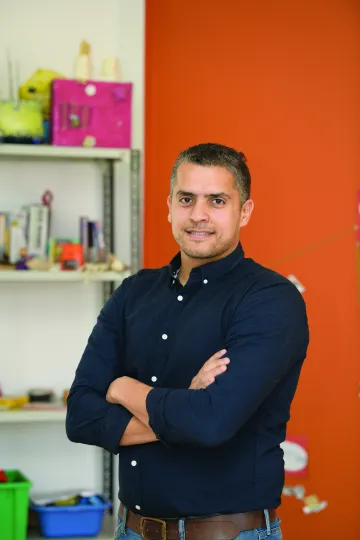
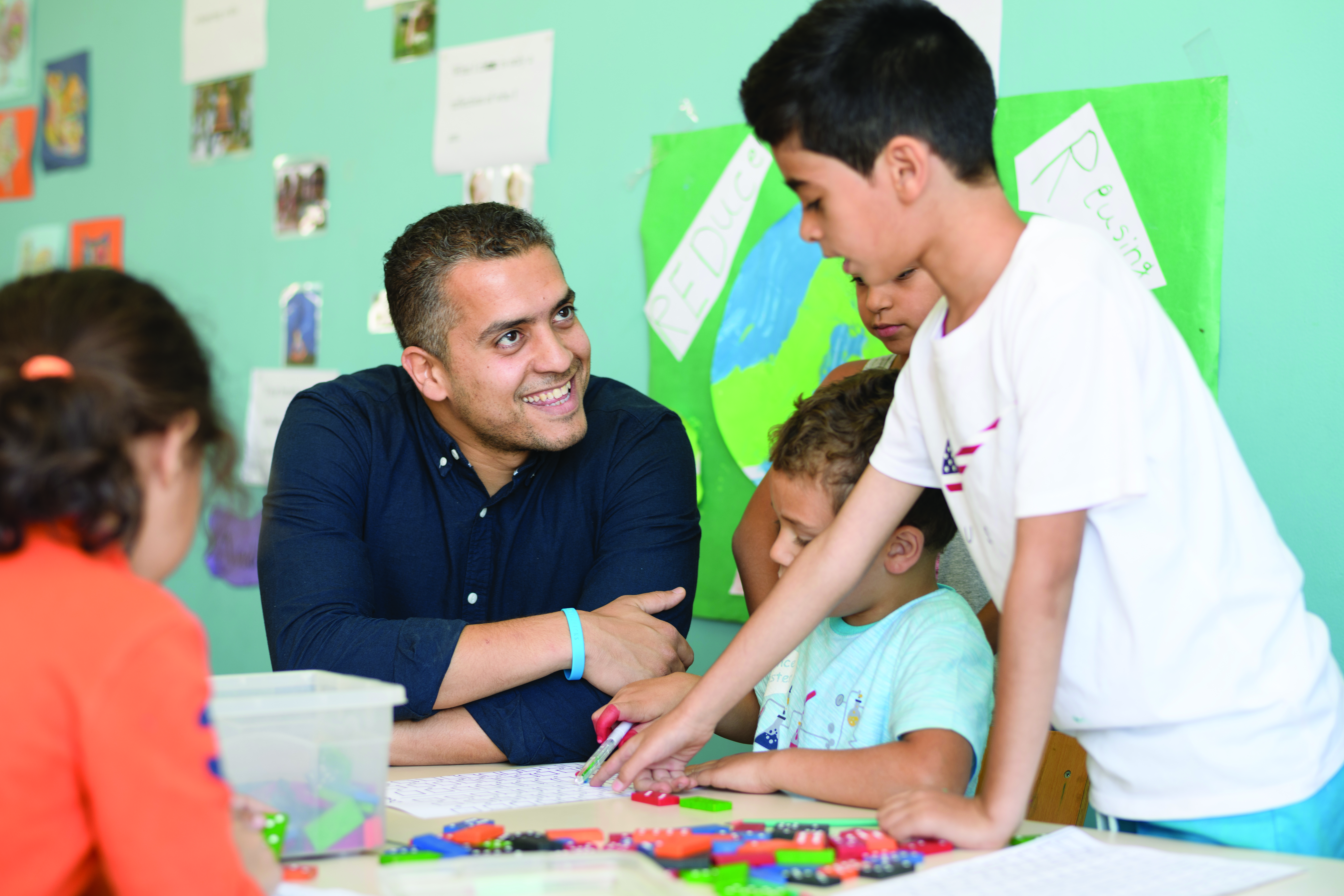
A man poses with his arms crossed, smilingSeif Abou Zaid '08, '17, CEO of Mavericks school. Photo by Ahmad El-Nemr.

"I was always interested in education as a vehicle for liberation and empowerment," said Seif Abou Zaid '08, '17, CEO of Mavericks school. It's this understanding of education that led him to seek a new approach to schooling in Egypt.

Mavericks, Egypt's first blended learning school, was founded with an approach to education that focuses on personalized learning that fits the individual needs of students; an emphasis on hands-on activities that make the learning experience fun and engaging; character building; and open-house education, where students are not confined to the traditional classroom and all parts of the school are learning spaces. Students are empowered to make decisions starting in Pre-K and KG1, choosing where to learn and which activities to do during the day.

"We're not interested in comparing students to each other," Abou Zaid highlighted. "We want kids who accept themselves, have self-awareness, and challenge themselves and each other."

Though many praise the school for its blended learning techniques, this is just a tool, as Abou Zaid pointed out. "Actually, for us, blended learning is not the end game," he explained. "What's beyond blended learning is this idea of being child-centered, of following the child's interest and challenging students to be the best versions of themselves. If technology is a tool that can empower this, then so be it."

Having majored in political science, minored in history and earned a master's in public policy from AUC, Abou Zaid always focused on how he could make an impact on the community. "I was interested in the sweet spot or common ground between education as an empowering tool and public space," he said. "This is where I saw myself, hopefully, doing meaningful things."

Abou Zaid started out working on two startups before founding Mavericks, both targeting middle and high school students as well as middle managers. He quickly found that the impact at this stage wasn't what he wanted. "We wanted to build a different generation, empowering people to be mavericks -- or think outside the box -- and influencing the present and the future. This is what a student-centered learning experience is all about."

Hoping to expand the Mavericks model across Egypt's governorates, Abou Zaid established two campuses in Cairo and one in Damietta. The aim is to spread this new learning philosophy to the many students who still don't have access to quality education inside and outside of Cairo. "The impact we can have now is to set an example," he affirmed. "Later on, we're really interested in scale. We want to provide high-quality education, but at a scale that actually has the right impact for the millions or billions out there who deserve access."

Job Matching

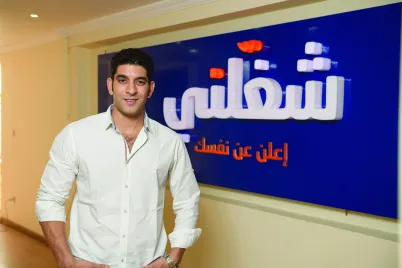
20180424-_DSC1027Omar Khalifa '08 in front of the office for his online recruitment platform Shaghalni. Photo by Ahmad El-Nemr.

Education is one space in which impact can be made. But what happens after schooling ends? A major challenge in the Egyptian economy now is the large population of unemployed youth.

Omar Khalifa '08, CEO and founder of Shaghalni.com, saw a chance to expand opportunities for Egyptians by making the recruitment process and job market more transparent.

Through Shaghalni online platform, blue and grey-collar job seekers share their skills and experiences by posting their profiles and promoting their skills -- giving the chance for employers to hire them directly.

Khalifa's idea for the platform was sparked after observing AUC's successful employment fairs each year. "We have the best companies coming to campus," he said. "I never had a real issue finding a job. However, I always wondered, 'That's great, but the majority of working-class Egyptians don't all enjoy the same employment opportunities.'"

Shaghalni started out as a printed journal promoting middle-skilled jobs. Then, Khalifa switched things around, publishing individual profiles of job seekers for employers to browse. To have a real impact, though, Khalifa decided he was going to have to go online.
Although he faced difficulties raising funds at first, he eventually put his own money into creating a beta version to test out. Today, two years later, there are 90,000 users and 8,000 companies posting on Shaghalni's website, and a mobile app is in the making. "It proves that if you believe in something and you're passionate about it, things will actually work," Khalifa commented on his investment in the project. "If you don't put your money into it, no one will."

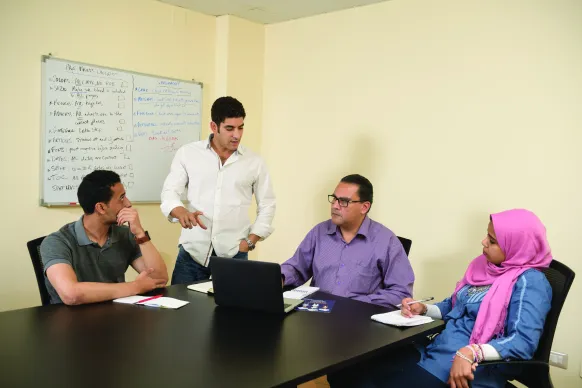
20180424-_DSC1075Khalifa's website now has more than 90,000 users and 8,000 companies -- connecting people with jobs across the country. Photo by Ahmad El-Nemr.

Now, Khalifa's passion is drawing him outside of Egypt, pushing him to continue growing and making changes in the job market.

"My passion is helping people," Khalifa asserted. "When you receive feedback and see people getting jobs -- these people have families; they aren't just individuals -- it's worth so much more than money. Shaghalni is successful in Egypt, but we want something that can go regional. We're nowhere near where we want to be, but I think we're making a difference. That's my passion."

 
Share

Tech Unicorn

Tech Unicorn
Ioanna Moriatis, feature photo by Ahmad El-Nemr
<?xml encoding="UTF-8">

By Ioanna Moriatis, feature photo by Ahmad El-Nemr | This is the cover story of the Spring 2018 edition of AUCToday.

Mostafa Kandil '15 is just 25, and yet is already at the core of a revolutionary trend in Egypt with his new company Swvl, a mobile app that organizes convenient and customized transportation routes around Egypt at reasonable prices. In fact, Swvl -- which was accelerated at the AUC Venture Lab -- recently raised $8 million in its first round of venture capital financing. This is the largest round of funding for a tech startup in Egypt and one of the largest in the Middle East.

"What we're doing is building public transportation for emerging markets," said Kandil, who was named -- along with co-founders Mahmoud Nouh and Ahmed Sabbah -- among Forbes Middle East's Class of 2018 Arab 30 under 30. "Often, people outside of emerging markets don't understand the magnitude of this global issue. In these markets, the middle class doesn't have affordable ways to commute. We're going to these markets and building the infrastructure for them."

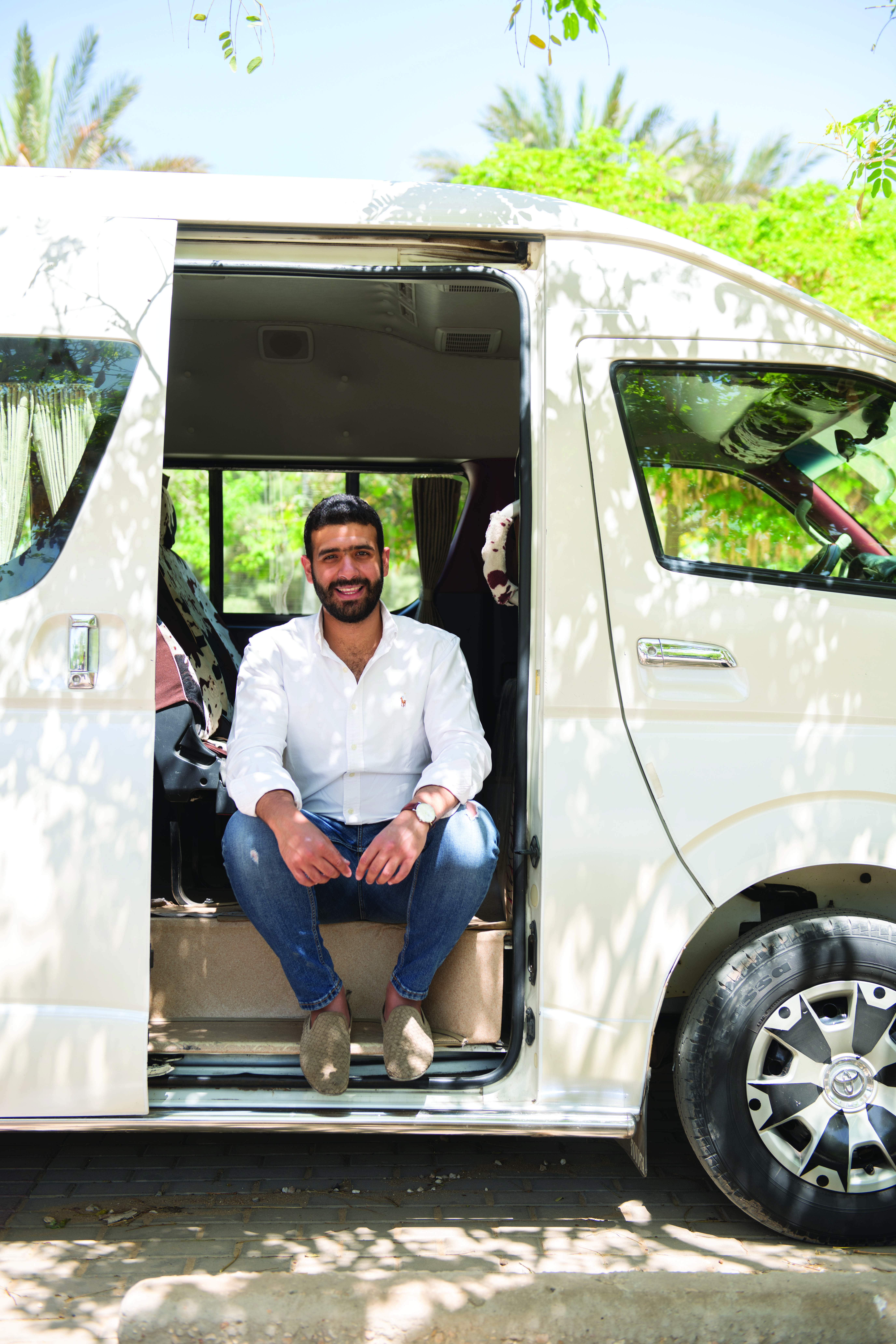
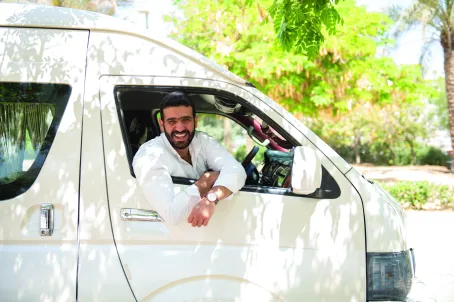
A smiling man leans out of a bus window.At just 25 years old, Kandil is already changing the rideshare industry in Egypt. Photo by Ahmad El-Nemr.

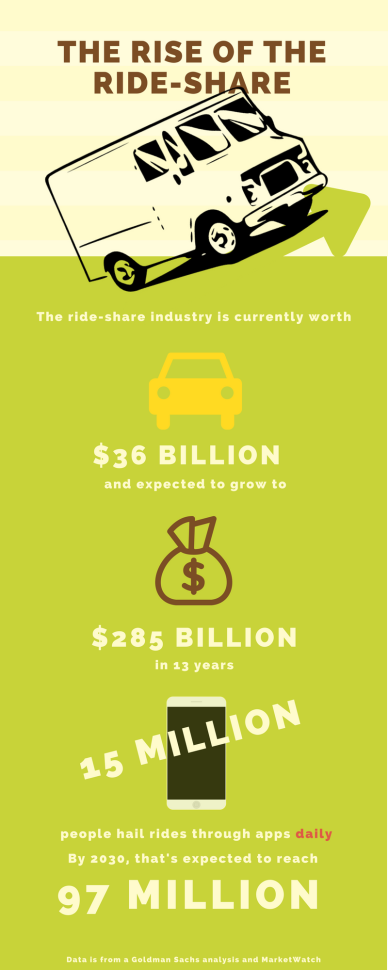
In the short amount of time since its founding in 2017, the young startup has seen impressive growth, crossing Egypt's borders as it begins to establish roots abroad. After just six months, the transportation company was moving thousands of people a day. "Swvl is on its way to becoming a household name in Egypt and one of the biggest job providers in the country," said Kandil. "We are very excited about what the future holds for us as we build Egypt's first tech unicorn -- a company that investors value at more than $1 billion."

Companies around the world have tried to tap into this market with little success beyond a limited region. Kandil and his partners have impressed international investors with the rapid and widespread development of Swvl and the start of its expansion outside of Egypt to other emerging markets across the Middle East, Southeast Asia and Africa.

"The impact we've seen is incredible," said Kandil. "Nobody has been able to crack this issue before, and we're growing out of Egypt very quickly."

How It All Began

With an innovative mind already cultivated at the age of 16, Kandil started his AUC studies as a petroleum engineering student.

After gaining experience in the field through an internship, he began to think of going down a different path. "Petroleum engineering is a very specialized field," he explained. "You focus on one tool for years. I get bored easily and need change. I wouldn't be able to work on only one thing and not feel like I'm creating something new."

And so, he shifted focus and began to create.

At 19, Kandil was selected as one of 30 participants in a program hosted by Google and was invited to its headquarters in Dublin to network and learn about entrepreneurship. "It was a life-changing experience," he reflected. "We were 30 people from 25 different countries. Everyone came from a different background and field."

Equipped with a curious, entrepreneurial mind, Kandil returned to Egypt only to pack his bags and fly out once more -- this time to the Philippines. Recruited by the trending company Rocket Internet, Kandil was given the opportunity to build and grow a business based on an already successful business model. "They cherry-pick entrepreneurs, give them budgets and send them to a country to start a business," he said. "We were supposed to grow the business, scale it and hire replacements after six months to continue sustaining the company's progress when we leave. It was an amazing experience."

After six months, Kandil had already grown his online vehicle marketplace, Carmudi, to 40 people and scaled it to three cities. Carmudi was soon the second largest company in the Philippines, coming out on top of three major competitors.

Transforming Transportation

52,000,000 miSwvl comes as a cost-friendly and useful alternative for commuters, given the challenges associated with public transportation in Egypt -- whether in terms of the reach of the bus and metro network or the lack of a clear system. Through this application, Kandil and his partners have been able to build an entire transportation infrastructure in Egypt, offering a reliable and accessible service that spans across Cairo and even extends outside of the capital.

Users of Swvl input their desired pick-up location and destination, and the application offers a set of routes and times from which to choose. It gives all the essential information: how long the ride will take and the distance needed to walk based on the route. Users are able to pay online so that riding just becomes a matter of pick-up and drop-off.

Swvl's system of buses sets up routes based on the pick-up and drop-off locations typically requested, offering shared fixed flat rates with no surge pricing. When the application was first introduced in Cairo, the first few routes departed from AUC so that the team could monitor the market and gather data to multiply routes based on consumers' needs.

Kandil also noted that this application offers an effective relief to the government, privatizing a system of public transportation while maintaining affordable prices and creating opportunities for employment. Since the introduction of the app, Swvl's fleet has increased to hundreds of buses. Swvl intends to invest $16.9 million, or EGP 300 million, in the Egyptian market in the next three years to employ micro-entrepreneurs. "We want to become one of the biggest job creators in the country," said Kandil.

AUC: The Springboard

While at AUC, Kandil was a member of the Cairo International Model United Nations, an organization that pushed him to grow as a leader and businessman. "We had to lobby at conferences and get everyone around us to believe in what we were saying," said Kandil.

"I think this is a unique skill that AUC students, in particular, have. When I graduated, I started doing this. My job is basically selling what we do."

After graduation, Kandil dabbled in venture capital for some time as an intern, before joining Otlob as its head of operations. Already managing five teams as a fresh graduate, he was able to increase the company's efficiency by approximately 400 percent.

Continuing down the path of company growth, Kandil then joined Careem as a market launcher, debuting cities in Turkey, Pakistan and Egypt for the transportation service in only six months. His talent was recognized with the CEO's High Achiever Award.

Having worked in an on-demand transportation company for some time, Kandil began to observe trends in the market, noticing that the average trip fare totaled three or four dollars, which can be a toll for the average Egyptian commuter. "I had a hypothesis that the problem was with the tourism companies," Kandil said. "I knew that these companies have huge fleets of buses that are high quality, but completely underutilized."

With his eye on an opening in the market and partners interested in collaborating, Kandil felt ready to leave Careem and begin work on a new project. He and his fellow co-founders Nouh and Sabbah left their job positions, and the next month, were working on Swvl.

Kandil and his team are alumni of the AUC Venture Lab, Egypt's first University-based incubator, where they participated in cycle eight. AUC Venture Lab offers acceleration programs to high-growth and innovation-driven startups. With the AUC Venture Lab's entrepreneurial support as well as the knowledge and guidance of mentors, the team was able to launch the application before graduating from the cycle.

"It's important for entrepreneurs to create new innovation-led startups that act as platforms for increasing competitiveness," said Ayman Ismail '95, '97, the Abdul Latif Jameel Endowed Chair in Entrepreneurship and director of the AUC Venture Lab. "Almost 50 percent of AUC Venture Lab startups receive investments, with the total now exceeding EGP 220 million. We are proud of the Swvl founders, who are definitely changing and revolutionizing the Egyptian transportation sector."

Venturing into the Unknown
 

A busy roadway in CairoTraffic in Cairo can make owning a car of your own an annoyance. Photo via IaSousa on Flickr.

Kandil's academic background and experience traveling as a student have given him an edge as he looks to continue developing his startup. "It's been very challenging," he noted. "We want to keep growing quickly. I was lucky that I got to work with different cultures in various geographic locations when I was younger. It makes it much less scary when we say, 'OK, let's go to this country and launch a business there.'"

After overcoming many challenges along the way and creating success out of limited initial resources, Kandil feels confident in his decision to divert from his original career path. He encourages AUC students and graduates to take risks such as this one and innovate.

"As AUC graduates, we have the opportunity to take risks," said Kandil. "My single advice is: Build something; take a risk. This is what will differentiate you. It's been very hard taking this leap, but we now dream of seeing Swvl as the first Egyptian tech unicorn. We're laser-focused on this vision right now."

 
Share

Business as Un-Usual

Business as Un-Usual
<?xml encoding="UTF-8">


COVID-19 is changing the name of the game in the world of business.
 

By Nahla El Gendy


As the coronavirus pandemic continues to spread globally, pushing governments to make significant interventions, businesses are continuing to adapt to the new normal while satisfying the altering needs of their customers.

"The current circumstances that the world is facing are more of a game changer. Any business, regardless of its position in the market, has to consider this and adjust accordingly in order to survive," said Alain El-Hajj '15, computer science graduate and chief operating officer of Paymob, a digital payment enabler empowering the underserved, consumers and merchants with access to financial services. "Feeling forced to change your day-to-day operations isn't an easy thing, but, fortunately, we are quite used to it."

COVID-19, and any other crisis, shouldn't change business models if they are well-structured but could definitely lead to what El-Hajj described as a typical evolution, where companies could reinvent themselves, refresh their thinking or invest in something new. "The current circumstances made us shift our focus to certain products more than others," he said.

Paymob recently partnered with another electronic payment service provider, Klickit, to offer digital payment solutions to GEMS [Global Education Management Systems] schools in Egypt, enabling tuition fees to be paid online. "This initiative will help cater to consumer needs during the COVID-19 pandemic and is expected to be implemented in countries other than Egypt," said El-Hajj.

More Home, More Internet

For technology-based companies such as Paymob, working from home did not introduce a drastic change. "Luckily for us, as a fast-scaling company, our need for technologies that help us perform our day-to-day operations more efficiently are pretty much the same for working remotely, and due to our great team, we've adapted quickly to these new measures," said El-Hajj.
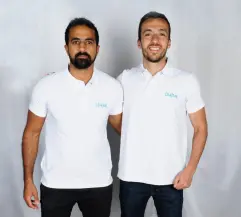
Some companies, such as [34]ML, already applied a remote work policy before COVID-19. Founded by two AUC alumni, Ahmed Saafan '11 and Ashraf Mourad (MA '19), [34]ML is a software company specialized in the design and development of mobile applications. It recently launched the Around Egypt application to promote tourism and show the beauty and hidden gems of Egypt in 360 degrees -- a service that comes in handy during the COVID-19 pandemic. Offering an immersive virtual reality experience, the Around Egypt app reached more than 1 million users on Facebook and over 30,000 downloads since its launch in April 2020.


"The app features more than 30 different virtual reality tours of sites all around Egypt -- from Cairo to Aswan, from temples to national parks, from religious sites to entertainment venues, from 80 million years ago to the 21st century," said Saafan, construction engineering graduate, business lead at [34]ML and a member of AUC's rugby team. "There couldn't be a better timing to launch this app. With the COVID-19 pandemic forcing everyone to stay at home, people are geared more toward the internet, online applications and technology in general. With tourism, this is particularly useful because mosques, churches, temples, museums and other tourist attractions in Egypt have been closed."


Around Egypt app

In light of the COVID-19 pandemic, the company is also working on adding to its existing portfolio Software as a Service (SaaS) products, a form of cloud computing whereby a service provider hosts applications for customers and makes these apps available over the internet for a monthly fee. "The pandemic has triggered us to pivot into a more product-led company and transform our business offerings," said Saafan.
 

Adapting and Adopting

Breakfast team working under strict health and safety measures

It's not only the internet whose consumption has increased but also food -- and, of course, companies had to adjust. According to Deloitte, one of the world's largest management consulting firms, out-of-home consumption that typically generated the highest profits has fallen, coming to "nearly a standstill," whereas at-home consumption has risen. This has caused disruptions in supply chains and may lead to long-term changes in customer behavior and demand, as Deloitte described it.

Breadfast, an online supermarket that delivers freshly baked goods and groceries to people's doorsteps, is adjusting its operations in this unprecedented situation by implementing firm health and safety measures.
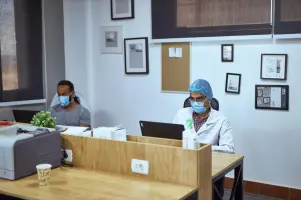
"We have placed strict precautions to mitigate the risk of the coronavirus, from sanitizing all workspaces and wearing face masks to reducing shifts and having an alarm that goes off every hour for employees to pause operations and wash their hands," said Yehia El Darawy '12, '17, petroleum engineering major and country manager of Breadfast.

COVID-19 pushed Breadfast to accelerate its online grocery shopping: evolving from a bakery delivery service to an online supermarket, and increasing its portfolio to include more categories such as cooking ingredients, health and household items, baby needs and even meat -- with plans to add a broad range of products such as chicken, toothpaste and garbage bags, among others. The bakery also went from next-day delivery services to delivery within an hour in several areas across Cairo. "We are humbled by the opportunity to provide a safer way of grocery shopping with a wider range of products to keep our teams and customers healthy," noted El Darawy.

What About the Nonprofits?

The business impact of COVID-19 is not merely restricted to business entities but social enterprises as well, such as Helm, which provides advisory and coaching services for institutions, professionals and governments to work toward the effective and sustainable inclusion of people with disabilities in the workplace. Like many entities, Helm pivoted from a physical academy to an online one and shifted the focus of its training -- whether individual or corporate -- to new, customized needs brought about by COVID-19. This has allowed people with disabilities under Helm's umbrella to not only work from home but also learn new skills online through different development courses. Consequently, Helm Academy's online platform became the first inclusive online learning platform in the Middle East and North Africa that is specialized for people with disabilities, according to Amena Elsaie '11 and Ramez Maher '12, co-founders of Helm.
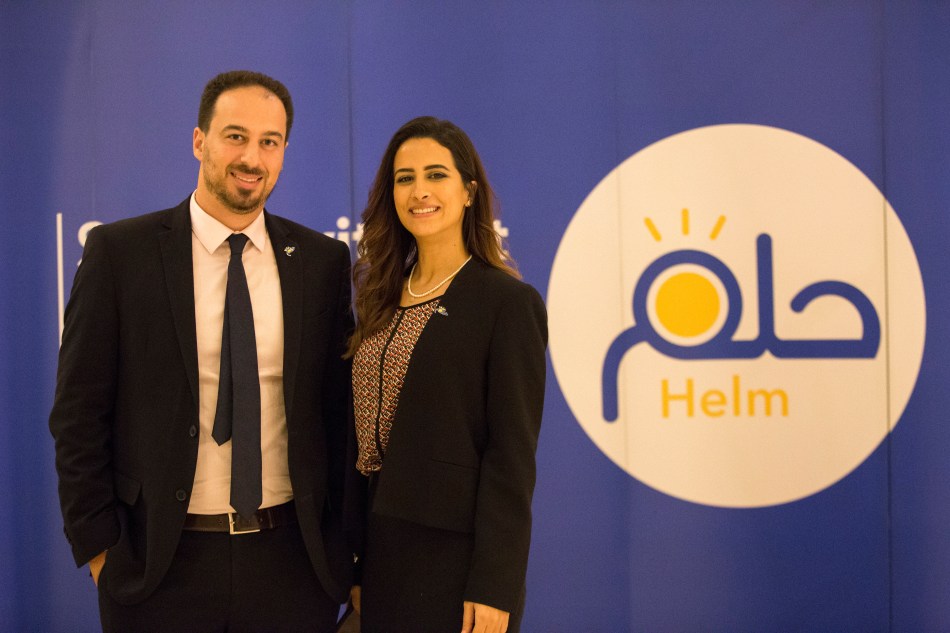
"Since the start of the quarantine, our team has conducted a total of 180 client meetings per month instead of 20," said Elsaie. "We met virtually with e-learning experts across five continents to study the best technological solutions and learning management systems out there in order to provide the most suitable and accessible model tailored in Arabic
to fit our client needs."

One of Helm's employees while working from home

Within Helm, "we have temporarily shifted the organizational roles so that those whose jobs were affected are performing other duties and supporting other teams. We have also used this time to invest in the team's growth through bringing in consultants and organizations for capacity building and training to help lift the spirits of people during these turbulent times," Elsaie added.

Not only is COVID-19 affecting business operations at Helm, but it has also changed perceptions, ideologies and personalities. "We regularly give our people the Myers-Briggs Type Indicator in order to identify their personalities and make sure they are doing what's best for them," noted Elsaie. "It's surprising how these tests have shown a drastic shift in people's personalities both pre-pandemic and post-pandemic, as extraverts turned to introverts, including myself!"

Will Things Be the Same?

Regardless of how tough this period has been for almost all businesses, it has offered eye-opening lessons that are here to stay.

"Productivity skyrocketed in certain areas, including technology and product functions, and that is something we all want to capitalize on. When these tough days are over, we will surely go back to our meetings and gatherings, but work-from-home arrangements and other measures will be adopted more extensively," said El-Hajj.

[34]ML has already started to focus more on its marketing activities. "Since everyone is online more now, we are investing more time into creating content for our marketing outlets," said Saafan. "We are also considering sticking to virtual meetings even after the end of COVID-19. From a business perspective, the pandemic has actually accelerated digital transformation across several functions and industries. For example, people are now more comfortable with online meetings and digital signatures."

Saafan also stressed how much he and his team have learned about unforeseeable circumstances suddenly changing set plans. "We now recognize the importance of a clause in our agreements for force majeure, which we never really understood before," he said.

These unforeseen circumstances have taught Helm's team to step out of their comfort zones and never take no for an answer. "When you think there is only one way of doing business, COVID-19 comes to show you that there are always other options. We just have to expand our horizons and think outside the box," reflected Elsaie.

And be flexible. "The most important lesson we learned is that you have to be very agile in order to make the best use of opportunities that come your way. There are a lot of competitors out there, so you have to change rapidly, adapt and try to read the trend as best as you can," said El Darawy.

For Paymob, COVID-19 proved "how betting on the right people and finding the right team are key for surviving all hardships," affirmed El-Hajj. "We will always continue to work hard to find the right talent and maintain the right culture through our growth, as COVID-19 is not the first challenge and will definitely not be the last."

 
Share

Spend Smart, Save Smarter

Spend Smart, Save Smarter
Celeste Abourjeili

Do you have cash to spare?Are you looking for stable investments to maintain or increase the value of your money? In this economy, money can be less productive inside the bank than in investments due to inflation, which has led to a drastic devaluation of the Egyptian pound.

To dissect Egypt's economic status and discover the best saving methods, we spoke with Jasmin Fouad, professor of finance in AUC's Heikal Department of Management. Below are some of her tips for navigating the current Egyptian economy and multiplying, or at least safeguarding, your savings.

Share

Getting Started in Startups

Getting Started in Startups
<?xml encoding="UTF-8">

By Claire Davenport

Are you interested in breaking into Egypt's growing market for entrepreneurship but not sure where to start? Want to know where the current market is headed?

According to knowledge platform Wamda, startups in the Middle East and North Africa attracted $3.94 billion in funding in 2022, with Egypt emerging as one of the top three markets for investment. Yet, there are many barriers to entry, from lack of capital to risk of failure, which can make a career as an entrepreneur seem like a daunting prospect to many.

To demystify the current startup ecosystem in Egypt and what it takes to break into it, we sat down with Ayman Ismail '95, '97, Abdul Latif Jameel chair in entrepreneurship, associate professor in the Department of Management and founding director of the AUC Venture Lab, Egypt's first university-based accelerator program.

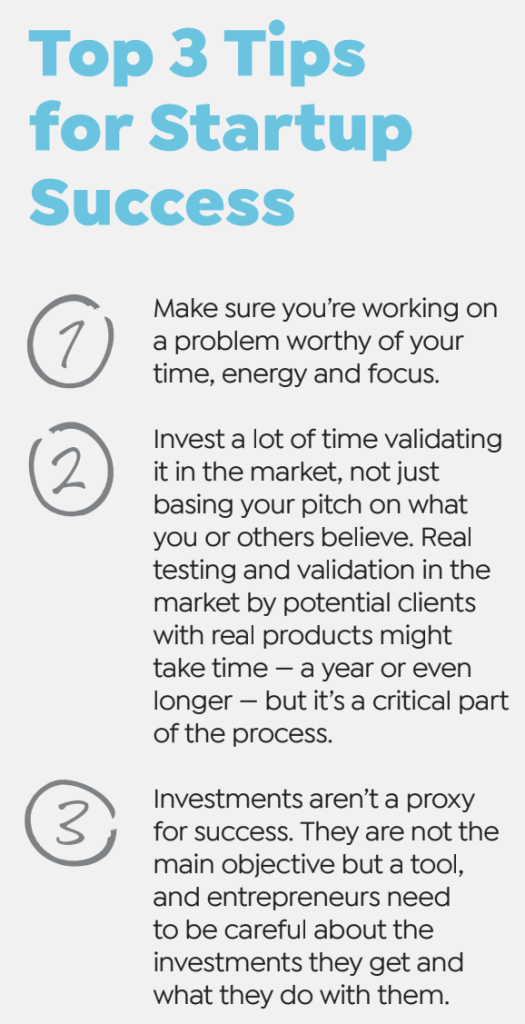
Below are Ismail's insights into the current startup climate in Egypt and his tips for getting started, pitching your venture to potential investors and more!

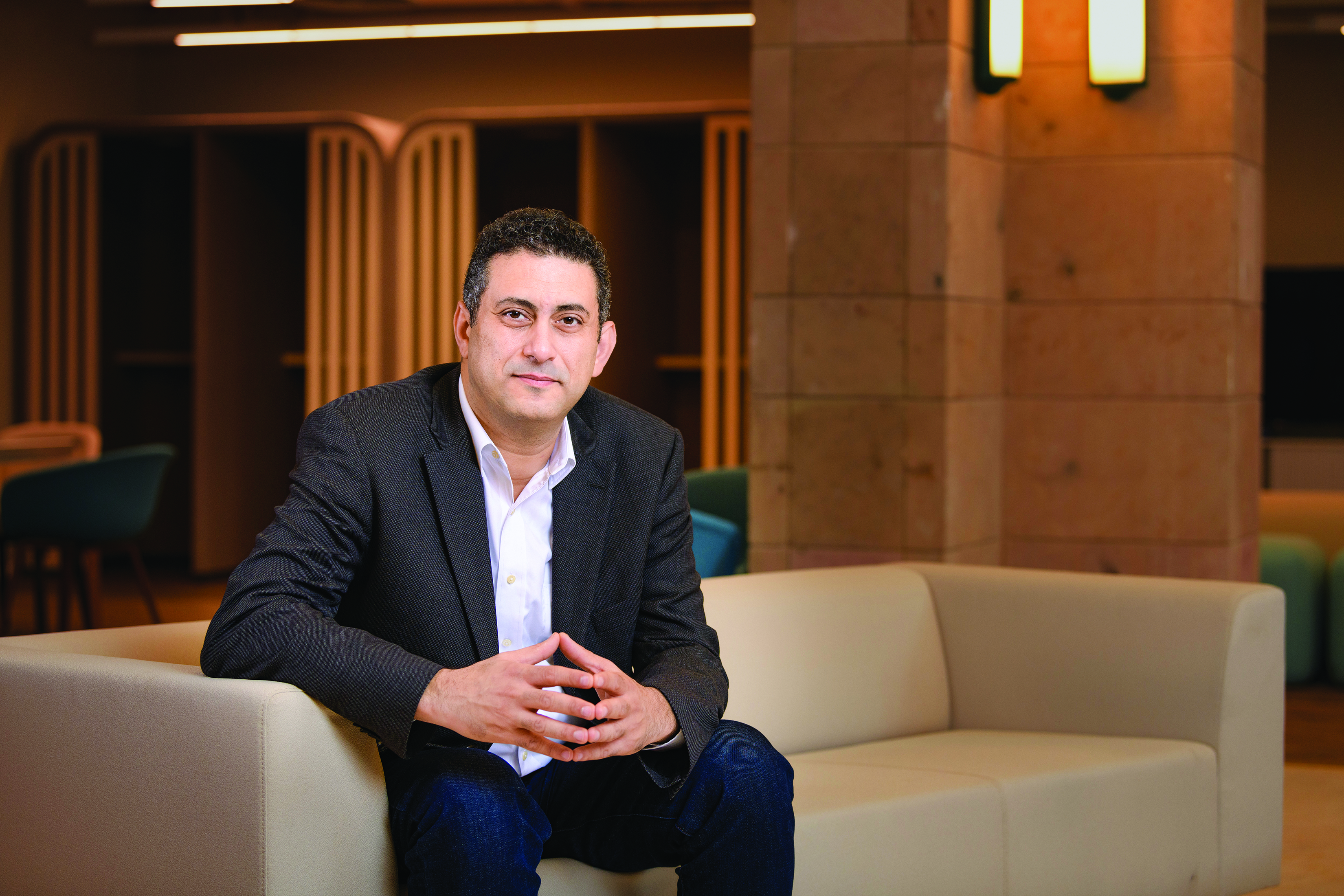
Man in a suit sits on a sofa at AUC's Innovation Hub

What has the startup climate historically looked like in Egypt?

The tech-enabled startup movement in Egypt is around 15 to 20 years old. Linkdotnet -- one of the very first ventures to exit in 2011 -- was founded by a team of AUCians. It was a fantastic deal that created a lot of energy, and since then, there's been so much growth in terms of startups, investments and enablers.

Where is the Egyptian startup scene headed?

Five years ago, venture capital investments in Egypt were around 20 million to 50 million dollars. Starting 2020 and 2021, it jumped to 400-450 million each year. That's a huge growth in investments in that sector. In the next few years, I would expect a lot of growth in the quality of startups and number of investments.

Where does AUC and the Venture Lab fit into this picture?

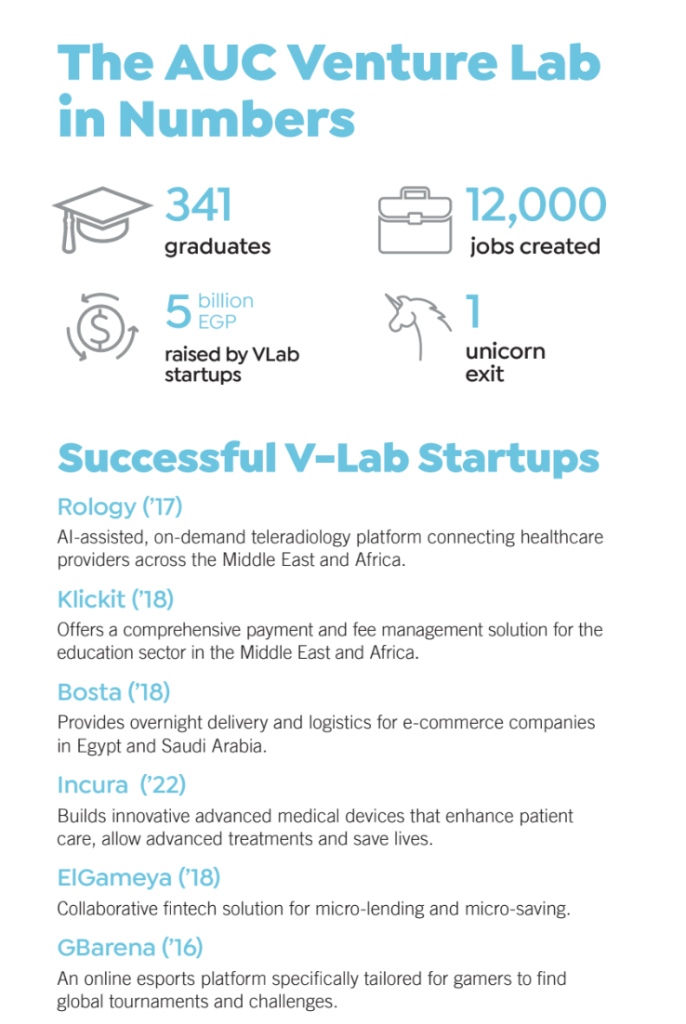
In 2013, we launched the AUC Venture Lab, our startup accelerator. Now, it's the top university-run accelerator in the Middle East and Africa.

Our objective has always been to support the entrepreneurial ecosystem and put AUC in the heart of that space. We've supported more than 300 startups since the activation of our flagship accelerator program and more than 100 others through different programs under the lab.

What are these other programs?

AUC Angels, our investment network; a capacity-building program to transfer our knowledge to program managers running similar initiatives at other universities or companies in Egypt; and a launchpad that funds early-stage tech startups.


What does the AUC Venture Lab look for when assessing startups?

We see if the problem is worth solving and if it's operating in a fast-growing, innovative space. We also evaluate whether the team can bring this kind of idea to life. Do they have the right mindset? Are they competent, visionary and ethical?

Do you have any advice on pitching a startup to a potential investor?

A lot of people think of pitching as a selling job. I think a better way to understand it is as a matching opportunity. If I'm just trying to convince someone to invest, I am only telling them what they want to hear so I can sell. But if my objective is to understand what the people on the other side have in mind -- what they've done before and whether our goals match -- then the conversation takes a very different tone.

Do you have any suggestions for fundraising outside of traditional capital?

If you can bootstrap with investments from your savings or family and friends, that's amazing because investments come with a lot of constraints. And there's a big movement for bootstrapping right now.

Are there any risks with sustaining a startup once it's gotten off the ground and been active for a few years?

There are several points where companies can fail. People usually think about the new idea stage, where the startup is not yet defined and you have very little money. But there is another high-risk stage, which is when you move from being a fast-growing startup to a mature company and are building sustainable revenue streams and looking for stability to grow the business organically at a rate that fits the market. This is one of the biggest failing points; people reach a ceiling and they don't know how to transition into a profitable business.

Is there any sector you see taking off in the next few years to look out for?

The most obvious is anything related to artificial intelligence, which is a global trend. The second is sustainability, green economy and climate resilience. That space is evolving quite rapidly, and I'm expecting it to grow gradually in Egypt. The third, which I think is very relevant to Egypt but more difficult to get into, is healthcare. It's a big opportunity with a very interesting market.


Share

One Man's Trash is Another Man's Treasure

One Man's Trash is Another Man's Treasure
<?xml encoding="UTF-8">

By Abigail Flynn

Ibrahim Abougendy '14

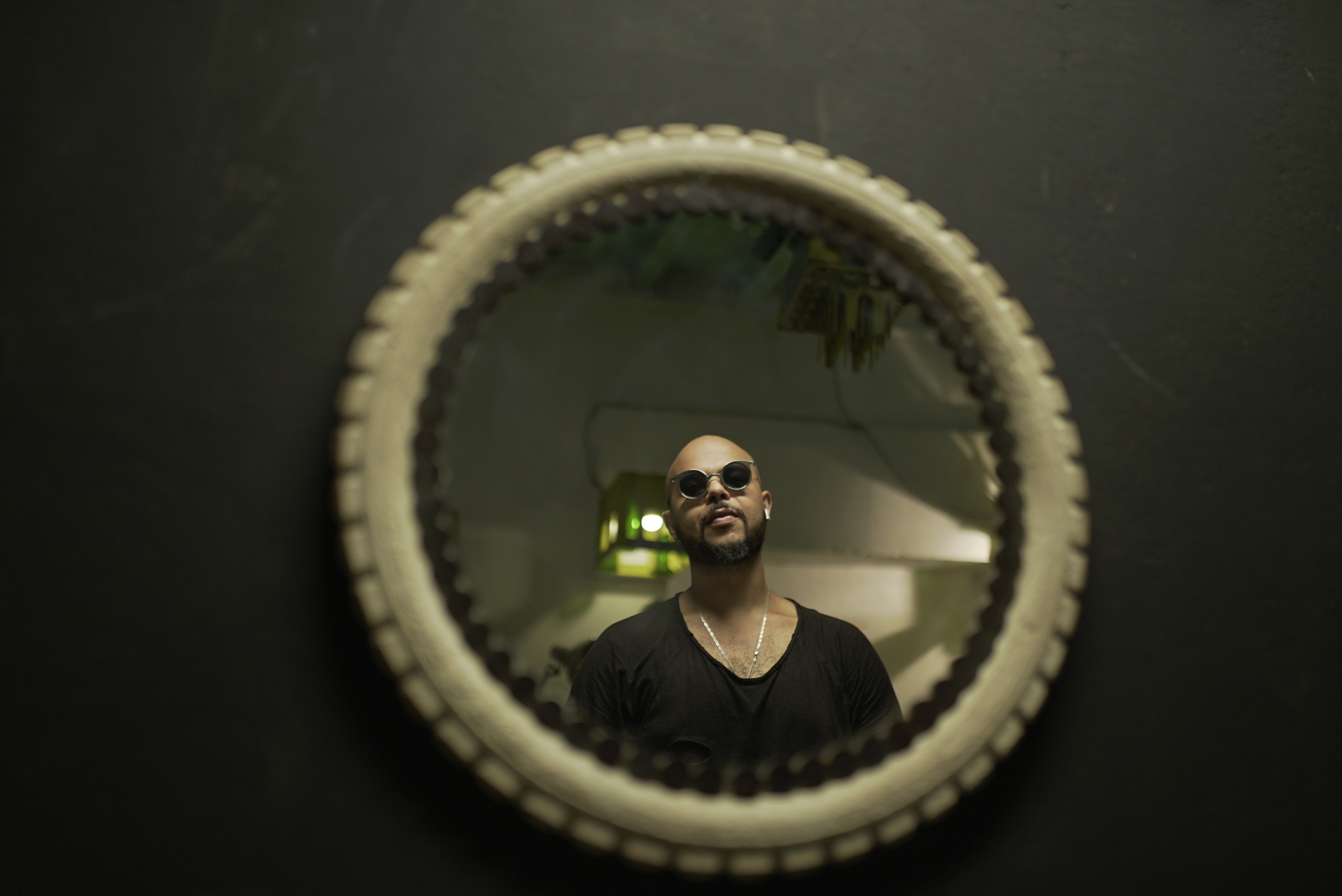
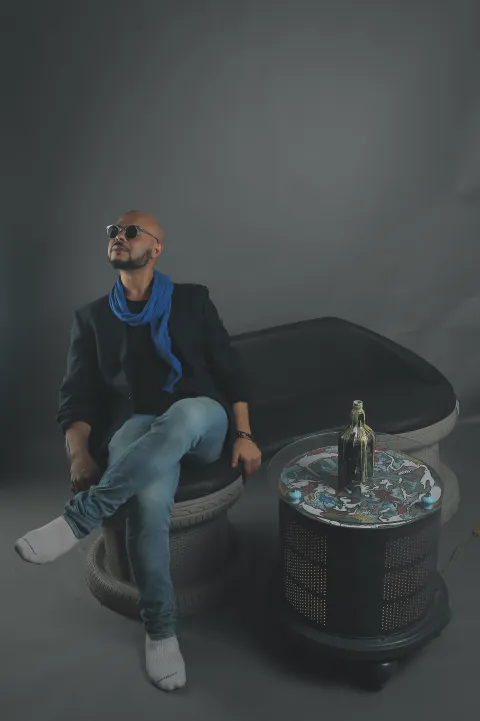
Transforming abandoned tires and old washing machine drums into living room furniture, Ibrahim Abougendy '14 turns trash into treasure with the startup he co-founded, Mobikya. Abougendy upcycles waste materials into colorful and comfortable handmade furniture, such as chairs, mirrors and couches.

Abougendy also co-founded two other startups that utilize eco-friendly and biodegradable designs. His water bottle line, Qarura, uses a special clay mix "pottery" that boosts the alkaline content in water and requires less energy in production, while his pottery-based coffee brewing tools from his company Gahawena require less energy than traditional copper.

Outside of the home, Abougendy's work supports local animals. He helped design shelters out of tires, or "Sheltires," which optimize the heat-trapping capacity of rubber tires to offer a warm retreat for stray cats.

"Waste is actually raw material," Abougendy said. "What keeps me persistent against all odds is my passion to be an accelerator for a paradigm shift to happen."

 
Share

Hop, Skip and a Jump

Hop, Skip and a Jump
<?xml encoding="UTF-8">

By Yasmin El-Beih

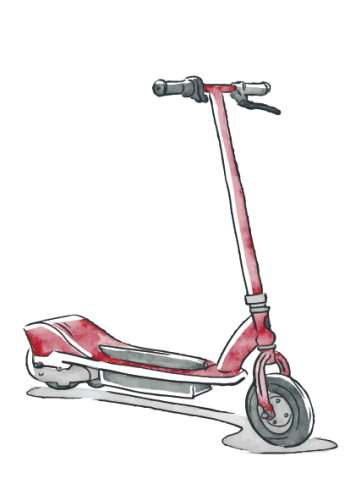
Today, more than 180,000 users in Egypt have replaced their short-distance car, cab or ride-hailing trip with an electric scooter or electric bike at least once, thanks to Rabbit Mobility, a clean-tech startup with the ambition to revolutionize how we take short-distance trips while bettering the planet in the process.

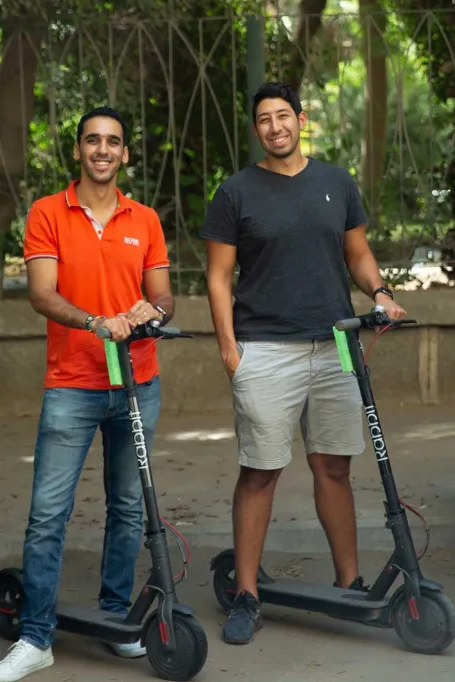
Co-founders Kamal ElSoueni '13 and Mohamed Mansoury '14 came up with the idea in 2019 after working for a couple of years in global management consulting firms based in Dubai and London, respectively. Returning to Egypt for vacation, they both noticed an increasing reliance on cars, even for short-distance trips.

Mansoury and ElSoueni hope to expand Rabbit's operations outside of Egypt
"When you're traveling a lot and you come back home, you really feel the difference," ElSoueni described. "We started to notice a grayish black cloud forming over the city, which we had never noticed when we lived in Egypt, and we were always complaining about traffic. In 2018, while visiting the United States, I came across a massive electric scooter company, and that's when we started thinking about applying similar solutions in Egypt."

ElSoueni and Mansoury held focus groups through their own networks to tackle transportation-related inquiries that might aid their blossoming business idea. They found that regular cycling wasn't highly popular given the hot weather for much of the calendar year in Egypt, making it an uncomfortable option for commuters. "I myself used to cycle to AUC for a semester or two as a student, but I always had to shower once arriving to campus before heading to class, so I was able to relate to the feedback we got from the focus groups," said ElSoueni. "We thought that if we removed the element of effort, it would make life easier. We also learned through some of the ride-hailing apps operating in Egypt that around 50% of the trips are for a distance less than 3 kilometers, while 70% are for a trip that is less than 8 kilometers."

The data posed a tremendous opportunity for a business idea -- and for the environment. By mid-2019, ElSoueni and Mansoury had both quit their management consulting jobs to make Rabbit a reality.

"By replacing car rides with electric scooters or electric bikes, you're relying on electricity instead of fossil fuels," Mansoury said. "From this simple shift, you save a lot of carbon dioxide emissions. We estimate that we've saved more than 50,000 kilograms of carbon dioxide emissions just this year."

Although their fast-growing userbase is mostly comprised of riders under 40 years of age, a reflection of the growing youth population in Egypt, up to 10% of their customers are over 45.

User segments also differ in every governorate or city where Rabbit operates. In Tanta, they found that nurses at the public hospital were taking a couple of rides every day between 1 and 2 pm. Through making a few feedback calls, the Rabbit team realized that the nurses were not only using Rabbit bikes and scooters for their daily commutes, they were also going back home for lunch using the eco-friendly vehicles, as they found them safer, faster and more cost-effective than taking a taxi.

Besides a relentless vision to become the go-to solution for any trip under eight kilometers, be it commutes, first-mile/last-mile or delivery services, Rabbit has other audacious goals on the horizon.

"For us to achieve this vision, it's going to require a lot of expansion into many locations, as well as development to our tech," said Mansoury. "Right now, we only have electric scooters and electric bikes, but our short-term plan is to also introduce electric mopeds. We've already brought in our first prototypes and are working on this."

The co-founders have shortlisted potential countries for expansion, with urban issues and infrastructure similar to Egypt. Rwanda, Morocco, Saudi Arabia and South Africa are new markets Rabbit has set its eyes on. In many of these locations, Rabbit has already begun securing international partners to support their process.

Mansoury and ElSoueni credit the milestones they have achieved to their supporters and mentors, a tight-knit community of fellow startup founders. From Ayman Ismail '85, '87, associate professor in the Department of Management and AUC Venture Lab founding director, to former AUC President Lisa Anderson, there are many who have assisted in their journey, along with the networks, resources, global experts, advisers, research papers and reports at their disposal -- much of which came through their access as former management consultants.

They also have a third co-founder, Bassem Magued, whom they call a "borderline genius." Magued helped in restructuring Rabbit as it took off and in nailing the app's geographic accuracy.

"We see a lot happening, with the potential for much more, not only in clean transportation but also clean tech across the Middle East and North Africa," asserted ElSoueni.

 
Share