Zeinab Khadr
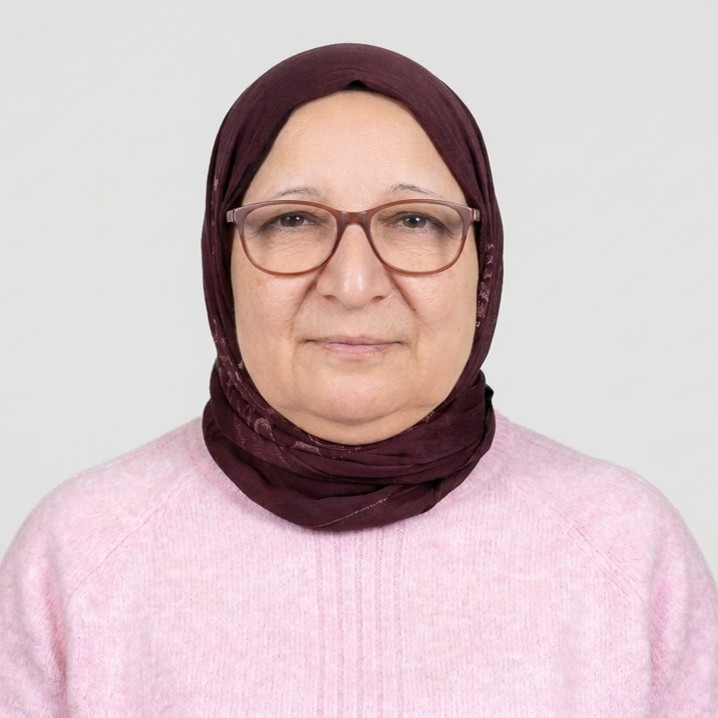
Zeinab Khadr is an eminent Egyptian statistician and demographer whose career masterfully unites sophisticated quantitative analysis, academic leadership and impactful regional research. She currently serves as a senior research professor at the Social Research Center at The American University in Cairo and holds a full professorship within the Department of Statistics at Cairo University. Her pioneering work is dedicated to uncovering structural inequalities, focusing heavily on reproductive health equity, family support structures, social gerontology and the development of urban deprivation indices across the Arab region.
Khadr's stellar academic trajectory is anchored by a PhD in sociology with a specialized minor in population studies from the University of Michigan. She also holds both her master's and bachelor's in statistics from the Faculty of Economics and Political Science at Cairo University, where she has taught extensively for decades, mentoring generations of students in multivariate analysis, sampling and descriptive statistics. Her exceptional scholarly foundations have been recognized through competitive international honors, including the prestigious Population Council Fellowship, the Andrew Mellon Fellowship and a USAID Peace Fellowship.
Throughout her career, Khadr has been a vital institutional leader, steering prominent statistical and demographic bodies in Egypt. She previously served as director of the Cairo Demographic Center and as director of the Surveys and Statistical Applications Center at Cairo University. Her methodological expertise has made her an invaluable asset to international organizations; she has served as a specialized sampling and statistical consultant for the United Nations Development Programme's landmark Arab Human Development Report, as well as the National Center for Social and Criminological Research in Egypt.
As a prolific principal investigator, Khadr has spearheaded an array of high-stakes, collaborative research projects funded by global entities such as UN-Habitat, the World Health Organization, the International Labour Organization and the Ford Foundation. Her work often uses advanced Geographical Information Systems to map physical deprivation in urban settings and assess the performance of scientific and educational institutions nationwide. Widely published in peer-reviewed journals like BMC Public Health and Habitat International, Khadr remains at the forefront of demographic science, continuously translating complex data into actionable frameworks to alleviate poverty and close health equity gaps in transitional societies.