
Zeina Ghanem and the Power of Asking for Help
Zeina Ghanem ‘21 shares lessons from her work as a counseling psychologist and the stigmatization of mental health for women
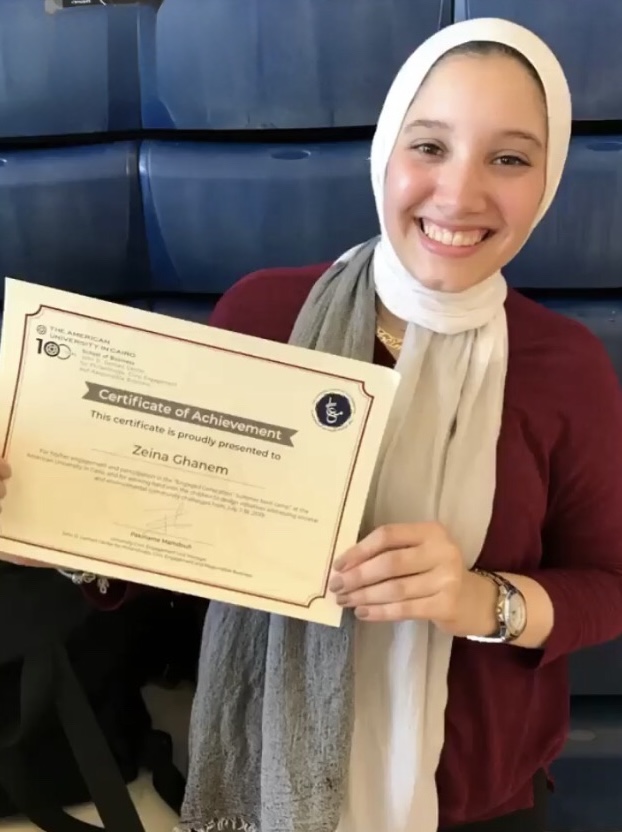
Zeina Ghanem ’21 joined AUC to study business and minor in psychology, but a class field visit to a public hospital sparked her passion for psychology and studying the mind.
“I saw how fascinating the brain is,” Ghanem said. “How someone could be living in their own world, not in a very positive way, and then someone else could offer some help and make this person's life so much easier and better with time.”
“If you create this safe space as a therapist, no matter the differences you have with the person in front of you, they will be willing to open up.”
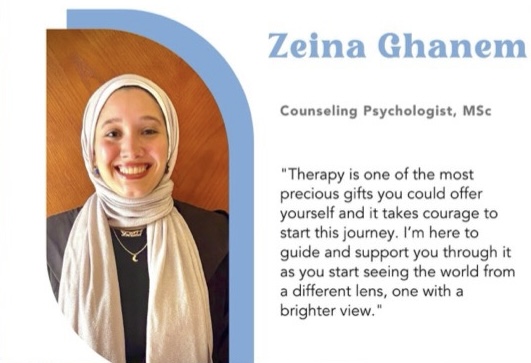
Ghanem is a counseling psychologist working online and offline to provide youth and adults with support on their mental health journey.
Her passion for women’s mental health grew while pursuing her master’s in counseling psychology from the American College of Greece, where she completed a yearlong practicum at a refugee center for women in Athens. Fluency in English and Arabic helped Ghanem hold group therapy sessions with women from across the world, including many Arabic -speakers and women fleeing the war in Ukraine. She worked with women across cultural divides, translating experiences back and forth during group therapy sessions.
“This was really helpful in seeing the differences and the similarities in terms of the shared experience of being women, no matter where they're coming from or what their experience is,” Ghanem says.
Working as a counseling psychologist for women of all ages gave her growth through the stages of life and different challenges people face along the way. “Many women start seeking help when they’re in their 40s or 50s. By then, the patterns are already established and have been going on for years. So usually for them, it's a life-changing experience,” Ghanem says, attributing the late start on therapy to a lack of psychoeducation and the stigmatization of mental health when they were younger.
However, Ghanem has noticed younger women increasingly seeking mental health support, reflecting the broader global rise in awareness and acceptance of mental health care.
“I would say the most common issues that usually young girls come with are related to their identity, confidence and social pressure,” Ghanem said.
“A big part of [therapy] usually goes around helping them understand themselves, who they are, understand their bodies, how hormones could affect their behavior or their mood, and how to handle it.”
Ghanem explains that many young women often come to therapy with high-functioning anxiety, feeling the need to accomplish in many areas in their lives all at once: build a career, be in a healthy relationship and build a family, while taking care of their physical and mental health.
“In that case the anxiety is masked as ambition and of course this leaves them exhausted and burnt out,” Ghanem said.
After graduation, Ghanem took a gap year to train at public and private hospitals and clinics around Egypt exploring the clinical side of psychology. The experience helped her narrow her focus on counseling psychology and helping individuals work through their problems one on one.
"I felt like this is something that I would want to do, to have more of a personal impact on someone's life, and not necessarily be working for a corporation or like a huge entity. It doesn't have to be huge, even if it's just a one-on-one effect on a much smaller scale.”
Developing the client-therapist relationship to allow someone to express their emotions is a gradual process of creating trust and good communication. “You hear their story and give them space to open up and be comfortable,” Ghanem said. “If you create this safe space as a therapist, no matter the differences you have with the person in front of you, they will be willing to open up.”
Ghanem hopes to expand her practice of helping people through their toughest challenges, running awareness campaigns and looking for new ways to raise mental health awareness in large settings. In the meantime, she says finding mental health support is easier than you think.
“Just don’t be afraid to ask for help,” she affirmed.
