Home page
ع
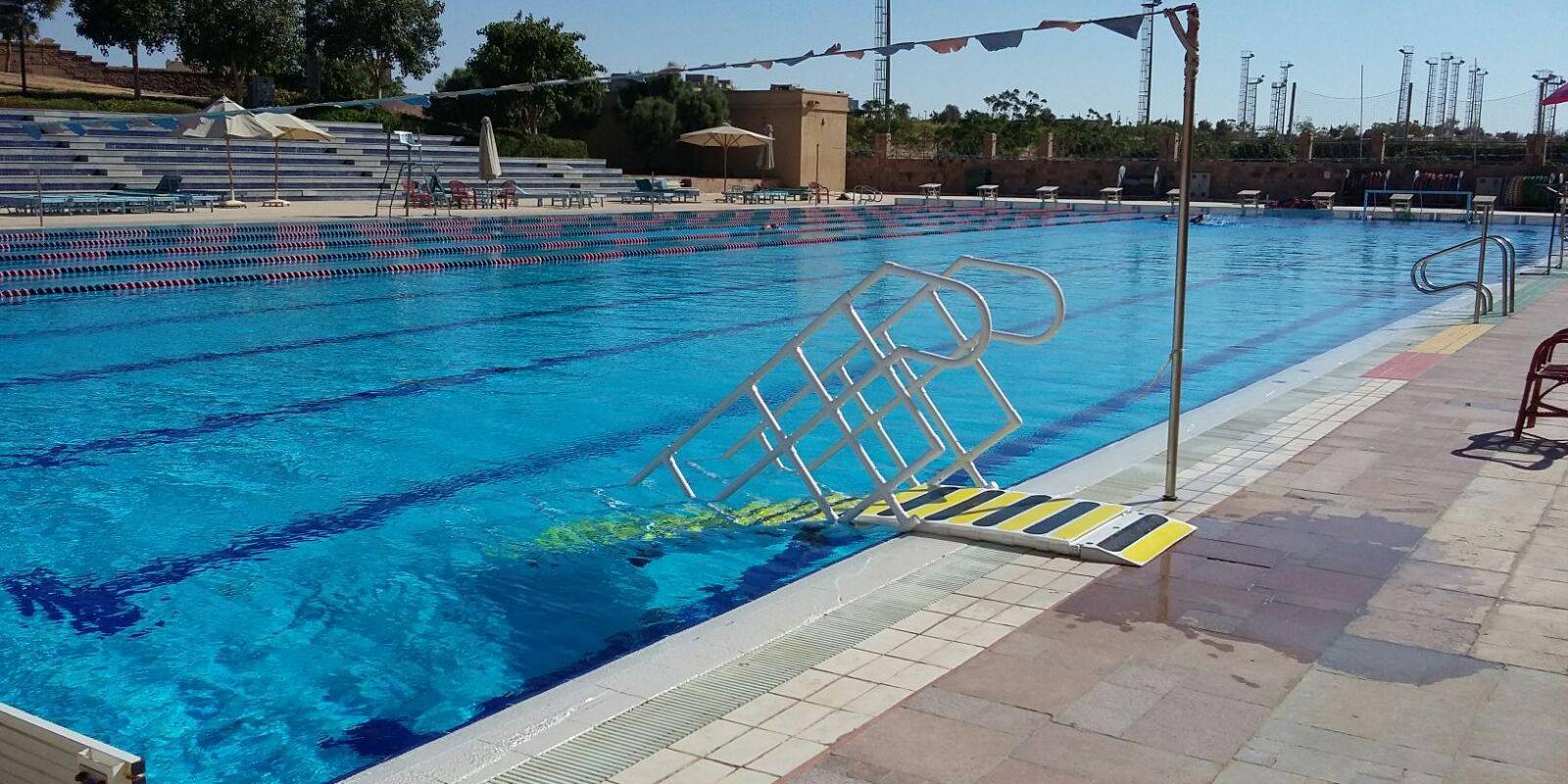
The new staircase at AUC's swimming pool will increase access to the University's facilities

AUC Provides Supportive Learning Environment for People with Disabilities

December 02, 2015

According to the United Nations, one in seven people worldwide have some form of mental or physical disability. Eighty percent of those with disabilities live in developing countries and have limited accessible to resources and medical care. In an effort to empower people with disabilities and increase awareness, the United Nations delegated December 3 as the International Day of Persons with Disabilities. The theme for 2015 is Inclusion Matters: Access and Empowerment for People of all Abilities.

In Egypt, AUC has some of the best facilities and resources to accommodate students with disabilities, and they are improving every year.  

Adaptive Technology Corner

AUC hosts two adaptive technology corners with innovative software and hardware to assist students who are visually impaired. These include: Job Access with Speech (JAWS), a screen reader that converts text on the screen to synthesized speech; and Kurzweil 1000, used to digitize print materials such as library books or articles, class assignments and exams into a format that is readable by JAWS. There is also a braille printer that prints e-books, PDF and even Arabic Text into braille. Braille Note Display is another portable device for note taking in braille that students can use in class. In addition to Plextalk, a pocket-size, portable device for audio recordings during lectures.

Currently, seven students, including two graduate students, use the technologies for their studies at AUC, ranging in majors from philosophy and political science to economics. Marwa Mansour, assistant director of operations at University Academic Computing Technologies, pointed out that a variety of technologies are needed to accommodate students from different backgrounds. “Some students are taught to use Braille, some know how to use JAWS very well and some only depend on recording,” said Mansour. “We teach the students how to use the various technologies.”

Each visually impaired student has JAWS software installed for free on their personal laptops for the duration of their time at AUC, however more licenses are needed for newly enrolled students.  To further support people with disabilities, plans are underway to acquire portable magnifiers, specifically with low vision students to use in class and invest in more sophisticated scanning technology to translate written documents into digital files that can be converted to audio or Braille.  UACT already has a part-time visually impaired delegate, Ahmed Abdel Tawab, who trains students on the JAWS software and assists them in scanning and printing of material, software installation and setup.  However, since demand for their services are increasing, UACT hopes to hire an assistant to help students with the technology.

Accessibility on Campus

In accordance with the U.S. Rehabilitation Act of 1973 and Americans with Disabilities Act of 1990, AUC ensures that individuals with disabilities have equal access to services, programs, resources and activities offered by the University. This encompasses both physical access and academic modifications to enable people with disabilities to realize their full potential.

The New Cairo campus is designed to be accessible to people with disabilities. All campus areas are accessible by wheelchairs, and club cars are available for transport around campus with prior arrangement. Recently, at the Sports Center, a specialized, sloped staircase has been installed in the Paul B. Hannon Swimming Pool to ensure that people with disabilities have an easy and accessible means of entering and exiting the pool. 

“Our aim is to better serve all members of the AUC community and allow people with disabilities easier access in and out of the pool,” said Louise Bertini, manager of athletics for aquatics.

Support for Learning Disabilities

The Adaptive Technology Corner and accessible campus facilities are essential for students who have physically disabilities. However, not all students have disabilities that are visible to others.  

“Learning disabilities are hidden disabilities” explained Alexandra Gazis, assistant director for student disability services in the Office of Student Support. “Students with learning disabilities don’t only need academic support. They also need social and personal support”

Learning disabilities includes disorders like dysgraphia and dyslexia, as well as attention deficit disorder and attention deficit hyperactivity disorder. With a recent gift to establish the Ismail Fund for Students with Learning Disabilities, the Office of Student Support has expanded its services to provide all-around support to ensure students can make the most of their time at AUC. A psychologist who is an expert in learning disabilities will now be available for students, as well as a licensed assessor who evaluates the students, makes recommendations and helps develop a detailed plan, including steps toward personal, academic and social goals.  

“We already give a lot of support to students, but with the new fund, we asked what can we give differently? Which other dimensions can we include?” explained Gazis. “We have services and academic support, but we needed a more tailored program for students with disabilities, including personal growth opportunities, group support, yearly plans and necessary software.”   

Currently, 18 students have registered at the Office of Student Suppoort and have been professionally assessed at the University. “There are many more students who are given support through AUC’s mentoring unit, but they don’t want to go through the assessment because they are reluctant and afraid of the stigma,” said Abeer Abdelraouf, learning disability officer. “There are a lot of other students we don’t know about who, because of the stigma, won’t approach us at all.”  

To combat the stigma and discrimination of mental health challenges, the Office of Student Support is vigilant about holding workshops and awareness sessions for the entire community. These sessions not only shed light on the different types of mental health issues, they also educate staff, faculty and students on how to best help people who are struggling with them. “We have held two awareness sessions this semester, and we plan on meeting with faculty members to give recommendations and explain how to move forward with the next steps,” noted Gazis.

The office is also working on acquiring more sophisticated software with multiple licenses so it can be useful to more than one student. “Most issues fall within writing, spelling and reading,” Gazis said. “We need software to assist students in finishing exams or assignments within the time limit of the class.” Currently UACT has some of this software, but students have to go to the library to use it. 

AUC’s Student Disability Services Unit, Gazis added, provides services to students with disabilities to not only ensure that all activities and programs are accessible, but to collaborate with students, faculty and staff in enhancing the self-determination of people with disabilities to enhance their chances of academic success.

“AUC is one of the first universities in the Middle East to have an office specifically for students with disabilities,” Gazis pointed out. “In Egypt, I can see other universities looking to us as an example and recognizing that yes, there are students with disabilities and trying to see what they can do to help them in their academic careers. Our aim is to create a campus environment where students are viewed on the basis of ability rather than disability.”
Related stories

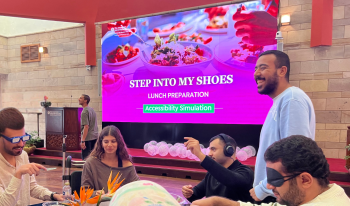
Students participating in the simulation with "stepping into the shoes of others" on the board
December 3, 2025

Stepping Into Others’ Shoes: AUC Students Run Accessibility Simulation

To honor the International Day of People with Disabilities, the Psychology of Inclusion and Exclusion in Egypt undergraduate class set up an accessibility simulation, bringing together students and faculty from across the AUC community to gain a new perspective on what life is like with a disability — stepping into the shoes of others. The event, hosted by the Center for Student Wellbeing and Student Accessibility Services, started with each attendee being assigned a disability. Some were assigned visual impairments and given eye masks. Some participants were designated audio impairments and wore noise cancelling headphones. Others were given various mobility restrictions, such as being paralyzed from the waist down or having limited mobility in their hands. Together, the participants had to work together to make a salad, a task that might seem simple but had many added challenges. Participants worked together to navigate cutting vegetables, reaching across a wide table and communicating through the challenges that come with audio and visual impairments.The simulation showed participants the ways people with disabilities have to go about their daily lives as well as how they can support each other. Participants had to rethink their typical teamwork processes to play to their strengths and accommodate gaps. Those with mobility impairments could help coordinate visually with those with audio impairments and auditorily to those with visual impairments. The experience showed how important accommodation, support, grace and understanding are to people with disabilities.“The event was a focused, high-impact simulation designed to foster empathy and build awareness among participants regarding the challenges faced by individuals living with various disabilities,” explained Alexandra Gazis, associate director of Student Accessibility Services at AUC and course instructor. “The primary goal is to provide attendees who do not have a disability with a short, experiential understanding of how simple, everyday tasks can become exclusionary, especially when various barriers are present.”The purpose of this simulation was to help raise awareness of the ways that disabilities impact daily life and the ways that the AUC community can think through necessary accommodations by being conscious of what it's like to live with disabilities.“The simulation was a great way to raise awareness of the realities of living day to day as a student with a disability,” shared Grainne Condron, one of the students in the class. “I see this collaboration between staff and students as making strides toward real change.”Additionally, AUC will be lighting the plaza and Bassily Auditorium in purple on December 3 to celebrate the International Day of People with Disabilities. AUC will be the first institution to light its buildings purple for this occasion in Egypt, marking once again its commitment to accessibility and visibility. 
Student Experience
Heba Kotb doing field research
December 3, 2025

AUC Psychology Professor Aids WHO Funded Study on Autism Care Training in Egypt

As researchers and psychologists work to improve the lives of those with autism around the world, the need for country-specific support networks and training has become clear. Heba Kotb ‘84, associate professor of practice in psychology, helped to develop an Egypt-specific autism training program in partnership with the World Health Organization and international universities. “It’s critical that we tailor autism care to specific cultural environments, which is exactly what this research developed," Kotb explained. “The importance of this program comes not only from the context-specific research, but also the ability to share it with families who need the support.”Autism care in Egypt has been heavily concentrated in major urban areas, with limited access to support for those outside of Cairo. This study — which was in partnership with AUC, the University of Maryland, McGill University’s Montreal Neurological Institute-Hospital, Egypt’s Ministry of Health and Population, Autism Speaks and WHO — sought to train families to care for the needs of youth with autism. The study sent out 16 Master Trainers to conduct five-day intensives in rural areas, with the intention of providing caregivers — mainly mothers — with the knowledge to support their children. Kotb worked with the international partners to design the training for the Egypt-specific program. “Egypt has a very different societal context around caregiving than, say, the United Kingdom,” Kotb affirmed. “It was essential that we consulted on this context so that Egyptian families could best access the support they needed.” Kotb also helped to assess the effectiveness of the program after it was concluded, interviewing eight mothers in Upper Egypt and 10 in Alexandria. She then provided thematic analysis on the data, which was published into a paper last August, concluding that programs like the country-specific master training do have a strong impact.“The interviews were really eye opening; I couldn't believe the impact of the program. Families don't get many services, especially for children with disabilities. In many cases, they are neglected,” Kotb said. Reflecting  on her experience within the study, Kotb said that parents shared with interviewers that their children couldn’t speak and would spend all day at home doing nothing until this program began training them how to better interact with their kids.. “The parents described it as a miracle,” Kotb said. “The children were suddenly speaking and playing, and became toilet-trained. They started to learn that they can actually do anything.”    Kotb has been specializing in researching children with disabilities for over 30 years. After getting her bachelor’s in psychology from AUC, she worked as an educator in a school for students with disabilities before eventually pursuing her PhD in education from Leeds University in the United Kingdom. Since then, she has been researching how to make schools accessible for all students. “I found working with children with disabilities to be incredibly rewarding. All my research has been in the area of disability studies, and it’s such satisfying work.”Ultimately, Kotb hopes that this study will serve as a pilot program that will lead to many other training programs like it. Now that the study is concluded, WHO and Egypt’s Ministry of Health will potentially work together to expand the training. Kotb is eager to continue helping. “I think the training program should be spread to all cities. Children with autism are everywhere. Many people don't realize that children with autism can be educated and trained, and can become productive members of society. We need to continue working to provide support.”
Civic Engagement
visual impaired person guided by someone
October 20, 2025

Tips on Navigating Inclusivity

Debunking myths, Farid shared firsthand tips on the do’s and don’ts of engaging with people with visual impairments:Face to FaceDon’t assume we need help. Ask first.If we do need help, it will only relate to visual impairment. We don’t need help with everything.Communicate with us on how we would like to be assisted so there is mutual respect for each other’s space. Don’t ask someone to lead us out of a place. Speak to us directly on how we would like to be guided.Offering help is thoughtful and appreciated, but don’t go out of your way to accompany us wherever we go. Sometimes giving directions is all we need.Don’t treat us differently than people around us. If we’re standing with a group, there is no need to grab a chair for us or get us coffee. Don’t give us front-row seating. These are nice gestures from well-intentioned people, but they make us feel uncomfortable.You don’t need to raise your voice to speak with us. We only lost our eyesight; our other senses are not affected.If two people, including a person with a visual impairment, are talking to you or asking a question, address them both. Don’t just speak to the sighted person. We can sense it.The tools we use are not toys for others to fool around with. My cane is indispensable for my safety and existence.Avoid grabbing or pulling someone’s cane, even if you’re trying to help that person move around. It’s dangerous and invasive. You can ask to hold one end of the cane while we hold the other.Don’t scream “Be careful” or honk at us when crossing the street. It distracts rather than alerts us.
Student Experience
Zaydan family receiving degrees at graduation
September 22, 2025

'AUC Saw Beyond Labels'

“I want to take this moment to express my deepest gratitude for welcoming Omar and me and for creating an environment where Omar can thrive not despite being autistic, but through it,” said Hala Ibrahim Zaydan, parent of Omar Sharaf El Din ’25, as she accepted an honorary Doctorate of Humane Letters at the June 2025 commencement ceremony, during which Sharaf El Din graduated. Though the family originally worried about Sharaf El Din’s adjustment to university life, with the help of AUC’s accommodations, Sharaf El Din graduated with a Bachelor of Science in mathematics. His mother was awarded an honorary doctorate for her dedication to her son’s studies and commitment to promoting inclusion at AUC.“[Zaydan] worked closely with AUC faculty, administrators and the Center for Student Wellbeing to strengthen support systems for students with disabilities,” reads her honorary degree citation. “Her efforts have not only guided her son’s academic success but also extended to assisting other students on campus, reflecting her commitment to empathy, collaboration and community. Her contributions exemplify the values of accessibility, integrity and inclusion that AUC upholds.”"Her contributions exemplify the values of accessibility, integrity and inclusion that AUC upholds."With the help of AUC’s accessibility initiatives, Zaydan was able to accompany Sharaf El Din to classes as his aide. As his mother, Zaydan knows her son’s specific needs and has been shadowing him since Grade 5, ensuring he received a quality education. She left her profession as a dermatologist to help Sharaf El Din in school and advocate for disability support.With inclusion as one of its core tenants, AUC ensured both Sharaf El Din and Zaydan were thoroughly supported. The Center for Student Wellbeing worked with the family to provide standard accommodations for his course load, note-taking and exams. “AUC believed in him and saw beyond labels,” said Zaydan. “The University was incredibly flexible and brought out the best in Omar without unnecessary pressure. The mathematics faculty were also very supportive and made every effort to respond effectively to Omar’s needs. They are providing guidance and support to help him find a suitable job.”“AUC believed in him and saw beyond labels."For Zaydan, learning math alongside her son was a departure from the material she was used to studying, but she was dedicated to providing Sharaf El Din with total support. She appreciated the English classes required of AUC as well as the liberal arts curriculum. Zaydan’s favorite class was ancient Egyptian studies, to which she joked, “Maybe I’ll do a master’s next!”
University News
Share