Home page
ع
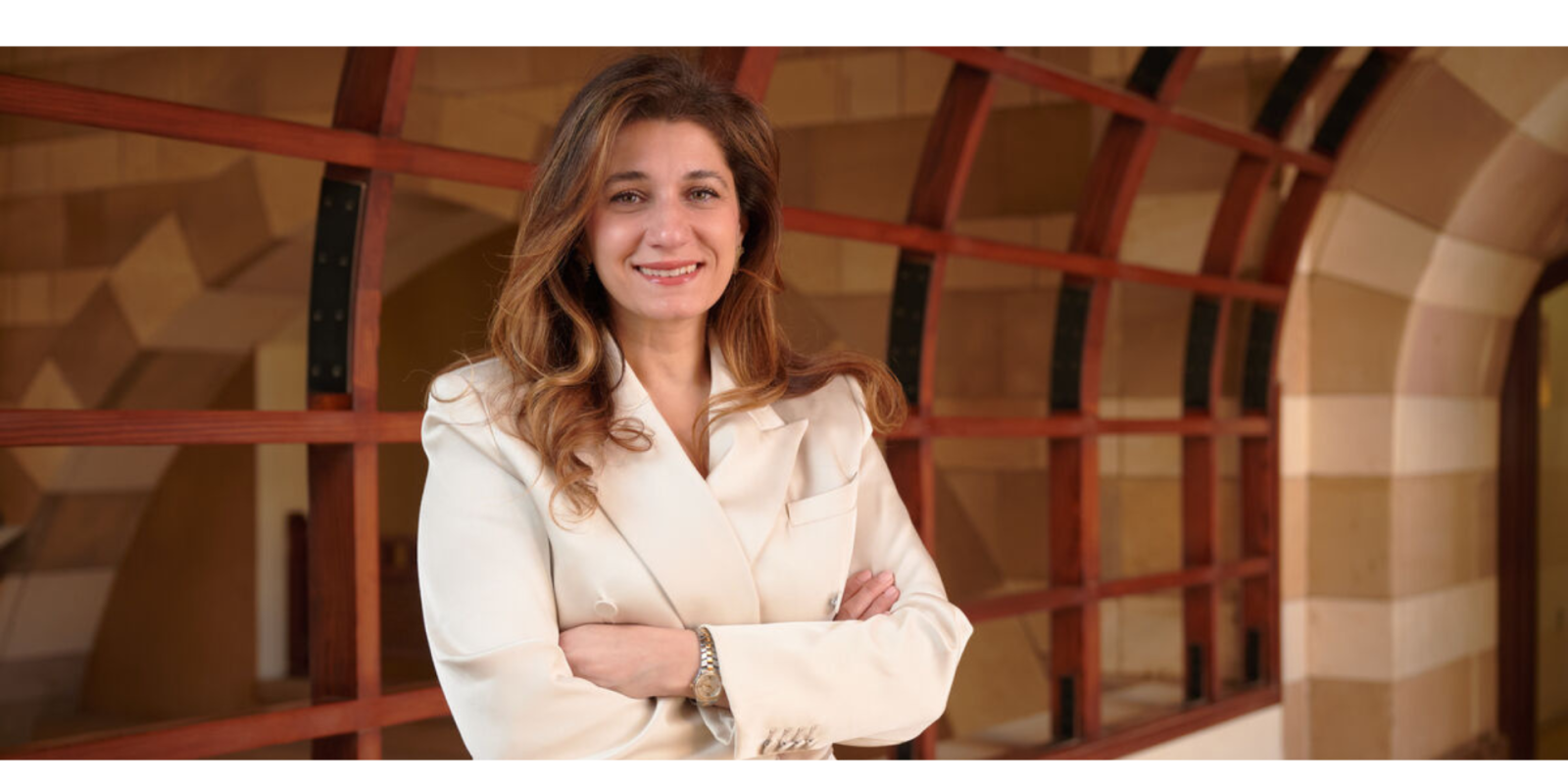
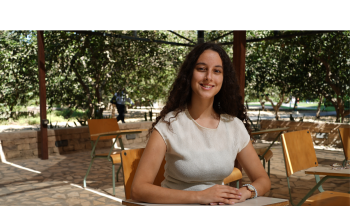
Farah Kashlan stands with her arms crossed in a hallway

Meet the New VP for Advancement, Alumni Relations

Olatunji Osho-Williams March 24, 2026
University News

Farah Kashlan is AUC’s new vice president for institutional advancement and alumni relations.

Kashlan joins the University from the Georgia Institute of Technology, where she served for the past 12 years. She arrives with over 15 years of experience in advancement leadership, strategic fundraising and stakeholder engagement. “I came to AUC because the University has always been the beacon of education,” said Kashlan. “I see this as an opportunity for us to go international with the capabilities of our students and faculty.”

Most recently, Kashlan served as director of development for the Daniel Guggenheim School of Aerospace Engineering. Earlier in her career, Kashlan held advancement and development roles at Agnes Scott College. She has also worked in business development and strategic analysis in the technology, communications and consulting sectors. 

“I'm very passionate about education and the opportunities that we can create for civil society,” she said. “I'm also a firm believer that education is the greatest equalizer in life, and so universities should be the place where thought capital is expressed. Every day, in ways both seen and unseen, people are using critical thinking to move us closer to solving the challenges we face as a world.”

As vice president for institutional advancement and alumni relations, Kashlan will lead University-wide strategies on advancement, fundraising and alumni engagement. In the short term, she plans to focus on building AUC’s legacy of academic excellence, lifelong learning and civic engagement.

“All four of these pillars are crucial to the development of our students and to the betterment of our community and surroundings. We want our alumni to come and say, ‘I graduated from this institution and it continues to make change in the world.’” 

In the long term, Kashlan plans to continue to empower faculty to innovate, foster a healthy University environment for students and continue existing collaborations to steer AUC into the future. She will work closely with academic and administrative University leaders to strengthen AUC’s culture of philanthropy, deepen relationships with stakeholders, and expand the University’s global donor and alumni networks. 

“I want to see AUC keep rocking,” she affirmed. “It's the epicenter of historical changes and huge innovations, all tied together by the sense of commitment to social equity and community. This University is the beacon for the region, and the fact that it has maintained its stability through all the geopolitical unrest is a testament to how dedicated everyone is to making sure that AUC thrives.”

More about Farah Kashlan:

What’s something people don’t know about you?

Born in Lebanon and raised in the American South, I happily blend both cultures and take the best of both. I’m in the stage of completing my PhD in healthcare technology policy from Georgia Institute of Technology and I’m also a classically trained violinist.

What do you do in your free time?

I come from a big family. I love to travel; I have family all over the world. I love being outdoors and also love fishing — just don’t ask me to put the worm on the hook. 

Now that I’m in Egypt, I’m getting much more into museums, movies and the art scene. I’m a huge fan of Umm Kulthum and Mohamed Abdel Wahab. That’s such a passion of mine. Plus, we have these padel courts and I’m looking to get into racquet sports. 

What’s your favorite memory from when you were a student?  

In my freshman year of college, I was a biology major. I remember going into my arts class, and for the first time in my life, I had a D on something that I had designed. 

I thought to myself, “Surely I could go and convince this teacher that I deserved a better grade,” and it was humbling because it taught me this idea that there is such a thing as perspective. In the world of sciences, you have the rhetoric, you have the formula, you have all these things that give you an outline or structure for what you need.

It was very humbling because in the conversation with a teacher, I learned that there are actually more ways than one to get to a solution. That conversation helped me realize, even in science and math, that there isn’t just one straight path to the answer. And that's kind of how life is. There's no one way to get somewhere.

What accomplishment are you most proud of?

Being a mother to a very bright young lady. To be able to say I poured into a life is probably my proudest accomplishment. You can have all these degrees and accolades, but family comes first. Being born into a wonderful family and helping create another one is my most prideful moment.

If there is one world issue you could solve, what would it be and why?

I would really like to end wars. You don’t choose where you’re born or what family you’re born into, but things that are manmade are absolutely destructive.

Any advice to a current student at AUC?

Do the hard things first. Try and try and try. College is the only time in your life when you can make mistakes and fail and be absolutely forgiven and never judged. And this is where you learn to build success — through trial and error.
Related stories

Mohammed Abuzaid at AUC graduation holding a large placard which reads "Accounting Spring '11"; another image of Mohammed Abuzaid at his desk
March 11, 2026

Returning to Ramallah

Mohamed Abuzaid ’11 didn’t expect to attend AUC, but a fateful email from the registrar’s office changed his life.“Living in Palestine, you don’t have that much luxury to put your kid in such a college,” Abuzaid said. Growing up in Ramallah, he heard good things about AUC from a friend who attended the University. Abuzaid emailed the registrar asking how to apply, but when he learned the tuition exceeded what he could afford, he let the registrar know it was out of budget. “They answered, ‘Why don't you apply for the Palestinian scholarship?’” he said.Abuzaid was a recipient of the Taher Family Endowed Scholarship, established in 2005 by Abdulhadi Hassan Taher to support Palestinian students based on their financial need and academic merit. After learning about the scholarship, he and his friends in Ramallah applied together and were all admitted to the University. Two decades later, he says the decision changed his life. ""AUC got me to another level,” he says, “It made me a better critical thinker and gave me all the tools I need in work, life — everything.”Today, he is the chief financial officer of Inash Al-Usra (Family Revitalization) Association in Ramallah, Palestine. The organization began in 1965 to support economically vulnerable Palestinian women and has since grown to one of the region’s oldest charities, offering funding initiatives, professional services and social welfare programs to Palestinians.For Abuzaid, AUC’s education helped build the interpersonal and strategic reasoning skills he relies upon to do his work. “AUC got me to another level,” he says, “It made me a better critical thinker and gave me all the tools I need in work, life — everything.”After graduating with a degree in accounting, Abuzaid weighed a postgrad job offer to work abroad, but his father’s wishes kept him in Ramallah. “My father told me ‘You need to pay back for your home country. After that, you can travel,’” Abuzaid reflected. Inash Al-Usra was the place where Abuzaid could combine his skill in corporate finance with his desire to do good. “I can see the financial health of the charity organization and distribute it to the people who really need it, ” he said."It’s more rewarding than any money in the world."The work is challenging — over 100,000 people receive benefits from Inash Al-Usra’s expansive programs. The nonprofit sells traditional handicrafts produced by Palestinian women, does charity, operates restaurants and orphanages, provides scholarships and serves community members across Palestine. Since the war in Gaza began, the organization has faced even more challenges. Abuzaid and his colleagues maintain a list of co-workers killed during the conflict. They work to feed people in refugee camps, take in orphans and support community members.“The economic situation here is a struggle, so you have to believe it when someone enters your office and tells you ‘I haven’t eaten in a week; I need anything.’” Abuzaid said.With its challenges, the fulfillment he gets from supporting his city and country is more than anything he could ask for. “It’s more rewarding than any money in the world,” Abuzaid affirmed. The University continues to offer numerous donor-funded, named and endowed scholarships to support Palestinian students today. Most recently, the Richard Brow and Angela Seay Palestinian Scholarship and Wasef Jabsheh '67 Palestinian Endowed Scholarships were established in 2025 to support the tuition of Palestinian students from Gaza. Learn more about scholarships at AUC. 
Civic Engagement
A student sits in a chair in an outside classroom surrounded by greenery.
November 3, 2025

AUC Student Aspires to Use Architecture to Solve Global Challenges

With the support of the new Kerr Family Scholarship, AUC freshman Malak Hashem is on her path to becoming an architect whose buildings will address challenges to sustainability faced by communities worldwide. “We have a lot of global challenges, like pollution and the use of nonrenewable resources,  so I chose architecture in order to solve these global issues. My current interest is in sustainability and net-zero building. I hope, with my knowledge, that I can help a lot of people and communities in installing these methods so that we can maintain a stable and sustainable environment,” Hashem says.Hashem’s studies at AUC were made possible through the newly founded Kerr Family Scholarship, which partially supports an undergraduate student from freshman year until graduation based on their academic merit and financial need. A lifelong passion for drawing, crafting and sculpting led Hashem to study historical art, where she discovered the beauty of geometric Islamic architecture and the grandeur of ornamented Baroque ceilings. This blend of beauty and function inspired Hashem to major in architecture, a discipline she says “can’t be replaced with AI because humans are the only ones capable of being creative.”  "I became interested in architecture because it's a mix of both worlds, art and also practicality. It's something that can help people around the world with."The University’s New Cairo campus is the perfect place for an aspiring architect to study. The low-lying Andalusian-inspired campus gardens provide crucial greenery and shade, recirculating water to minimize waste amid Egypt’s water shortage. Summer winds usher its cool moist air into the heart of campus, which spreads through internal courtyards and windcatchers, reducing the need for air conditioning. Hashem’s dream is to use sustainable energy in her future buildings to dull the blow of the water crisis. “I hope with my knowledge that I can support a lot of people and help communities in installing these methods so that we can maintain a stable and sustainable environment,” Hashem says.On a campus built brick by brick to encourage connection and prioritize sustainability, Hashem has found a likeminded community. Conversations with seniors in her major have made her excited to take an architecture theory class, which analyzes the historical purposes behind structures and offers new opportunities to explore the architecture that inspires her. AUC’s Core Curriculum has also exposed her to new topics at a deeper level, such as the study of beauty in the rhetoric and composition department. “I got to learn about beauty as a really important concept that is deeply rooted in every aspect of our life, and it doesn’t have to do with appearances or social media trends,” Hashem says.With opportunities to address the world’s greatest challenges, Hashem is taking classes across disciplines— business, psychology, sociology— to develop as an architect and person, in preparation to create a more beautiful and sustainable world.“I won’t just stop at undergraduate. I will also do my best in order to attain more knowledge through my graduate studies, so that one day I could achieve my dream to build communities that are sustainable,” she affirms.
Student Experience
Salima Ikram receiving Amelia Peabody award
October 19, 2025

AUC Inaugurates Amelia Peabody Professorship, Research Fund in Egyptology

AUC has established the Amelia Peabody Endowed Professorship and Research Fund in Egyptology — the first such professorship in the Middle East and Africa and one of few in the world.Thanks to the generosity of a donor who wishes to remain anonymous and with the support of the Fourmi Legacy Foundation, the professorship and research fund will provide expanded opportunities for teaching, research, fieldwork and excavations. “The purpose of this endowment is to advance fieldwork, research and teaching that deepen our understanding of Egypt’s past and strengthen the foundation for future scholarship,” said AUC President Ahmad Dallal.The inaugural professorship has been awarded to Distinguished University Professor of Egyptology Salima Ikram (YAB ’86), a world-renowned Egyptologist and field archaeologist. “I am honored and delighted to be the first incumbent of the Amelia Peabody chair in Egyptology,” said Ikram. “The generosity of the donor ensures that Egyptology will have a secure place at AUC. The professorship has been instituted in order to sustain and develop Egyptology at AUC, and I very much hope to continue fostering Egyptology at the University as well as exposing AUCians to the richness of ancient Egyptian culture and emphasizing its links to the present.”Ikram first came to AUC as a year-abroad student in 1985, when she “fell in love with Egypt,” and returned as a faculty member in 1995. She has helped shape AUC’s Egyptology department through her field work, partnerships with international stakeholders and commitment to public engagement. Ikram has published numerous articles and books on Egyptology and led field initiatives such as the North Kharga Darb Ain Amur Survey, the Amenmesses Project, the Animal Mummy Project and currently administers the Theban Mapping Project. Her research interests include animal mummification, funeral archeology rock art, the environment, diet and disease, with studies that have led to groundbreaking discoveries that changed scholastic understandings of daily life in ancient Egypt. Affirming the importance of Ikram’s work to the AUC community and the Egyptology field at large, Dallal said, “Dr. Ikram’s work exemplifies the purpose of this new endowment: rigorous scholarship that serves knowledge and society.”Through this professorship, Ikram will be endowed with the financial backing to continue her groundbreaking work and follow the footsteps of its fictional namesake: Amelia Peabody. Peabody is the star of a series of historical mystery novels set in the late 19th century that feature an unconventional and daring Egyptologist, fascinated by Egypt and eager to uncover ancient mysteries. Written by the New York Times best-selling novelist and Egyptologist Barbara Mertz (under the pen name Elizabeth Peters) and published between 1975-2010, the series inspired an entire generation to engage with the wonders of Egyptology. Curious and determined, the name of Amelia Peabody is meant to invoke this same passion for Egyptian history and culture in its awardees. “It is a matter of joy that the chair is named after a fictional optometrist, Amelia Peabody,” said Ikram. “The creator of the Amelia Peabody character was a very dear friend of mine, Barbara Mertz, one of the first women to earn a PhD in Egyptology from the University of Chicago. She popularized Egyptology, and we found that Amelia and I had many things in common, from our love of ancient Egypt to mysteries, and the handy belt meant for archaeology.”As a field, Egyptology is a cornerstone of the AUC community. Books on the subject remain among AUC Press’s all-time best sellers, including several by Ikram, such as Ancient Egypt: An Introduction, Death and Burial in Ancient Egypt, and Divine Creatures: Animal Mummies (as editor). Other Egyptology best sellers include Ancient Nubia: African Kingdoms on the Nile, Gods and Myths of Ancient Egypt, Nefertiti, Queen and Pharaoh of Egypt, and Ancient Egyptian Jewelry.Emphasizing the importance of Egyptology as a field, Ikram noted, “Teaching Egyptology at AUC is not only to create new Egyptologists, but also to expose Egyptian students to different aspects of their culture and history, to instill a sense of pride in their heritage and to make them more conscious of its value — not only to them and Egypt, but to the world.”
University News
Members of the Sawiris family, senior AUC leadership, ministers, ambassadors and other notable figures standing in front of the Onsi Sawiris School of Business at AUC
January 6, 2025

Legacy of Excellence: AUC Celebrates Naming of Onsi Sawiris School of Business

Along with the Sawiris family, AUC celebrated the naming of the Onsi Sawiris School of Business in a special ceremony on the New Cairo campus on January 6. The school was named in honor of the late Onsi Sawiris, a titan of business in the Middle East, founder of the Orascom Group and patriarch of the family, in appreciation and recognition of a transformative gift from the Sawiris family. The single largest philanthropic gift in the institution’s history, it provides funding to support excellence in business education.“For the first time, a school at the University is to be named, and it is fitting that it honors Onsi Sawiris — a man who embodied a deep love for Egypt, visionary business acumen and an unwavering commitment to education,” said Mark Turnage (ALU ’82), chair of AUC’s Board of Trustees, at the ceremony. “On behalf of the Board of Trustees, I extend our deepest admiration and appreciation to the Sawiris family: We thank you for your extraordinary generosity, your trust and your partnership.”“For the first time, a school at the University is to be named, and it is fitting that it honors Onsi Sawiris — a man who embodied a deep love for Egypt, visionary business acumen and an unwavering commitment to education."AUC President Ahmad Dallal also paid tribute to the enduring Sawiris legacy. “We are here to honor the late Onsi Sawiris — a visionary leader of industry and business whose legacy is carried forward by his three sons, grandchildren and the thousands of people who have been touched by the Sawiris family. Onsi Sawiris was not merely a businessman; he was a pioneer who transformed the way we think about business, leadership and innovation. Despite the many obstacles that lay in his path, Onsi saw opportunities where others saw only barriers.”The funding will impact the school and its different stakeholders in several ways. It will provide scholarships for students, facilitate interdisciplinary research for faculty, establish a professorship in artificial intelligence and data science, and support visiting faculty and student exchange programs with several leading U.S. business schools and universities, including the University of Chicago –– one of the top worldwide. These collaborations will enable AUC and partner institutions to tackle pressing global issues, such as climate change and economic fluctuations, through multidisciplinary research and best practices, producing graduates who are globally informed, culturally sensitive and driven by innovation. “Our partnerships with leading American universities will create pathways for students of the Onsi Sawiris School of Business to develop a global mindset, a nuanced regional understanding and interdisciplinary skills essential to tackling the challenges of the future,” said Dallal."Bonds with AUC have also served to reinforce and extend the historic connection between Egypt and UChicago."Melina Hale, dean of the College at the University of Chicago, highlighted the transformative impact of the Sawiris Scholars Program at UChicago and other U.S. universities: "The University of Chicago has been fortunate to witness while we are celebrating here today the extraordinary and long-standing commitment of the Sawiris family to the cause of education," she said. Hale also commeded the University of Chicago's well-established ties with AUC: "The American University in Cairo has played an important part in the Sawiris Scholars program from the start. With two successful students from AUC in its first year., the program was soon opened to other universities and increased numbers of students. Bonds with AUC have also served to reinforce and extend the historic connection between Egypt and UChicago. With your prestigious institution, we look forward to supporting The American University in Cairo and the Onsi Sawiris School of Business in its bright and impactful future."“Our partnerships with leading American universities will create pathways for students of the Onsi Sawiris School of Business to develop a global mindset, a nuanced regional understanding and interdisciplinary skills essential to tackling the challenges of the future.”This gift is made possible through the generosity of the NNS Foundation, the Naguib Sawiris Charitable Fund, Naguib Samih Sawiris, the Sawiris Foundation for Social Development and Orascom Construction. Nassef Sawiris, executive chair of OCI Global, reflected on his father’s belief in the importance of education for future generations. “Not only did my father believe in the value of education for his children, but he also recognized the benefits of providing similar opportunities to talented and deserving students across Egypt and the capacity for bolstering Egypt's economic competitors in so doing,” he said. “As a result, 25 years ago, my father established the Onsi Sawiris Scholarship Program, which was unprecedented at the time, to promote academic excellence and achievement.” “Seeing the potential within the AUC community –– the tenacity, curiosity, creativity and drive to succeed within the student body. Our family looks forward to continuing the support to AUC and its mission to be a global leader in education and excellence.”The program has thus far provided full-tuition scholarships to 99 Egyptian students to pursue bachelor's or master's degree at prestigious U.S. universities, including the University of Chicago, University of Pennsylvania, Harvard, Stanford and MIT. “The only stipulation my father made in return was that recipients returned to Egypt upon graduation to immediately begin reinvesting their talent and entrepreneurial skills to advance Egypt's economic standards for future generations,” said Nassef Sawiris.So why is the Sawiris family creating new educational opportunities through the Onsi Sawiris School of Business at AUC? “Seeing the potential within the AUC community –– the tenacity, curiosity, creativity and drive to succeed within the student body,” said Nassef Sawiris. “Our family looks forward to continuing the support to AUC and its mission to be a global leader in education and excellence.”“Today’s school naming honors the past and inspires the future."Through scholarships, research, professorships and exchange programs, the Onsi Sawiris School of Business will continue on its path to driving educational excellence in Egypt, the region and worldwide. “Today’s school naming honors the past and inspires the future. It celebrates our shared vision to create a learning environment that fosters creativity, critical thinking and ethical leadership,” said Sherif Kamel ’88, ’90, ’13, dean of the Onsi Sawiris School of Business. “Here’s to the future, the endless possibilities that lie ahead and the enduring spirit of our beloved school of business.”Photo caption: The Sawiris family, including Engineer Naguib Sawiris, Engineer Samih Sawiris and Mr. Nassef Sawiris; AUC President Ahmad Dallal; Board of Trustees Chair Mark Turnage; Dean Sherif Kamel; Dean of the College Melina Hale at the University of Chicago; Provost Ehab Abdel-Rahmen as well as senior AUC leadership, ministers, ambassadors and other notable figures at the Onsi Sawiris School of Business celebration
Business
Share