How to Write a Biography
Research by Assistant Professor Nina Ellis has taken her to the far reaches of America to examine the life of short story writer Lucia Berlin
What does it take to tell the story of a life?
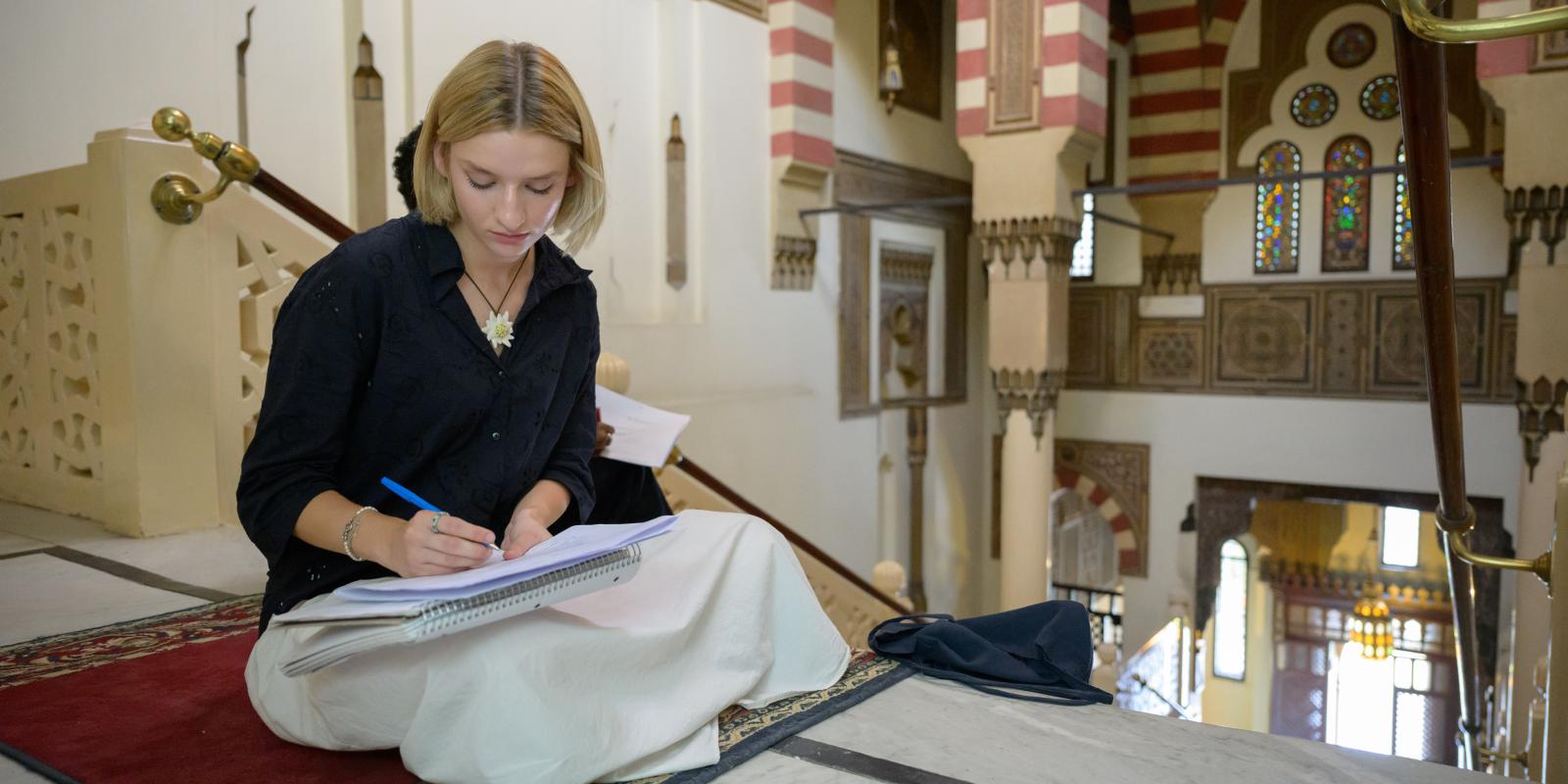
Over two months, Nina Ellis, assistant professor of English and comparative literature, traveled to 17 towns, three countries and two continents to write Looking for Lucia, the first biography of itinerant American short story writer, Lucia Berlin.
In an era where AI can summarize a life in seconds, her research expedition across the Americas is the culmination of a decade-long journey to write a biography. Her research unearthed new stories about Berlin, changing how future readers will understand the author’s work.
“I feel like I know her better than I know my husband,” Ellis joked. “I've known her longer too. I met him in 2019, and I met her in 2017 — and he's cool with that.”
Looking for Lucia chronicles the life of Lucia Berlin, who posthumously gained prestige for her 2015 short story collection, A Manual for Cleaning Women. Commonly known as a working class writer, Berlin has a true story that spanned social classes and continents — once living as a girl in Chile’s high society, before dropping out of college to marry a sculptor in New Mexico.
The biography traces both Berlin’s life across the Americas and Ellis’s research trip through Berlin’s homes decades later, weaving in interviews with Berlin’s children, friends, neighbors and students from every stop along the way.
"I feel like I know her better than I know my husband. I've known her longer too."
“I was doing things like tracking down newspaper articles about marriages and obituaries, and then literally using the phone book,” Ellis said.
The journey began far north at Berlin’s birthplace of Juneau, Alaska, where Ellis tracked down Berlin’s first address. After that, she caught a flight down to investigate Berlin’s home in El Paso, Texas, and crossed the border into Ciudad Juárez, Mexico.
Soon after, Ellis flew south to Santiago, Chile, where she drove up and down the country’s spine on a hunt for the rural estate where Berlin set her novella, Andando.
Biographers frequently travel for research, but to go this far and against geographical sense “is a bit mad,” as Ellis said. “And I was excited by that because it felt kind of like performance art.”
After discovering A Manual for Cleaning Women at a San Francisco bookstore in 2017, Ellis wrote her Master’s thesis for University College London about Berlin.
"I was doing things like tracking down newspaper articles about marriages and obituaries, and then literally using the phone book."
Though Berlin was a prolific author, publishing 76 short stories in her lifetime, she had few critics during her day. Facing a lack of secondary sources for her thesis, Ellis researched the people who read at Berlin’s memorial service and emailed them interview requests, even mailing a hand-written letter to one of Berlin’s oldest friends. The thesis earned her a PhD scholarship to write a critical biography of Berlin at Cambridge University and evolved into a book deal.
“In Santiago, I met up with one of Lucia's best friends from school when she was a girl, who looked amazing, but must have been in her late 80s. She was telling me stories about things that happened during that period,” Ellis said.
After Chile, Ellis criss-crossed North America: New Mexico, New York City, Puerto Vallarta and Yelapa, Mexico. She followed a hand-drawn map created by one of Berlin’s sons along Yelapa’s coast, searching for the location of the house where the family lived decades ago, which is now a luxury resort.
The final stops were the San Francisco Bay Area, down again to Mexico City and back up to Colorado, where Berlin is buried, and finishing in Santa Monica, where she died. After finishing her travels, writing and editing the biography took Ellis an additional two years.
Writing a biography carries great responsibility, not just to the subject, but to the people who knew them who are still alive. Ellis often found herself reading through Berlin’s most intimate journals and emerging with hidden stories on the places and people Ellis would later meet.
“I’ve read all this stuff about her children as children — lessons, diaries, everything. And now, I know the children,” who are now in their 60s, Ellis said.
Ellis has published short stories and drafted a novel before, but she cited the experience of writing 80,000-words for her PhD as what empowered her to write a 100,000-word biography.
And this spring, she looked to imbue her creative writing students with the same confidence by teaching a class with one goal: write 60,000 words in a semester.
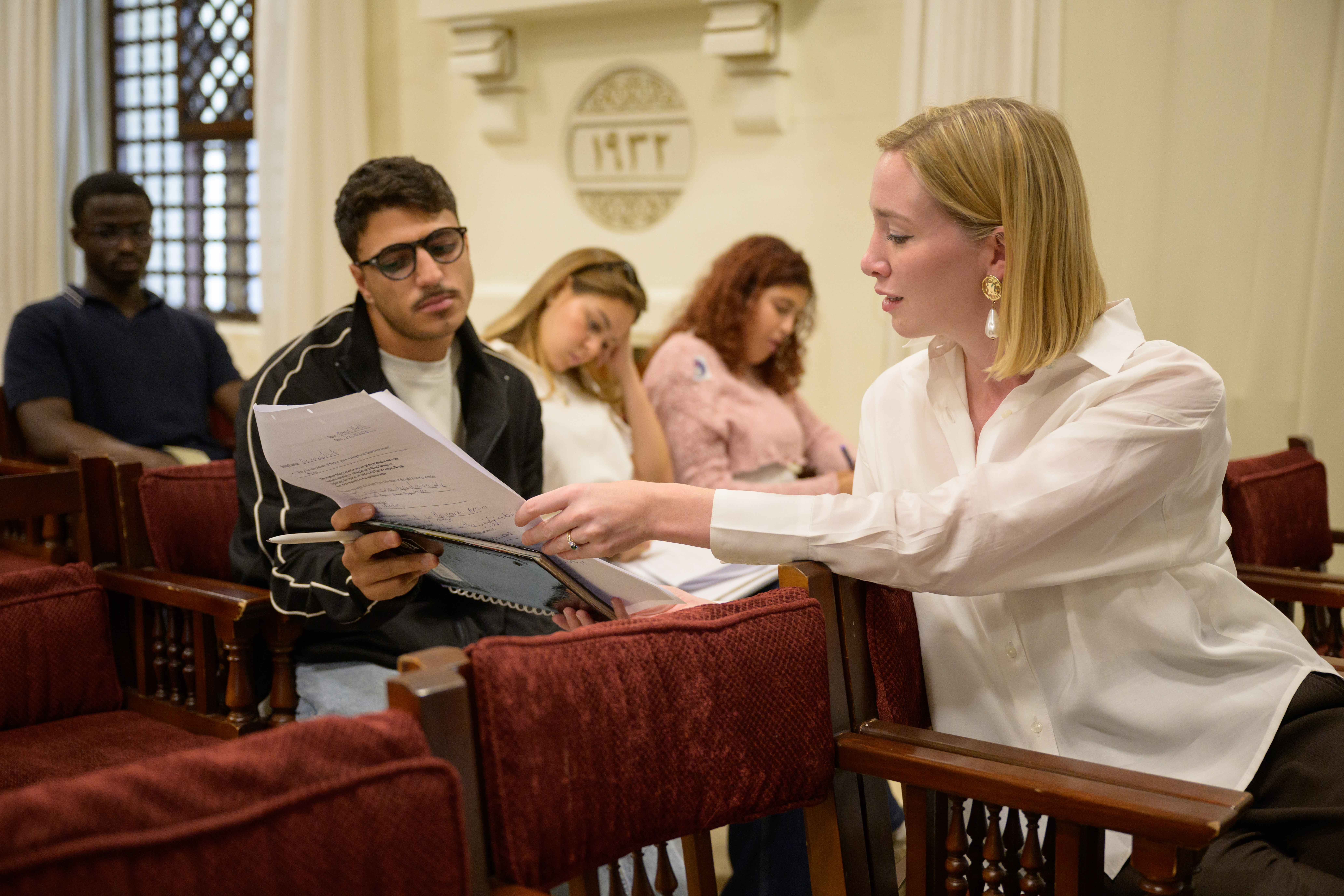
Undergraduates in her capstone seminar on novel-writing hand wrote nearly 1,000 to 3,000 words twice a week for homework, in finger-cramping pursuit of a book draft. Ellis, who also wrote the 60,000 words by hand, said the experience helped students venture past their perfectionism and write.
“I really, really believe that the way to learn to write is by writing,” Ellis said. “It's so tempting to take classes, watch videos and learn the tips, but at the end of the day, you need to implement them. That's a journey you have to go on by yourself.”
You can read more about Lucia Berlin’s journey in Looking for Lucia, set to be published by Farrar, Straus & Giroux on June 15, 2027.
