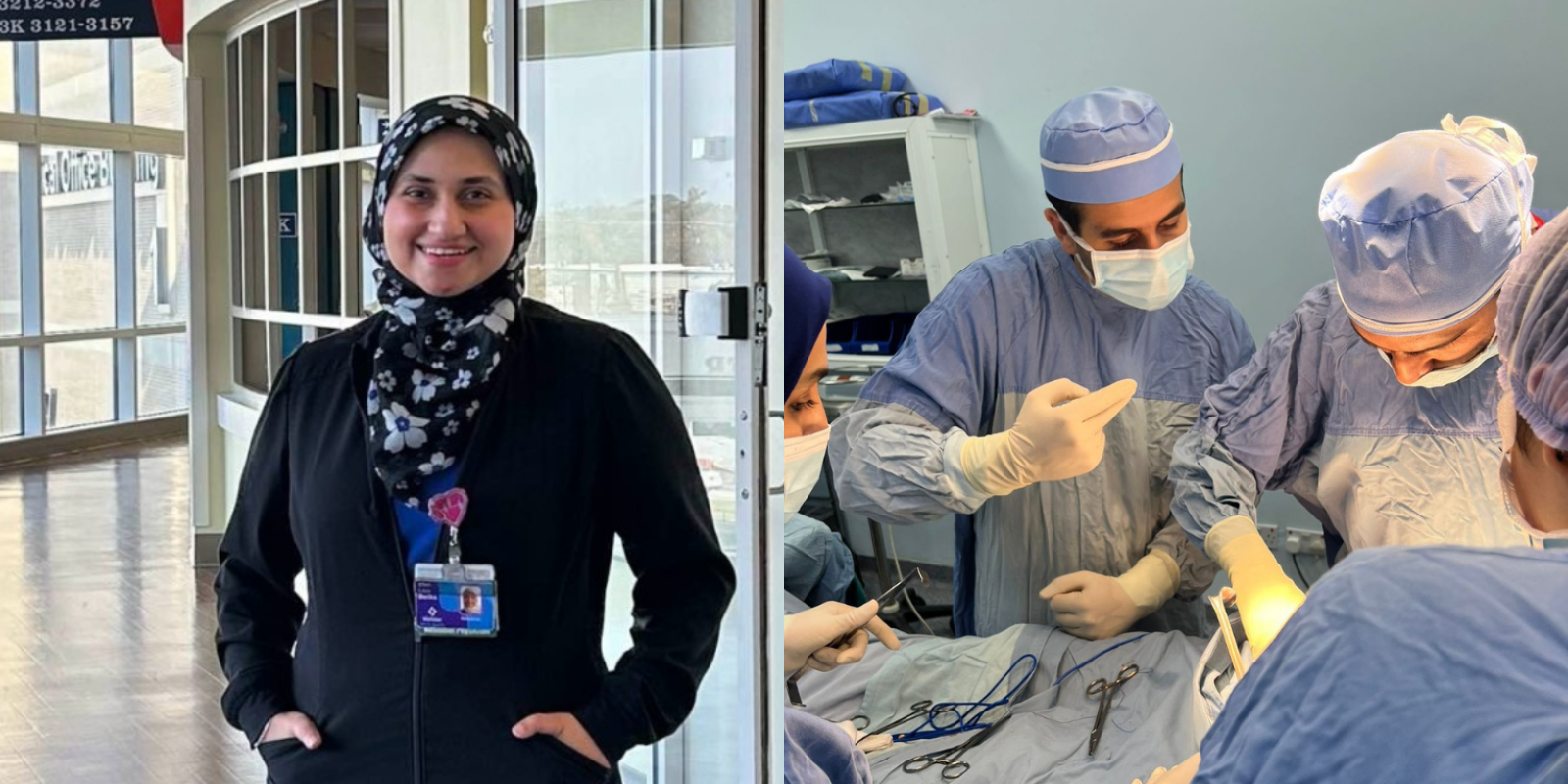
AUC’s Premedical Track Opens New Doors for Future Doctors
The University's pre-medical track provides a holistic preparation for aspiring doctors applying to medical schools abroad.
Rached Zeghlache ’17, a biology graduate of AUC’s premedical track, recently passed her board exams and completed her residency in internal medicine at the Yale New Haven Health System in Connecticut. Zeghlache says AUC’s accredited courses and research opportunities in related fields like biomedicine gave her the space to fully pursue medicine.
“The fact that AUC offers those courses, that they are accredited and that medical schools recognize them really helped me get those prerequisites to qualify for medical school admission,” said Zeghlache.
A New Partnership
The premedical track has been a part of the University’s undergraduate programs for approximately two decades. Today, AUC is partnering with St. George’s University (SGU) in Grenada where qualified graduates of the premedical track can submit a priority application for entry into SGU’s U.S-accredited school of medicine.
“This new agreement is the first of its kind that allows our graduates a facilitated way to secure an interview with the Faculty Student Selection Committee at SGU and potentially get accepted into medical school there,” said Ahmed Abdellatif, associate professor of biomedical and neurosciences at AUC and coordinator of the University’s premedical track.
Under this partnership, accepted students can qualify for a merit-based international student scholarship that is granted once they successfully enter the four-year MD program.
What Is AUC’s Premedical Track?
Combining a holistic education of the human body and the societies we live in, AUC’s premedical track incorporates the liberal arts ethos of the University into its course planning. Students spend almost two years studying biology, chemistry, physics and mathematics, in addition to behavioral sciences, social sciences or psychology courses that involve significant critical writing.
Biology and pre-medical track junior Yousef Taha was inspired to pursue a career in medicine after witnessing an open-heart surgery during a school career-shadowing event at the end of the seventh grade.
"For me, medicine is not just about the operation room, it's also about the advocacy that comes with medicine."
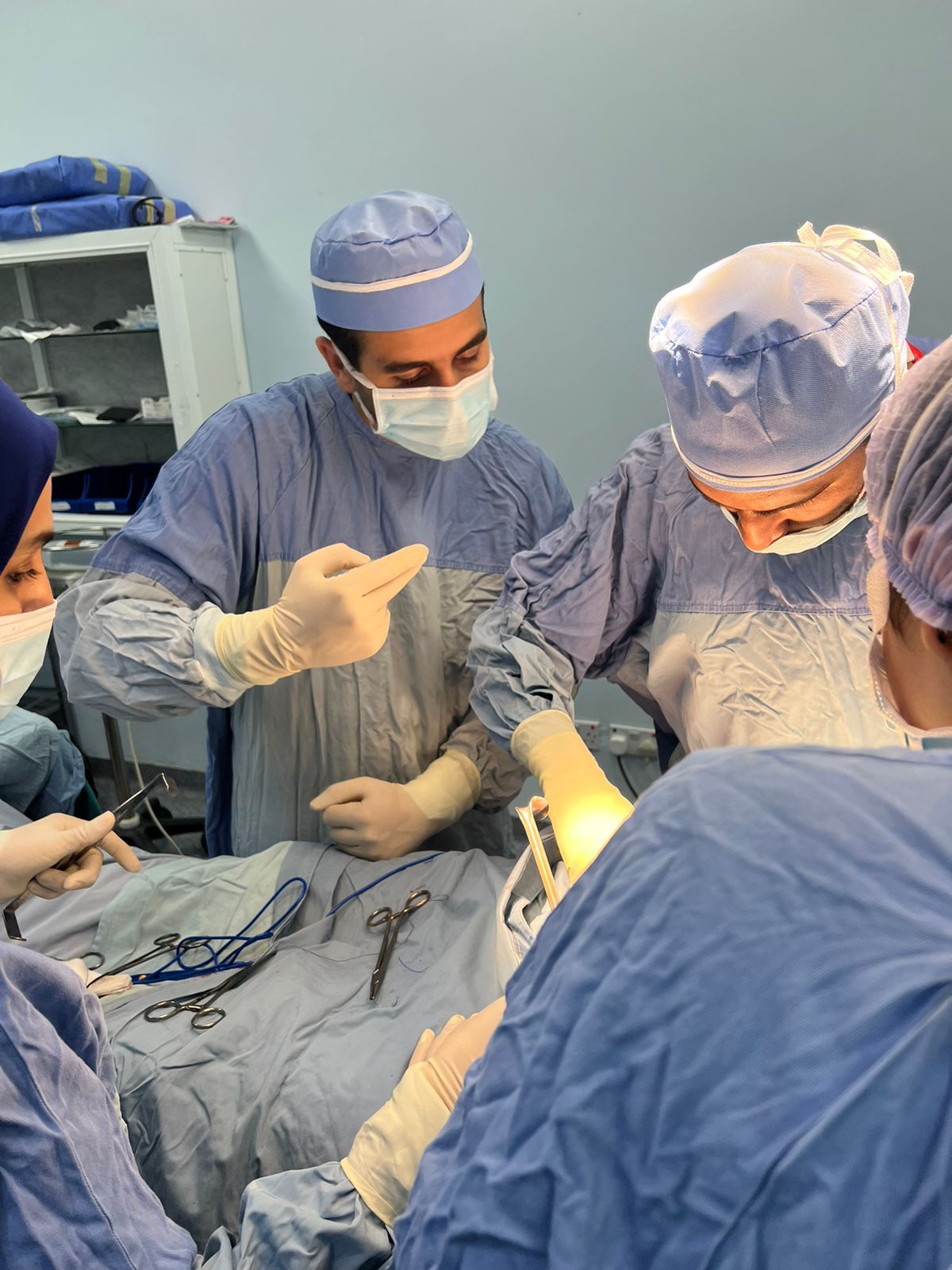
“The scene of me being able to see a heart leave the human body and the body still remain alive was breathtaking,” Taha says. The moment inspired Taha, who comes from a family of doctors, to pursue a career as a cardiac surgeon.
The freedom to study the liberal arts and pursue medicine on the pre-med track has opened doors for Taha to intern in the operation room of Jordan Hospital in Amman Jordan, serve as vice president of the biology association and travel to New York City with the Cairo International Model United Nations team (CIMUN).
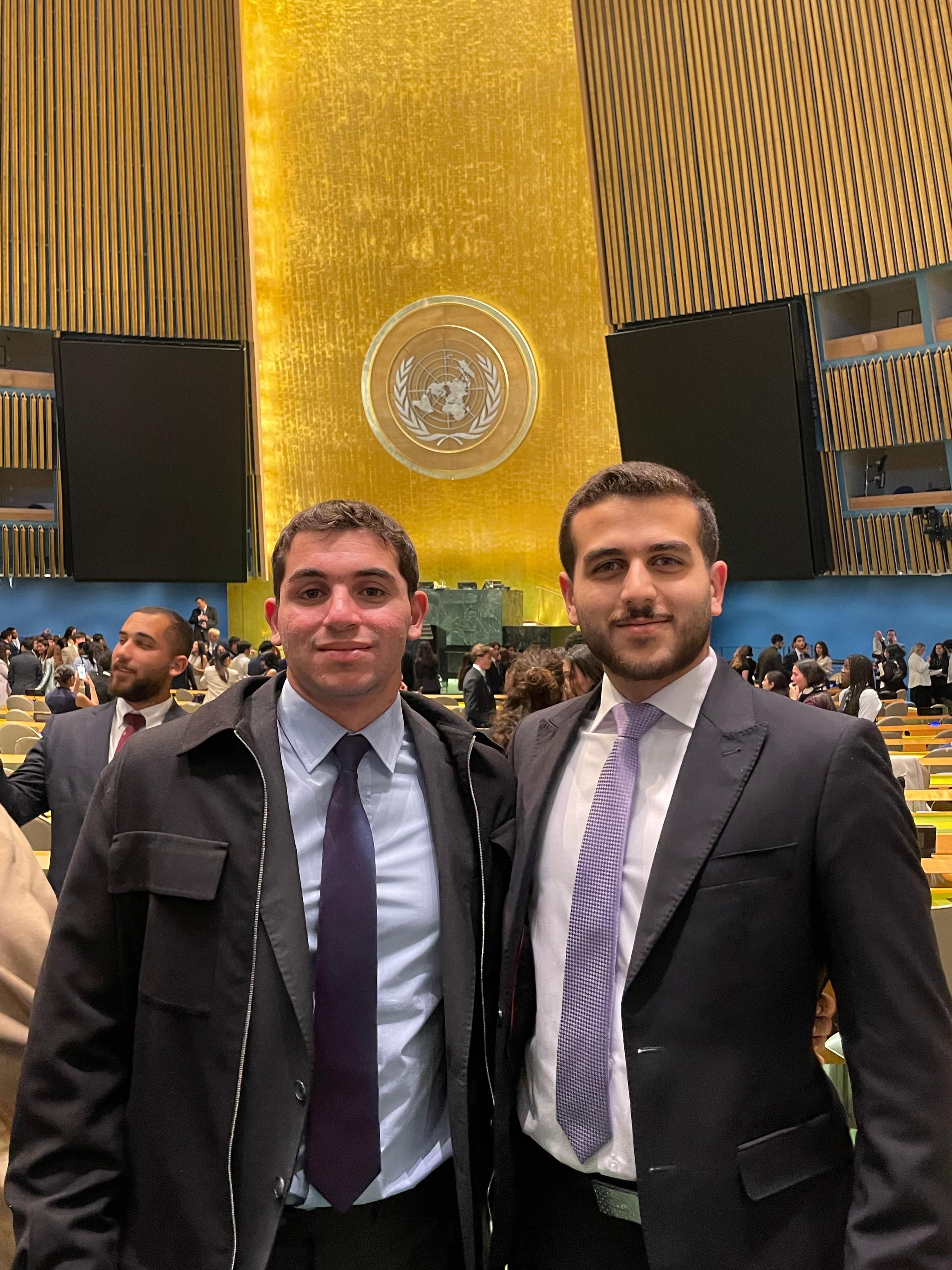
“For me, medicine is not just about the operation room, it's also about the advocacy that comes with medicine. This is why I was part of CIMUN,” Taha says. In April 2025, Taha was awarded on the floor of the UN General Assembly at the National Model United Nations conference for best position paper alongside his co-delegate political science senior Hussein Sherif.
“If it wasn’t for the clubs I’ve been a part of at AUC, I wouldn’t have had such a chance,” Taha says.
A former physician in the United States, Abdellatif emphasized that medical schools look for students with diverse interests. A benefit of a premedical track with a liberal arts education such as the one offered at AUC is that students can explore several potential career paths and majors before deciding to apply to medical school.
“Anyone, regardless of their major, can join if they’re aiming to study medicine after graduation. To be eligible for medical schools abroad, students must complete all the coursework for their major, plus the premedical track,” said Abdellatif.
"You don’t necessarily need to be a biology or chemistry major to be admitted to medical school.”
Abdellatif explained that medical schools also want applicants who show commitment. Premedical applicants with a unique background or exposure to diverse disciplines can show medical schools they have explored their options in different majors and are still dedicated to becoming a doctor.
“Most people think the only thing that gets you admitted to medical school is having good grades,” Abdellatif said, adding that strong extracurricular activities and diverse academic backgrounds in areas such as liberal arts and business are assets. “You don’t necessarily need to be a biology or chemistry major to be admitted to medical school.”
Furthermore, because applying to medical school is a long process, Abdellatif advises his students that they will need something else to do while applying. Exposure to liberal arts can widen your options.
“It’s important to stay engaged while you wait, whether by volunteering at a hospital or working with an NGO,” said Abdellatif.
Where They Are Now
Lina Berika ’14 is a graduate of AUC’s premedical track who uses her education in the sciences and humanities to treat young children as a second-year pediatric resident at Augusta University.
“I chose pediatrics because it is the science of medicine and society."
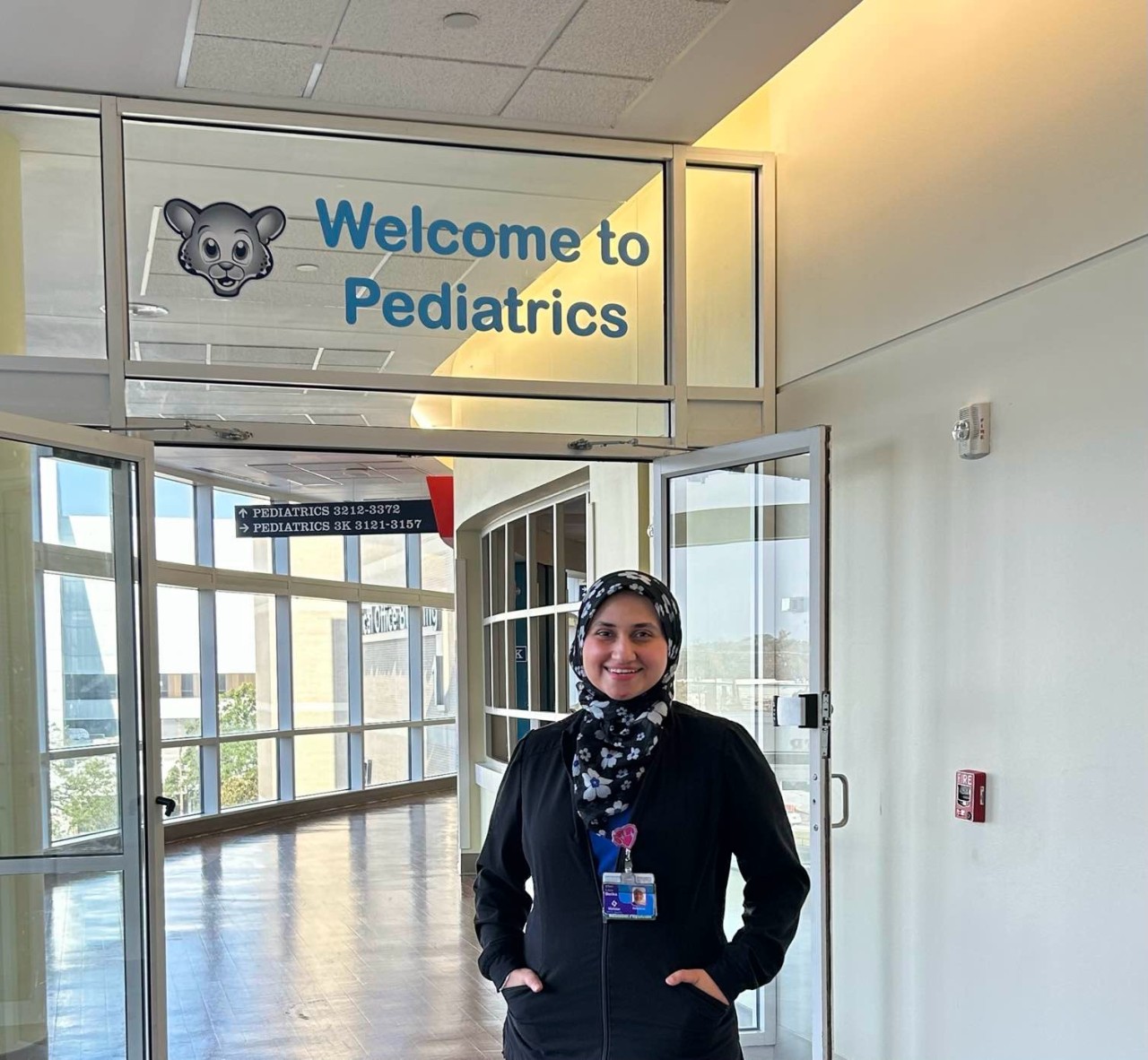
Prior to her residency, Berika attended medical school at the Lebanese American University in Beirut through a joint AUC-LAU agreement between both institutions prioritizing eligible applicants from AUC to attend LAU’s medical college.
Growing up, her love for science was matched by an equal love for the humanities, and medicine was the intersection of both.“You are providing objective data and treating people using that data. It’s unlike philosophy or sociology. With medicine, you are just studying humans,” she said.
The ability to explore the humanities and pursue medicine led Berika to major in biology and minor in psychology at AUC.
Berika remembers the required freshman rhetoric and composition courses at AUC, saying these classes helped refine the writing and problem-solving skills she uses every day in residency. “You have to be a good writer and use logical and critical thinking in order to be a good physician, and I believe AUC’s liberal arts education made me very much ready for that in residency,” she said.
This liberal arts approach equips students with the well-rounded foundation essential for success in medical school. In a specialty as critical to the success of society and wellbeing of others as pediatrics, Berika’s education in the technical and social sciences helps her treat patients all the way from children to young adults.
“Knowing the social and psychological background of your patients is critical to providing great care, especially in pediatrics,” she said.
“I chose pediatrics because it is the science of medicine and society. You are taking care of an entire family through the child because the child is the most precious being in the household."
