Home page
ع Search AUC

AUsCenes: News@AUC Roundup
AUsCenes: News@AUC Roundup
the News@AUC team
<?xml encoding="UTF-8">

By the News@AUC team | This roundup appeared in the Fall 2017 edition of AUCToday.
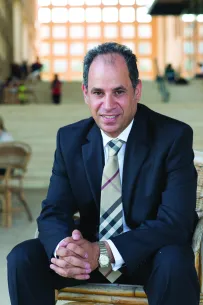
New Provost Ehab Abdel-Rahman

"We have the right people"

This year set in motion with Professor Ehab Abdel-Rahman as AUC's newly appointed provost.

After many years of service at the University, Abdel-Rahman recognizes the distinct qualities that have shaped AUC into the leading global institution it is today and brings a fresh perspective to his new role as provost.

"This is a time for key discussions about the future of the University," Abdel-Rahman said. "I hope to capitalize on the unique opportunity to engage students, faculty, staff and alumni in a deeper dialogue about our structures, policies, processes and, more importantly, our vision for the future of AUC. We have the right people to guide this dialogue."

Abdel-Rahman first joined AUC as assistant professor of physics in 2006. He went on to become chair of the Department of Physics, associate dean of graduate studies and research in the School of Sciences and Engineering, and director of the Yousef Jameel Science and Technology Research Center. As a senior administrator, he held the positions of associate provost for research, vice provost and interim provost. In recognition of his accomplishments, AUC presented him with the Research Innovation Award, Excellence in Teaching Award, Innovative Teaching Award, President's Distinguished Service Award, Outstanding Service Award, and the Provost's Distinguished Service Award.

As provost, Abdel-Rahman envisions boundless opportunities for AUC's growth. "All the challenges that AUC has faced in the last few years have been defining moments and presented opportunities to enhance our operations," he affirmed.

Full story here.

First Female Minister of Tourism

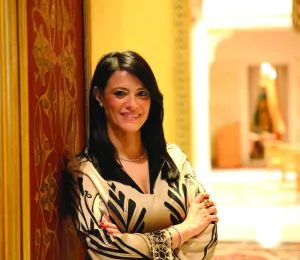
Rania Al-Mashat '95 is Egypt's new Minister of Tourism.

Rania Al-Mashat '95 is Egypt's new minister of tourism -- the first woman in Egypt's history to hold this position since the ministry was established more than five decades ago.

Al-Mashat has always emphasized being driven by a sense of responsibility to serve Egypt. "Every international and domestic post or recognition along my career path better equips me to competently serve my country," said Al-Mashat. "That's my lifelong goal."

A leading expert in monetary policy and international economics, Al-Mashat has worked with prominent financial institutions in Egypt and worldwide since graduating from AUC with a Bachelor of Arts in economics. At the International Monetary Fund (IMF), she served as adviser to its chief economist, Professor Maurice Obstfeld, and as senior economist. She played a key role at the Central Bank of Egypt, where she worked for 11 years and served as assistant sub-governor and head of its Monetary Policy Department. She also acted as a liaison between the bank, sovereign rating agencies and the IMF.

Recipient of the 2013 Distinguished Alumni Award from AUC, Al-Mashat is well-known as a global economist. In 2017, she participated in the World Economic Forum's "Investing in Peace," a panel composed of influential global figures. She was among a list of 10 renowned economics experts whose input was sought for a World Economic Forum article discussing making the world a fairer place. In 2014, the World Economic Forum named her a Young Global Leader for her commitment to bettering Egypt through her impactful work. Al-Mashat's biography is featured in Daughters of the Nile: Egyptian Women Changing Their World (Cambridge Scholars Publishing, 2016).

Al-Mashat noted that her various experiences at AUC exposed her to the international dimension of economics and solidified her decision to pursue her master's and doctorate in the field at the University of Maryland. She also completed executive education certificates in leadership from Harvard and Oxford universities.

During her time at AUC, Al-Mashat was active in numerous extracurricular activities, such as the Cairo International Model Arab League, Cairo International Model United Nations, AIESEC and the Arab Cultural Club. She also participated in the Student Union as the representative for economics majors. In addition, she, along with other AUC students, had the opportunity to represent Egypt at the Bruno Kreisky Forum for International Dialogue in Austria. "These experiences helped build my confidence, trained me in public participation and interaction with others, as well as broadened the networks to which I still have access to this day," reflected Al-Mashat.

Full profile on Al-Mashat here.

AUC Welcomes New Trustees

William B. Inglee is the senior partner and cofounder of Inglee Sauer Moseley Strategies.

AUC's Board of Trustees has welcomed two new members: William B. Inglee, senior partner and co-founder of Inglee Sauer Moseley Strategies LLC and a senior adviser at the Center for Strategic and International Studies, and Tarek Masoud, professor of public policy and the Sultan of Oman Professor of International Relations at Harvard University's John F. Kennedy School of Government.

Inglee's career has included senior positions in the private sector, executive branch and United States Congress. Previously, he was clerk and staff director of the Committee on Appropriations in the U.S. House of Representatives. "William Inglee's extensive expertise in foreign affairs will serve as a trusted guide to support AUC's outreach and engagement with the international community," said Atef Eltoukhy '74, chairman of AUC's Board of Trustees.

Inglee holds degrees from Georgetown University's School of Foreign Service and Carleton University's Center for Russian and European Affairs. He has also been awarded the Order of Merit Officer's Cross, First Class, by the president of the Federal Republic of Germany. "It's a great honor to join the Board of Trustees of The American University in Cairo," said Inglee. "I am very much looking forward to working with the other members of the board in supporting and growing the critical educational and leadership position of this incredible academic institution. Egypt is a land and people with a rich history and unlimited opportunity, and The American University in Cairo plays an exceptional role in shaping Egypt's future."
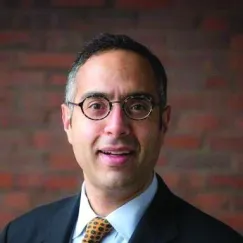
Tarek Masoud is a professor of public policy and the Sultan of Oman professor of international relations at Harvard University's John F. Kennedy School of Government.

With his research focusing on the role of religion in the political development of Muslim-majority countries, Masoud is author of Counting Islam: Religion, Class, and Elections in Egypt (Cambridge University Press, 2014) and co-author of The Arab Spring: Pathways of Repression and Reform (Oxford University Press, 2015). A former Carnegie Scholar, Masoud is also a member of the editorial board of the Journal of Democracy. "As the University embarks on another centennial of excellence, Tarek Masoud's years of dedication to studying the Middle East will enrich AUC's regional and global involvement and standing," said Eltoukhy.

Masoud holds an AB from Brown University and a PhD from Yale University. "As an Egyptian-American," said Masoud, "AUC has always been one of my intellectual lodestars. I have long been in awe of its distinguished faculty, particularly in the social sciences, and I cannot exaggerate the magnitude of what I have learned -- and continue to learn -- from scholarship produced at AUC. It should be no surprise that such a superior faculty produces superior graduates; some of my most distinguished students at the Harvard Kennedy School have been products of AUC. I am humbled and honored to now be part of that institution, and to have the opportunity to do what I can to support its academic mission."

Meet AUC's New Counselor
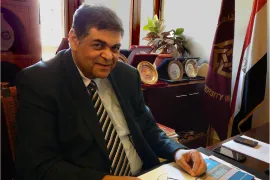
Dr. Hatem has had an extensive career in the field of medicine and nonprofit medical administration.

Dr. Ashraf Hatem, the University's new counselor, has joined AUC after an extensive career in the field of medicine and public and nonprofit medical administration. He was secretary-general of the Supreme Council of Universities and served as minister of health for a five-month term in the months following the 2011 revolution.

Though he earned his medical degree from the renowned Faculty of Medicine at Cairo University, AUC was always a subject of admiration for him. "For me, AUC has a long history and has always been a dream," Hatem said. "I decided to change my career from the public sector to the international nonprofit sector after 30 years, which is something I am excited about."

The role of the counselor is typically liaising between Egyptian authorities and the University. This includes working on continuing to develop good relations between AUC, Egyptian institutions and the Supreme Council for Higher Education, as well as helping to implement the accreditation process for all academic degrees.

Read an interview with Dr. Hatem here.

Palestinian Writer Wins Naguib Mahfouz Medal
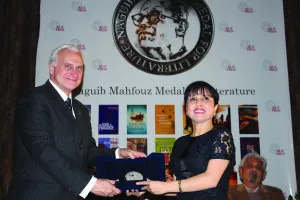
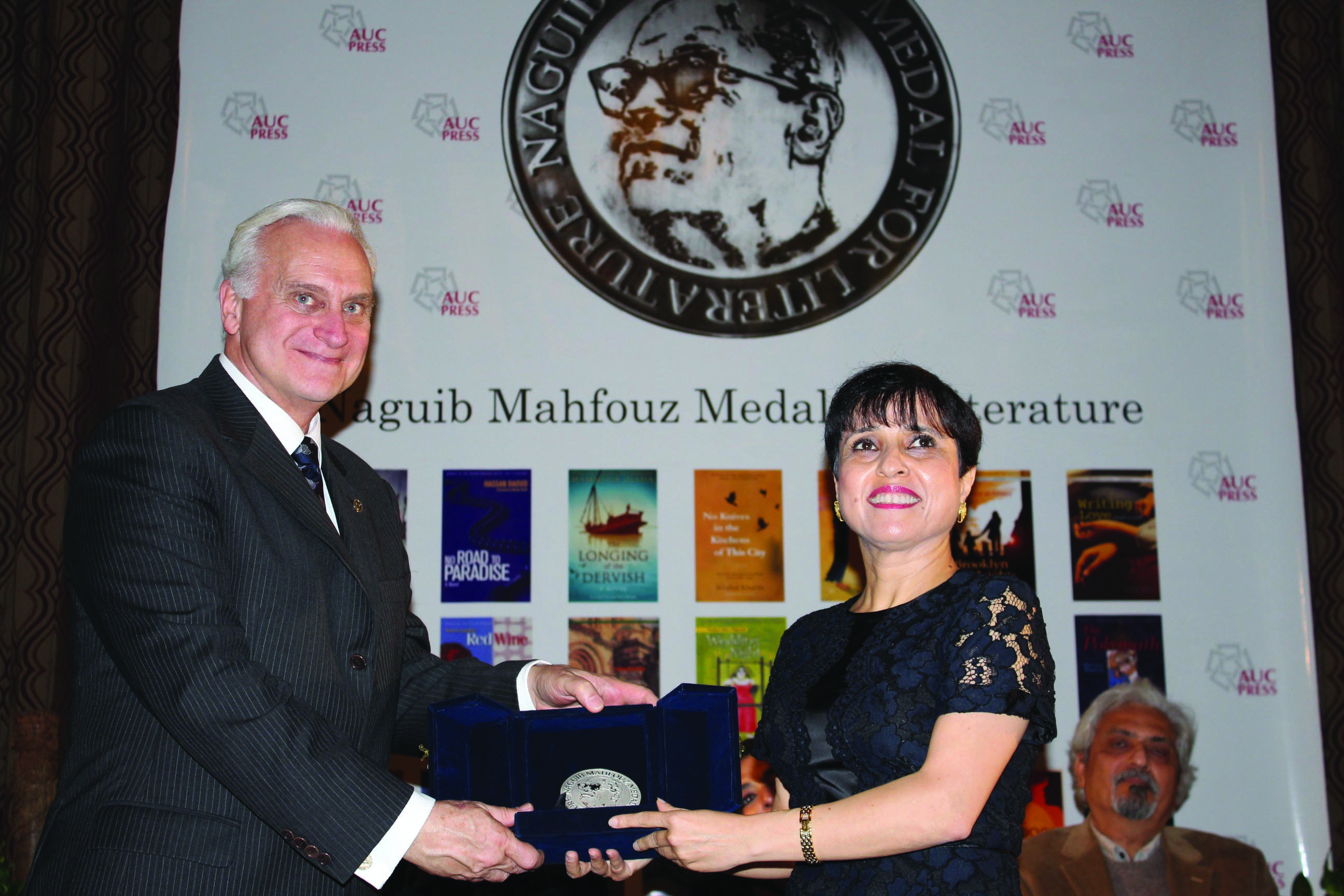
Author Huzama Habayeb's novel Mukhmal, or Velvet, won the 2017 prestigious award.


Palestinian author Huzama Habayeb was awarded the 2017 Naguib Mahfouz Medal for Literature for her novel Mukhmal, or Velvet. The prize is presented annually by AUC Press since 1996.

Set against the backdrop of al-Baq'a refugee camp in Amman, Jordan in the 1970s, Habayeb's novel centers around the lives of Palestinian women and presents a unique narrative of the Palestinian struggle in the post-Naqba generation.

Habayeb sees the novel as a way to reflect on her own identity as the daughter of a Palestinian refugee. "My story rises up on a lofty tower of losses and derives its legitimacy from a staggering legacy of loss, and more loss," she said, upon accepting her award from President Francis Ricciardone. "The women of Velvet are able to capture joy in the midst of oppression, and they desire food and sumptuous fabrics, and wait for only one man, even within a wide space of misery, violation and repression called the 'camp.'"

Full story here.

AUC to establish 20 career centers at 12 public universities
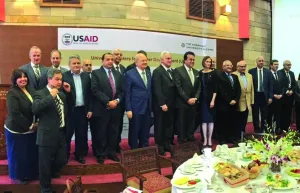
AUC launched the University Centers for Career Development project at a formal breakfast with the stakeholders.

Due to the success of AUC's Career Center and its three pilot Employability and Career Development Centers at Ain Shams and Suez Canal universities, AUC has launched the University Centers for Career Development (UCCD) project. Over the course of four years, the project will establish 20 UCCDs at 12 public universities in Upper Egypt, the Delta and the greater Cairo area, impacting roughly 1 million students -- more than 70 percent -- with funding from the United States Agency for International Development (USAID).

The UCCD project will partner with the International Labour Organization to analyze the needs of the current labor market and help the universities equip students with the required knowledge and skills for the job market. "This is part of the mandate to expand our expertise to build capacities within the community to serve more Egyptian youth and help them prepare for their future careers," said Maha Guindi, executive director of AUC's Career Center.

Some of the universities that will be home to their own sustainable career centers include Ain Shams, Alexandria, Aswan and Mansoura universities. AUC is hiring a team to establish the centers, which will eventually be staffed by career development facilitators and will offer career advising; employment services; workshops on resume writing, the job search and interviewing techniques; employability skills training; and resources from training partners, including AUC's Research Institute for a Sustainable Environment. Minister of Higher Education and Scientific Research Khaled Abdel Ghaffar said that he's looking forward to another beneficial aspect of these centers: establishing entrepreneurial skills.

According to USAID, 3.5 million Egyptians under the age of 30 are unemployed. "If each student who will have access to these 20 centers finds a job through these centers, then this project has the potential to cut Egypt's youth unemployment rate by at least a third and will ensure University graduates are a driving force behind Egypt's economic growth," said Sherry Carlin, director of USAID Mission.

Full story here.

Tech Ties: AUC, Udacity partner on blended learning
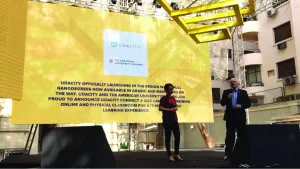
President Francis Ricciardone with Udacity COO Clarissa Shen at the project's launch event.

AUC and online educational platform Udacity are partnering to bring tech curriculum onto campus next year.

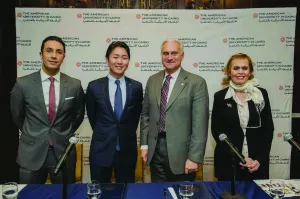
President Francis Ricciardone and Chief Operating Officer of Udacity Clarissa Shen announced their partnership at the RiseUp Summit, which saw the active participation of distinguished AUC students, faculty and alumni and where AUC was a "strategic partner" and "first believer."

Connect @ AUC is Udacity's first partnership with an educational institution in Egypt and the Middle East and North Africa region. "We have a certain global brand, and so does Udacity," said President Francis Ricciardone. "Putting us together will be the essence of any great partnership. It's not simply additive ... it's transformative."

Udacity aims to offer AUC students in-person access to events and programs that mirror the company's connect sessions, which are hybrid, blended-learning model courses that connect students with tech companies. The program
will combine online curricula with physical classrooms, with an initial focus on data science and mobile development. These courses allow students to learn skills in demand in the tech industry, according to Shen.

"We want to bring the power of Udacity together with AUC so that we can bring many more amazing industry-relevant training and skills to the AUC community," she said.

Full story here.

Fintech at AUC among first worldwide

President Francis Ricciardone with representatives from Luqman Weise Capital shortly after signing the memorandum.

AUC signed a memorandum of agreement with Luqman Weise Capital to establish the Luqman Weise FinTech Fellowships Fund. The program will begin admitting students in Spring 2018, offering 14 fellowships for Egyptian students to attend AUC in pursuit of a Master of Science in finance. Additionally, Luqman Weise Capital will be supporting the development of a FinTech concentration at AUC under the Master of Science in finance program -- the first in Egypt and among the first worldwide.

"We will now be able to put a greater emphasis on FinTech and establish the first concentration in degree studies in the region, in Egypt -- thanks to [Luqman Weise Capital] and [its] vision ... to expand [its] industry and grow it in Egypt, and through Egypt, to the entire region," said President Francis Ricciardone.

FinTech, or financial technology, is a growing field garnering interest across the globe. "FinTech is going to change the way finance works," said Mohamed Khater, Luqman Weise Capital's chief investment adviser. "The way we trade, the way we handle money, the way we handle transactions are going to change in the future incredibly."

In addition to helping establish the FinTech concentration at AUC, Luqman Weise Capital has agreed to provide support as the University develops courses and will be bringing in distinguished visiting professors to work with students, as well as train faculty members, in order to build a solid foundation for the program moving forward.

Full story here.

Top Accreditations

AUC's School of Business has been reaccredited by the three most prestigious international business and management education associations: the Association to Advance Collegiate Schools of Business, the Association of MBAs and the European Foundation for Management Development Quality Improvement System. Only 77 business schools -- representing 1 percent of leading business institutions worldwide -- received the three distinguished accreditations, known as the triple crown. Since initially acquiring the triple crown accreditation three years ago, AUC's School of Business became the first in the Middle East and third in Africa to obtain all three renowned recognitions.
Full story here.

AUC's Master of Public Administration and Master of Public Policy are the first worldwide to receive triple crown accreditation in public affairs education by the European Association for Public Administration Accreditation. AUC is the first University to earn this honor outside of the Council of Europe.
Full story here.

For the fourth consecutive time, AUC's computer science and engineering program has been reaccredited by ABET (Accreditation Board for Engineering and Technology). The program was praised for the quality of its curriculum, student creativity and completion of projects, flourishing teaching environments, equipped labs and competent faculty. AUC's computer science and engineering program is the first outside of the United States to receive this recognition since 1999.
Full story here.

The Department of Accounting is now fully accredited by the Association of Chartered Certified Accountants (ACCA) in the United Kingdom and received the maximum exemption of nine out of 14 modules. AUC's undergraduate accounting program is the first in Egypt, Africa and the Middle East to obtain the maximum exemption that ACCA may grant to any accounting program.
Full story here.

 
Share

Wondering which clubs on campus promote international exposure? Here you go.

Wondering which clubs on campus promote international exposure? Here you go.
Ioanna Moriatis
<?xml encoding="UTF-8">

By Ioanna Moriatis | This story appeared in the Fall 2017 edition of AUCToday.

Whether representing students of different cultural backgrounds or engaging them in international dialogue, AUC's more than 60 student clubs and organizations reflect the University's global character.

"Internationalization is not just about going abroad; it's about the mindset," asserted Mohamed El-Shalakany, mechanical engineering major and secretary-general of AUC's Cairo International Model United Nations (CIMUN), the largest student-run activity on campus, the largest Model United Nations conference in Africa and the Middle East, and one of the largest inter-collegiate Model United Nations programs outside of North America. "Being exposed to international topics and cases, I've learned a lot that I wouldn't have known if it weren't for CIMUN."

Following are highlights of four active student organizations at AUC that give their members a unique multinational experience.

CIMUN

Cairo International Model United Nations

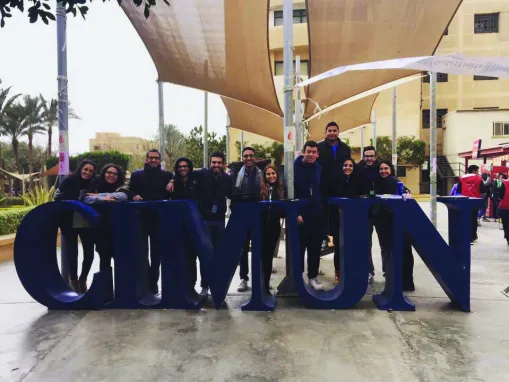
AUC's 30-year-old Cairo International Model United Nations inherently promotes internationalization. It prompts students to investigate and debate global topics, both among themselves at conferences on campus and with students from around the world at the annual National Model United Nations conference in New York, where AUC's CIMUN team received the Outstanding Delegation award -- the highest at the conference -- for eight consecutive years.

Pioneering Model United Nations in Egypt and the region, CIMUN has attracted students from universities across the globe. "When they come to AUC, it's not only for the conference, but to experience Egypt in general," said El-Shalakany.

CIMUN, El-Shalakany added, has been concentrating efforts on drawing more student participation from abroad in AUC's CIMUN conferences and acting as a hub for global dialogue among student leaders.

Read more about CIMUN here.

clubs5 (2)

Black Student Association

Enhancing campus diversity, AUC's Black Student Association holds various cultural and intellectual events for students and conducts community outreach activities outside of New Cairo. "Our aim is to provide awareness of the type of diversity present at AUC," said Joel Ogwang, biotechnology graduate student and president of the Black Student Association. "We use Africa as our example to showcase diversity."

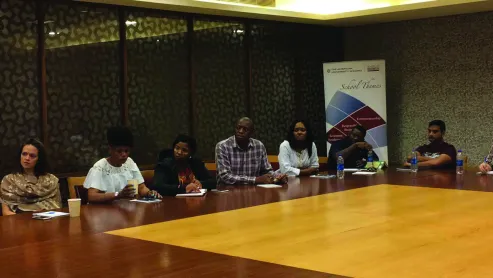
clubs1This fall, the association hosted a roundtable discussion titled "Understanding Cultural Diversity at AUC," where graduate students discussed various topics, breaking down barriers and engaging in critical dialogue about individual perceptions of diversity at the University. "We discussed how diverse we actually are, how we do things differently, how we have distinctive greetings," said Ogwang, who grew up in Uganda and is attending AUC under the African Graduate Fellowship. "We talked about how to bridge the disparities that might exist."
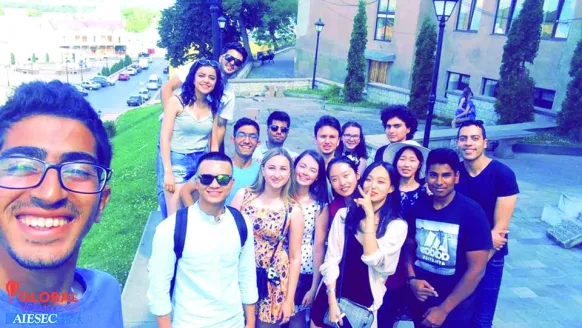
The Black Student Association itself is home to students of different nationalities. "We have students from Egypt, Tunisia, Algeria, Sudan, Uganda, Madagascar, Gambia, Nigeria, among others," said Ogwang. "It's a good representation of cultures across Africa, but we invite any nationality to join as well."

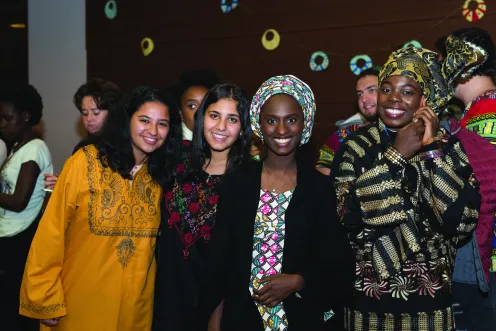
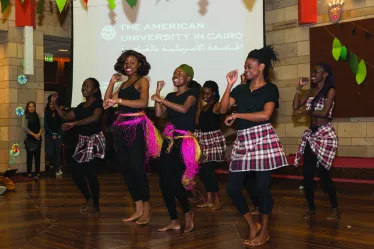
Highlighting the different cultural backgrounds that make up the association, members collaborated with the Office of International Student Life in a joint campus event, African Perspective, which invited students from different African countries to perform cultural dances in traditional attires. Members also traveled to the Bibliotheca Alexandrina to familiarize Alexandria University students with AUC's graduate studies and scholarship opportunities.

Watch a video about AUC's BSA here.

aiesec

AIESEC

For members of AIESEC, an international student network with local chapters in different universities around the world, having a well-rounded, global experience is critical to developing leadership skills that would encourage personal and professional development. AIESEC organizes student volunteer opportunities abroad as well as professional and entrepreneurial internships overseas. "Being abroad adds a lot to your portfolio," said Kamal Abdel Ghani, computer engineering major and president of AIESEC at AUC. "When we monitor projects, we consider them on a professional level and also think about how this will affect the individual person."

Traveling to various countries through AIESEC-organized programs, students are able to engage in various communities, reflecting on the way they interact in different settings and developing important characteristics for professional and academic success. "When we travel, we interact with interns from a lot of cultures," said Abdel Ghani. "Given different challenges, we develop characteristics like being solution-oriented or self-aware. We get to know more about other countries and become world citizens."

Check out the AIESEC Egypt Facebook page here.

clubs6

Student Action for Refugees

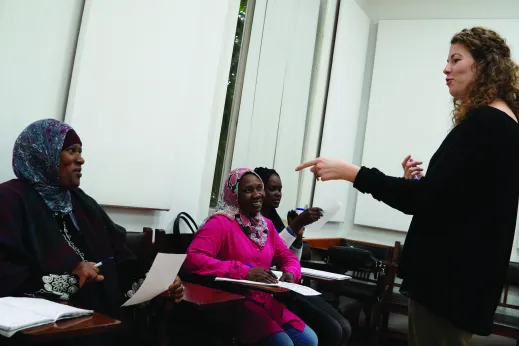
Anouk Wijtsma, a master's student in migration and refugee studies and president of Student Action for Refugees (STAR), has the opportunity to engage with Cairo's international community outside of AUC's campus. By offering English classes, STAR helps refugees in Cairo -- who come from countries such as Sudan, Syria, Ethiopia, Yemen, Iraq or Somalia -- gain skills to advance professionally in Egypt or resettle in other countries. "The students are really excited and willing to learn," said Wijtsma. "Through teaching, we get a lot of input from students of various cultures with diverse ideas."

starr2In addition to English, STAR hopes to offer French or German next semester, acknowledging a need within the refugee community for enhanced language education. "Many refugees hope to learn French or German in preparation for resettlement in another country," said Wijtsma, who comes from the Netherlands.
Passionate about the opportunity she was given to come to Egypt and interact with individuals from different backgrounds, Wijtsma is most enthusiastic about her experience with STAR and the impact she has been able to make on the Cairo community. Wijtsma started to build STAR's English program last year and has now seen the program expand, with almost 400 refugee students coming to receive tutoring from AUC volunteers. "There are many things our refugee students don't have access to, mainly education," Wijtsma explained. "They're very appreciative of the classes we offer and feel it's important to have something like a diploma to show others. Education builds their self-esteem."

Check out this Caravan piece about STAR's first year.


Share

CASA: 50 Years of Changing Lives... in Arabic

CASA: 50 Years of Changing Lives... in Arabic
Aliah Salih
<?xml encoding="UTF-8">

By Aliah Salih | This is the cover story for the Fall 2017 edition of AUCToday.

Fifty years ago, Arabic was a Less Commonly Taught Language in American universities. Today, it is one of the fastest-growing foreign language programs in U.S. universities, according to the Modern Language Association. The way Arabic is taught has also been radically transformed.

"How the teaching of Arabic changed from the examination of recondite manuscripts by scholars who have a penchant for the arcane, into the study of a living language spoken by millions [is] really one and the same. It is, moreover, the story of CASA [Center for Arabic Study Abroad]," wrote Gerald E. Lampe, who served as director of CASA in the 1990s, in a 1992 document on the history of CASA, presented to the Middle East Studies Association.

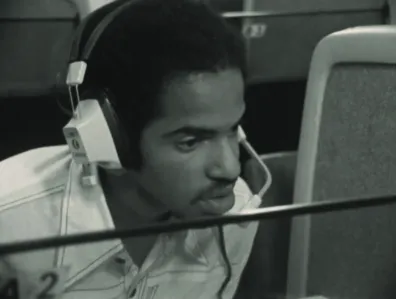
casaoldThe founding of CASA at AUC was nothing short of a revolutionary academic move, taking students from rigid classroom-based curricula based on analyzing and translating excerpts in Classical Arabic to reacting to breaking news on the radio, appreciating humor in a comedy, crooning the lyrics of a top hit and chatting with a taxi driver.

In 1966, the U.S.-based Joint Committee of Near and Middle East Studies decided to establish an Arabic-teaching program abroad and chose AUC as its location. "The reality was that the United States needed a capacity that it did not have: people who knew about the Arab world who could speak Arabic -- and there were now people looking for that kind of opportunity," recounted Thomas A. Bartlett, AUC advisory trustee who served as president of the University during the year CASA was founded, in a 2005 oral history interview for the University Archives. "We thought it was important; we wanted to do it."

The committee members saw AUC in the heart of Tahrir Square as the perfect location for the CASA program. They evaluated the University as having exceptional instructors, able to absorb the program and accommodate student needs, as well as having a stable relationship with the Egyptian government.

The year 1967 witnessed the beginning: a consortium of eight prominent American universities, including AUC, taking care of policymaking. The program was set, the curriculum drafted, 31 applications received, 16 selected and top-notch instructors recruited.

What happened for the next half-century is a story of endurance and excellence that shows how this transcontinental institution, now celebrating its 50th anniversary, has become a landmark for language teaching and the world's premier, full-immersion Arabic-language program.

CASA Comes to Cairo

Since its founding, CASA has served as a link between the Middle East and the United States. U.S. government entities, primarily the U.S. Department of Education, and those in the academic field saw the need for Americans learning Arabic to immerse themselves in the study of the region. The curriculum was arranged according to these objectives, and students were required to study the three varieties of Arabic: Classical Arabic, Modern Standard Arabic and Colloquial Arabic.

The Joint Committee of Near and Middle East Studies, which brought the program to life, was formed by the Social Science Research Council of the American Association of Learned Societies to delegate the process. The council had a long history of "supporting scholars in the humanities and related social sciences." The committee was composed of academics from universities that offered Middle East studies or Arabic. They appointed William Brinner, professor emeritus of Near Eastern studies from the University of California, Berkeley, to visit three institutes in the Middle East. The visit assessed AUC, the American University of Beirut and the University of Tunis. Brinner's visit was in AUC's favor, rendering Cairo as an "attractive locale, sophisticated

casaold2

metropolis and a leading center in the Middle East for commerce, culture, art and entertainment, accustomed to dealing with Western tourists" and showing openness to international newcomers.

CASA offered AUC a distinct opportunity to position itself among other international universities in the region. "One of our concerns during those years, from my point of view, was to develop relationships with strong American universities because we needed that," Bartlett noted. CASA's existence in AUC granted the University a stature among prestigious Ivy League and renowned universities.

Since the start, CASA was co-directed by both a U.S.-based director and an in-house director at AUC. The first was to take care of all aspects of the program and was chosen from a consortium of universities, while the latter was in charge of implementing CASA policies at AUC. Today, the CASA consortium has grown to include 28 universities and colleges in the United States that oversee the academic, financial and administrative aspects of the CASA program, with one member acting as the U.S. administrative base. Currently, Harvard University is the U.S. administrative base for CASA. The Governing Council, which handles the management and government of CASA affairs, consists of representatives of six member universities on a rotating basis. The council meets directly with the CASA directorship at the Middle East Studies Association's annual convention.

The Beginning

CASA's first year was an eventful one. With Portland State University as its first U.S. administrative base, the program was scheduled to start in October 1967 and continue until June 1968. However, the Six-Day War took place in Egypt just four months before the scheduled date. Brinner, who had then been appointed the U.S. director, was faced with tough choices, including the cancelation of CASA altogether. One of the options was to schedule the program for January 1968 at AUC and move it to the University of California, Berkeley for the time being. The plan worked, and everything was arranged in Berkeley, from classrooms to the temporary appointment of instructors.
A few months later, students took off to Cairo, where CASA officially started running on January 12, 1968.

As a language, Arabic "went from being taught as only a written language to being taught as a spoken, living language," said Lisa White (CASA '82), who was CASA's executive director from 1993 to 1997. White served as Arabic language lecturer at Cornell University before returning to AUC as senior Arabic language instructor.

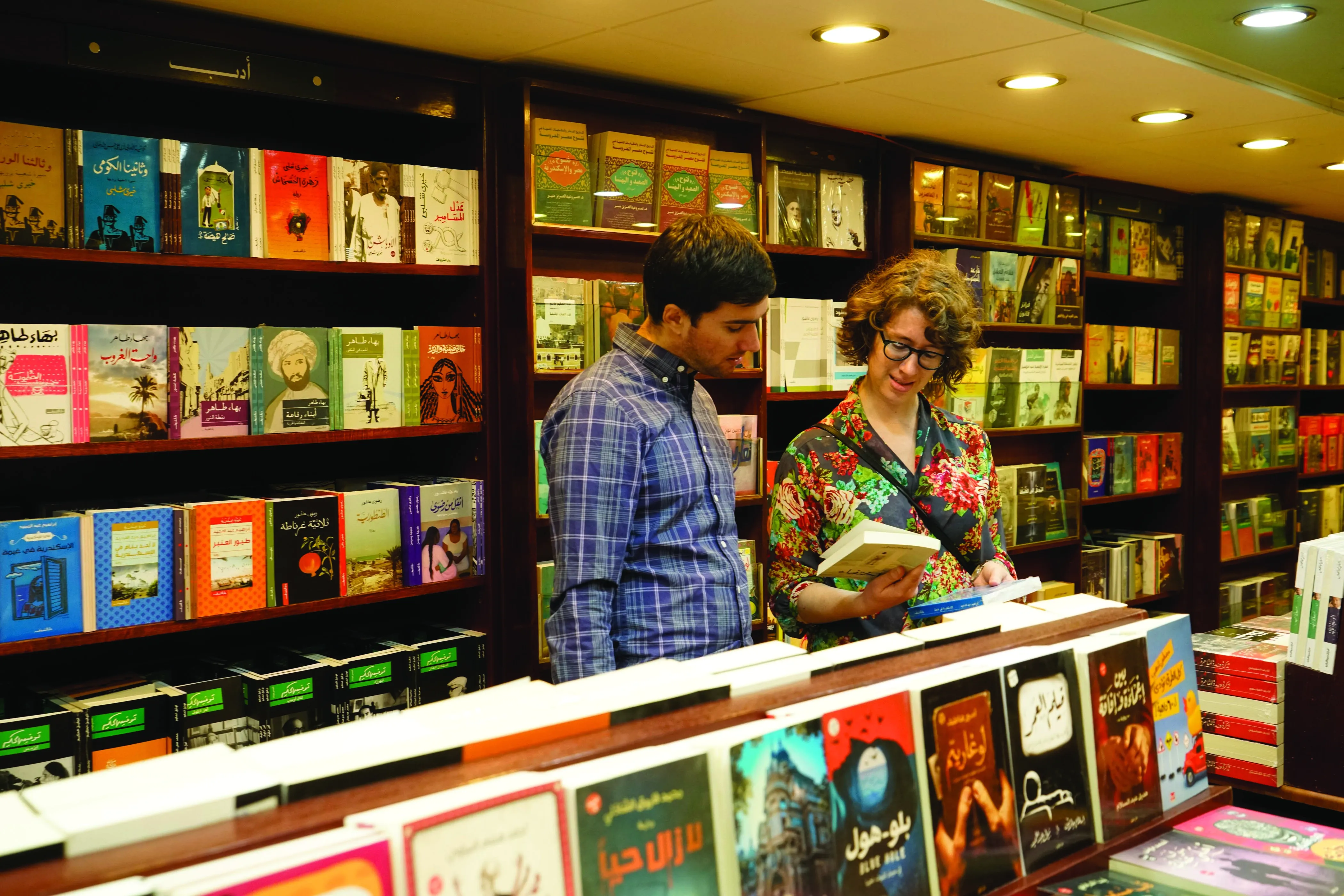
While CASA introduced a groundbreaking change in the way Arabic was taught, its directors were keen on updating the curriculum and synching it with the demands of language learning in the region. "Twenty-two hours of instruction were scheduled for the first semester: spoken Cairene, Modern Arabic Literature, Background to Modern Egypt, Modern Standard Arabic, Composition and Translation, and language laboratory work," Lampe explained. The courses revamped the traditional system through discussion instead of pure translation, speakers who gave lectures in Modern Standard Arabic on a wide range of topics, a language lab and tape library that were equipped with recorded short stories at different intervals to allow students to repeat sentences, modern plays and recent newscasts, listening and dialogue exercises, and popular and classic songs. "The CASA method focused on Arabic as a 'living spoken language,'" said John Swanson, associate provost for assessment, evaluation and special projects at AUC, who co-directed CASA in the 1980s. "I think the most unique thing about CASA is that it gave highly motivated students of the language an opportunity to spend a whole year focusing on developing their Arabic skills at the highest level, without any outside academic interference."

casaold3The CASA curriculum's adaptability to the times has allowed it to be versatile and flexible for its students and alumni, with some going into impoverished areas of Cairo for graduate research or simply laughing at memes regularly emerging from Egyptian social media.

Living and Learning in Cairo

This year, there are 14 distinguished students enrolled in CASA at AUC. Students who apply not only have to show interest and potential, but substantial proficiency in and previous knowledge of Arabic. The program is set to take advanced students of Arabic
to near-fluency.

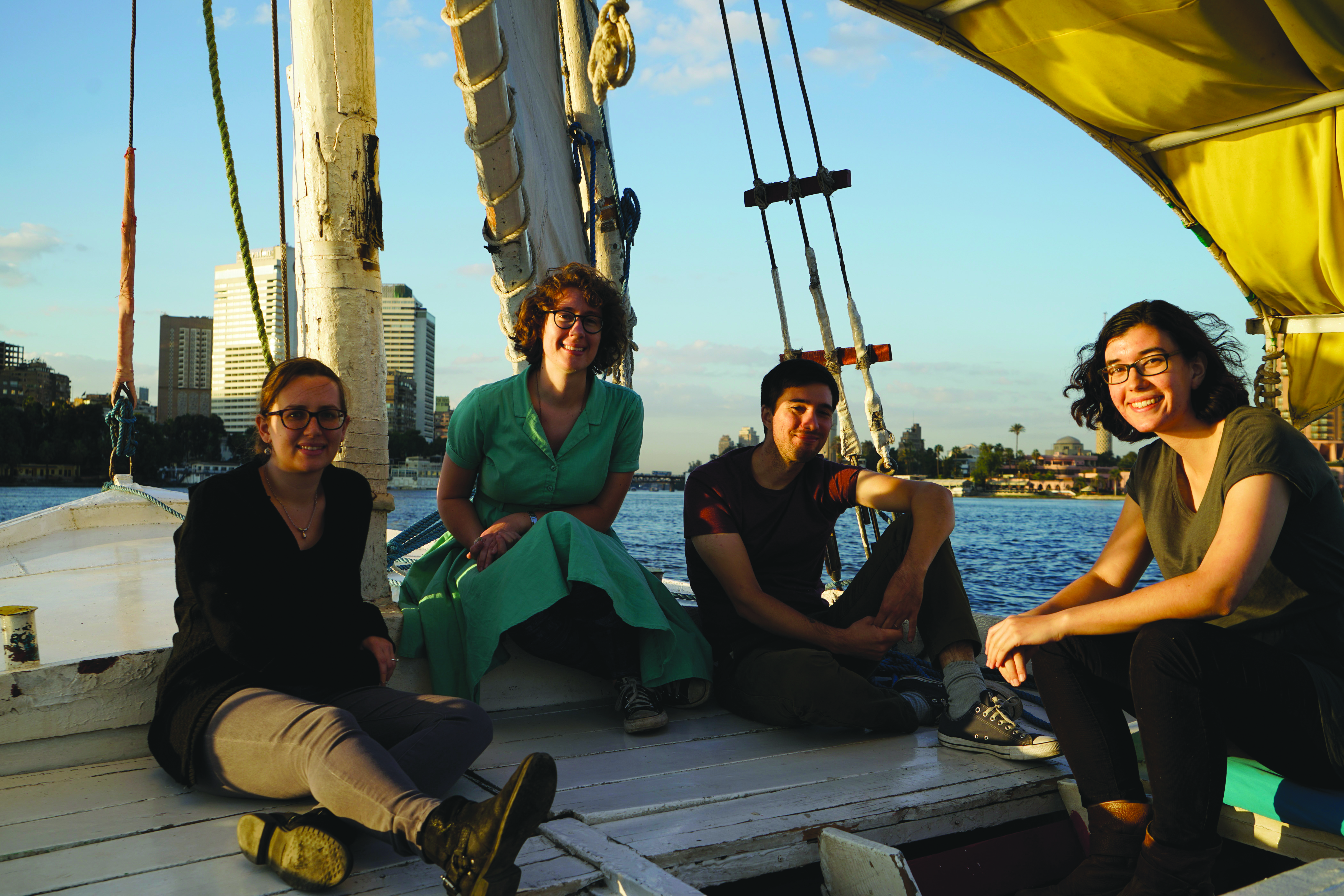
"I started studying Arabic with a visiting professor in college at a school without a formal Arabic program, and I was determined to find a way to continue," explained Eleanor Ellis, a Harvard University graduate student who is currently studying at CASA in AUC. "It was my dream to do CASA in Cairo."

Swanson noted that after CASA gained a reputation, it became "a thing that you were expected and almost required to do if you were going into specializations in Middle Eastern studies."

Affirming this, David Kanbergs, another current CASA student and a graduate of anthropology and Middle Eastern Studies from City University of New York, said, "Nearly every professor I studied with during my undergraduate course work who does research on the Middle East and North Africa graduated from the CASA program."

casa6During the fall semester, CASA fellows are dedicated to strengthening their language skills in general. In the spring semester, the program description states that they are "given the chance to use the skills to tailor the program to their own academic and professional needs." Impressed by CASA's relevance and fruitfulness, Kanbergs believes the best part of the program is providing students this opportunity. "We learn from authentic sources on topics that revolve around our interests," he said.
Click here for testimonials from CASA alumni!

While many students are hoping to gain knowledge from CASA to use in the future, the CASA experience is not exclusively prospective, but a concurrent day-to-day one. "Being in the center of Cairo gives me the opportunity to use new vocabulary, phrases and grammatical knowledge as soon as I walk out of the University," added Kanbergs. "Every day, I can apply what I've learned with friends and strangers, which ensures that I'll retain the knowledge rather than forgetting what I've learned."

Summoning up what one learns in a language class for one year is a challenge, and students have described the program as "rigorous," "intense" and "outstanding." The program is not designed for taking baby steps in Arabic; it is all about engaging students. Their potential is determined by their level of participation in the course. "One of the great struggles of studying Arabic is that you can never learn enough to become fluent if you take only four years of Arabic in college," reflected Alice Duesdieker, a current CASA fellow who recently completed her master's in Middle Eastern studies at Harvard University. "CASA is the only program that I'm familiar with that takes you above and beyond to the point of being truly fluent."

Echoing the same sentiment of experiencing Cairo up close, Ellis emphasized that it doesn't stop at being able to navigate the streets of Cairo, but also grasping Egyptian popular culture, as well as emotionally and mentally connecting with the people.

"One of the really unusual and exceptional things about CASA is that it's not only textually immersive. We are also really pushed to learn and use ammiya [colloquial Arabic] and be immersed in Cairo," Ellis explained.

"When Egypt qualified for the World Cup, I watched the match with an Egyptian friend and saw the celebrations in Tahrir that night. The next day in our ammiya class, we discussed the celebratory jokes and memes that were circulating after the match. CASA faculty members are constantly adapting our courses to what's happening around us."

One of CASA's most distinguished faculty members at AUC was the late Elsaid Badawi, professor emeritus of applied linguistics. Badawi started teaching at CASA in 1969, served for many years as co-director of the program, played a key role in designing the CASA curriculum and was awarded CASA's Lifetime Contribution Award. He believed that language is to be learned, not taught. "The secret to CASA's success is the willingness to trust the students to commit the time and effort required to learn Arabic," he said. "CASA students are incredibly eager to learn, very worried about the grades they get and take studying very seriously."

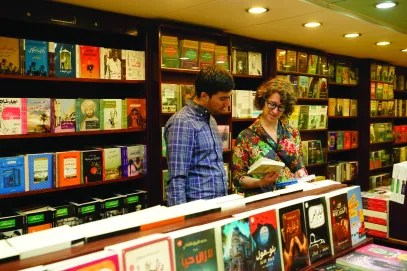
casa4CASA students browse through Arabic books to supplement their studies.
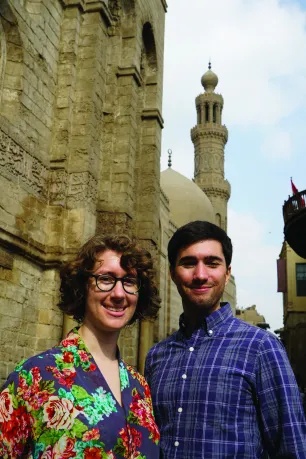
Between long hours of classes and reading one novel per week, CASA students appear to be comfortable with the workload, their faculty's pace and unique pedagogy, and classmates who are eager to learn. "CASA is very rigorous, and the teachers are exceptional and committed to supporting us," said Ellis. "It has also been great to study alongside other students who are equally devoted to Arabic."

Duesdieker similarly reflected, "The teachers in the CASA program are truly outstanding. Their willingness to meet with students before or after class to work on anything from understanding broad concepts to specific grammar issues, or even the correct pronunciation of a single letter, is truly amazing."

CASA students describe Cairo as accommodating to their interests and personalities. They are grateful for the chance to study in AUC Tahrir Square, surrounded by one of the most stimulating neighborhoods in Cairo. "I feel incredibly lucky that we have our classes at the Tahrir Square campus," said Duesdieker. "It's a great opportunity for practicing Arabic and engaging with the life of the city."

While Cairo's diverse and rich character invites any newcomer on a journey to explore it, CASA has a role in integrating students with the city through cultural field trips and a daily bulletin posted outside classrooms. "There's so much going on in Cairo, and CASA does an excellent job of integrating this with our courses," said Ellis. "We attended a play at Masrah el-Gomhoria and then met with the dramaturg in class."

From going to independent music venues like Makan on Saad Zaghloul Street and tasting international cuisine to enjoying dynamic views from their home balconies, the heart of the city resonates. "Wust el Balad at night has a magical atmosphere that is bustling and hectic, yet still calm and relaxing," Kanbergs said.

The CASAwiyiin Experience

There are more than 1,500 CASA alumni who have all embarked on different paths in life. What most took away from CASA is more than just language skills. "It was the immersion in Egyptian culture as opposed to just the language itself that changed my views and gave me a background in the Middle East, which has lasted the rest of my life," recalled David Bonderman (CASA '69), prominent businessman, philanthropist, and founding partner and chairman of TPG.

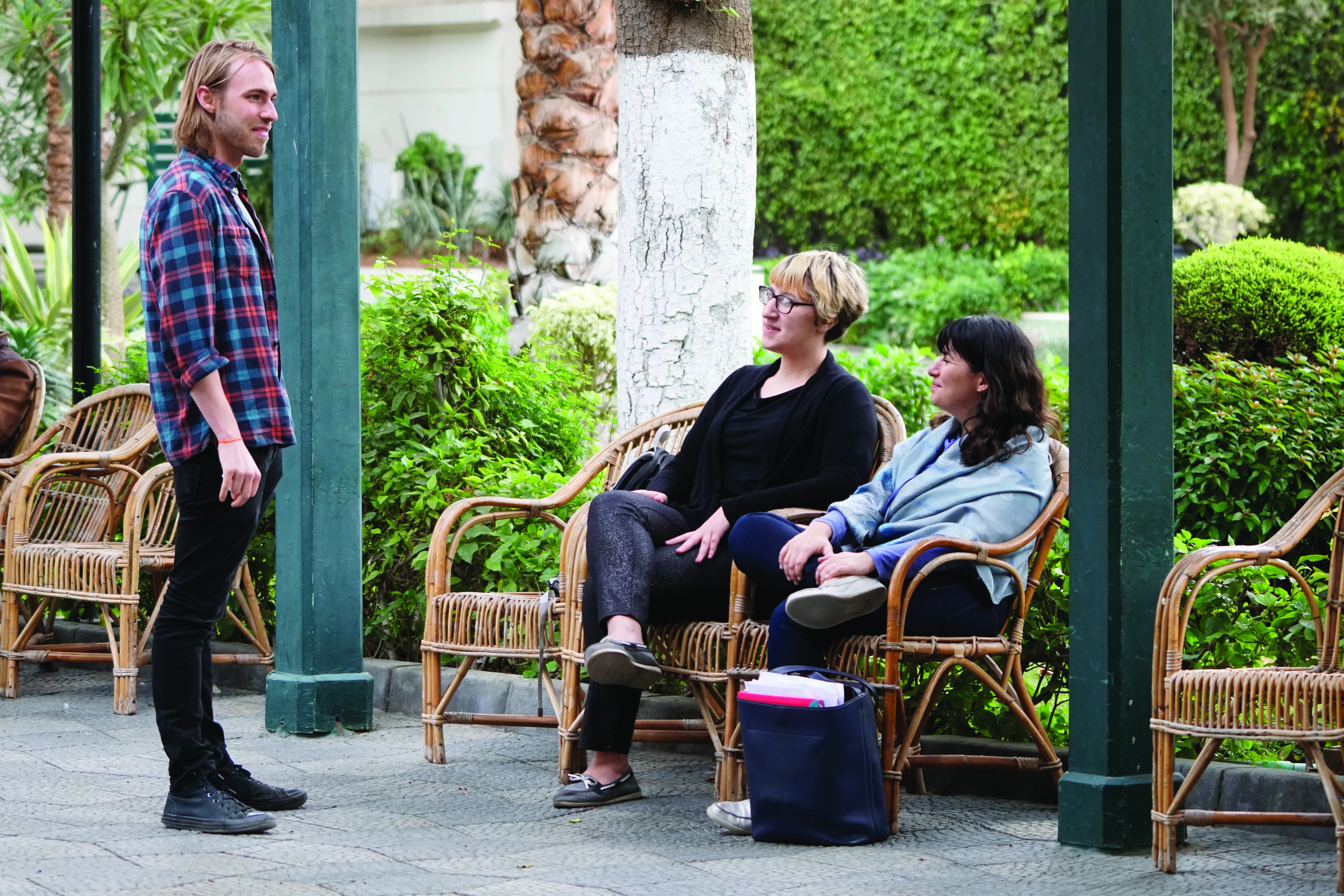
CasacoupleCASA students are immersed in Cairo's history, culture and language.
For most, being in Cairo and at CASA gave them the ability to develop careers devoted to the study of the Middle East. Denis Sullivan (CASA '84, '09), professor of political science and international affairs, co-director of the Middle East Center and director of the Boston Consortium for Arab Region Studies at Northeastern University, is one of the proud "CASAwiyiin" who believes his studies helped him secure a tenure position and allowed him to further explore and research the region during his PhD studies. Sullivan noted that his favorite night in Cairo was his first night there. He recalled "breathing in the feel of Tahrir" and making a lifelong friend through a random encounter. "He taught me more Arabic than any language partner I ever had," Sullivan explained. "He taught me about 'real life' in Egypt, especially about the majority of al-sha'b [the people] and the Egyptian underclass."

Before her time at AUC as provost from 2008 to 2010 and then president from 2011 to 2015, Lisa Anderson (CASA '76) studied Arabic at AUC. "CASA crystallized my lifelong love of Egypt, of Arabic and of learning," said Anderson, who is currently the James T. Shotwell Professor Emerita of International Relations at Columbia University.

"I have had the immense good fortune of having a career that I have found to be -- like the city and the language CASA taught me about -- endlessly fascinating. Alhamdulillah!"

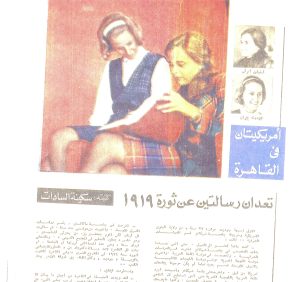
Meanwhile, Evelyn A. Early (CASA '71), who dedicated 44 years of her life to public policy and development in the region, published her first book on the lives of Baladi Egyptian women in the Cairene district of Boulaq Abul Ela, with interviews conducted entirely in colloquial Arabic. After teaching anthropology in universities for almost a decade, she went on to have a globetrotting career at embassies and cultural centers in Morocco, Sudan, Syria and the Czech Republic. During her time at CASA, she met former Egyptian president Muhammad Anwar el-Sadat's sister, Sakina El Sadat, who wrote about Evelyn and her friend's experience of being American female students in Cairo in Hawaa, a women's magazine.

HAWAtwooftwo.jpgEvelyn A. Early (CASA '71) and Judith Gran (CASA '69) featured in Hawaa magazine in 1970.
Early indicated she owes CASA much of her career as a diplomat. "CASA was key to my dual-track academic and diplomacy career," she reflected. "I have utilized the Arabic I learned in CASA to complete my master's degree at the American University of Beirut, my PhD at the University of Chicago, and in teaching, researching, consulting and diplomacy ever since." One of her latest published co-edited works, Everyday Life in the Muslim Middle East, includes scholarly contributions from distinguished authors -- among them nine CASA alums. Early's article on Egyptian telepreachers in the book is based on research she conducted in Arabic.

Many Egyptian-Americans were not only interested in CASA for academic development, but for learning about their identity and backgrounds. "Being in Cairo for CASA allowed me to go to the Egyptian National Archives whenever there was spare time. That's when I began some of the archival research that would make it into my dissertation and later work," said Alan Mikhail (CASA '04), professor of history at Yale University.

CASA, Mikhail added, helped him to gain experiences he had long yearned for, such as watching old Egyptian films he heard of and hadn't seen, as well as ones he had never heard of. "The [CASA] class put all the films we saw into a narrative of modern Egypt and helped me see how they worked from, with, and sometimes against each other," he said. "Now I feel that I can watch older Egyptian movies and put them into some sort of context of their production and place in Egyptian film history."

Casastory2CASA's more than 1,500 alumni also form bonds with each other through the intensive program.
For some, the Arabic they learned provided an opportunity for community engagement. "Immediately after CASA, I worked as an education advocate for unaccompanied refugee minors at AMERA [Africa and Middle East Refugee Assistance]," said Max Shmookler, PhD candidate in the Department of Middle Eastern, South Asian, and African Studies at Columbia University. "I used my Arabic knowledge in reading documents, taking testimony, accompanying clients to Egyptian institutions and advocating on their behalf, and frequently serving as an impromptu interpreter." Since then, Shmookler has continued to use his knowledge of Arabic in his return to academia, focusing on the Arabic literary genre, maqama, and co-editing a major anthology of Sudanese stories translated into English, The Book of Khartoum: A City in Short Fiction (2016).

Much like in 1967 when it began, CASA was on hiatus in 2013 due to political unrest in Egypt and has now resumed its program at AUC, in Cairo. It could have ended both times, but CASA's continuity conveys the story of revolutionary endurance and excellence -- a trajectory akin to the moment students decide to learn an intricate language like Arabic to when they succeed and influence those around them. As Lampe put it, the program was founded in "a new era [that saw] the appearance of CASA and [witnessed] its fight to change the curricula and methods followed in the teaching of Arabic, [making] a singular and lasting contribution to the field of Arabic study."

 
Share

Building Skins, Tearing Boundaries

Building Skins, Tearing Boundaries
Ioanna Moriatis
<?xml encoding="UTF-8">

By Ioanna Moriatis | This story appeared in the Fall 2017 edition of AUC Today.

"It was helpful to learn how architects think in other countries. In Egypt, we always have the same idea of what architecture should be like, and we use the same notion with everything we do, but apply it to different buildings. In this case, we got to see different perspectives and learned how to use these perspectives to create a better design."

This is how architecture student Reem Gamil described her international experience as part of the Architectural Design Studio VIII High-Tech class, where AUC students worked collaboratively with their peers from Princeton University in the United States, as well as Roma Tre University in Italy and The French University in Egypt, on developing adaptive, low-cost skins for buildings.

Skins for buildings? "Yes, similar to human skin, it protects, regulates and acts as a sensor, adapting to different environmental conditions like humidity, light and temperature in a sustainable and energy-efficient manner," explained Sherif Abdelmohsen, associate professor of digital media and design computing in the Department of Architecture, who is leading the project on the AUC side.

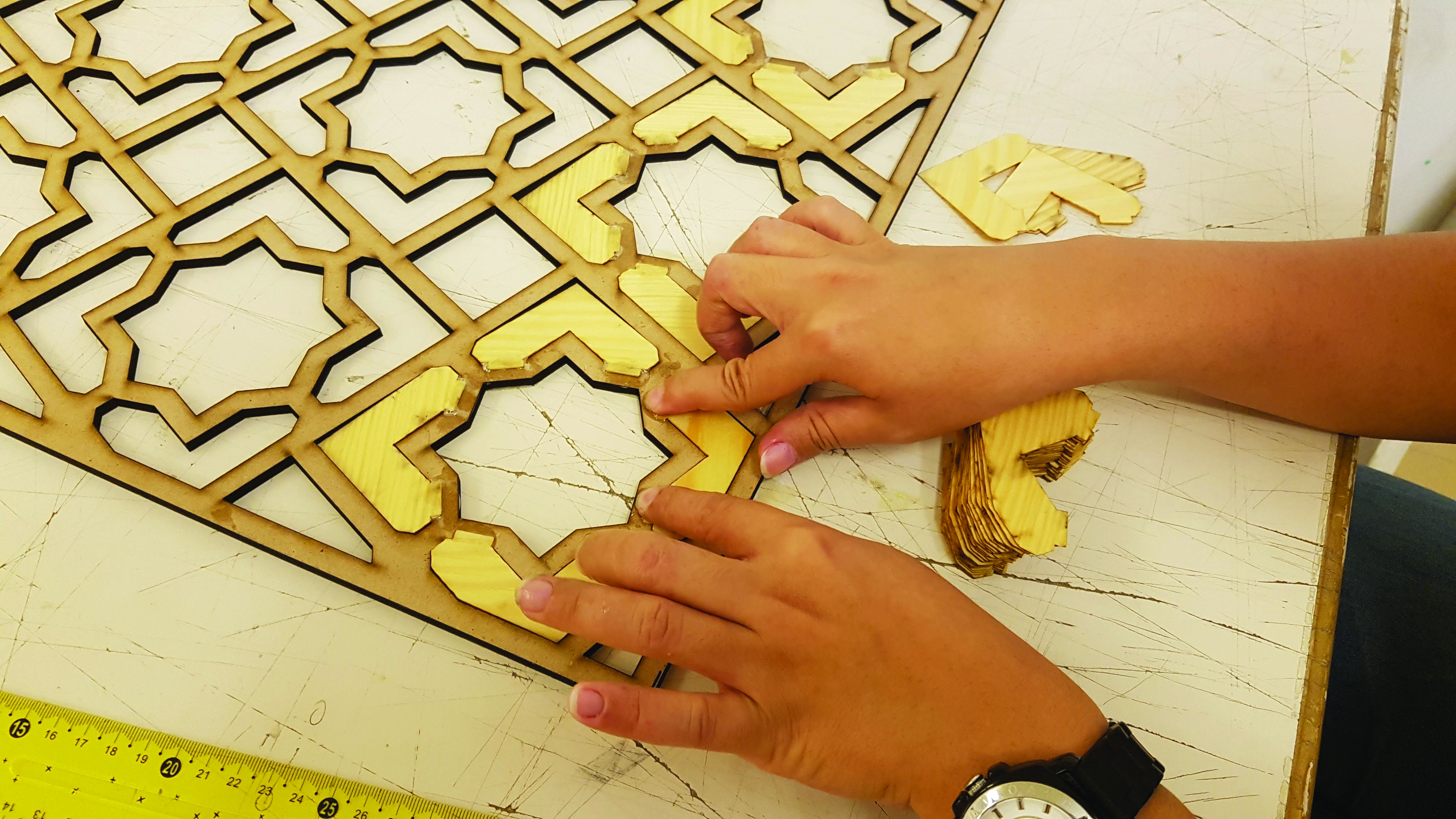
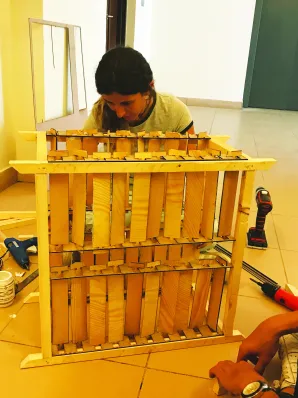
skins5Laila Azmi works on the fabrication and assembly of her group's project, The Morphers
Students and faculty members from the partner universities explored innovative, inexpensive and energy-efficient adaptive skins, which envelope buildings to moderate the influence of weather on the interior of a building, thus enabling the design of a zero-carbon built environment. "Current solutions to control the influence of weather on building interiors rely on rigid, intricate and expensive devices, which restrict their wider adoption in low-carbon buildings," said Abdelmohsen. "This project examines the interplay between geometry, morphology, natural material behavior and environmental performance to develop skins that reduce energy consumption."

International Innovation

Abdelmohsen and his main counterparts at Princeton University -- Sigrid Adriaenssens, associate professor of civil and environmental engineering, and Guy Nordenson, professor of architecture and structural engineering -- initiated the project upon receiving a grant from the Bartlett Family Fund for Innovation and International Collaboration, which assists faculty members in their collaborative research with other universities. The Bartlett Family Fund paves the way for partnerships between universities across the globe, opening doors for new, diverse perspectives that enhance research initiatives. "The project had teams from different disciplines working together with the primary goal of deepening the intellectual and scholarly engagement between AUC and Princeton University," said Abdelmohsen.

Increasing international exposure for students, Abdelmohsen and Adriaenssens brought in professors Stefano Gabriele from Roma Tre University and Passaint Massoud from The French University in Egypt to contribute to the research project titled, "Soft Adaptive Skins for Energy-Efficient Architecture." The research group focused on wood, specifically cross-laminated timber, in the design and construction of building skins. Students at both AUC and Princeton worked in groups to design, fabricate and operate adaptive building facades using cross-laminated timber. "This collaboration has been key in the development of innovative ideas and the interdisciplinary nature of our work," reflected Abdelmohsen.

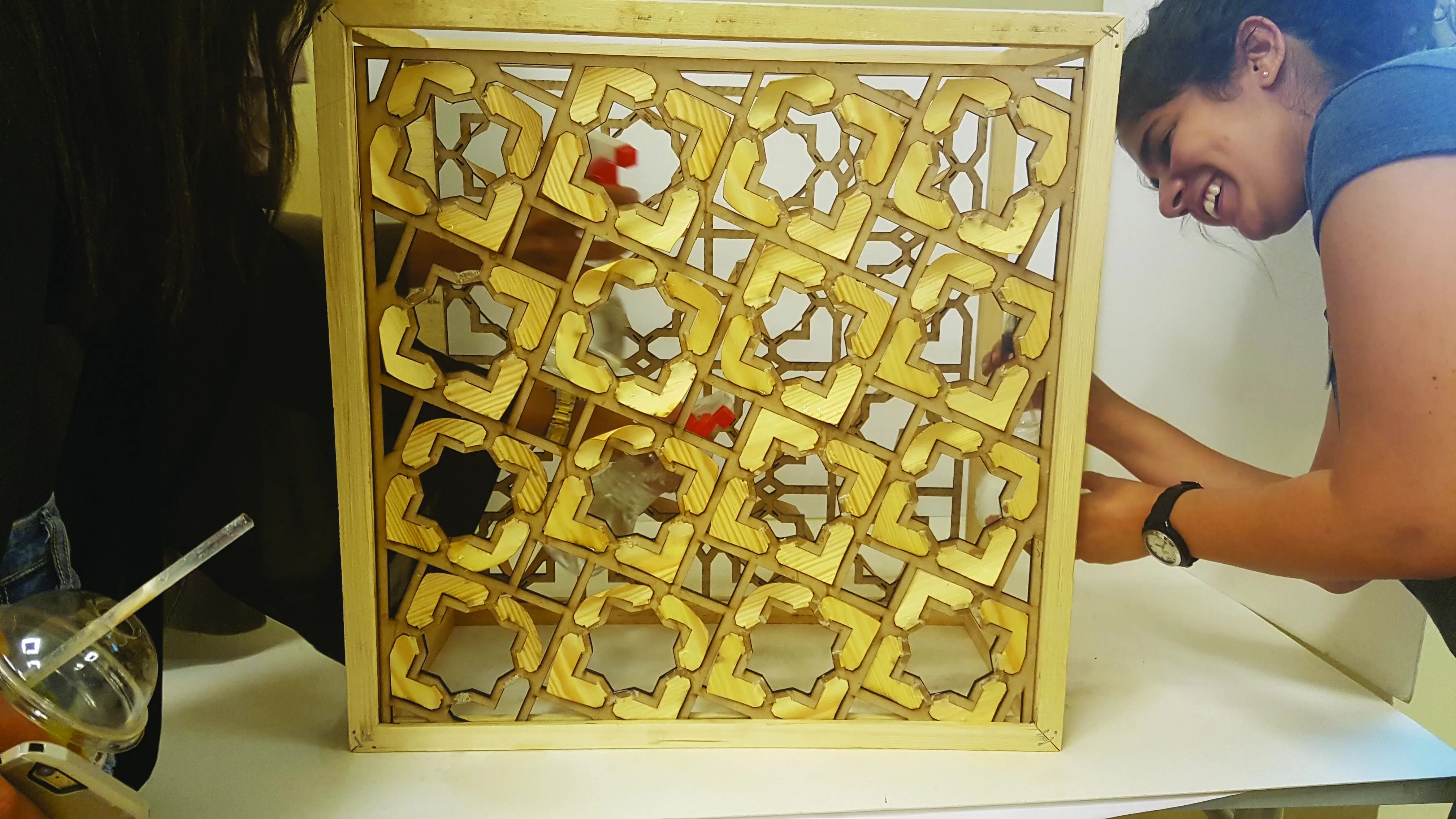
skins2Moshira Ayad and Lina Mahgoub's dynamic shading device prototype
The three professors also had the support of their research assistants, Luigi Olivieri, who worked with Gabriele; Veronica Boyce, who worked with Adriaenssens; and Rana El-Dabaa, Aly Magdy and Tasbeh Mokbel, assistants who worked with Abdelmohsen at AUC.

With the support of the Bartlett Family Fund, the team was able to delve into the benefits of international collaboration, meeting in person during two workshops held at AUC and Princeton. Engaging directly with one another added another layer to the project, allowing Abdelmohsen and his counterparts to explore the intricacies of the adaptive skins and their applications.

This international exchange also enabled both teams to examine their technology in differing environments -- a vital advantage in investigating environmental influences on buildings and energy efficiency. "This is especially beneficial since we're not working with something artificial; we're working with wood," said Abdelmohsen. "We wanted to see how wood would behave under different conditions and what we can learn from our arid environment versus their humid environment."

Adriaenssens of Princeton added, "Adaptive facades need to fulfill many performance criteria that belong to different traditional disciplines. They need to filter light, heat and cold. They are architectural form makers. They have to be strong, require little actuation energy, and need to fit in a cultural and architectural context. Our research team included architects and engineers. In addition, a facade in the desert of Egypt needs to perform differently from one in the snowy winters of New Jersey. Therefore, the project lent itself well to an interdisciplinary approach with participants of different geographical backgrounds."

With a host of locations from which to draw inspiration, Abdelmohsen and his team were able to develop ideas to further refine their prototypes. "Our initial idea was inspired by the traditional mashrabiya, which is commonly used as a building skin to act as a sun-shading device," he said. "We took an innovative perspective with this traditional design and attempted to lower cost while reducing energy consumption simultaneously."

A Global, Multidisciplinary Approach

Buildings may deceptively appear restrictive to the eye, seemingly limited in the amount of creativity and flexibility that can alter their material and shape. Abdelmohsen contends, however, that architectural design -- being a multidisciplinary practice -- offers limitless possibilities. "It's really endless in terms of what you can do and the kind of innovation that can come out of it," he asserted.

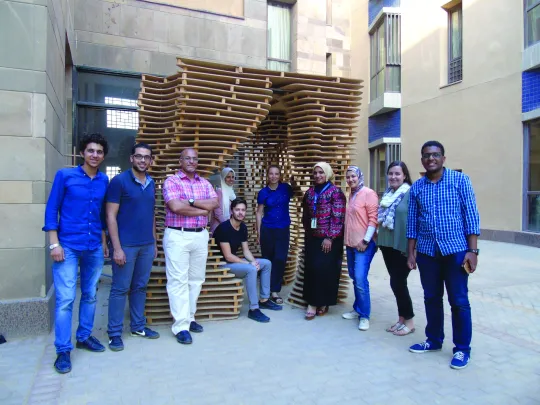
skins4Team of instructors at the AUC summer workshop: Aly Magdy, Mohamed Saber, Sherif Abdelmohsen, Tasbeh Mokbel, Luigi Olivieri, Sigrid Adrianessens, Passaint Massoud, Rana El-Dabaa, Veronica Boyce and Gasser Youssef.
The Bartlett Family Fund sets in motion projects that encourage this type of interdisciplinary collaboration, offering the resources necessary to bring diverse minds together and eliminating obstacles that restrict innovation. Abdelmohsen and his research assistant first traveled to Princeton for two weeks, joining Adriaenssens as she integrated the workshop within her course for architecture and engineering master's students. Building on the results of the Princeton workshop, Abdelmohsen welcomed Adriaenssens, one of her students and Gabriele's research assistant, Olivieri, to AUC New Cairo for a one-week workshop. The international visitors offered their insights as Abdelmohsen's 30 architecture students worked on building prototypes of adaptive skins. This was incorporated into a design exercise for the six-week summer course during which students designed a hypothetical school of architecture for AUC. "We had Professor Gabriele from Italy on Skype during these workshops, giving the students advice and tracing their progress," noted Abdelmohsen. "Such international collaborations really add value to the student experience."

From Gabriele's end, there was a similar appreciation for the chance to collaborate with international partners. "This was wonderful, from my side, for many reasons," said Gabriele. "Firstly, from a human point of view, professional collaborations are better in the presence of empathy and common purpose, and I found this true in this particular case. Secondly, it is very interesting to match your teaching and research experience with your peers from different countries. This definitely enriches you and your research horizons."

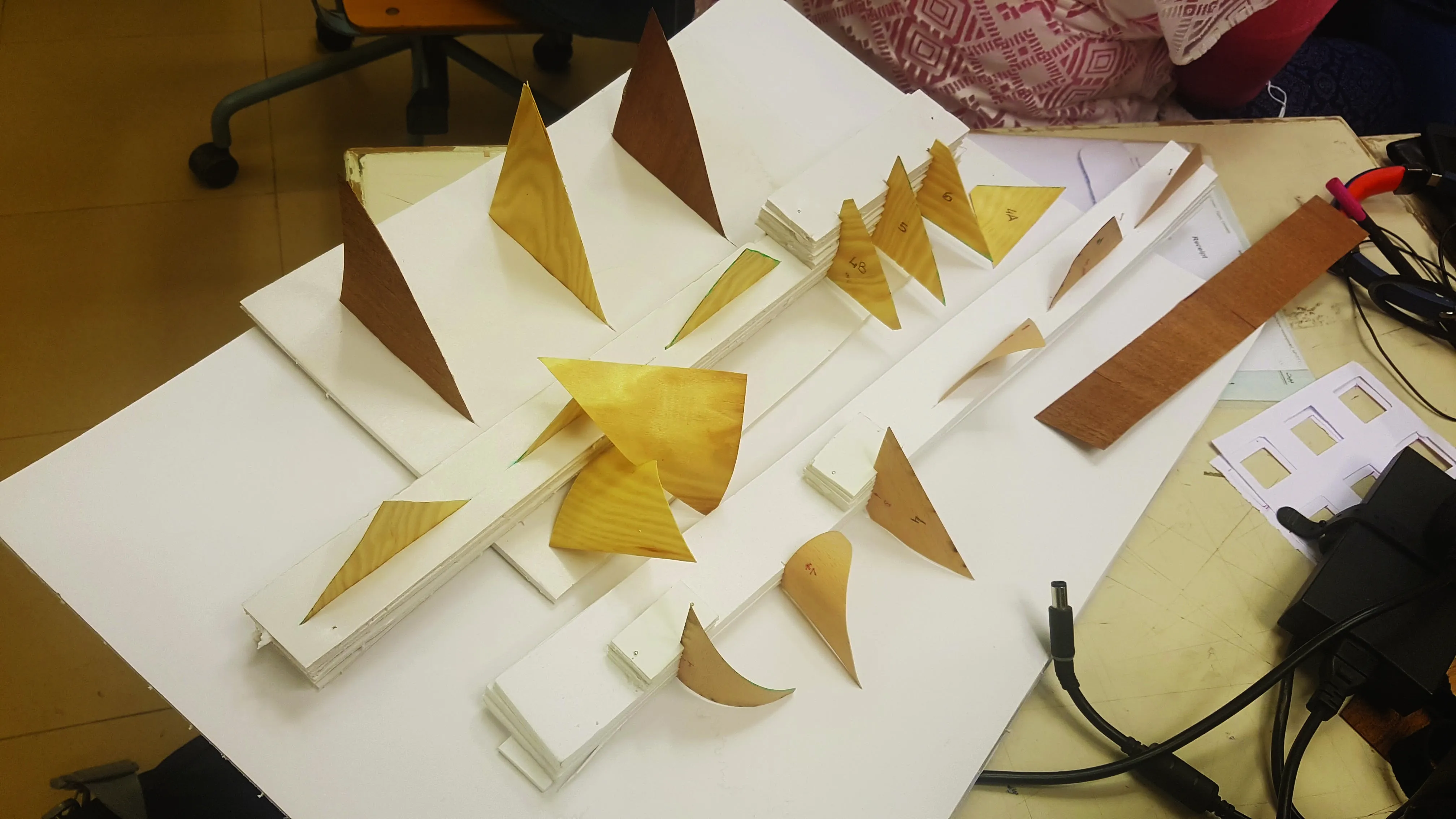
Skins3Preliminary testing by students for multiple wood veneer samples.
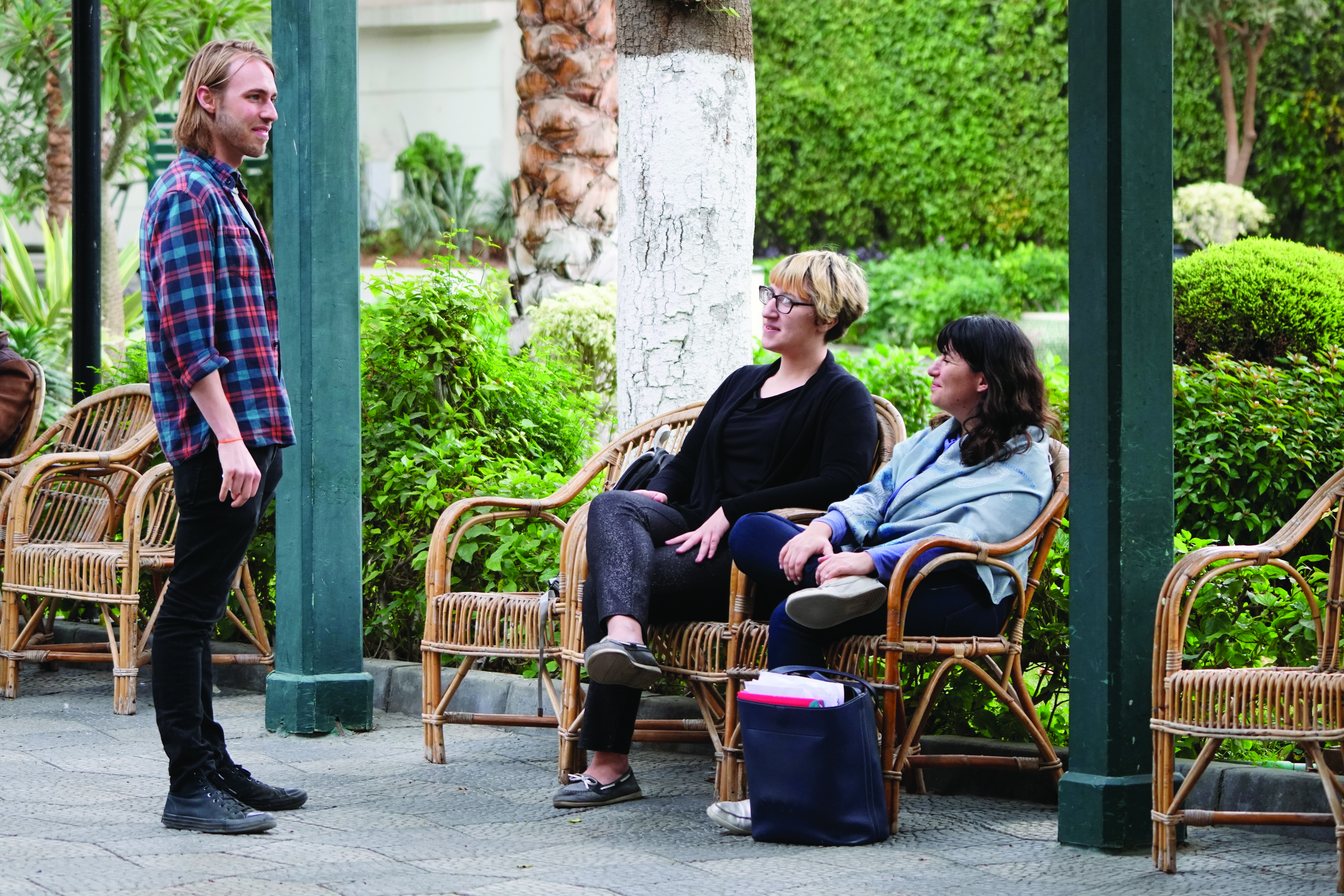
It is this deeper engagement that Abdelmohsen is particularly keen on. The workshops invited the student perspective into the mix, opening the floor for more dialogue and a rich flow of ideas. Additionally, the project introduced students to distinguished international professors with varying concentrations and expanded channels of communication for students to connect with peers from around the world.

"We were very happy that we brought experts here to work with students on our research," noted Abdelmohsen. "In person, they were able to quickly and easily point out issues for the students to develop in their designs. We wouldn't get that in a normal studio environment. On the other side, AUC students were able to meet and work with top-notch professors in their fields. They were also able to integrate physics into their work, with Gabriele helping to explain technicalities from another perspective."

Adriaenssens, too, observed the benefits of involving students in impactful research. "Research brings students in touch with their inquisitive nature," she said. "Learning how to ask the right questions, developing methods to finding answers to your questions and questioning the results are key for the development of an open and critical mind. In particular, the inclusion of AUC architecture students, who are design and concept-driven, has the potential to lead to a generation of new inventions. The adaptive facades they designed and prototyped were innovative, efficient and beautiful at the same time."

After the success of this collaboration, Abdelmohsen hopes to continue to involve students in international projects, noting the value of prompting students to work on research that extends beyond the classroom and can influence architectural trends even outside of Egypt. "We want to engage our students in international collaborative initiatives like the Bartlett Family Fund to increase their exposure," said Abdelmohsen. "We benefit from the fact that students also tend to act differently in different settings. They become more engaged and committed in a project like this that can have real impact."

Check out more of AUC's named scholarships here.

 
Share

"Endlessly fascinating": What CASA Alum Have to Say

"Endlessly fascinating": What CASA Alum Have to Say
<?xml encoding="UTF-8">

These quotes appeared in the Fall 2017 edition of AUCToday, as part of our feature story on CASA.

casa4

"CASA's formidable and excellent curriculum and faculty not only cemented my mastery of Arabic, but also motivated me to pursue a career path in Arabic language instruction. A year after graduating from CASA, I was launching an Arabic program at Friends Seminary in New York City. Eight years later, I launched another at Kalamazoo College. Also, the fascinating and diverse projects being undertaken all over the world by my cohort (2006-2007) provide a constant source of inspiration."

-- Anna Swank (CASA '07)
Kalamazoo College's First Arabic-Language Professor

Learning Arabic in the CASA program was like spending a year in a different historic
age. By the time the academic year finished, I was pretty exhausted but had reached a level of fluency that I had not imagined possible.

-- Paul K. Anderson (CASA '83)
Part-Time Student, Laney College

"CASA was one of the most amazing experiences of my entire life. At the university level, I've been teaching Arabic for close to 30 years, largely on the strength of having completed my PhD in religion, with my dissertation on the early Arabic-language versions of the Book of Job."

-- Steven P. Blackburn (CASA '73)
Curator of the Arabic Collection, Hartford Seminary

The importance of my CASA experience in setting my career path was second only to that of my initial decision to study Arabic. My time in Egypt was truly formative for me both personally and professionally, and the opportunity to spend first a summer and then a full year in the intensive study of Arabic enabled me to develop the basis for the speaking and research competencies that have been critical to my success as an academic in the field of Middle East politics and international relations.

-- Laurie Brand (CASA '79)
Robert Grandford Wright Professor of International Relations and Middle East Studies and Director of the Middle East Studies Program, University of Southern California

"My year at CASA in Cairo back in 2005-2006 was one of the most rewarding professional experiences in my life. It allowed me to really begin to develop confidence with my Arabic language abilities and was crucial in jump-starting my career as a translator of Arabic literature. CASA helped a few of us students set up a course in pre-Islamic Arabic poetry with the renowned Dr. Farouk Shousha, and that was a key moment for me. The course was delightful and informative in every way. And now, over a decade later, I have just received a major grant from the National Endowment for the Arts to translate that very same poetry. Thank you, CASA!"

-- Kareem James Abu-Zeid (CASA '06)
Scholar, Writer, Editor and Award-Winning Translator

 
Share

Traveling Minds: Students Engage with the World

Traveling Minds: Students Engage with the World
Aliah Salih
<?xml encoding="UTF-8">

By Aliah Salih | This story appeared in the Fall 2017 edition of AUCToday.

The more you learn about the world, the more you learn about yourself -- a philosophy shared by faculty members Mohamed Menza, affiliate assistant professor of the Core Curriculum and director of the Dialogue Program, and Hakim Meshreki, assistant professor of marketing.

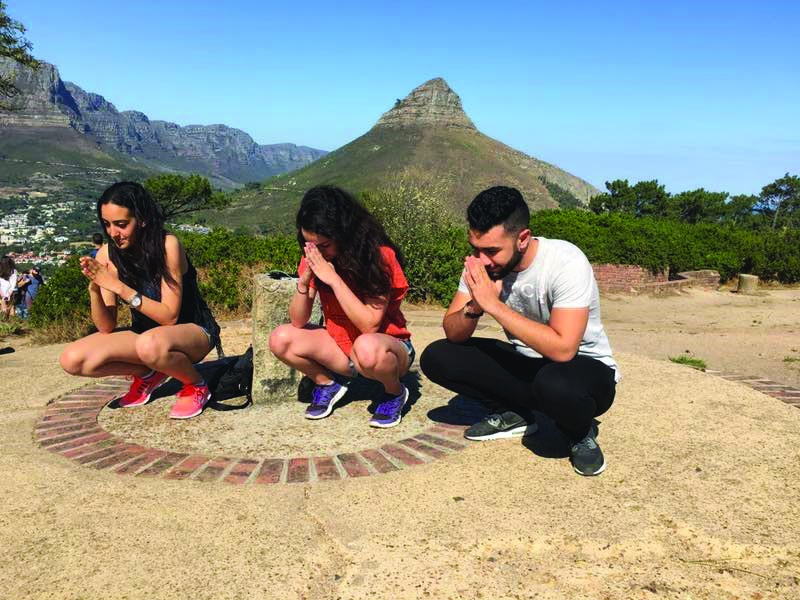
Building on this philosophy, students from the School of Business went to South Africa on a weeklong study trip with Meshreki, while Menza's students connected with the United States and pockets of the Global South -- Nigeria, South Africa and India --
via videoconferencing.

travelm3Videoconferencing allows learning from afar.
Core Dialogue

South-South Dialogue: Perceptions and Reflections from the Global South is a capstone-level course under the Core Curriculum, where -- every other week -- students are taken out of the realm of textbooks and readings and connected to universities from different places. "We have diverse partners across the Global South," explained Menza. "The point is that they are diverse, which serves the multidisciplinary nature of the course."

AUC students and their overseas peers conduct readings on a specific subject, ranging from economics and politics to gender and sociology, and then discuss concepts together the following week. "The opportunity to have videoconferencing sessions with people from around the world and discuss matters with them was very compelling," said Suliema Benhalim, economics senior and entrepreneur. "It allowed me to implement a lot of what I learned in economics to a more cultural side of each topic."

travelm5This is the value that liberal arts education adds to each student, Menza noted. "Departments have their own limitations, but this is the benefit of the Core Curriculum. You're not confined to academic contours or certain angles," Menza explained. "We try to merge the gap between academia and the real world."
The course -- which combines internationalization, blended learning and cross-cultural dialogue -- included videoconferencing sessions with the American University of Nigeria, Carnegie Mellon University in the United States, University of the Western Cape in South Africa and Amrita School of Business in India.

The multilateral Dialogue Program course series was first introduced in 2001, not too long after September 11, when there was a dire need for challenging emerging stereotypes and promoting an East-West exchange of ideas. The course's impact on students is not confined to dialoguing or written skills, but also changing perceptions and preconceived notions. "I honestly saw another side of each country," said Benhalim. "I found the conversation with Nigeria very interesting because we discussed many topics under gender, from cultural implementations of gender differences to political instability and the lack of gender equality in politics. I learned more about the problems they face and about our cultural similarities and differences."

Global Outlook

An AUC study trip, organized by the School of Business, to the University of Stellenbosch Business School last spring enhanced the business and economic outlook of students. "If you are a business person," explained Meshreki, "you may launch a new idea based on a perception you have that may not be right. How different cultures will perceive your idea cannot be based on your own perceptions; it has to be based on reality. During the trip, students learned that perceptions might not be real. They were shocked to view reality against their own perceptions, but if we want to build international leaders, we should make sure they're getting this global encounter."

The students were able to see three major sides of business in South Africa: academic institutions, entrepreneurial ventures and corporations. They attended lectures at the University of Stellenbosch Business School and visited two extremes of the business world in South Africa: multinational corporations and entrepreneurs from impoverished districts, including one who created a coffee stand similar to Starbucks in his neighborhood. "When we met the entrepreneurs and heard their stories, the idea of 'getting good grades to feel like I learned' changed inside me," said Reem Yakout, a junior majoring in management of information and communication. "Being an entrepreneur is hard, but that's the point. This trip made me realize it's not all about work as much as it is about what I want to do and how to do it."

travelm4The comparative perspective with South Africa was also eye-opening. "My favorite lecture was the Economics of South Africa; it made me think of Egypt's economy," said Yakout. "I remember thinking, 'Why doesn't Egypt have something like this? It surprised and inspired me."
The study trip was distinctive in the international exposure it provided. "Exploring the history and culture of South Africa gave me insights about the country and how I can deal with people in business, in different countries and in the future," said Yasmine El Tayeb '17, a business marketing graduate who attended the course as a graduating senior. "We explored different teaching methods employed by professors and gained great international exposure, as well as the pleasure of knowing and understanding other cultures. Internationalization in the curriculum builds your character and enhances your career prospects."

 
Share

Grads Across the Globe

Grads Across the Globe
Elizabeth Lepro
<?xml encoding="UTF-8">

By Elizabeth Lepro | This story appeared in the Fall 2017 edition of AUCToday.

Between law school, a marriage and a few major relocations, Kai Schneider (SAB '97) has ostensibly lived a whole life since leaving AUC in the late 1990s.

Yet, on a return visit to Cairo with his brother, Schneider cruised down the street where he lived when he studied abroad at AUC. He found his old bawab [doorman] and friend still sitting right where he remembered him. "He recognized me, ran down the street and hugged me, and just fell apart crying," Schneider said.

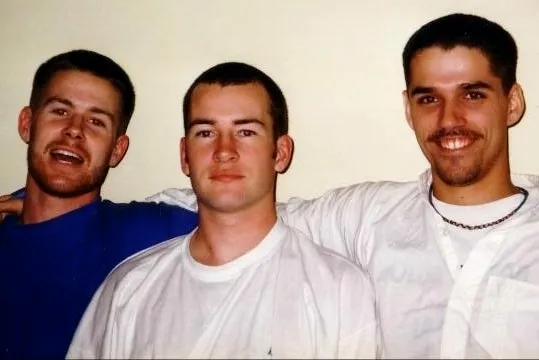
Mail0001Schneider (middle) with his friends in Cairo in the '90s.
Now in his early 40s, Schneider spent most of his adolescence moving back and forth between Sweden and the United States, and knows what it's like to leave a place behind. Yet, listening to him talk about Cairo makes it clear he has reserved a special spot in his heart for the ancient city, the connections he made and the memories -- many involving public transportation mishaps -- he still laughs at today.

"I have friends from AUC who are back in the United States," Schneider recalled. "We still talk about Tahrir and Cairo."

Over 13,000 of AUC's more than 38,000 alumni live internationally in more than 120 countries. Preparing students to become global citizens is built into the design of the University. Like dots on a map all connected back to the same starting point, students over the years have taken what they learned from Egypt, from AUC and from each other into careers where adapting to new cultures and environments is often part of the job description.

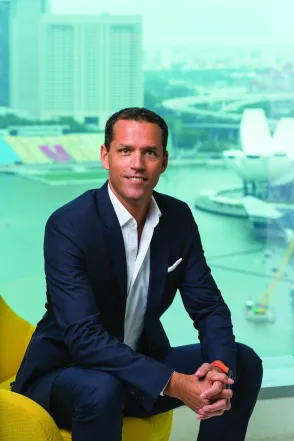
aluminternationalSchneider in Singapore

"From a management perspective, I still use the lessons I learned being at AUC and in Cairo," said Schneider, who studied international relations at AUC on a study-abroad program from the American University in Washington, D.C. and went on to law school. Schneider now lives in Singapore, is the managing partner of the Singapore office of Clifford Chance international law firm, and heads the office's Funds and Investment Management group.

Alumni utilize Cairo-learned lessons -- including the ability to adapt, laugh in any situation and empathize with those around them -- in their offices thousands of miles away from Egypt. Take Mahmoud Mouaz '00, who came to AUC to study engineering, but realized his heart was in connecting with people.

Mouaz, sales director for Iskraemeco smart energy company in Slovenia, credits his active involvement in the Student Union's activities committee with the realization that he was made for leadership positions in sales and marketing. As an undergraduate, Mouaz helped plan trips and concerts, like the carnival on campus, and worked closely with people from a range of backgrounds and experiences. He developed "a broad way of thinking and an ability to understand different people and characters, and create business opportunities. "I am able to adapt," he said. "I lived in Dubai and Slovenia, and traveled for a period of time between Cairo and New York."

Reflecting on how AUC helps develop leadership and interpersonal skills, he noted, "AUC builds that self-drive. Its education system and activities help students find what they are good at and give them the motive to fight to succeed."

Moving to a new country, be it Egypt or Slovenia or Singapore, does come with the risk of drowning. Svanhildur Thorvaldsdottir (SAB '05), who is Icelandic but educated in the United States, remembers how daunting it was to study abroad in Cairo when she was an undergraduate. "Being completely unable to communicate -- although I was able to roughly get by at the end of the semester -- was an interesting experience and one that I think everyone should try out sometime, even though it's super hard and frustrating," Thorvaldsdottir said. "The first time I successfully directed a cab driver to my house in Arabic was a very proud moment."

Thorvaldsdottir, a postdoctoral researcher at Ludwig-Maximilians University in Germany, remembers being inundated with safety warnings before making the move to Egypt. "I had heard from various people I knew that 'you can't take a cab there. You can't eat the vegetables. You can't buy the juice from the juice guys. You can't do this; you can't do that' and to basically eat nothing and do nothing because it isn't safe," she said.

Yet, another benefit of having a global network of alumni is that Thorvaldsdottir and others go on to be ambassadors for the realities of Cairo. "My favorite juice is still half pomegranate, half guava from the juice guy. The veggies are lovely, and I had some of my most interesting conversations with cab drivers," Thorvaldsdottir continued.

"For me, being able to step out of the tourist bubble and just get to know the country a bit more was a really valuable experience."

IcelandThorvaldsdottir with her daughters in Iceland.

Mouaz, too, finds Cairo's friendly atmosphere and the compassion of Egyptians an easy message to promote in Slovenia. "Egyptians in general care about the welfare of society; they are decent and good-natured. They're not really big on capitalism or individualistic behaviors," said Mouaz "This is in harmony here. At one point, Slovenia was the economic capital of Yugoslavia, and Yugoslavia was big on socialism. You can still see traces of socialism here with the behavior of the people. It's more collective, which means that the society cares for the welfare of all people -- like Egyptians do."

Adapting to the snowfall and chilly climate during Slovenian winters is a different story. Mouaz admits he's more of a sunny-weather guy. Egypt is, after all, his homeland. "I've traveled a lot and lived in different places, but Egypt is where I belong," he said. Offering words of advice, he added, "Always be proud of who you are and where you come from. Invest in your future."

Connect with alumni through the Facebook page!

 
Share

Akher Kalam: Lessons from Migration

Akher Kalam: Lessons from Migration

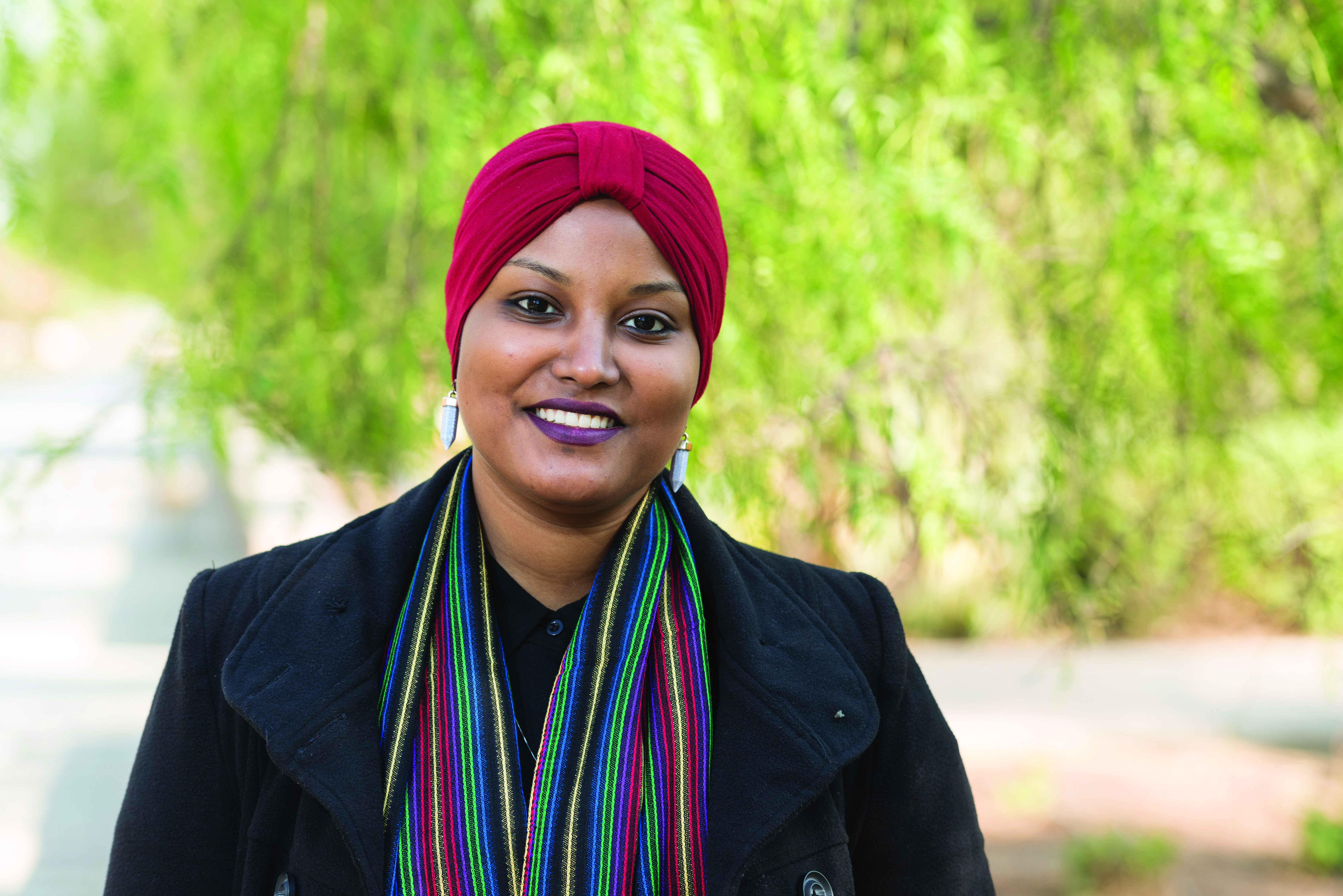
Azza Osman is pursuing a Master of Arts in community psychology under the African Graduate Fellowship at AUC. She was an intern, working as a capacity building coordinator, at Syria Al Gad Relief Foundation, which supports Syrian refugees residing in Egypt. She is also interning with AUC's John D. Gerhart Center for Philanthropy, Civic Engagement and Responsible Business. She received her bachelor's in psychology from Ain Shams University.

This story appeared in the Fall 2017 edition of AUCToday.

I was 7 months old and living in Sudan when my life shifted. My father needed to seek political asylum, so our family moved to Egypt. Because I was so young, I didn't feel the impact of this move right away, but as I grew up, it was impossible to ignore the challenges of living in a culture different from that of my family. Looking back, I can see how much the process of melding with Egyptian culture, dealing with prejudices and misconceptions, and eventually coming to study at AUC would shape my passions and interests over the course of more than 20 years.

During my 24 years of residence in Cairo, my highest priority and most rewarding challenge has been concentrating on my studies while trying to adapt to Egyptian culture. Over time, these two priorities have come together. What I've experienced and noticed about how community and belonging affect us have influenced my desire for change in Sudan, Egypt and Africa.

Being an African migrant and a woman living in Egypt has not always been easy. I face a lot of society's prejudices, misconceptions and discrimination. My dark skin, for example, invites a lot of judgment. This has made me a more resilient person and has pushed me to reach for more, not just in my own life, but for the lives of vulnerable communities everywhere.

I have a bachelor's degree in psychology and am currently pursuing my master's in community psychology because I want to use my academic knowledge and personal experience to support migrant and refugee communities in having equal access to opportunities and resources. I want them to be an empowered and developed community. I also want to help them discover and reach their full potential, regardless of the circumstances.

What I find extremely captivating about community psychology is that it goes beyond the individual and integrates social factors to promote positive change on many levels. Because it is based on scientific research, community psychology can offer tailored support to target populations through prevention, intervention and evaluation strategies that lead to their holistic empowerment, sustainability and development. It connects people to their communities and focuses on important issues that I believe Sudan and the African continent as a whole experience, including poverty, discrimination, inequality and lack of quality education.

AUC is one of the top universities in Africa and the Middle East. It is the only University in the region that offers a master's degree in community psychology. The strength and competitive stature of the University's program resonate with my desire to be part of an institution that actively changes the world for the better. I was fortunate enough to be awarded the African Graduate Fellowship, one of many opportunities at AUC that encourages students from different backgrounds to follow their dreams and further their education.

My entire experience at AUC has been eye-opening and positively challenging in many ways. Academically, the program has been everything I hoped it would be. The facilities and faculty mentors available in AUC's Department of Psychology are unparalleled in Egypt. I get the opportunity to apply my studies through practical experiences and internships parallel to my courses -- all leading to a hands-on experience that is efficient in developing my skills and knowledge. The principles and mission of the African Graduate Fellowship coincide directly with my aspirations and vision for change in Africa. My hope is that studying at AUC will equip me to provide the best possible services upon my return to Sudan. I am a firm believer in social responsibility. One of my ultimate dreams is to start a community-based organization in Sudan that would support and empower vulnerable groups with no regard to race, color or ethnicity.

I want to offer a safe space for members of a community to get together and receive support, skills and education, while sharing their own gifts, talents and knowledge.

When I look back at the ways being a migrant have shaped me -- offering lessons in patience, empathy, resilience and determination -- I am proud that I've navigated my education to reflect this experience. I am a culmination of communities: the larger community of two countries, that of my parents' culture and surroundings, and the life I've discovered and created for myself here in Egypt. This has made me a strong, open-minded, tolerant and, above all, grateful person. I truly believe that I have been lucky to live and experience all of that and to appreciate things like being part of a connected, loving family. These rich experiences led me to where I am today and will continue to guide me to a place where I can give back.

Share

Virtual Voices

Virtual Voices
Katherine Pollock
<?xml encoding="UTF-8">

By Katherine Pollock | This story appeared in the July 2017 edition of AUC Today.

The focus of the sociology class titled Borders, Wars and Refugees: From the Ottoman Empire to the Islamic State is the history of modern borders, yet the class itself takes place in a virtual world devoid of such borders.

Taught by Amy Austin Holmes, associate professor of sociology in AUC's Department of Sociology, Anthropology, Psychology and Egyptology, the class was a joint course between AUC and Oberlin College in the United States. The course utilized video conferencing technology as a tool to bring AUC students from their classroom in Cairo together with their peers in an Ohio classroom to exchange and debate ideas.
"In both the United States and Egypt, a lot of students can no longer afford to go on a study-abroad program, so our class provided an alternate means of exposing students to the experience of sharing the classroom with students from a different university," said Holmes. "Students benefit greatly from this international exchange."

Institutional Collaboration

Holmes co-taught the course with Zeinab Abul-Magd, associate professor of history at Oberlin who was a visiting professor at AUC's history department in 2011-2012 and again in 2014. The idea for this collaboration came more than a year ago when Holmes and Abul-Magd began planning for the course.

In order to get this idea off the ground, Holmes and Abul-Magd submitted a grant proposal to the Global Liberal Arts Alliance, which aims to strengthen education in the liberal arts and sciences globally. The grant allowed Abul-Magd to travel to Ottoman archives in Istanbul and British archives in London, collecting old maps from the archives and hosting a lecture series at Oberlin, in which Holmes presented twice.

The class began with the collapse of the Ottoman Empire and the formation of new nation states, focusing on different minorities and ethnic groups. "In order to explain recent events in the region, we have to look back in history and ask how it got this way," said Holmes. "This history of displacement was a theme throughout the class, as well as how borders were drawn, who drew the borders, what to do if there are people with the same identity on two sides of the borders."

a generic photo of a laptop and notebook with a handA joint course between AUC and Oberlin College utilized video conferencing technology as a tool to bring AUC students from their classroom in Cairo together with their peers in an Ohio classroom to exchange and debate ideas.

The syllabi at AUC and Oberlin covered the same readings for a number of weeks throughout the semester so as to facilitate discussion between the two groups. However, Holmes did emphasize certain relevant topics more specifically, such as that of Nubians in Egypt and Kurds and Yazidis in Syria and Iraq. Drawing further inspiration from the idea of the "borderless classroom," Holmes brought in two Nubian guest speakers to the class and a Kurdish guest speaker from the Sinjar region of Iraq, who spoke via an online platform.

Connecting Across Borders

AUC and Oberlin College students video conferenced approximately every other week, reading the same material and engaging in discussions. AUC classrooms are equipped with advanced video conferencing technology, which greatly facilitated this international virtual conversation. The technology allows the camera to zoom in on the person speaking, as well as pan out and capture the whole classroom at once. It is also possible to see both classrooms at once on the same screen, so it feels as though the class were taking place in one room.

"Video conferencing was a new experience and was quite interesting," said Amr Haddad, a political science senior at AUC who is minoring in sociology. "It was different from a normal classroom setting because it encourages you to participate all the time."

Holmes emphasized that this two-way communication gave students a voice.

"To know that there are people in another country, on the other side of the world, listening to them gave an added importance to what the students were saying," said Holmes. "Even just projecting on the big screen gives their words a sense of importance and weight that you wouldn't have in a normal classroom setting."

Similarly, Abul-Magd noted, "A large number of Oberlin College students joined this globally connected course, which took the form of a Middle Eastern history seminar. At enrollment time, my students were very excited about the possibility of connecting with and talking to fellow college students in an important country in the Middle East like Egypt. They tremendously enjoyed the video conferences and looked forward to each one of them."

With U.S. President Donald Trump's inauguration and his immigration and border walls proposal in recent news, one of the first class sessions was spent discussing these topics with students across the ocean. "We discussed in general the issue of borders in relation to current affairs, external borders of a sovereign government and even internal domestic borders," said Holmes. "The topics of the wall between the United States and Mexico and the travel ban came up quickly, for example."

From the American perspective, Abul-Magd noted, "The fact that the topic of the course touches not only on Middle Eastern history issues but also current political issues in the United States, especially Trump's new border policies, made the whole experience more enriching and exciting for Oberlin students."

Reflecting on what he learned, Haddad declared, "The students from Oberlin were very good listeners. They didn't criticize anyone's point of view, but were ready to accept any differences in opinion. On both sides, we realized we have a lot in common when it comes to the way of analyzing texts or understanding certain issues.

The fact that we come from different cultures did not cause any problems, but actually made us realize that we could all have the same perspectives on certain issues."

 
Share

Student Spotlight: Meet Six International Students

Student Spotlight: Meet Six International Students
<?xml encoding="UTF-8">

These quotes appeared in the Fall 2017 edition of AUCToday.

Yasmeen Abdelkader

Undeclared freshman student from the United States

Yasmeen"I was tired of proclaiming that I was Egyptian without experiencing Egypt, so I came to Cairo to reconnect with my roots. Since I came here, I've learned that Egypt is an overlooked gem that offers valuable life lessons. Above all, I've learned the importance of family. One of my favorite memories was AUC's Thanksgiving dinner because it showed how different cultures could blend into one, not to mention the delicious food. Egypt is also a very collectivist culture. If I'm experiencing trouble, whether it be car issues or confusion about an assignment, someone will always go out of their way to help me, with no expectations in return. This has given me the most wonderful, wholesome feeling of joy and belongingness. Now, I aspire to become a mentor to younger students."
 

Mohammed Abdellaoui

Computer science sophomore and Tomorrow's Leaders Scholarship Recipient from Algeria

Mohammed Abdellaoui"Egypt has its own legacy, which encouraged me to step into this country and sense the historical dimensions inside its walls. Being in such an environment is priceless because you don't get the chance to walk and learn in a place that was -- hundreds of years ago -- a hub of the most brilliant minds in history, those who changed the path of science forever. Through community service clubs at AUC, I went to rural areas in Egypt to teach children math, Arabic and English using games. I am also working with the Robotix Club to teach basic robotics to impoverished children with disabilities. AUC stands for quality. I see motivation wherever I go: students eager to make a change and enthusiastic about doing something great for their communities."
Hanin Elfandi

Biology sophomore (premedical track), Tomorrow's Leaders Scholarship recipient from Libya

laststudent"As an AUCian, I feel like a citizen of an important place where the unreachable is right at my fingertips. At AUC conferences and events, we network with amazing leaders who listen to our ideas because they believe we matter. This gives me a sense of empowerment. Another thing I adore about AUC is the welcoming and friendly Office of International Student Life, where I feel at home and valued because of my different background. The office ensures that we as international students see the beauty of Egypt by escorting us to different places in the country and organizing heartwarming gatherings. Egyptians love us here and always offer to accommodate."
Khaddija Jobe

English literature sophomore and study abroad student from Gambia and the United States

kadijah"I grew up in West Africa and wanted to come back to the continent, but somewhere completely different from where I grew up. I've always been interested in doing this; I just never had the chance to venture out on my own and explore. It's a nice dual experience to be at AUC as a student and experience how things work academically, as well as be a tourist in Egypt. I'm getting a unique historical perspective. Because we're in Egypt, my professors are using works that relate more to the area, so I'm being introduced to different theorists and authors."
Michel Salzer

Political science study abroad student from Germany

Germanstudent"Egypt is rich in that it has so much to offer. There's an interesting mixture of cultures, and people always communicate different opinions. AUC, more than any other university, is a way of life, not just an educational institution. You can achieve many things and interact with important and interesting individuals. You come across different people on campus, with different ways of living and thinking. The University encourages multidisciplinary thinking, and people exchange a lot of ideas through courses. It's a very interesting melange of Egyptian, American and European academic traditions"
Adam Angus

Business administration junior from the United States

Adam"AUC offers opportunities and a unique learning experience that you would not be able to get in other countries. I'm learning here within an interesting economic situation. My goal is to tackle the class gap to really structure a strong middle class. The University is helping me achieve this goal because it really brings about a new perspective and pushes you to innovate. I've learned so much about myself and where I come from because of the Egyptian society's collective unity. This kind of networking is at the forefront of global business." 
Share