Home page
ع

Internal Affairs

Internal Affairs
<?xml encoding="UTF-8">

By Em Mills

A Tokyo-based finance expert. A former fashion model. An award-winning filmmaker. A lawyer and previous Montana senator. An international economist in the U.S. Department of the Treasury. While this list might sound like the start of a bad joke, if you put them all in a room, you'd find one thing they share: All of them previously served as presidential associates at AUC.

Beginning in 1981 with Harvard graduate Frank Packard, the program has been welcoming American fresh graduates to Egypt ever since. Kicking off with just one associate, it grew to include cohorts from across the United States interning in multiple offices at AUC, learning from both their positions and newfound context while experiencing life in Egypt.

I'm writing to you as the latest presidential associate in the 43rd year since the program's inception. I joined AUC in September 2023, and since then, I've been learning the ropes of the campus newsletter in the University's Office of Marketing Communication and Public Affairs, playing chicken with New Cairo traffic and sounding out Arabic words just to puzzle over "sandwich" for 20 minutes without realizing. Like the associates who came before me, I too have felt the humor and absurdity of adjusting to a new context, with Egypt's particularities confusing and delighting me in turn.

By the grace of the now-discontinued presidential associates newsletter, Internal Affairs, I was able to get a glimpse into some of the projects, excursions and generalized chaos that the former associates got up to during their time at AUC, alongside the diverse careers that they pursued. Reading through, I recognized many experiences I had shared and a few that I was grateful I did not, such as performing a surprise vocal solo for the provost at a dinner party.

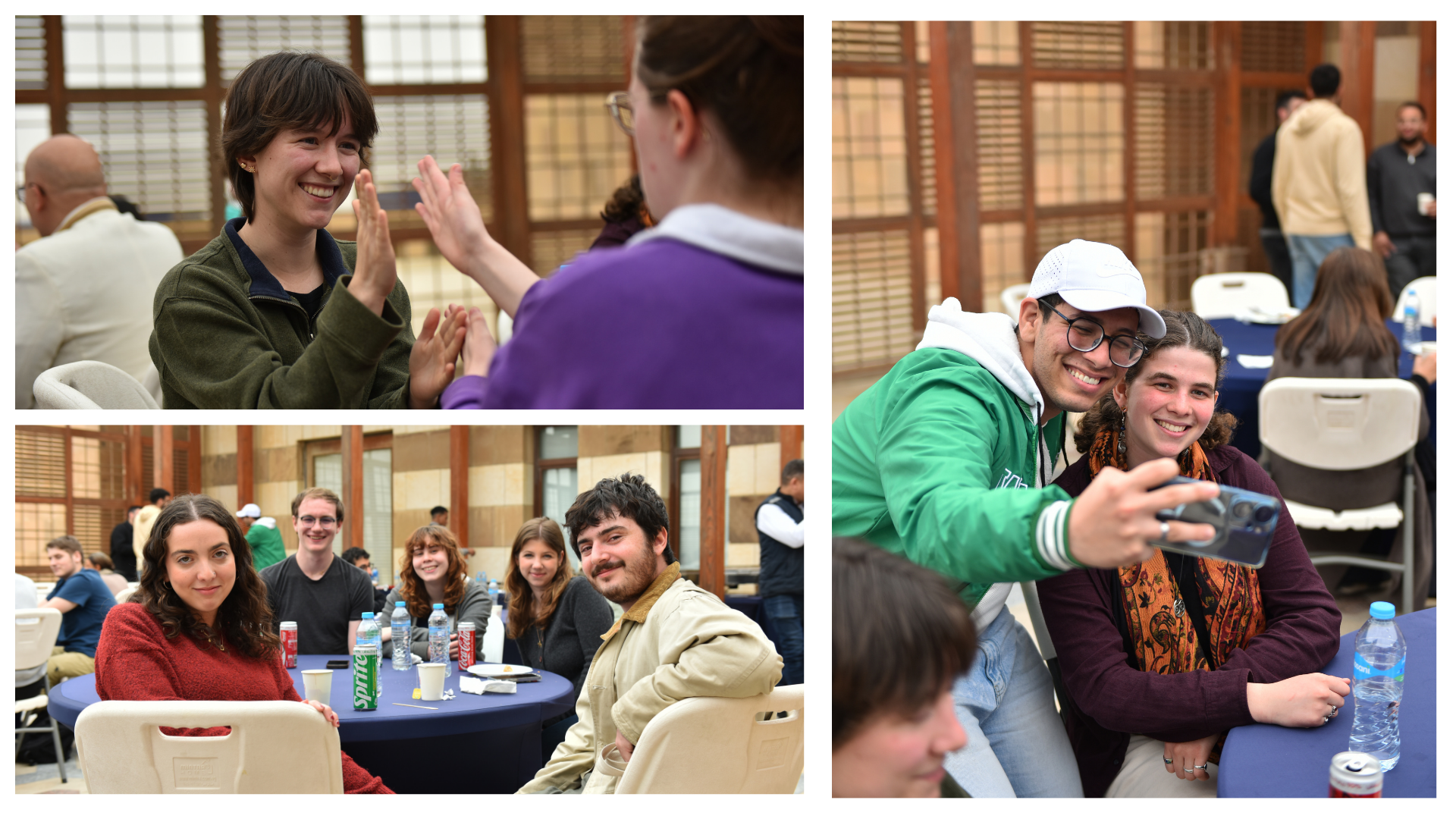
While much has changed since the program started, some things remain consistent -- including the bond between Egypt and the associates. During an informal meetup in Cairo that included five associates from different years, it became clear that connection with the program doesn't just end at the close of the year. Katherine Patterson, currently completing her master's in energy studies at Sciences Po and a presidential associate from 2015 to 2016, put it like this, "No matter how much time passes, every so often, I seem to find myself back aboard a felucca on the Nile surrounded by other associates."

  • five people smile while sitting on a felucca on the Nile in Cairo, EgyptOne current and four former AUC associates swap stories on a felucca in the Nile, 2023. Photo by Devon Murray
  • newspaper clipping of five people on a felucca on the NileInterns on the Nile Courtesy of the Internal Affairs newsletter
 

Rowaida Saad Eldin, former executive director of the Office of the President but known to the interns as the beloved "Den Mother" of the program, put her attention, care and generosity into making the experience something meaningful to both the interns and their surrounding community.

Beginning as a volunteer, as the program grew her position became official as she was named the first intern coordinator by former AUC President Richard Pedersen.

"I worked with the presidential interns, later referred to as presidential associates. I would take them around, to the places I loved. I felt so proud of the opportunity to show them Egypt -- the version of the country tourists don't usually see. I wanted them to get a full experience, not just come to work and go home. The interns themselves were also very active. They volunteered to teach refugees at St. Andrew's Church and work with kids at the Children's Cancer Hospital Egypt 57357. Some wrote for Egyptian newspapers in English. They reached out to the community and became integrated in their own ways."

Learn more about the program here.

 
Share

Ropes and Reps

Ropes and Reps
<?xml encoding="UTF-8">

Walking into a gym can feel intimidating -- immense metallic machines stacked to the brim with weights so massive it becomes a safety hazard. However, seniors Mohamed Sami and Youssef Abdelaziz have introduced two new fitness classes at AUC that require minimal equipment and are accessible for all fitness levels: jump rope and calisthenics. We sat down with them to learn how it started and how it's going.

Mohamed Sami - Accounting Senior

Sami and group at the AUC Sports Center, photo by Ahmad El-Nemr

How It Started

Sami began jumping rope at age 13. "It was really good cardio without the need for any expensive equipment or a gym. It's so accessible and very convenient," he says. At AUC, he was inspired by coursework in his Entrepreneurship and Innovation class to create an informal team on campus in coordination with the Office of Athletics. Now, every Wednesday the AUC Sports Center is abuzz with the staccato stomps of students improving their skills on the rope -- and inventing their own.

Why We Love It

Despite its intensity, the sport lends itself to the flexibility and range of the human body. Sami stresses the ease of learning the ropes -- literally -- in his jumper-see, jumper-do attitude, teaching a wide variety of students, from novices to experts. "Some beginners feel uncomfortable or insecure because they don't know where to start. I focus on making them feel comfortable with baby steps."

Looking Ahead

Although the group has yet to become an official team, jump rope takes much of Sami's time. "Balancing academics and teaching is so hard," he says. "But I love what I'm doing, and I hope to start my own academy after graduation."

Youssef Abdelaziz, Psychology Senior

man balancing on a pull up bar outsideAbdelaziz at the AUC Sports Center, photo by Ahmad El-Nemr

How It Started

Abdelaziz started learning calisthenics during the COVID-19 pandemic. After the lockdown was lifted, he went back to the gym but soon realized he'd have to adapt his regimen: "I went with the aim of building the muscles specifically for calisthenics."

He began teaching calisthenics at AUC after impressing his peers at a pushup competition on campus. Amassing the interest of around 50 students, the calisthenics team solidified itself as a force to be reckoned with at the AUC Sports Center. The feedback from students has been positive.

Why We Love It

Calisthenics is a form of strength training where the body acts as the main source of resistance to challenge muscles.

"While powerlifters and bodybuilders lift weights and dumbbells, calisthenic athletes leverage different positions of their bodies like handstands and pullups," Abdelaziz explains.

Looking Ahead

Abdelaziz prioritizes the social aspect of calisthenics, noting how participants benefit from connections. "They are in a circle that encourages training and working out. When you get to know more people who have the same mindset and goals as you, I think that's a win." Eventually, he intends to use his background in psychology and aptitude for physical activity to launch a sports psychology course at AUC.

By Ammar Abdelwahab Mathematics Senior


Share

Fact, Fiction and the Post-Truth Crisis

Fact, Fiction and the Post-Truth Crisis
<?xml encoding="UTF-8">

By Devon Murray

This loss of trust has created a new landscape where emotion and belief often trump fact, allowing misinformation to take hold and influence public opinion. "In the age of the internet, social media has allowed misinformation to spread faster and wider than ever before, disrupting traditional forms of political communication and leading to serious consequences," Cosentino adds.

Gabriele CosentinoGabriele Cosentino, photo by Mohamed Badawy

A New Era

Cosentino's interest in post-truth began during U.S. President Donald Trump's political ascension in 2016, which reminded him of Silvio Berlusconi, an Italian media tycoon-turned-politician and the topic of Cosentino's PhD dissertation at New York University. "A lot of people drew parallels between Trump and Berlusconi, so I wrote a book in 2017 that tried to make sense of Trump and link his success to the precedent set by Berlusconi. And then as I was writing this book, the whole topic of post-truth exploded."

With populist movements gaining ground in Western democracies and emerging powers like China challenging the world order, the era of global U.S. hegemony is coming to an end, Cosentino says. "What we are seeing now is a shift in global power dynamics and the unraveling of the U.S.-led liberal democratic model. A new geopolitical era is coming to life, and its contours are still blurry."

Cosentino argues that the shift goes beyond politics and economy, extending into ideology. For example, during the coronavirus pandemic, misinformation fueled distrust in vaccines and mask mandates, which he explores in his book, The Infodemic. He describes COVID-19 as the first public health crisis of the post-truth era, marked by an intense battle of information between experts and the public across media platforms.

Finally, the post-truth condition is characterized by emotions and beliefs taking precedence over facts and rationale. This can especially be seen in politics, where campaigns employ fear-based rhetoric to sway voters on issues like immigration, security and public health, creating divisions based on irrational fears rather than informed debate. "Traditional truths and established narratives are no longer universally accepted," he says. "In fact, they are being actively contested on multiple fronts."

The Emotional Economy

"Post-truth" was chosen by Oxford Dictionaries as its 2016 Word of the Year, a decision prompted by two political events that year that had shocked the world: the election of Donald Trump to the U.S. presidency and the Brexit referendum. "Both events were, in a way, symptoms of the post-truth crisis because they were marked by an overwhelming amount of false information -- both unintentional (what we refer to as 'misinformation') and intentional (what we call 'disinformation')," Cosentino says.

While misinformation and disinformation have always been present in politics and media, Cosentino emphasizes that social media platforms and the large tech companies behind them have greatly exacerbated the post-truth crisis. "People are growing more accustomed to getting their news through social media instead of traditional media companies," he says. "This shift has sparked a power struggle between tech giants and traditional media, both vying for attention and legitimacy."

"It's not that society has moved past truth, but rather that truth has become irrelevant."

Social media platforms thrive on emotional, rather than rational, engagement. "That's where the business model draws much of its power," Cosentino explains. "Watching a self-proclaimed citizen journalist report news while walking down the street feels much more authentic than, say, reading a polished piece from The New York Times, which has likely undergone rigorous research. Unfortunately, a lot of these self-styled journalists are misinformation or propaganda peddlers."

Moreover, social media platforms are designed to boost viral content that keeps users engaged, regardless of its veracity. This can have severe consequences, as illustrated by Cosentino in Social Media and the Post-Truth World Order. He presents the case of Myanmar, where Facebook spread false information and hate speech against the Rohingya, a predominantly Muslim ethnic group, contributing to the 2017 genocide carried out by Myanmar's security forces.

"The interethnic problems in Myanmar predated the arrival of Facebook, of course, but its aggressive marketing and unsupervised popularization in a fragile democracy produced a quick exacerbation of political issues," he says.

As these companies continue to resist regulation and more sensational content goes unchecked, Cosentino warns that there will continue to be major consequences. "Tech companies have amassed an excessive amount of power, and we are now seeing the impact," he says.

Divide and Conquer

Cosentino reminds us that the impact of social media platforms hasn't always been negative: "Just a few years before 2016, these platforms were hailed as agents of democratization and liberation for societies led by authoritarian governments," he says. "However, after seeing that they could be used to upset the political order, authoritarian regimes studied them to see how they could be used for opposite ends -- to stifle dissent and suppress opposition."

A prime example Cosentino gives of this shift is Russia, which has been found responsible for running countless disinformation campaigns around the world. "The Russians elevated this game to an art form, really," he says. "It caught everyone -- security agencies, politicians and citizens -- by surprise."

Russia has employed disinformation campaigns to influence domestic politics in the United States and Europe, sow fear and hatred toward humanitarian organizations like the White Helmets in Syria and spread anti-Western sentiment in the Central African Republic.

"Using fake accounts, bots, memes, hashtags and viral content, we can see the weaponization of social media by using the same features that activists had used just a few years ago, but now to spread misinformation and propaganda, and ultimately divide society," Cosentino says.

These campaigns are now also an established practice for governments in Turkey, Iran, Venezuela, Saudi Arabia, Israel and China, among others, where they employ paid citizens, known as state-sponsored trolls, to push content online, Cosentino says. "Of course, they are also used by non-state actors, such as conservative ethno-nationalists or anti-vaxxer groups in the United States and Europe."

The platforms that once promised democratization are now being weaponized to manipulate and divide society, particularly in politics. "For me, at the heart of post-truth lies a political crisis, especially in Western democracies," Cosentino says.

Finding Truth

If the age of unquestioned truths is over, how can we know what to believe? Cosentino writes in the conclusion of Social Media and the Post-Truth World Order that we can no longer reach the truth, nor even get close. "Not because we lack information, but rather because of the sheer amount of conflicting, misleading and constantly changing information that we are exposed to," he writes. "Too much information has cluttered our ability to form a rational opinion and propagandists and demagogues know this all too well."

Despite the efforts of some mainstream media outlets to strengthen their authority by adhering to rigorous journalistic standards, Cosentino argues that recent political events have put us back to square one. "Trump's 2024 victory shows how much impact false information had on the election cycle," he says. "It's not that society has moved past truth, but rather that truth has become irrelevant, as fictional narratives have supplanted evidence-based analysis in forming public opinion."

However, Cosentino believes that the future is not all doom and gloom. "There are no easy solutions, but people can make an effort. In general, internet and social media users are becoming more digitally literate. I can see a growth in awareness in my classroom and online. Of course, tech platforms also need to do their part and be held accountable for their responsibility in allowing the spread of false information," he says.

As the effects of the post-truth era continue to reveal themselves, Cosentino is committed to documenting them through his research. "The political problems resulting from this are very complex and may even take a generation to solve," he says. "As our trust in journalism and scientific inquiry declines, so does our support for democracy, its processes and its institutions. To protect democracy we need a more informed and responsible public opinion, and a better regulated information environment."

 
Share

Notes of Change

Notes of Change
February 26, 2025
<?xml encoding="UTF-8">

By Dalia Al Nimr

Mariam Mohsen finds solace in music. Playing the piano since she was 8, the integrated marketing communication and political science sophomore who was born with a visual impairment uses music to connect with the world around her, expressing herself beyond words.

woman plays the piano on stage in an auditoriumwoman sits on a piano bench in front of a piano on stage in an auditorium. She is facing the camera and smilingMohsen warms up before a performance at Ewart Memorial Hall, photos by Ahmad El-Nemr

"Visually impaired people I've met either think Braille music is very hard or don't know it actually exists," says Mohsen, who heads the Music Committee in AUC's Musicana student organization. "After just relying on my ears to understand the composition of a piece of music, I wanted to know how to actually write music from a theoretical perspective -- so I learned Braille music, which helped me picture the notes in my head while playing them."

Mohsen wanted to spread the word about Braille music, so she organized an online international conference where she invited organizations that transcribe, print or teach Braille music. "My goal was to provide resources to people with visual impairments to pursue music like sighted people do," she recalls. "I want to let every single blind person know that they can do whatever they want if they put their mind to it."

"It's not easy to fight for your goals, but when you see the results, you'll be happy that you actually followed your dreams."

Living by that motto, Mohsen did not just stop at music. She came up with initiatives to increase accessibility and inclusiveness across the country. "Accessibility has always been an integral part of my life," she says. "I was born visually impaired, so I wanted to do something that would make a change or difference in Egypt and the world."

Mohsen was an active participant at the December 2021 annual national celebration for people with disabilities, where she met with Egypt's President Abdel Fattah El-Sisi and proposed a recommendation that all official documentation in the country have tactile features or Braille. "I could lose or misidentify my ID or even my passport," says Mohsen, who was named the country's Accessibility Ambassador.

Based on Mohsen's recommendation, the 2023-2024 ballots integrated Braille, and the Central Bank of Egypt embossed a tactile feature into the new plastic EGP 20 banknote, with plans to extend this to more banknotes.

"I worked alongside the Central Bank of Egypt, researching international laws and protocols, and I am proud that Egypt is one of few countries that introduced Braille into their ballots," she says. "It's very fulfilling when you do something that benefits people and impacts them positively."

For Mohsen, this is just the beginning. "I can do even more," she affirms. "It makes me brave and courageous to propose suggestions that will make life better for people like me." Mohsen's younger sister, who also has a visual impairment, is further inspiration for her advocacy. "I want future generations to feel better about themselves," she says. "It's not easy to fight for your goals, but when you see the results, you'll be happy that you actually followed your dreams."

AUC student Mariam Mohsen is working to increase accessibility across the country


Share

100 Years of Lifelong Learning

100 Years of Lifelong Learning
Devon Murray
<?xml encoding="UTF-8">

Photos courtesy of the University Archives

When AUC was still a dream, Wendell Cleland, assistant to AUC's founding president, Charles Watson, played a pivotal role in the early vision of the University. Setting out to Cairo to study Arabic and see how viable establishing a university would be, he left the United States in 1917, during World War I. Cleland crossed the Pacific, traveling up the West Coast to Canada, then to Japan, China and India, before passing through the Suez Canal to Port Said.

"But the day we arrived at Port Said, the United States declared war on Germany. ... We had a communication from the Board of Trustees over here and Dr. Watson that they had decided that if a war was going on there that involved Egypt and the threat of the Germans, that there wasn't much opportunity to promote the growth of a new university in Egypt."

After the war, AUC began operations in 1919. Cleland notes that there were many graduates of secondary schools or the Egyptian University who were interested in taking classes at AUC.

Wendell Cleland

Local Connections

In the beginning, the school's primary aim was to engage and serve the Egyptian public through lectures, film screenings and outreach programs.

For Cleland, connecting the local community with AUC's foreigners and boosting the school's reputation was of major importance. He describes how the public lectures that began with the Division of Extension were a crucial factor in achieving this goal.

"... We did a good deal of publicity and got speakers speaking in Arabic, including Taha Hussein ... and Al Azhar students would come down in great bulks to take these lectures. ... That built a kind of spirit of goodwill between the foreigners, the Americans, and the local people."

Hanna Rizk, who served as Wendell Cleland's assistant director starting in 1925 and later took over as head of the division before going on to become the first Egyptian vice president of AUC, reflects on the unique freedom afforded to the program's lecturers in one of his reports:

"It is worthy of note that we never place any restrictions on what our lecturers may say and occasionally they may have been surprised when I have told them so. It is also remarkable that the freedom of our platform has never yet been abused by any lecturer."

Hanna Rizk

The school also screened films at Ewart Memorial Hall and beyond. Ghali Amin, an AUC graduate who worked for the division, noted in his oral history interview that the school began having weekly cinema shows after his first year in order to raise money. This began in 1934 "when families didn't go to public cinema, nor girls alone."

A season ticket cost 25 piasters for one seat in the hall and 30 for the balcony. The films were typically historical, social, scientific or based on literature. King of Kings, a 1927 film that depicts the last weeks of Jesus's life before crucifixion, was shown to a Christian-only audience 20 to 30 times per year around Easter.

"Once Cecil B. Dellille [the film's director] was in Cairo before Easter time. They took him around Ewart Hall to show him the poor Christian families who had come to see the film." Rizk added in a 1947 report: "The King of Kings film is not exhibited in Egypt in any place other than in Ewart Memorial Hall."

It was during this time that Umm Kulthum, the Palestine Orchestra and other major artists performed at Ewart Hall. "AUC was selected because of its good acoustics for recording," Amin said. Despite tumultuous times in Cairo and beyond, attendance remained consistent. Even during World War II, when there were air raids during shows and people would leave the theater into a blackout, "Programs [were] as popular as usual; films came as usual."

Health and Welfare

In the early days of the University, Egypt's rapid population growth prompted the Division of Extension to send its students to visit villages outside of Cairo. Their goal was to assess the challenges faced by the residents and explore ways to help. Cleland recalls the efforts in his oral history interview:

"... It was rather amazing the degree to which the local villagers accepted this kind of aid. We didn't ask them for anything; we offered just to help them."

One of the school's most successful public health campaigns, launched during this period, was the "Save the Eyes" initiative -- whose name was chosen by Rizk and approved linguistically by Taha Hussein. The campaign aimed to raise awareness of eye hygiene and prevent blindness, a pressing concern in Egypt's rural regions. By distributing leaflets, screening educational films and hosting local events, the campaign helped to address a critical health issue while demonstrating the division's ability to engage directly with the public.

Submissions for the "Save the Eyes" poster competition

The school also opened a Child Welfare Clinic in Cairo's Sayeda Zeinab neighborhood in late 1925. During its first six months of operation, the center served 1,294 people, giving 5,056 treatments, mostly to women and children, and operating a small girls-only school, according to minutes from a 1926 Board of Trustees meeting.

The report describes the clinic's location and services:

"The American tourist who occasionally visits this center first gets a ride through narrow, thickly populated streets, where an automobile has to creep and a few drops of rain make mud for two weeks. Just behind the famous tomb-mosque of Lady Zeinab, granddaughter of the Prophet, and near three other mosques, he descends from his car ... Up narrow stone steps he goes to the second story and there he is ushered into a bright, clean reception room from which he can watch events."

A visit to the clinic cost two and a half piasters; however, no one was turned away for inability to pay. Patients could also enjoy demonstrations on childcare, nutritional counseling, advice on cheap materials for creating cradles and bathtubs at home, and religious lessons.

SCE's Child Welfare Clinic in Sayeda Zeinab, Cairo

Evolving with Egypt

Throughout the years, SCE's curriculum has always been set based on the needs of the public. According to Osman Farrag, director of the Division of Public Service from 1966 to 1973 and professor emeritus of psychology, the school offered free courses in psychology, family planning and care for children with disabilities.

Osman Farrag

He describes in an oral history interview how many of the division's courses came to be during his tenure, and specifically how one conversation he would never forget launched one of SCE's most successful programs.

"A student [who] was studying English came to me and said, 'I am a chemical engineer and I am working in a textile factory. ... Suddenly after ten years I have been promoted and became the president of the company. I have 150,000 workers ... I am lost. ... I haven't had any experience in management or administration."

The student told Farrag that there were many like him -- teachers who became headmasters and doctors who were promoted to heads of hospitals. All of them had the same problem: they didn't know how to lead. "We started to offer this [business and public relations] program which flourished and is one of the most important areas of study at AUC now," Farrag said.

Similar stories led to the development of other tailored courses. Farrag describes special programs that upskilled government employees in

Egypt's ministries, such as a massive training program for agricultural workers under President Gamal Abdel Nasser's land reclamation program, and specialized English courses for diplomats, doctors, lawyers, businessmen and legislators. Under Farrag, the school also offered decoration engineering for movie producers and theaters, playwriting and secretarial studies, which was one of the most sought-after courses, he recalls.

"I had at that time a big problem facing the huge number of applicants who [wanted] to attend this course. To the extent that the police sometimes interfered in order to solve our problem because the pressure was tremendous. Why? Because in banks a good secretary can get starting from 3,000 pounds a month to 15,000 pounds a month. The AUC graduates in other departments cannot get this [much], so we used to receive applications from AUC graduates themselves. ... We used to accept about 200 every semester."

A Spirit of Service

To understand the SCE's commitment to community and service, one need only look at its administrators. Mohamed El Rashidi, who worked in the Division of Public Service and its successor, the Center for Adult and Continuing Education, from the late 1960s to the early 2000s, embodied this ethos, as his dedication often extended beyond his official role at AUC. He describes in his oral history interview that he was also in charge of civil defense, where he trained staff members in crisis management and first aid:

"Once, we had a fire at [Ewart Hall]. My people, my people whom I trained, put [out] the fire before the [firemen] came ... In '67, I helped all the Americans [evacuate during the war] ... I took them to Alexandria, put them on a bus to a hotel, and spent the night. And brought them from Alexandria, to Malta or Cyprus or some place. And I was the only Egyptian with them."

Rashidi's example of selfless service reflects the broader legacy of the Division of Extension and its successor programs, which, from their inception, aimed to bridge gaps -- whether through education, cultural exchange or social services. From addressing public health issues to creating new opportunities, SCE's enduring legacy of connection and care continues today.

As Rashidi put it, "CACE is [the] backbone of education in Egypt. ... Anywhere you go, you find our graduates, CACE graduates, holding very good jobs. ... Whether they are police officers, drivers, ministers, under secretaries of state -- they are everywhere, like nerves in a body."

 
Share

Game Changer

Game Changer
By Devon Murray
<?xml encoding="UTF-8">

"I see life in sports," says Karim Hosny '05, head of purpose at Right to Dream Academy and co-founder of Nafas, a social enterprise that initiates and manages sports teams for Egypt's underserved youth. "There's teamwork, losses, people supporting each other. It's a positive ecosystem where you can learn a lot."

For Hosny, sports have always been a pillar of life. Growing up, he played basketball at Al Ahly Sporting Club. Later on, while studying business administration at AUC, he was captain of the basketball team and a member of the volleyball and football teams. After completing his MBA at the University of North Florida and landing a job in investment banking, he returned to the University as a part-time football coach. After realizing the profound influence athletics had on his life as well as the lives of his teammates, Hosny felt compelled to share this experience with the larger community.

In Cairo, most football pitches are costly to rent or tied to a private sporting club, leaving many children without access to such activities. "Sports have become a commodity in Egypt," Hosny says. "This is not right; there needs to be a place for children to play, to breathe."

While on a team trip in London, Hosny learned about Street Child United, a charity that hosts athletic games around the world for teams of street children. Later, at the Doha GOALS sports conference, he met the president of the Homeless World Cup. "Things started flowing from there," Hosny recalls. "This inspired us to take the leap from being a group of volunteers into establishing a structure."

Alongside fellow alumni, friends and colleagues, Hosny launched Nafas in 2012. The first team practiced twice per week at AUC's Khalaf Ahmad Al Habtoor Football and Track Stadium before setting off to Brazil to play in the 2014 Street Child World Cup. Nafas has since taken teams of boys and girls to Russia, Qatar, Hong Kong, the United Kingdom, Norway, the Netherlands and Mexico to compete in similar events.

"The main idea was to give children a breath, or nafas, from their daily lives through sports," Hosny says. "We aimed to complement the work of Cairo's NGOs to give youth opportunities, exposure and pathways -- basically, using sports for good."

The team in Rio de Janeiro, 2014
Photo courtesy of Abdallah Ezzat

Full Circle

Speaking with the now-adults whom Hosny coached a decade ago, the impact of Nafas is apparent. Among the initial Brazil team of nine was Abdallah Ezzat, who had grown up homeless and began living in a Cairo shelter at the age of 8. He was just 13 when the team went to Rio de Janeiro.

"My trip to Brazil was a transformative experience that I cherish," Ezzat reflects. "It inspired me to continue to grow and help others. The coaches, the support and love, the training, the hope -- it has all made a huge difference in my life."

After Brazil, Ezzat became an ambassador for Street Child United and went on to travel with the Nafas team to Russia and Qatar for the third and fourth editions of the Street Child World Cup. Last year, he launched FitLifeU, a social development project seeking to holistically support street children and orphans in Cairo by teaching them computer skills, nutrition and mental health, as well as offering career guidance.

He also gets to know the children outside of the classroom environment, often at dinners or events. "The importance of building connections is something that I learned from Karim and his friends," he says. "I'm trying to follow a similar path."

Ezzat stresses that effective support boils down to people. "The shelters and the system governing them have issues," he admits. "What really helped me the most in the shelter were the volunteers. Some of them were university students like Karim. They were very supportive and loving from the heart."


Hosny and Ezzat at the Street Child World Cup in Moscow, 2018
Photo courtesy of Abdallah Ezzat

The Greater Goal

Hosny is now head of purpose at Right to Dream Egypt, a football academy that provides student-athletes between the ages of 11 and 18 with coaching, education and soft skills development. "Right to Dream is like Nafas but more comprehensive," he says. "We provide everything: housing, food and education. The boys and girls are scouted as children from across Egypt and live at the organization's campus."

Hosny's work at Right to Dream allows him to blend his business savvy and passion for sports. Though he no longer spends his days running teams up and down the field, he hasn't forgotten the importance of staying involved and on the ground -- or in his case, outside on the pitch. "Positive sports environments create massive networks and pathways, both of which help societies grow," he says.

Hosny's network -- which includes hundreds of boys, girls, women and men -- has become a force for change, enabling children to follow their dreams within and beyond the realm of sports. As Hosny asserts, "In nurturing dreams, we create the athletes and leaders of tomorrow, shaping a brighter future for all."

 
Share

Sustainability is in Vogue

Sustainability is in Vogue
<?xml encoding="UTF-8">

By Claire Davenport

May Kassem '05 isn't afraid to make a statement. Her brand, Scarabaeus Sacer, offers a green alternative to mainstream or fast fashion while raising awareness of social issues such as mental health.

The brand name refers to the ancient Egyptian scarab beetle, which is a symbol of rebirth and resurrection. And true to the name, Kassem is on a mission to revitalize Egypt's fashion scene. Kassem started Scarabaeus Sacer in 2018 with her husband Ali El Nawawi, looking to create positive impact while drawing on her background in psychology as well as her corporate experience. The brand was incubated by the AUC Venture Lab.

"I always speak very highly of my time at AUC," she said. "Combining your studies with extracurricular activities really shapes who you are funding, sponsorship and marketing -- even with things as simple as knowing how to present and pitch your ideas," she said.

Sustainability isn't just one factor, Kassem said. It's a combination of strategies to treat labor fairly and equitably, find materials locally, use eco-friendly resources, mitigate carbon emissions, reduce water and energy consumption, and make sure that every part of a product is sustainably sourced.

Scarabaeus Sacer has a transparent supply chain so consumers can see how their clothes are made from farm to closet. "Customers are able to scan a QR code, which will take them to an app where they can see images of every single part of the manufacturing process," Kassem said. "We also reduce waste by using everything that comes out of production, even the scraps."

For Kassem, a big part of the shift into an eco-friendly fashion future needs to be consumer-driven. "Consumers have the power to say no to unsustainable products and should also be on the lookout for certifications such as Fairtrade and Global Organic Textile Standard," campaigning through in-person events and live talks to bring this information to the forefront."

The Scarabaeus Sacer team is working to make its brand even more eco-conscious by experimenting with new inks and dyes sourced from veggies, fruits and other natural resources, as well as finding more sustainable packaging options and continuing to upcycle its lines.

In addition to sustainable fashion, a big part of Scarabaeus Sacer's advocacy work focuses on destigmatizing social issues. Their pilot collection was called "Mind, Body & Soul," focusing on mental health and well-being.

As Kassem noted, "If people walk down the street wearing one of our designs and someone says, 'Oh what's that about?' -- it starts a discussion on anxiety, depression, gender equality and discrimination."

Kassem is excited to watch the conscientious fashion movement grow in Egypt. "Every year, we see more people interested in living sustainably and having eco-friendly options. There is a demand, and now there is a supply. This is just how fashion has to be," she said.

 
Share

Singing the Eco-Blues

Singing the Eco-Blues

By Abigail Flynn

A young man in Cairo loses sleep worrying about how the city's pollution is worsening his mother's asthma. Meanwhile, a teenage girl on the North Coast is wracked with daily anxiety as rising sea levels threaten to submerge her family home. As the consequences of climate change materialize and intensify, so does the impact they have on mental health.

Kate Ellis, assistant professor in the Department of Psychology, studies how climate change is affecting young people in Egypt. "My research is on eco-anxiety. It's a bit of an unusual term, but it refers to the emotional and psychological distress that people experience regarding climate change, like sadness, anger or anxiety," Ellis explains.

These emotions can express themselves in different ways depending on an individual's context. "For some people, climate change is threatening their very livelihoods, so their anxiety stems from their day-to-day struggles," Ellis states. "At the same time, there are others whose lives haven't been directly impacted, but they still have broader concerns about the world, their children and future generations."

Interviewing individuals between the ages of 16 and 25 in Cairo, Alexandria, Marsa Alam and Assiut, Ellis has gained a comprehensive understanding of how the climate crisis is affecting people from different socioeconomic classes. After conducting these focus groups in collaboration with the Christian Blind Mission, an international organization that helps people with disabilities, Ellis attended COP27, the United Nations Climate Change Conference in Sharm El-Sheikh, with an AUC delegation to present her findings.

One major difference that Ellis found was between individuals who live off the land and those who do not. "Anyone who is dependent on the agriculture, fishing or tourism sectors is going to be particularly affected by eco- anxiety. In Alexandria, for instance, many people are anxious because they have lost their homes to rising sea levels or pollution is causing them serious illness," Ellis states.

Not everyone Ellis interviewed mentioned climate change specifically as the cause of their anxieties, but they were still very conscious of the changing environment.

"While many of these people would use a term other than 'climate change,' they were all aware of the environmental impacts that were affecting their lives and communities," Ellis recalls. "We also want to raise awareness of what is causing these environmental impacts, that being climate change."

Meanwhile, people who do not rely on agriculture, like Cairenes, express different concerns. "Focus groups in Cairo were more concerned about the state of the environment and economy," Ellis says. "There was a lot of discussion about nonhuman life, how things like overfishing and river pollution would affect sea life and the economy."

Understanding the types of anxieties young people in Egypt are facing and examining the sources of these stressors help researchers encourage a shift toward more sustainable behavior. For the last six years, Ellis has been working with various community projects that aim to improve sustainability all over Egypt, which is what inspired her to pursue the current eco-anxiety study.

"As people become more anxious due to climate change, they tend to become agitated and withdraw into themselves. You see this particularly in relation to extreme heat," Ellis says about her general findings. "You hear a lot of teenagers saying they don't want to have a family in the future because they're concerned about losing their homes, not having enough money and the world generally falling apart."

One major consequence of climate change and eco-anxiety is people losing a sense of agency. "Average people are angry at both the state and big business and industry. They perceive themselves as not being self-empowered," Ellis explains. "The problem seems too big to address at an individual level."

Ellis hopes to challenge this perception. "We want to show people they can make a difference at the individual and societal levels. There are so many youth groups doing work on climate change throughout Egypt, and we want to work with them to both improve education on climate change and potentially affect some sort of policy transformation," she says.

For those suffering from eco-anxiety, Ellis emphasizes the importance of community dialog. "Letting people express how they're feeling helps reduce anxiety and improve mood. Destigmatizing discussions about mental health is incredibly important," she says.

Share

Now Flying on Campus

Now Flying on Campus
<?xml encoding="UTF-8">

Descriptions written by Richard Hoath

For a bustling city that more than 20 million people call home, Cairo hosts a surprising abundance of wildlife. At AUC, the University Garden boasts more than 60 acres of serene space, with trees that bear citrus, mangoes, olives, dates and fragrant flowers, making it a great place to spot some of Egypt's resident and migratory birds.

We asked Richard Hoath, faculty member in the Department of Rhetoric and Composition and author of the Field Guide to the Mammals of Egypt and The Birds of Egypt and the Middle East to help us identify a few of the most common winged beauties with whom we share our campus.

Falco tinnunculus

a kestrel perches on the window sill of a building at AUC New CairoCommon Kestrel

This is a small falcon that breeds on campus. The male is smaller than the female, chestnut above, spotted with a black-tipped gray tail, gray head with a distinct moustachial stripe. The larger female is chestnut-brown-spotted and barred black throughout. Senior Thesis biology students have identified at least three nest sites on campus and have shown that they feed on birds, small reptiles and mammals, as well as large insects. Listen out for a penetrating kee kee kee, and watch for a raptor with a long straight tail and narrow pointed wings. The falcon was associated with the god Horus in ancient Egypt.

Vanellus spinosus

two birds standing next to each otherSpur-winged Lapwing

A striking wader. Both sexes are pale gray-brown above with a black breast and flanks. It has a black hood and throat and contrastingly white cheeks. The short, straight bill and long legs are black. Very black and white in flight. This species nests on the ground with four eggs in what is little more than a scrape. It can most often be seen in the desert scrub areas near the offices of AUC's Center for Applied Research on the Environment and Sustainability (CARES). Listen out for a sharp pik pik pik. This is an alarm call that says you are too close to the nest. Leave quietly!

A large Hawk moth at rest on old timber, it has a skull-like marking on its thorax and has the ability to squeak when alarmedDeath's-head Hawkmoth

Acherontia atropos


This spectacular insect is one of Egypt's largest and most impressive moths, its wingspan exceeding the length of some of Egypt's birds such as the Graceful Warbler mentioned below. The forewings are blue-gray complexly marbled with black and white and the hindwings yellow, banded black. It gets its name from the pale, skull-shaped marking on the thorax. Flies mainly at night and lies up by day in the gardens. Spectacular but completely harmless, its sinister reputation was reinforced by a starring role in the movie, The Silence of the Lambs as Hannibal Lecter's sidekick.


Pycnonotus barbatus

bird perching in a treeCommon Bulbul

A small brown bird with a big song and character. Both sexes dull gray brown with a darker brown head and a suggestion of an angular crest. Underparts paler. Bill slender and dark, and with dark legs.

This is one of the most common birds on campus. While it is rather dull in appearance, it makes up for this in voice. It chortles and warbles. Listen out for an agitated tchurr when alarmed. In Sinai, a very similar bird, the white-spectacled bulbul (P. xanthopygos) has a bright yellow bottom (vent).

Turdus merula

Blackbird (female)

Larger than the bulbul and a bird of the gardens. The male is jet black throughout with a bright yellow bill and eye-ring. The female is dark brown above and streaked brown below. The blackbird used to be a winter visitor to Egypt but in recent decades has dramatically increased its range as a breeding species and breeds on campus. Listen out for the wonderfully mellifluous song sometimes given by the male from the top of the library.

Lanius excubitor

bird stands on the top of an upright branchGreat Grey Shrike

Distinctive gray, black and white bird. Both sexes with pale gray upperparts and black wings and tail with white on wings in flight. Look out for a bold black 'bandit' mask through the eyes. This shrike nests on campus in the gardens and defends its nest. Duck! In the States, it is also called the Butcher Bird as it stores its prey, such as beetles, grasshoppers and the like on tree thorns for future use. Elsewhere, it uses barbed wire as an alternative. Clever.

Upupa epops

a large bird with black and white wings and an orange mohawk stands in a field of grassHoopoe

What a striking bird! The eponymous hudhud. Both sexes are cinnamon pink throughout with bold black and white wings and a long, slender downcurved bill. When alert or landing from flight, an elaborate crest is raised similarly tipped in black and white.

Taxonomists don't know what to do with the hoopoe; sometimes it is lumped in with the African woodhoopoes and sometimes put in its own family. An enigma -- and believed to have delivered wisdom to Solomon.

Prinia gracilis

bird perches on a stickGraceful Prinia

A tiny, mouse-like bird. Dull brown and streaked above and uniformly pale below with a slender bill and a long, slender and skinny tail. Difficult to see but can be heard throughout the gardens with a loud prrlip prrlip prrlip and a tsit. For those in central Cairo, and not afraid of devaluation, the terrace of the Zamalek Marriott is a cert. I prefer our gardens.

Want to learn more? Pick up a copy of Hoath's latest book, The Birds of Egypt and the Middle East, and his Field Guide to the Mammals of Egypt at the AUC Bookstore or buy them online.

All photos excluding shrike and hawkmoth by Ahmad El-Nemr

 
Share

Quiz: What does your go-to coffee place on campus say about you?

Quiz: What does your go-to coffee place on campus say about you?

L'Aroma: Peacefulness

You like cats, or at least tolerate them, given how many will be trying to sit on your lap while you sip your drink. You enjoy the simple things in life, like spending time sitting in the garden, and you don't mind stretching your lunch break just a teensie bit to enjoy the weather.

TBS: Balance

You enjoy the sweeter things in life. Never without a pastry or sandwich in hand, you strike a balance between the bitterness of your espresso and the sugar in your freshly baked croissant with the same poise that balances all things in your life. That being said, you have things to do, people to see! You take your coffee to go, balancing your teetering treat atop your steaming coffee lid as you head to your next appointment.

Cilantro: Patience

You are blessed with the gift of patience and understand that the best things in life are worth waiting for, which is why you visit the locale with the longest line. You're certainly a social butterfly; your friends spot you across Bartlett Plaza and pop over to chat while you wait. Like a caterpillar waiting calmly to receive its wings, your time is best spent relaxing while you wait for the aromatic experience of a fresh espresso.

Quick 24: Efficiency

As the name implies, you appreciate efficiency and embody self-efficacy. No need for a barista, you'll make the coffee yourself, thank you very much. With two clicks of a button, a quick peruse of the shelves and a no-nonsense conversation with the cashier, you are in and out with coffee and snacks in two minutes flat. You're a person who gets things done. As you stow your chips in your bag and sip your self-made coffee, you know you're saving precious time.

Need a container for all of this coffee? Visit the AUC Shop!

Share