Home page
ع
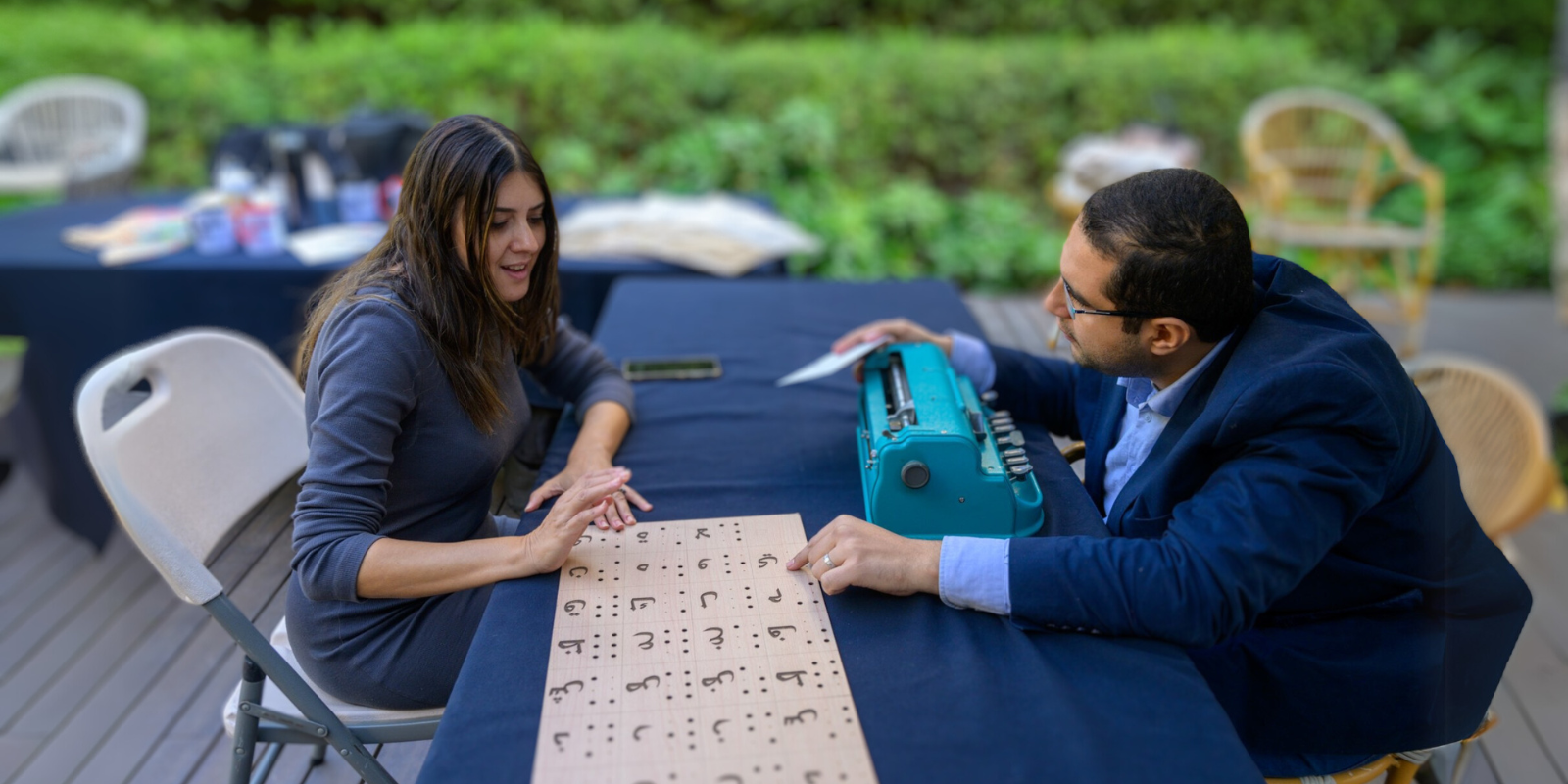
A man and a woman explore a wooden plank translating the Arabic alphabet into braille

Celebrating International Day of Persons with Disabilities

Celeste Abourjeili December 04, 2024
Civic Engagement

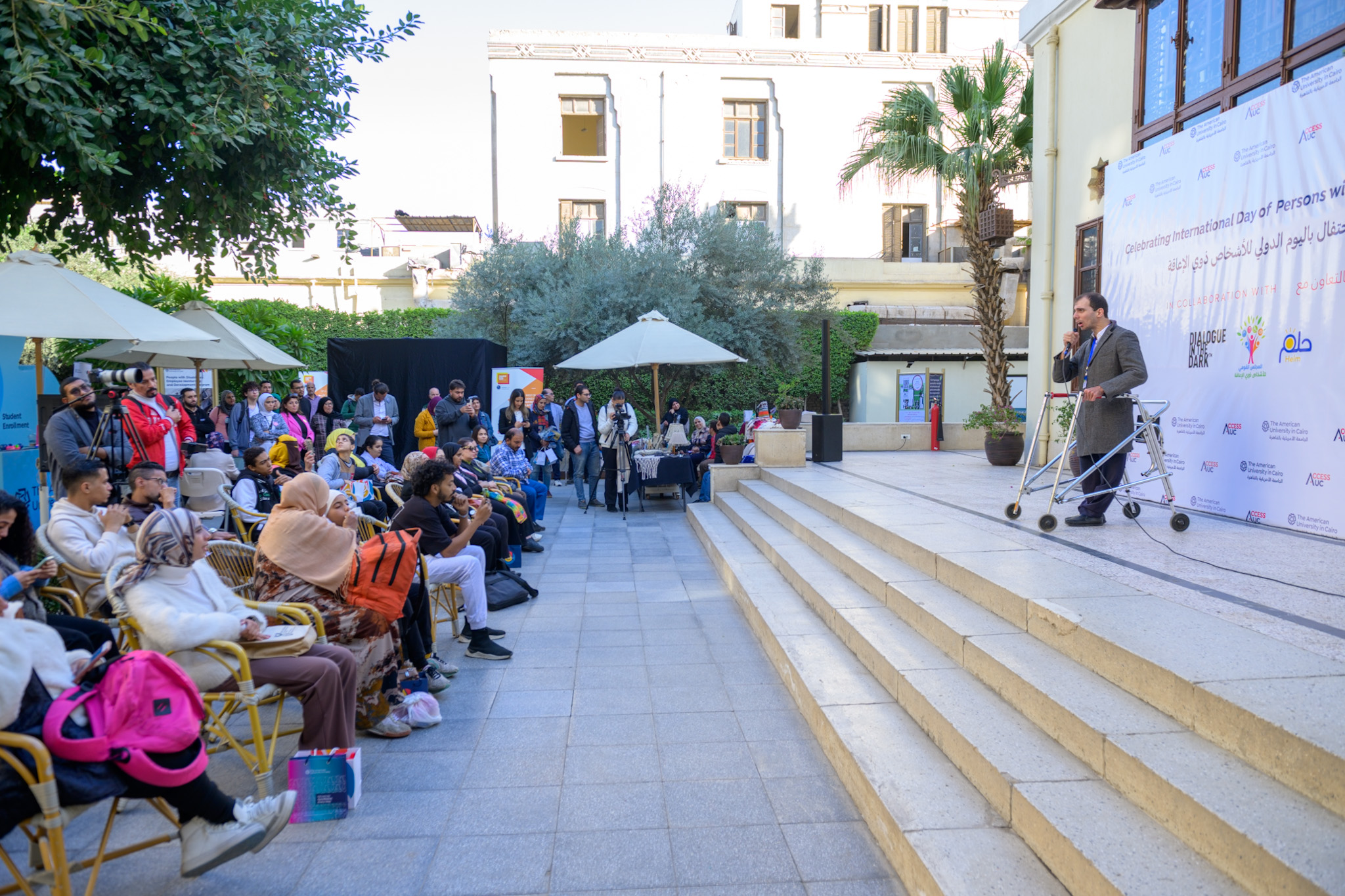
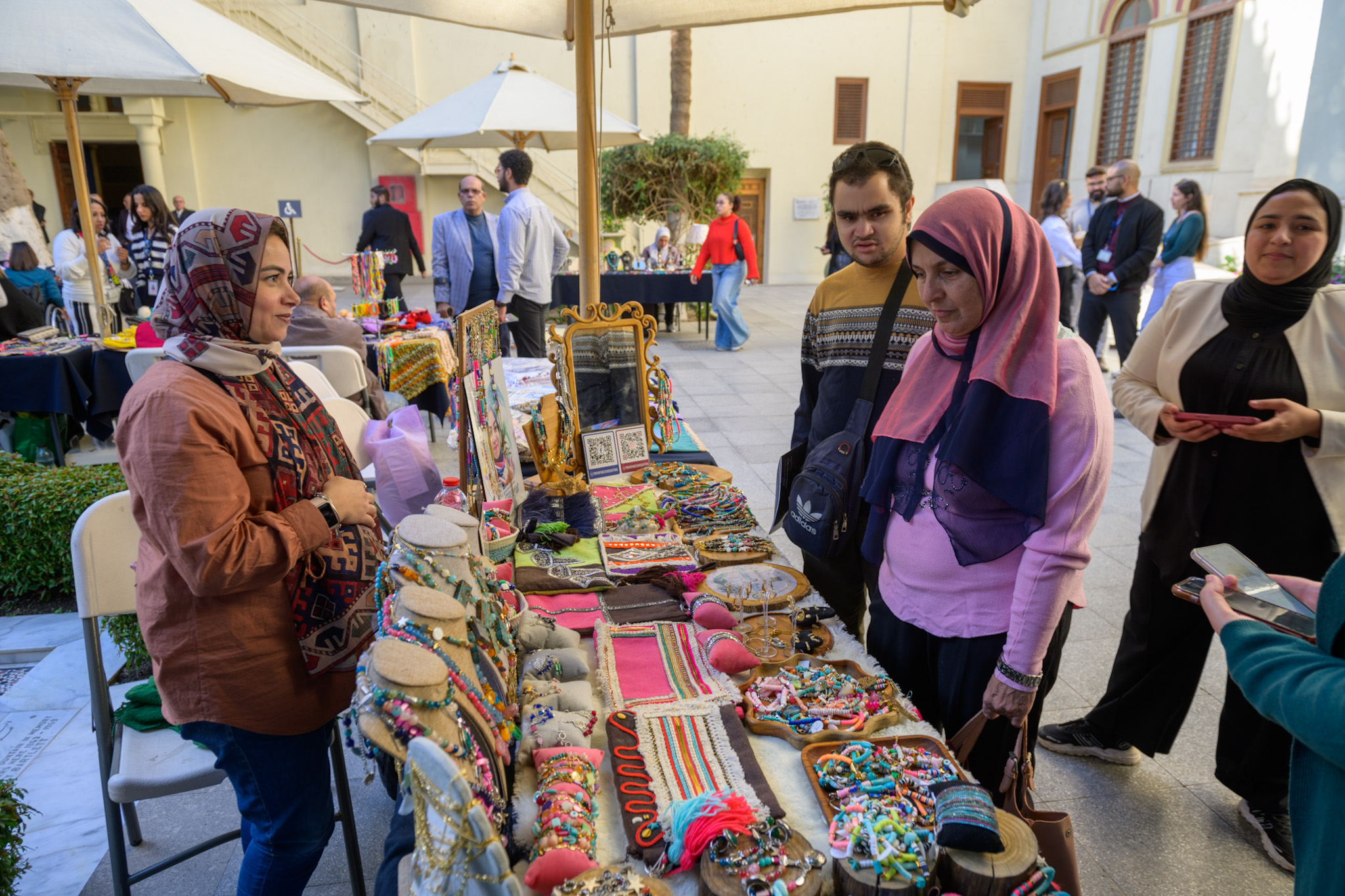
On December 3, AUC celebrated the International Day of Persons with Disabilities at its Tahrir Square campus through the AccessAUC initiative. The event included a panel discussion, hands-on activities and a bazaar featuring handicrafts made by people with disabilities.

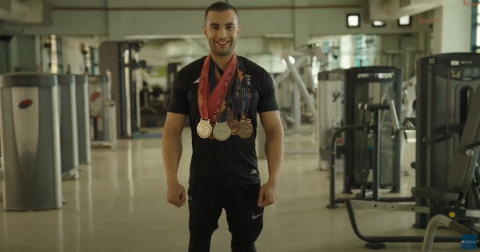
  • Employee Adel Elhout is wearing the medals that he won

    Inspiring Stories on International Day of Persons with Disabilities

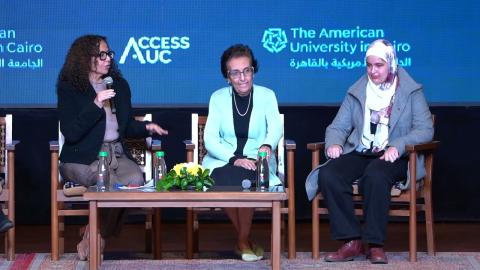
  • Three women sitting next to each other in separate chairs. One of them is talking into a microphone

    Panel Discussion: Universities as Catalysts for Inclusion and Access


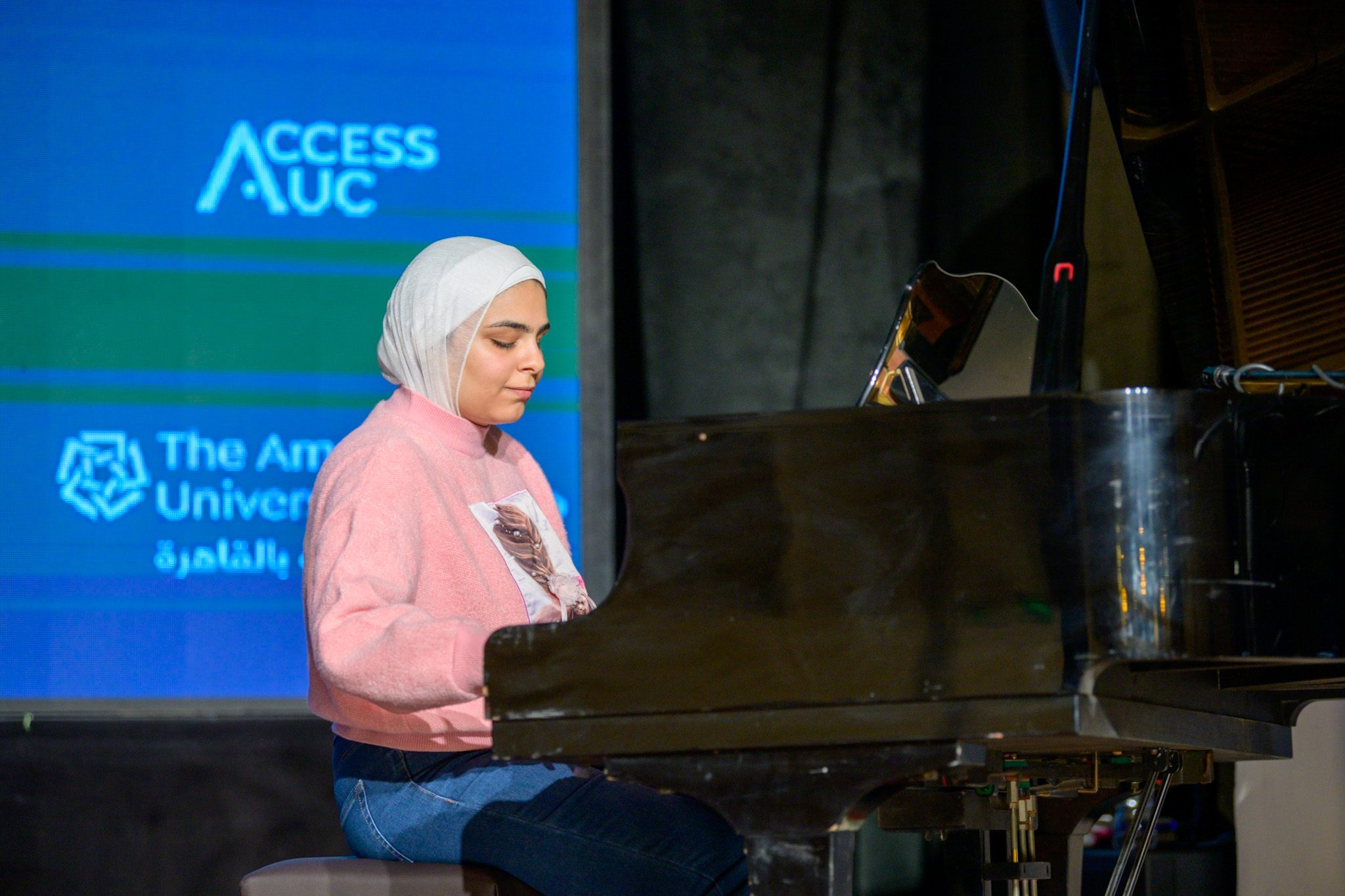
One of the day’s highlights was a panel discussion on “Universities as Catalysts for Inclusion and Access.” Panelists ranged from government officials and alumni heading nonprofits to AUC faculty and Excellence Scholars, and the event included a musical performance by Mariam Mohsen, a sophomore double majoring in political science and integrated marketing communication who was born with a visual impairment, adding an inspiring artistic component to the day’s program. The panelists discussed inclusion, barriers to accessibility in universities, policies, advocacy and more.

The panel commenced with AUC President Ahmad Dallal’s opening remarks, which defined the day as “a call to action to recognize, amplify and support the incredible potential of persons with disabilities.” The president spoke about the AccessAUC initiative, which represents AUC’s commitment and responsibility to create “spaces, practices and awareness to allow all members of the community to fully contribute.” Watch the full panel discussion

President Dallal believes that AUC is stronger because of its people with disabilities. “Persons with disabilities bring unique talents, perspectives and contributions that enrich our collective experience,” he said. “When we remove barriers to access and create environments where everyone can thrive, we unlock opportunities for all members of the community.”

Though he acknowledged that AUC still has work left to do, Dallal reflected on some of AUC’s wins in the fight for accessibility: The New Cairo campus was designed with accessibility in mind, and the specialized Student Accessibility Services unit works to support students with disabilities. Additionally, the newly launched People with Disabilities Employee Mentorship and Development Program provides job opportunities, upskilling and training, offering candidates the chance to gain professional experience across various functions within AUC and develop their technical and soft skills. The University will assist participants who complete the program in preparing resumes and will provide references to potential employers in Egypt.  

The day’s activities were planned with contributions by the organizations Dialogue in the Dark, Helm and the National Council for Persons with Disabilities. Dialogue in the Dark planned an immersive activity in which participants navigated through a completely dark environment with the help of guides with visual impairments, gaining a glimpse of life without sight. Other activities included the one-hand challenge, where participants had to adapt to conducting tasks with one hand, and sign language encoding, where they learned the basics of sign language. 

The celebration at AUC’s Tahrir Square campus not only highlighted the achievements and potential of persons with disabilities but also reinforced the University’s commitment to inclusion and accessibility, serving as an inspiring call to action for all institutions to prioritize equity. “At The American University in Cairo, we firmly believe that empowering persons with disabilities is not only the right thing to do; it is a pathway for stronger, more inclusive and more equitable societies,” affirmed Dallal.


QUICK FACTS ABOUT AUC 

  • AUC is the first university in Egypt to integrate classic and modern assistive systems, combining Braille with advanced assistive technologies. 
  • AUC offers Egypt’s only graduate diploma in inclusive education, reinforcing its commitment to empowering educators and fostering inclusive learning environments beyond AUC. 
  • The AUC New Cairo campus sets the standard for inclusivity as Egypt’s only university of its kind and a top institution in the MENA region, featuring wheelchair-friendly pathways, accessible residences, an inclusive sports complex, tactile pathways and adaptive technology corners. 
  • AUC offers dedicated scholarships for students with disabilities, including the Ahmed and Rania Ismail Endowed Scholarship and the Attijariwafa Bank Public School Scholarship for Students with Disabilities. 
  • AUC provides dedicated centers and units for students with disabilities. 
Related stories

administrators standing in front of new professional development center
January 27, 2026

AUC Expands Professional Development Programs to Administrative Capital

AUC has signed an exciting new agreement with the Administrative Capital for Urban Development (ACUD) to bring academic and professional opportunities to the New Capital through AUC’s School of Continuing Education (SCE). Under this agreement, SCE’s Professional Development Center will now be located in the Administrative Capital, enabling professionals to continue developing their skill sets.“The opening of AUC’s School of Continuing Education Professional Development Center at the New Capital marks a significant milestone in SCE’s commitment to lifelong learning and extended education,” said Mahmoud Allam, dean of the School of Continuing Education. “Through this center, we aim to support the continuous professional development of government employees and professionals, while extending AUC’s impact beyond campus and closer to the institutions shaping Egypt’s future.”The School of Continuing Education has many partnerships with outside institutions, including the Ain Shams Medical School, Al-Azhar University and the U.S. Embassy’s Regional Language Office. The agreement with the Administrative Capital for Urban Development will be the latest in a growing cadre of institutional partnerships that connect Egypt’s diverse educational opportunities to AUC. As the Administrative Capital continues to develop and become the heart of Egyptian government, AUC hopes to continue strengthening institutional ties with ACUD. The Administrative Capital, which became the seat of the Egyptian government in 2024, currently hosts 14 ministries and can house up to seven million people. The development of the capital city is part of the wider development initiative Egypt 2030. “We are pleased to sign this agreement with the American University in Cairo, which not only aligns with our strategic mandate to position the New Capital as a regional beacon for knowledge but also presents a vital integration of urban development and academic excellence,” stated Khaled Abbas, chairman and managing director of ACUD. “ACUD is committed to delivering state-of-the-art infrastructure that meets international standards, providing the necessary foundation for the AUC to drive human capital development.”
University News
A group of people sitting around a table signing an agreement with the Egyptian flag in the background
December 30, 2025

AUC Leads National Initiative to Transform Egypt's Electronics Sector

AUC has been selected to lead the “Invest with Confidence-De-risking Tech Startups Alliance, part of the Ministry of Higher Education and Scientific Research’s Alliance and Development initiative. Spearheaded by AUC’s Center for Entrepreneurship and Innovation at the Onsi Sawiris School of Business and the Center for Nanoelectronics and Devices at the School of Sciences and Engineering, the initiative aims to accelerate innovation and enhance Egypt’s competitiveness in the electronic design and manufacturing sector.Over the past decade, Egypt’s startup ecosystem has experienced remarkable growth, fueled by national strategies like Egypt Vision 2030, a young and dynamic population, and increasing venture capital investments. Despite this progress, deep-tech startups face significant challenges, including high capital requirements, limited access to specialized equipment, and shortages of skilled talent and expert support. The DTS Alliance addresses these gaps by bringing together key stakeholders to create an integrated ecosystem, positioning Egypt as a regional leader in electronics innovation.Yehea Ismail, director of AUC’s Center for Nanoelectronics and Devices, noted that the project does not just focus on software development but addresses Egypt’s potential in designing and manufacturing hardware technology — filling a critical need in the local technology landscape. “We have been working with regional stakeholders on this scope, and now it is time to go full scale in our beloved country Egypt and support our private sector to compete globally and attract foreign direct investment,” Ismail said.“[This initiative] is the perfect opportunity to bring in different stakeholders from our network toward such a promising and strategic national objective."The DTS Alliance brings together nine local partners across academia, the private sector, public entities, investors and enabling organizations. These include AUC; Zagazig University; Elaraby Group; EMASS startup; Micro, Small and Medium Enterprises Development Agency (MSMEDA), Flat6Labs, Den Venture Capital, Startup Factory and Meska AI. Hala Barakat '98, director of AUC’s Center for Entrepreneurship and Innovation, highlighted the significance of this collaborative network. “[This initiative] is the perfect opportunity to bring in different stakeholders from our network toward such a promising and strategic national objective,” she said. “We formulated internal and external partnerships to ignite innovation in Egypt’s entrepreneurial ecosystem and untap academia’s potential in research commercialization.” “We have been working with regional stakeholders on this scope, and now it is time to go full scale in our beloved country Egypt and support our private sector to compete globally and attract foreign direct investment."The alliance focuses on strengthening the electronics sector by localizing design and manufacturing to promote import substitution, supporting export growth and building capacity to meet industry demands. It encourages innovation through hackathons, develops industry-aligned curricula, advances artificial intelligence applications in electronics, and facilitates intellectual property creation and protection. Additionally, it integrates startups into new markets, promotes research spinoffs and attracts foreign direct investment, driving sustainable growth and competitiveness across the industry.Egypt’s Minister of Higher Education and Scientific Research Ayman Ashour stated that the Alliance and Development presidential initiative reflects the nation’s commitment to innovation through collaboration between higher education and industry. He added that the initiative seeks to harness research and entrepreneurial potential to build competitive economic sectors, demonstrating the power of cross-sector partnerships in promoting sustainable development.
Science and Tech
Students participating in the simulation with "stepping into the shoes of others" on the board
December 3, 2025

Stepping Into Others’ Shoes: AUC Students Run Accessibility Simulation

To honor the International Day of People with Disabilities, the Psychology of Inclusion and Exclusion in Egypt undergraduate class set up an accessibility simulation, bringing together students and faculty from across the AUC community to gain a new perspective on what life is like with a disability — stepping into the shoes of others. The event, hosted by the Center for Student Wellbeing and Student Accessibility Services, started with each attendee being assigned a disability. Some were assigned visual impairments and given eye masks. Some participants were designated audio impairments and wore noise cancelling headphones. Others were given various mobility restrictions, such as being paralyzed from the waist down or having limited mobility in their hands. Together, the participants had to work together to make a salad, a task that might seem simple but had many added challenges. Participants worked together to navigate cutting vegetables, reaching across a wide table and communicating through the challenges that come with audio and visual impairments.The simulation showed participants the ways people with disabilities have to go about their daily lives as well as how they can support each other. Participants had to rethink their typical teamwork processes to play to their strengths and accommodate gaps. Those with mobility impairments could help coordinate visually with those with audio impairments and auditorily to those with visual impairments. The experience showed how important accommodation, support, grace and understanding are to people with disabilities.“The event was a focused, high-impact simulation designed to foster empathy and build awareness among participants regarding the challenges faced by individuals living with various disabilities,” explained Alexandra Gazis, associate director of Student Accessibility Services at AUC and course instructor. “The primary goal is to provide attendees who do not have a disability with a short, experiential understanding of how simple, everyday tasks can become exclusionary, especially when various barriers are present.”The purpose of this simulation was to help raise awareness of the ways that disabilities impact daily life and the ways that the AUC community can think through necessary accommodations by being conscious of what it's like to live with disabilities.“The simulation was a great way to raise awareness of the realities of living day to day as a student with a disability,” shared Grainne Condron, one of the students in the class. “I see this collaboration between staff and students as making strides toward real change.”Additionally, AUC will be lighting the plaza and Bassily Auditorium in purple on December 3 to celebrate the International Day of People with Disabilities. AUC will be the first institution to light its buildings purple for this occasion in Egypt, marking once again its commitment to accessibility and visibility. 
Student Experience
Heba Kotb doing field research
December 3, 2025

AUC Psychology Professor Aids WHO Funded Study on Autism Care Training in Egypt

As researchers and psychologists work to improve the lives of those with autism around the world, the need for country-specific support networks and training has become clear. Heba Kotb ‘84, associate professor of practice in psychology, helped to develop an Egypt-specific autism training program in partnership with the World Health Organization and international universities. “It’s critical that we tailor autism care to specific cultural environments, which is exactly what this research developed," Kotb explained. “The importance of this program comes not only from the context-specific research, but also the ability to share it with families who need the support.”Autism care in Egypt has been heavily concentrated in major urban areas, with limited access to support for those outside of Cairo. This study — which was in partnership with AUC, the University of Maryland, McGill University’s Montreal Neurological Institute-Hospital, Egypt’s Ministry of Health and Population, Autism Speaks and WHO — sought to train families to care for the needs of youth with autism. The study sent out 16 Master Trainers to conduct five-day intensives in rural areas, with the intention of providing caregivers — mainly mothers — with the knowledge to support their children. Kotb worked with the international partners to design the training for the Egypt-specific program. “Egypt has a very different societal context around caregiving than, say, the United Kingdom,” Kotb affirmed. “It was essential that we consulted on this context so that Egyptian families could best access the support they needed.” Kotb also helped to assess the effectiveness of the program after it was concluded, interviewing eight mothers in Upper Egypt and 10 in Alexandria. She then provided thematic analysis on the data, which was published into a paper last August, concluding that programs like the country-specific master training do have a strong impact.“The interviews were really eye opening; I couldn't believe the impact of the program. Families don't get many services, especially for children with disabilities. In many cases, they are neglected,” Kotb said. Reflecting  on her experience within the study, Kotb said that parents shared with interviewers that their children couldn’t speak and would spend all day at home doing nothing until this program began training them how to better interact with their kids.. “The parents described it as a miracle,” Kotb said. “The children were suddenly speaking and playing, and became toilet-trained. They started to learn that they can actually do anything.”    Kotb has been specializing in researching children with disabilities for over 30 years. After getting her bachelor’s in psychology from AUC, she worked as an educator in a school for students with disabilities before eventually pursuing her PhD in education from Leeds University in the United Kingdom. Since then, she has been researching how to make schools accessible for all students. “I found working with children with disabilities to be incredibly rewarding. All my research has been in the area of disability studies, and it’s such satisfying work.”Ultimately, Kotb hopes that this study will serve as a pilot program that will lead to many other training programs like it. Now that the study is concluded, WHO and Egypt’s Ministry of Health will potentially work together to expand the training. Kotb is eager to continue helping. “I think the training program should be spread to all cities. Children with autism are everywhere. Many people don't realize that children with autism can be educated and trained, and can become productive members of society. We need to continue working to provide support.”
Civic Engagement
Share