Meet Saleem, an automated chatbot that promotes brain health and mental well-being over Facebook Messenger. Developed by Asmaa Saeed, a public health master’s student in AUC’s Institute of Global Health and Human Ecology, the Arabic-speaking bot seeks to teach Arab individuals ways to improve their brain health in a conversational manner, such as giving advice on maintaining healthy eating habits or referring individuals to mental health websites and resources.
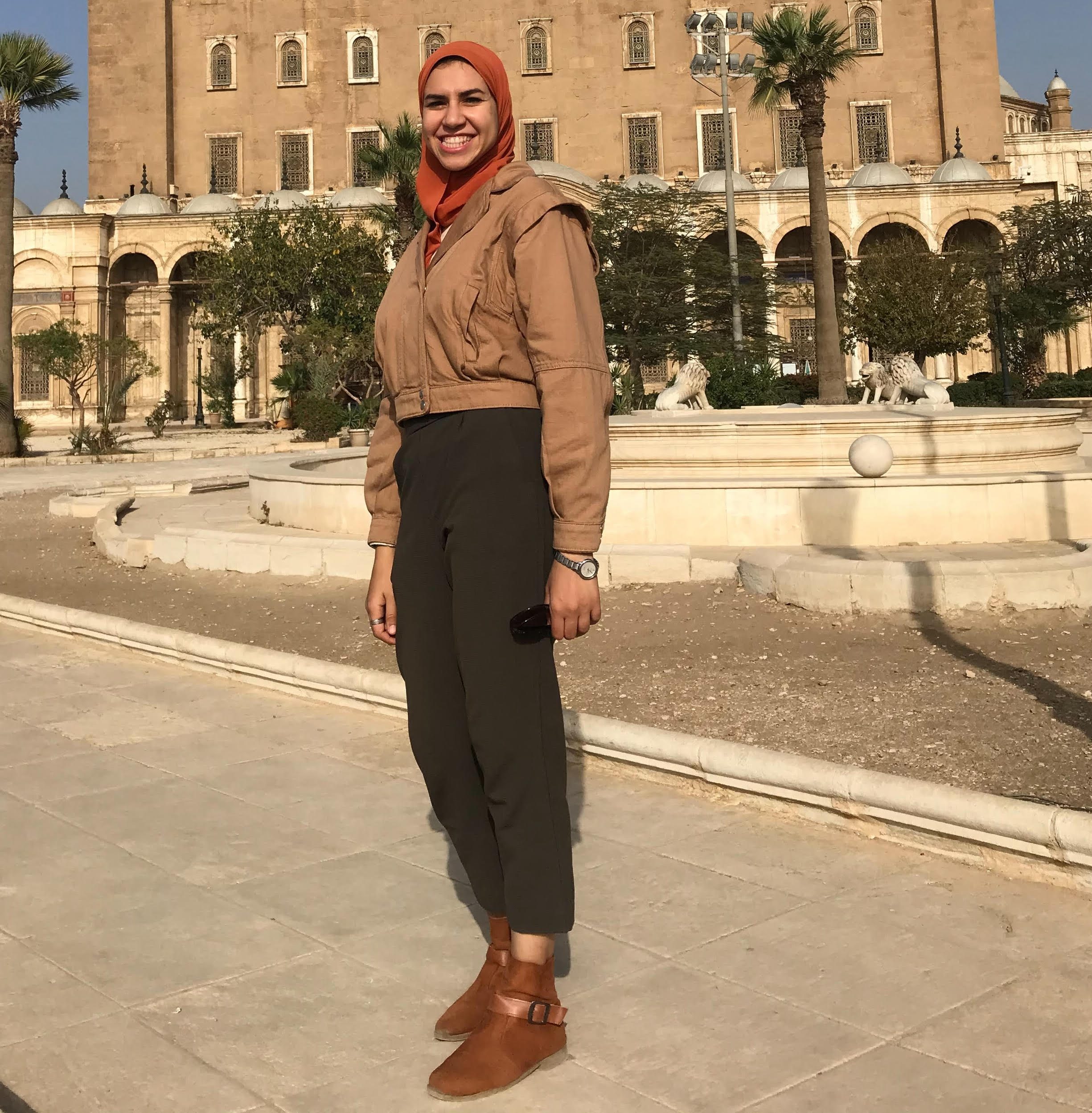
“The chatbot teaches individuals about various lifestyle factors associated with long-term brain health and mental function,” Saeed explains. “It gives the users tailored, personalized tips and recommendations for proactive steps and behaviors to support brain health.”
Saeed, who is also a research assistant at AUC, received an award from the International Brain Research Organization/Dana Brain Awareness fund for improving global engagement, outreach and brain awareness in an underrepresented region.
Saeed built Saleem because she is interested in the prevention of neurodegenerative diseases. “While science is doing its best to develop treatments that can prevent or delay these diseases, it’s not there yet,” she states. “Until it is, we need to adopt healthy lifestyles and behaviors that eliminate certain risk factors, such as hypertension, obesity, depression, physical inactivity and smoking.”
Saeed hopes that Saleem’s interactions with users will inform and influence them to make healthier choices. “The main challenge with this project is that there is limited awareness about brain health in this region and people here are not always willing to change their lifestyle,” she says.
To encourage better habits, Saeed made the chatbot as engaging as possible. “I named the chatbot Saleem, used human-like characteristics in the profile picture, developed empathic statements for the bot to use and enabled the program to utilize emojis, customized tips and referrals to helpful resources,” she says. “Developing Saleem was my favorite part of this project.”
Even Saleem’s name is an encouragement of brain health. “In Arabic, Saleem means healthy, and there is a famous Arabic wisdom that says, ‘The healthy brain resides in the healthy body,’” Saeed explains. “This perfectly matches with Saleem's goals literally and metaphorically.”
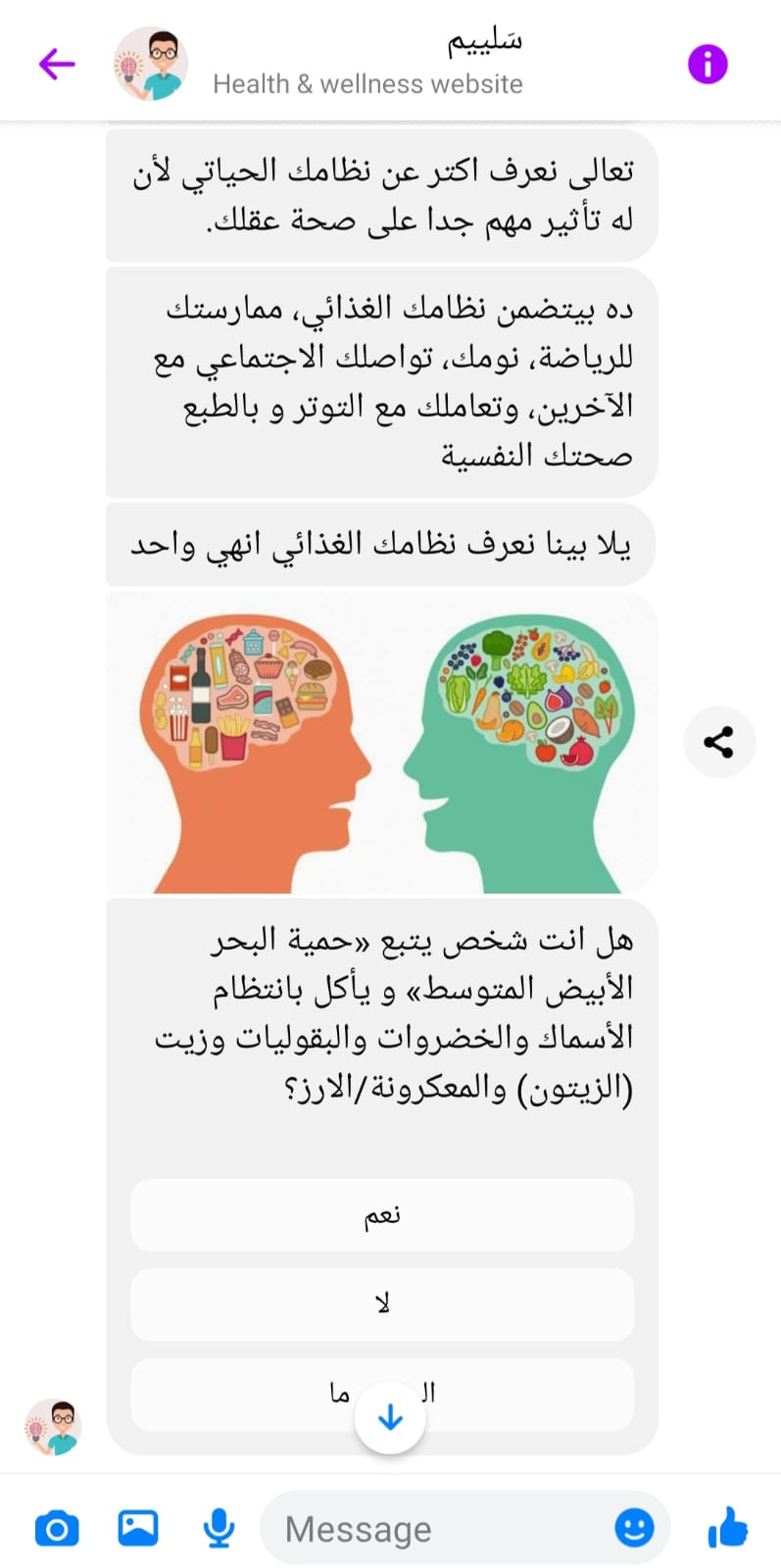 Saleem offers an array of solutions for its users. “For instance, we know that social connectedness impacts brain health,” Saeed states. “The chatbot gives users this advice: ‘Stay in touch! Rich social networks offer sources of support, ease stress, fight depression and stimulate the brain.’”
Saeed says her time at AUC was very important to the development of Saleem. “I created the idea of Saleem for my final project in my Global Health Communication Course. Professor Mohamed Salama helped me polish the idea and guided me throughout the steps of making the chatbot into its best version,” she recalls.
Saeed’s project was also a finalist in the Global Health Change Makers pitch competition, hosted by the American University of Beirut. The competition promotes projects that relate to global health and the UN Sustainable Development Goals. “Saleem contributes to the goal of maintaining healthy lives and promoting well-being as societies age,” she explains.
Saeed is optimistic about the future of her project and about public advocacy. “I believe that the impact of brain health advocacy and public awareness will one day improve health outcomes for both the individual and the community,” she concludes.