Home page
ع
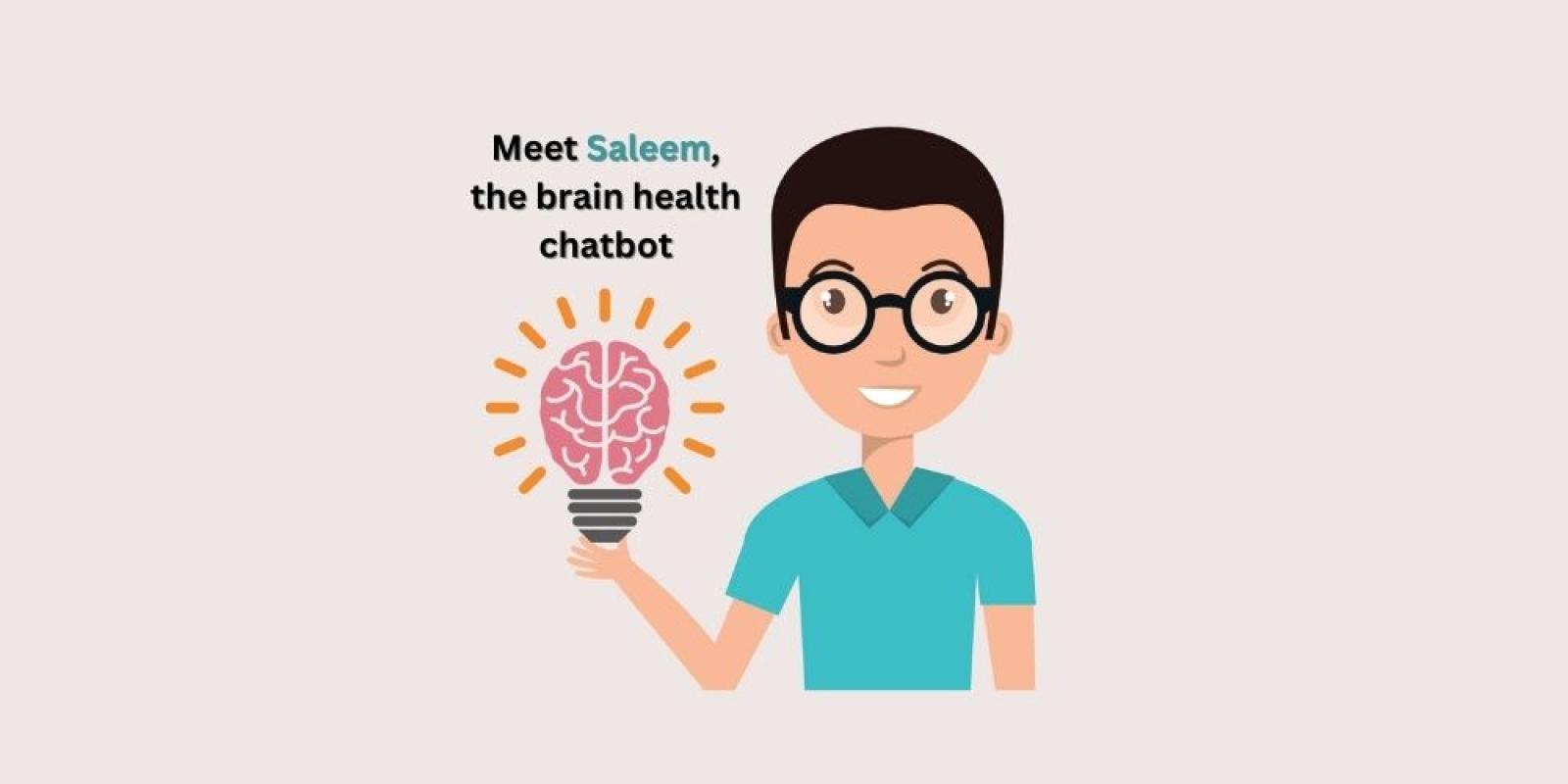
A photo of the chatbot's profile picture with the test "Meet Salem, the brain health chatbot"

AUC Master's Student Creates Arabic Chatbot to Promote Brain Health

Abigail Flynn February 06, 2023
Science and Tech

Meet Saleem, an automated chatbot that promotes brain health and mental well-being over Facebook Messenger. Developed by Asmaa Saeed, a public health master’s student in AUC’s Institute of Global Health and Human Ecology, the Arabic-speaking bot seeks to teach Arab individuals ways to improve their brain health in a conversational manner, such as giving advice on maintaining healthy eating habits or referring individuals to mental health websites and resources.
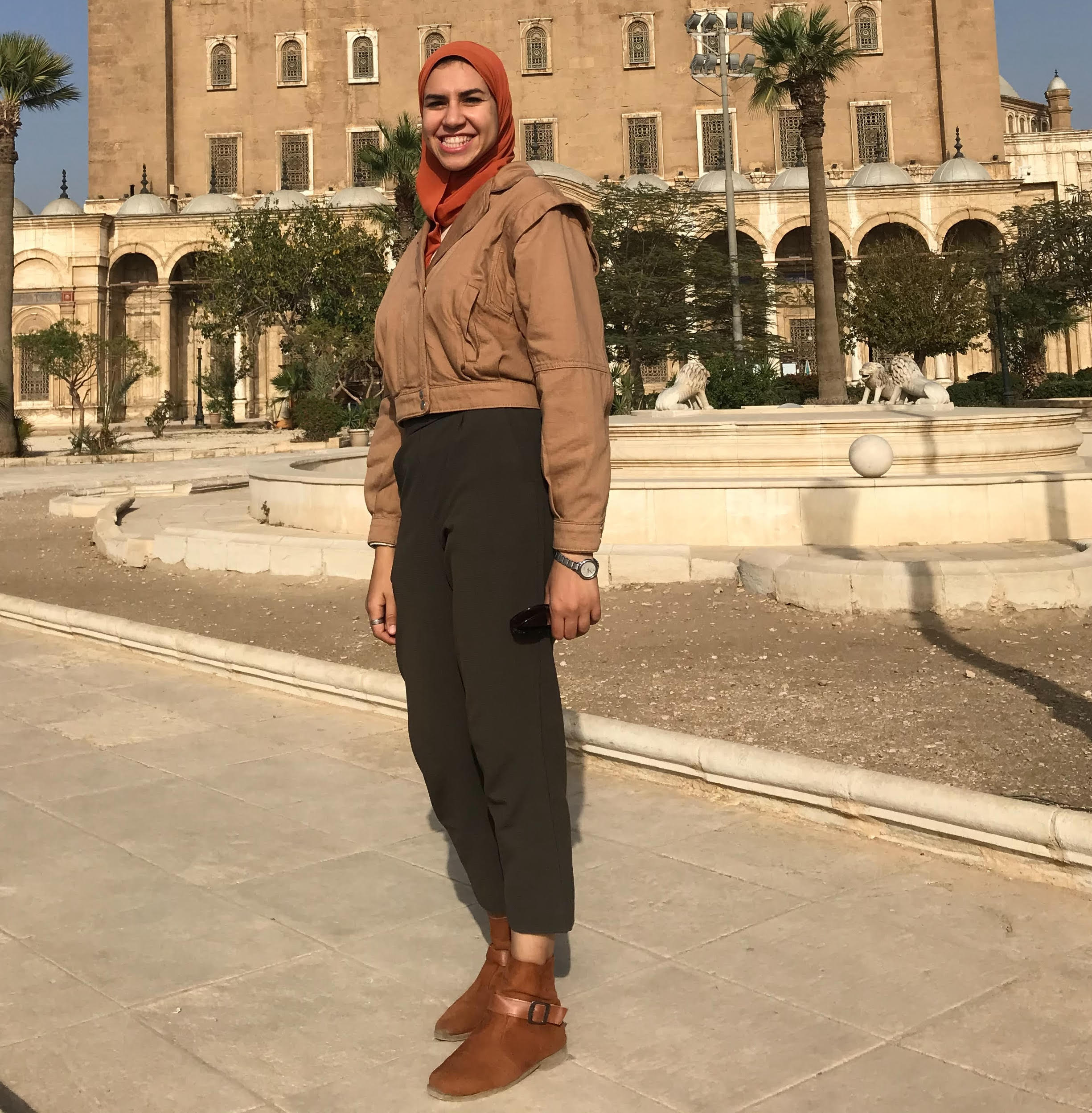
Photo of Asmaa Saeed standing and smiling

“The chatbot teaches individuals about various lifestyle factors associated with long-term brain health and mental function,” Saeed explains. “It gives the users tailored, personalized tips and recommendations for proactive steps and behaviors to support brain health.” 

Saeed, who is also a research assistant at AUC, received an award from the International Brain Research Organization/Dana Brain Awareness fund for improving global engagement, outreach and brain awareness in an underrepresented region.

Saeed built Saleem because she is interested in the prevention of neurodegenerative diseases. “While science is doing its best to develop treatments that can prevent or delay these diseases, it’s not there yet,” she states. “Until it is, we need to adopt healthy lifestyles and behaviors that eliminate certain risk factors, such as hypertension, obesity, depression, physical inactivity and smoking.”

Saeed hopes that Saleem’s interactions with users will inform and influence them to make healthier choices. “The main challenge with this project is that there is limited awareness about brain health in this region and people here are not always willing to change their lifestyle,” she says. 

To encourage better habits, Saeed made the chatbot as engaging as possible. “I named the chatbot Saleem, used human-like characteristics in the profile picture, developed empathic statements for the bot to use and enabled the program to utilize emojis, customized tips and referrals to helpful resources,” she says. “Developing Saleem was my favorite part of this project.”

Even Saleem’s name is an encouragement of brain health. “In Arabic, Saleem means healthy, and there is a famous Arabic wisdom that says, ‘The healthy brain resides in the healthy body,’” Saeed explains. “This perfectly matches with Saleem's goals literally and metaphorically.”
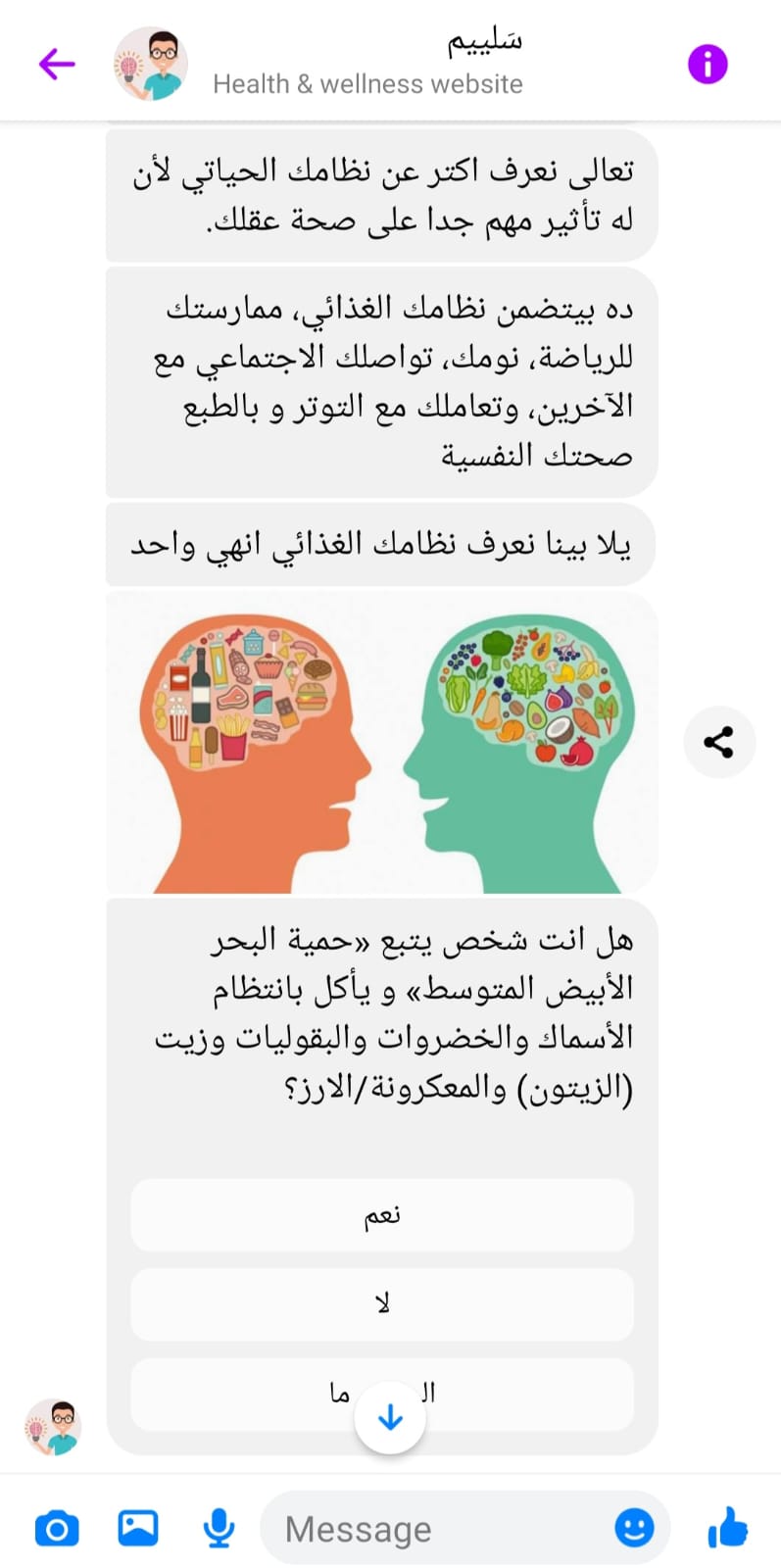
Screenshot of a Facebook Messenger chat where Saleem is giving advice on brain healthSaleem offers an array of solutions for its users. “For instance, we know that social connectedness impacts brain health,” Saeed states. “The chatbot gives users this advice: ‘Stay in touch! Rich social networks offer sources of support, ease stress, fight depression and stimulate the brain.’”

Saeed says her time at AUC was very important to the development of Saleem. “I created the idea of Saleem for my final project in my Global Health Communication Course. Professor Mohamed Salama helped me polish the idea and guided me throughout the steps of making the chatbot into its best version,” she recalls. 

Saeed’s project was also a finalist in the Global Health Change Makers pitch competition, hosted by the American University of Beirut. The competition promotes projects that relate to global health and the UN Sustainable Development Goals. “Saleem contributes to the goal of maintaining healthy lives and promoting well-being as societies age,” she explains. 

Saeed is optimistic about the future of her project and about public advocacy. “I believe that the impact of brain health advocacy and public awareness will one day improve health outcomes for both the individual and the community,” she concludes.
Related stories

Group photo of previous participants
September 10, 2025

AUC Launches African Brain Health Institute Fellowship Program

An exciting new frontier in brain studies is coming to AUC: The African Brain Health Institute Fellowship Program, a one-year initiative that will be jointly hosted at AUC and the Aga Khan University in Kenya. Training African researchers through a curriculum tailored to the continent's cultural and social realities, the program will include hands-on learning, mentorship and publication opportunities. Applications for the first cohort are expected to open this November, with a two-stage review process, and the program will officially start in September 2026. Why Brain Science in AfricaThe fellowship program is a collaboration with the Global Brain Health Institute (GBHI), with AUC leading operational management and overseeing execution. “The fellowships seek to produce a cohort of African leaders to assess the specific brain science needs of people in the continent,” said Mohamed Salama, professor at AUC’s Institute of Global Health and Human Ecology. “The science around brain health is a fascinating and emerging field.”Recent studies have shown that cross-disciplinary programs are essential to understanding the full scope of what the brain is capable of and how to keep it healthy. Cultural context has also been proven to have an impact on brain function. Unfortunately, Africa remains an understudied field in this regard, Salama explained. “The misconception that Africans are a ‘younger’ population has led to a gap in knowledge as to how aging African brains function. The African Brain Health Institute Fellowship Program seeks to close this gap by providing valuable insights on brain health within the African context,” said Salama.The fellowship program will apply a curriculum simliar to what GBHI has been using for the past decade but within an African framework. “The original GBHI model helped shape the way people think about brain health across the world. However, because it is global in nature, it does not focus on the challenges faced in Africa specifically. The risks and challenges within Africa are different, and the continent has not been studied before,” said Salama. “A modified program tailored to our needs will provide more support to African fellows since they will be trained on how to solve problems relevant to their region in a way that is less generalized.”“A modified program tailored to our needs will provide more support to African fellows since they will be trained on how to solve problems relevant to their region in a way that is less generalized.”Fellowship FocusThe African Brain Health Institute Fellowship Program will operate across two campuses: AUC and Aga Khan University in Nairobi, Kenya. “It’s one program with two connected universities,” said Salama. Each site will have its own cohort of 15 students who will do both site-specific and cross-site research and coursework. Salama has spent the past four years adapting GBHI courses to be offered at AUC. “We’ve been modifying the courses and changing them so they are more aligned to the Egyptian and African contexts,” said Salama. AUC’s existing brain science initiatives – such as the aging survey, the dementia registry and diversified research programs – make it the perfect host for the African Brain Health Institute. Upcoming cohort members will be able to take advantage of AUC’s relationship with local clinics, regional mentors and locally based GBHI senior fellows. Salama emphasized the diverse nature of the program. “There isn’t a ‘typical’ applicant,” he said. “Students may come from multiple backgrounds, such as neuroscience research, neurology, policy, arts, writing. It’s a multidisciplinary program.” Still, it’s expected that applicants have previous experience in the brain health field, even if not explicitly clinical or neuroscience-related, he added.A large aim of the fellowship is to cultivate the next generation of brain science leaders, taking junior professionals and amplifying them to mid-career status and beyond. To reach this goal, the program includes a flipped learning model with fellow-led sessions, giving participants the opportunity to guide their peers and expose gaps within their own communities. At the end of the program, each fellow will submit a proposal for a pilot project aimed at solving one part of brain health challenges. Fellows also will create five-year action plans with their mentors to pave the way toward continued work in the brain science field. “AUC has taken the lead in brain studies, and I believe GBHI and the African Brain Health Institute can be instrumental in supporting initiatives like this for a new generation of brain health leaders, fostering collaboration with a network around the world,” said GBHI Director Iracema Leroi. At a meeting of brain science experts hosted by AUC at the start of the Fall 2025 semester, there was palpable excitement for a brain health program that takes the global GBHI model and narrows it to best serve aging Africans. “It’s Africa for Africans, but also Africa for the rest of the world, and vice versa,” said Leroi. “Our goal is to change the world, to create a sustainable network of brain health leaders across the world, to come up with solutions to common problems for humanity around aging brain health.” “Our goal is to change the world, to create a sustainable network of brain health leaders across the world, to come up with solutions to common problems for humanity around aging brain health.” Expressing his vision for the future of the African Brain Health Institute, Salama noted, “I hope that next year we will have a completely culturally adapted program that is aligned and connected to GBHI but has an African taste.”
Science and Tech
September 12, 2018

AUC Introduces New Graduate Programs in Global Public Health, Education

With new PhD specializations and master's in the fields of global public health and education, AUC's graduate programs continue to grow. Global Public HealthAUC recently added to its academic portfolio a Master of Global Public Health (MPH), with concentrations in global public health policy and management, environmental health and precision health, as well as a PhD in Applied Sciences with a specialization in global public health. This is in addition to its pre-existing interdisciplinary PhD specializations in biotechnology, chemistry, computer science and nanotechnology. The MPH and the PhD in applied sciences are both under the new Institute of Global Health and Human Ecology, an interdisciplinary initiative launched by the School of Sciences and Engineering (SSE), but designed to include stakeholders across AUC. The School of Global Affairs and Public Policy is an early partner in this endeavor. Hassan El-Fawal, dean of the School of Sciences and Engineering, envisions the SSE programs giving students exposure to a range of fields, from the sciences, engineering, social and behavioral sciences to policy and communications -- empowering graduates with the skills they need to create sustainable solutions."You need to have that dialogue across disciplines, to go out from the laboratory and into the community," El-Fawal affirmed.Education The Graduate School of Education is directing a Master of Education (MEd) in teaching and learning and co-directing a graduate diploma in inclusive education. These new programs embody AUC's tradition of interdisciplinary collaboration, offering students a blend of technical and holistic instruction.The Master of Education, only offered in an online or blended format, includes topics such as the fundamentals of curriculum design, educational psychology and assessment of student learning.The graduate diploma in inclusive education is a joint program between the Department of International and Comparative Education and the Department of Psychology. This interdisciplinary program focuses on how schools and classrooms are designed to be inclusive to students of different abilities and backgrounds.Heba El-Deghaidy, chair of the Department of the International and Comparative Education at the Graduate School of Education, highlighted how taking an interdisciplinary approach to inclusive education will enhance the program. "This program is unique because it is interdisciplinary, and that will give students a chance to approach their studies from a variety of perspectives." These new graduate programs will push students one step further, encouraging them to engage with other disciplines at AUC and approach their studies in new ways.
Share
