Building Community Resilience to Mitigate Floods
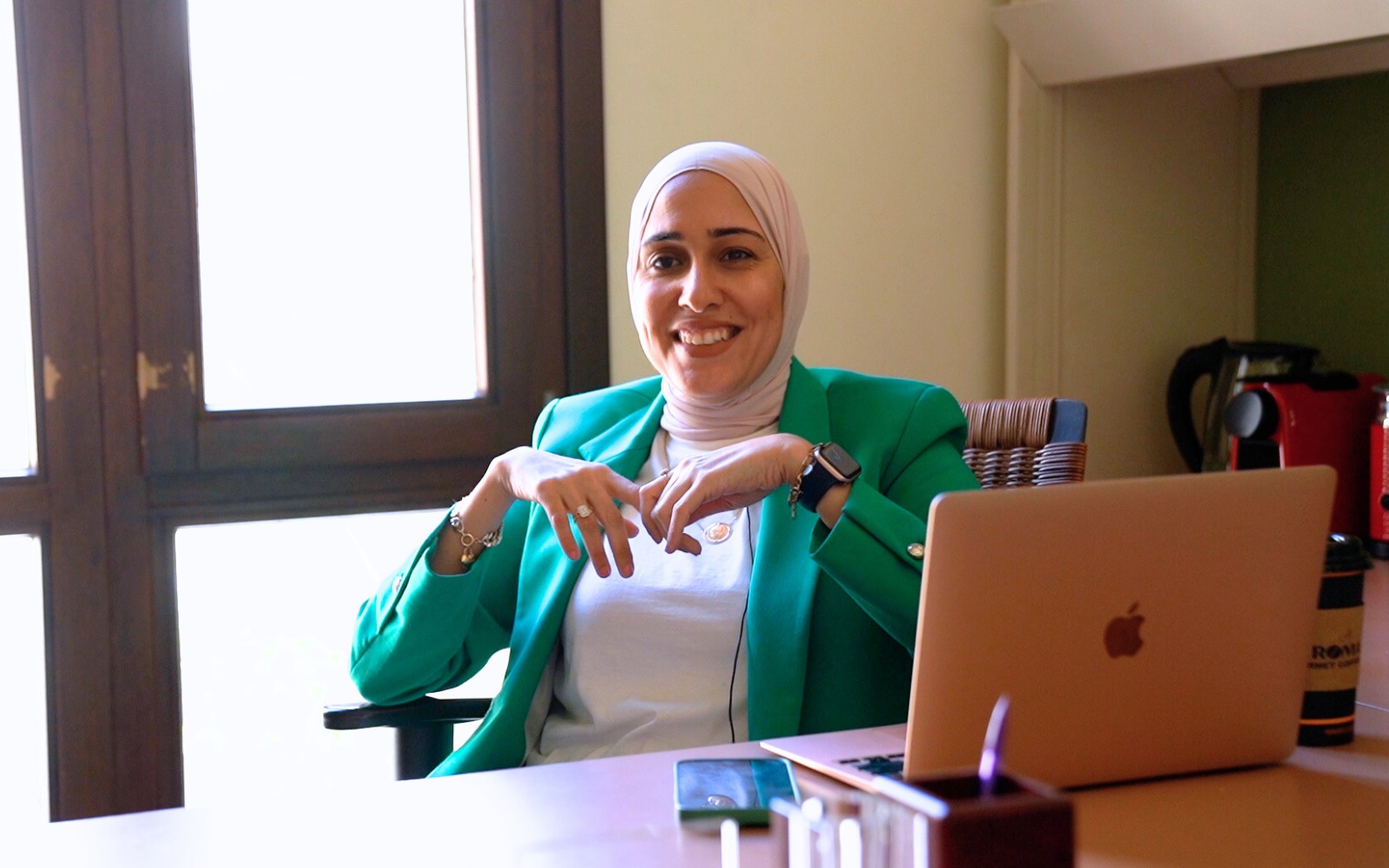
The only AUC faculty member specialized in community resilience, May Haggag ’11, ’16, assistant professor in AUC’s Department of Construction Engineering, uses data science and machine learning to develop effective flood risk-management strategies specific to Egypt's unique climate and geography.
May Haggag
"My work is all about communities, not just buildings"
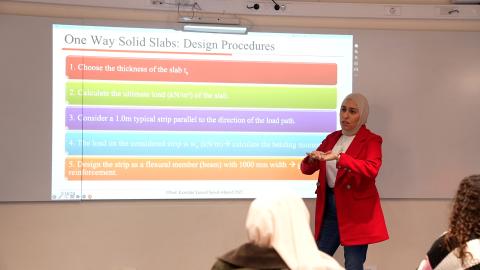
“I want to reshape Egypt's approach to mitigating natural hazards to ensure the safety and resilience of our communities, particularly with climate change taking its toll and Upper Egypt’s susceptibility to floods,” said Haggag. "People have to be ready; Mother Nature is in charge. Shifting weather patterns can trigger natural disasters, and we have to be able to adapt.”
Natural hazards and natural disasters are actually different, explained Haggag: “A natural hazard is something that can cause risk for people or communities. For instance, if you have a thunderstorm happening in the middle of nowhere, it will not affect people. It's just a hazard. But when the same thunderstorm happens in a city, it can affect people, buildings and infrastructure. This is when it becomes a natural disaster,” said Haggag.
The number of climate-induced disasters has tripled in the past four decades and is expected to double in the next 13 years, according to the Centre for Research on the Epidemiology of Disasters. The impacts are also severe, with approximately 1 million deaths attributed to climate-induced disasters and around 250,000 deaths expected to occur in the next 10 years, as per the Consumer News and Business Channel. Furthermore, the intensity of these disasters, along with life and property losses, is rapidly increasing. In the last two decades alone, climate-induced disasters have resulted in global damages of approximately $1.7 trillion, as reported by the Asian Development Bank.
“This highlights the critical need for proactive measures in disaster risk reduction and climate resilience,” Haggag states.
"People have to be ready; Mother Nature is in charge. Shifting weather patterns can trigger natural disasters, and we have to be able to adapt.”
Resilience, according to Haggag, refers to the ability of a system to bounce back to its original operations after a disaster hits. “This is evident in any power system, for instance, where redundancy is created by having backup transmission lines to transfer the load if one line fails –– preventing the collapse of the entire system.”
Community resilience is similar but focuses on people. “It’s about a community’s capacity to rebound from a disaster and recover in a sustainable and effective way in the presence of any challenges,” said Haggag, adding, “I am a construction engineer, but my work is all about communities, not just buildings. While pursuing my PhD at McMaster University, I decided to start developing models that could predict what would happen to our communities if a disaster hits.”
So how can we make our community resilient? How can we enable it to absorb shocks and quickly get back to its normal operations?
“The answer lies in maximizing the robustness, resilience and agility of our community by effectively managing the redundancy and resourcefulness of our people alongside our critical infrastructure systems,” said Haggag. “This was the base of my work. I was concentrating on climate-induced disasters because this is what we cannot foresee. Communities need to be prepared, and it’s important to raise awareness of proactive measures to mitigate and respond to disasters among policymakers, industry professionals, the general public and, of course, our students.”