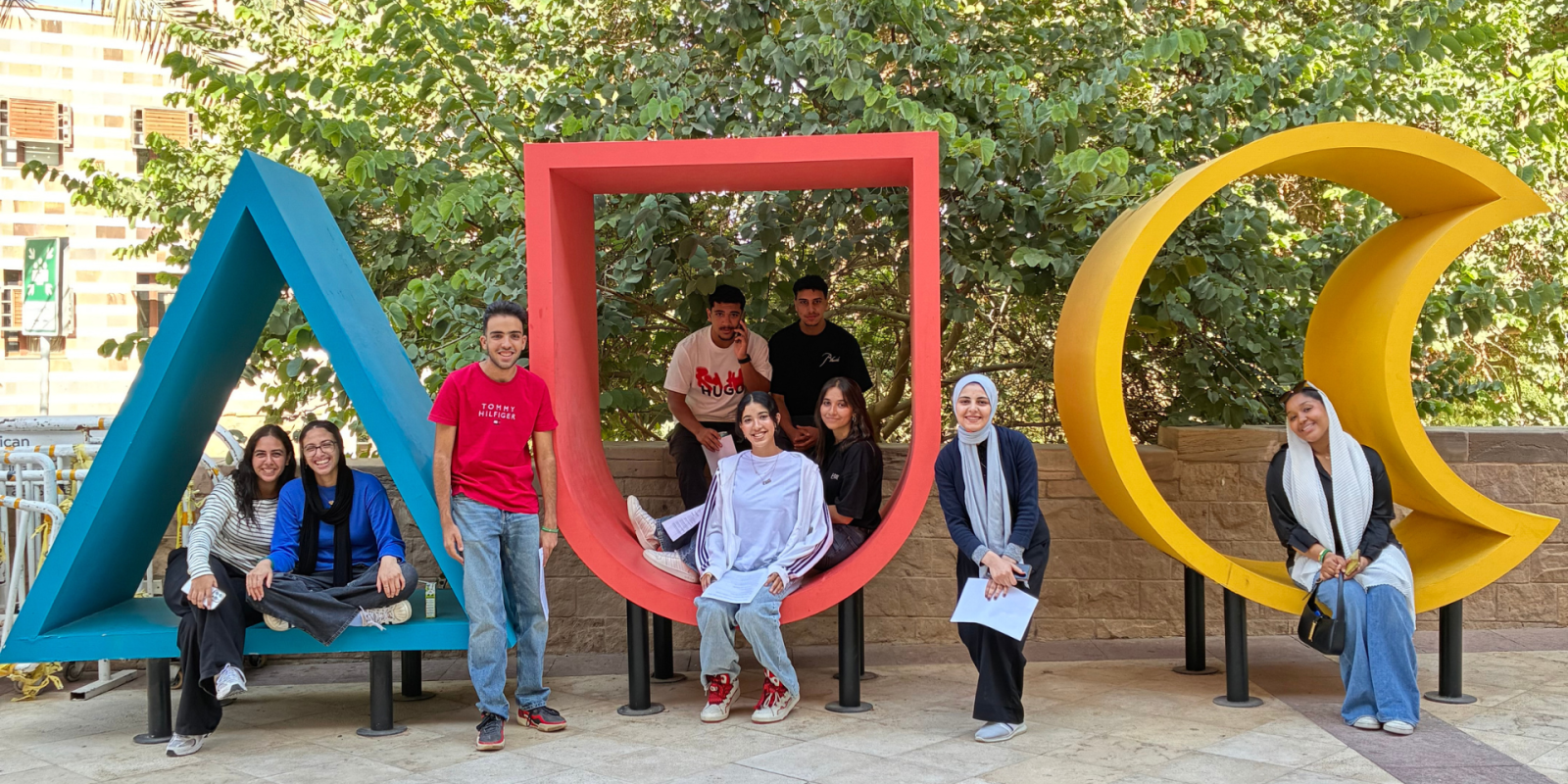
Reviving Egyptian Heritage at AUC
Students created new ways to share Egyptian heritage with their Gen-Z peers.
Reviving Egyptian Heritage at AUC
For decades, the pioneering Reda Troupe took Egyptian folk dances to the world stage, but when computer science freshman Marc Antony Gorgy questioned his peers about the famous dance group, most did not know who they were.
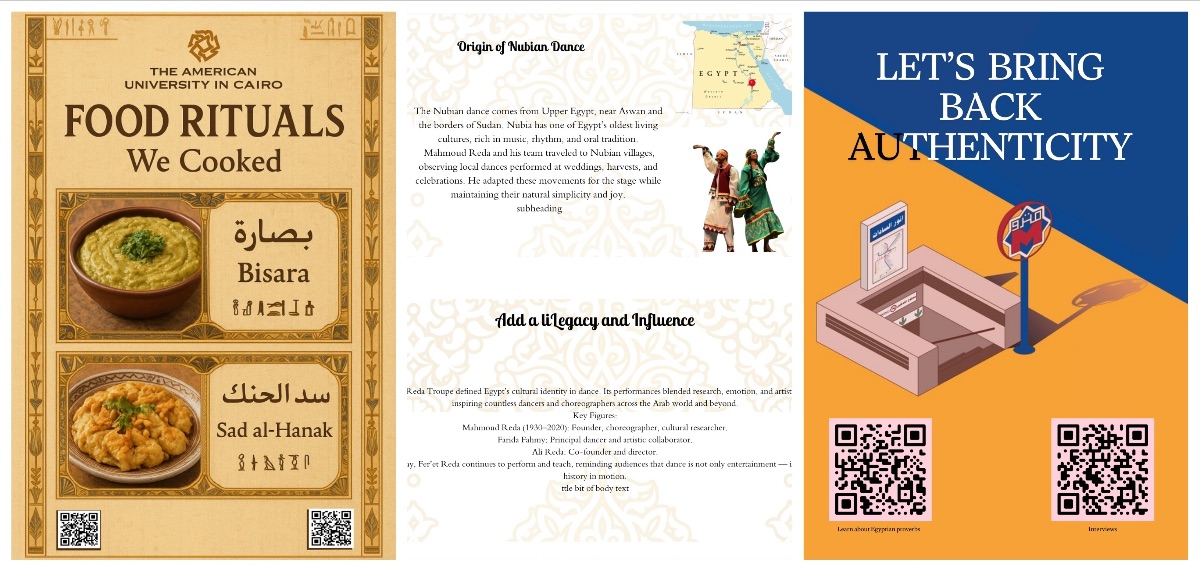
These interviews were part of a project for the freshman-level Academic English for the Liberal Arts, taught by instructor Hala Said, where students explored aspects of Egyptian heritage that Gen Z might not be fully aware of.
“The concept behind this project was that rather than exploring different cultures — let’s explore ours; let’s revive the heritage."
Said’s inspiration for the project came from interactions in class, where she would mention a common proverb, only to find that some students didn’t know the reference.
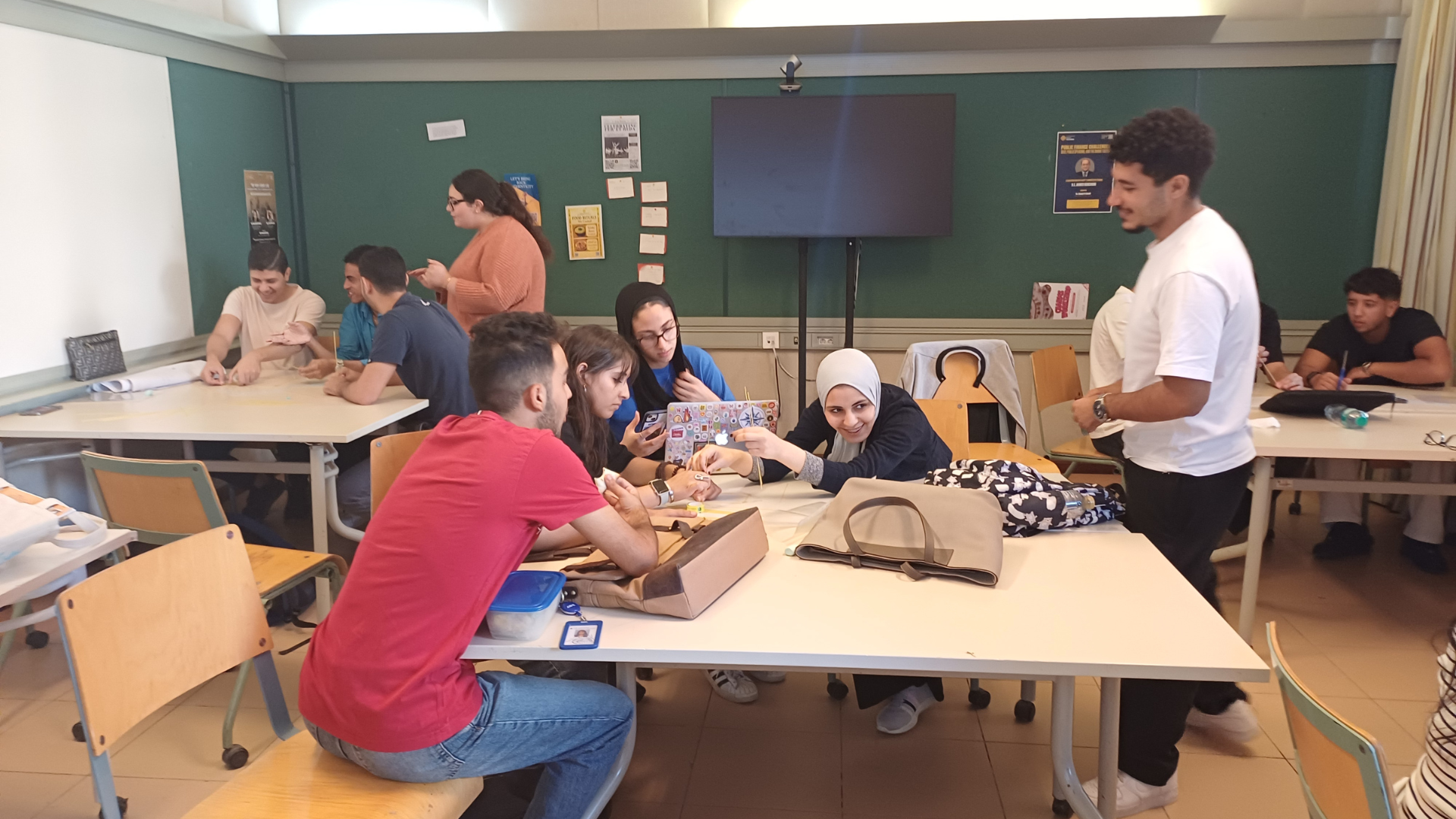
The generational divide reminded her of the popular phrase, “Are you from Egypt or are you from Masr,” and spurred Said to integrate cultural learning into the course’s skill-based curriculum. “Since we have the theme of cultural anthropology, the concept behind this project was that rather than exploring different cultures — let’s explore ours; let’s revive the heritage,” Said said.
Students interviewed their peers on campus about an aspect of Egyptian culture, then created content to share culture with a wider audience. “It pushed them to get out of the classroom,” Said explained, “It was also interesting for them to interact with people and feel like they’re teaching them something, but also learn about different things.”
Intergenerational Learning
Gorgy’s group found that while most of the students they interviewed did not know about the Reda Troupe, people outside the University with close intergenerational relationships knew of the dance troupe. His group developed an informative website detailing Alexandrian and Nubian folk dances to bridge this generational gap in knowledge.
"Reda actually went to all of Egypt's regions, learning their dances and integrating them in the theaters"
In their research, they discovered cultural stories ingrained into Reda’s dances, like how men in Alexandrian dances often held their hands in a thumbs-up. As Gorgy says, “This isn’t actually a thumbs up. It’s to represent that they’re holding a knife because their main job in Alexandria was fishing.”
The group also interviewed Mohammed Foromary, choreographer of the AUC Egyptian Folklore Troupe and technical supervisor of the Reda Troupe to learn more.
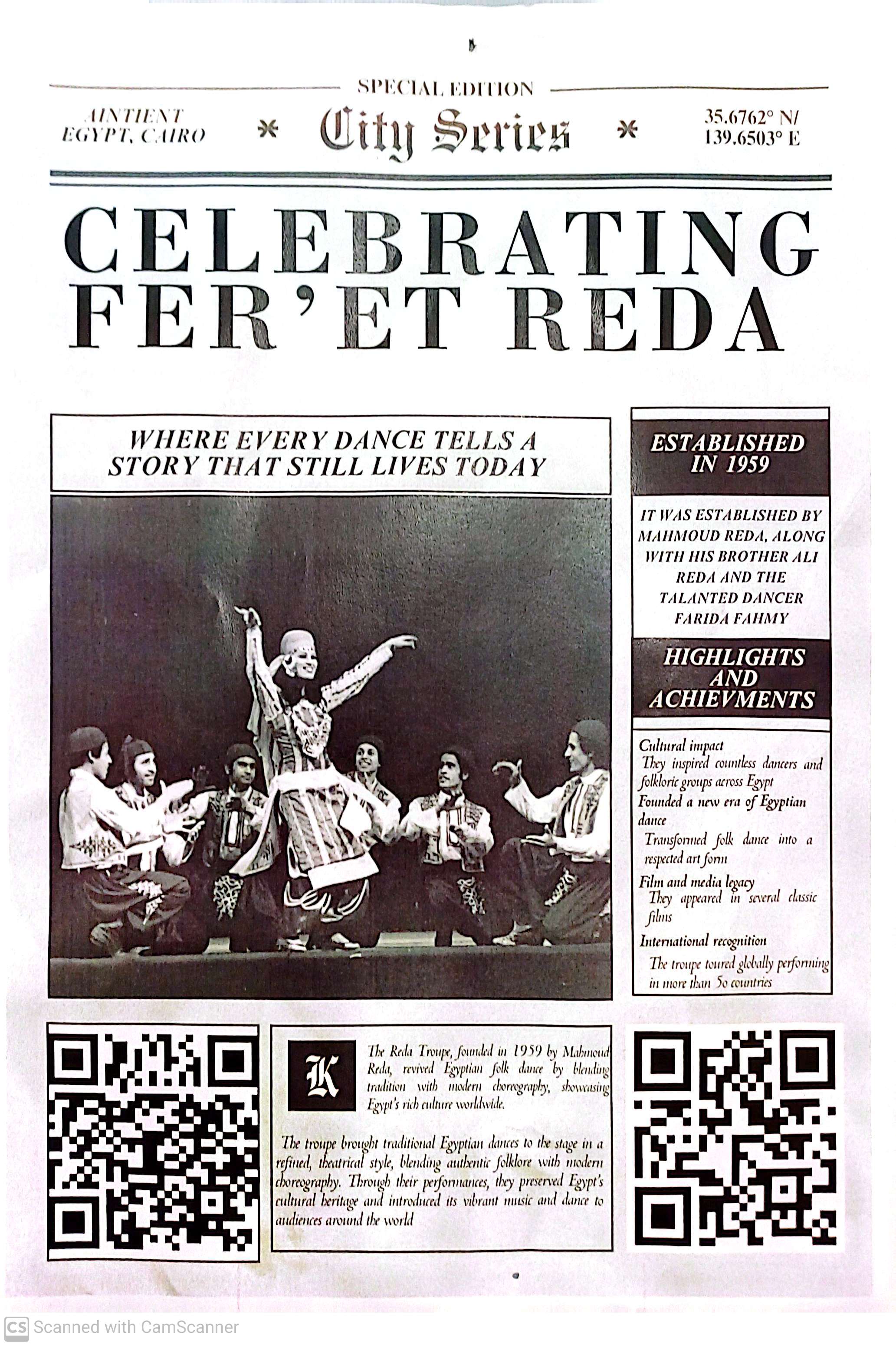
Gorgy says the project has taught him how the Reda Troupe brought the many cultures of Egypt closer together. “Reda actually went to all of Egypt's regions, learning their dances and integrating them in the theaters,” Gorgy says.
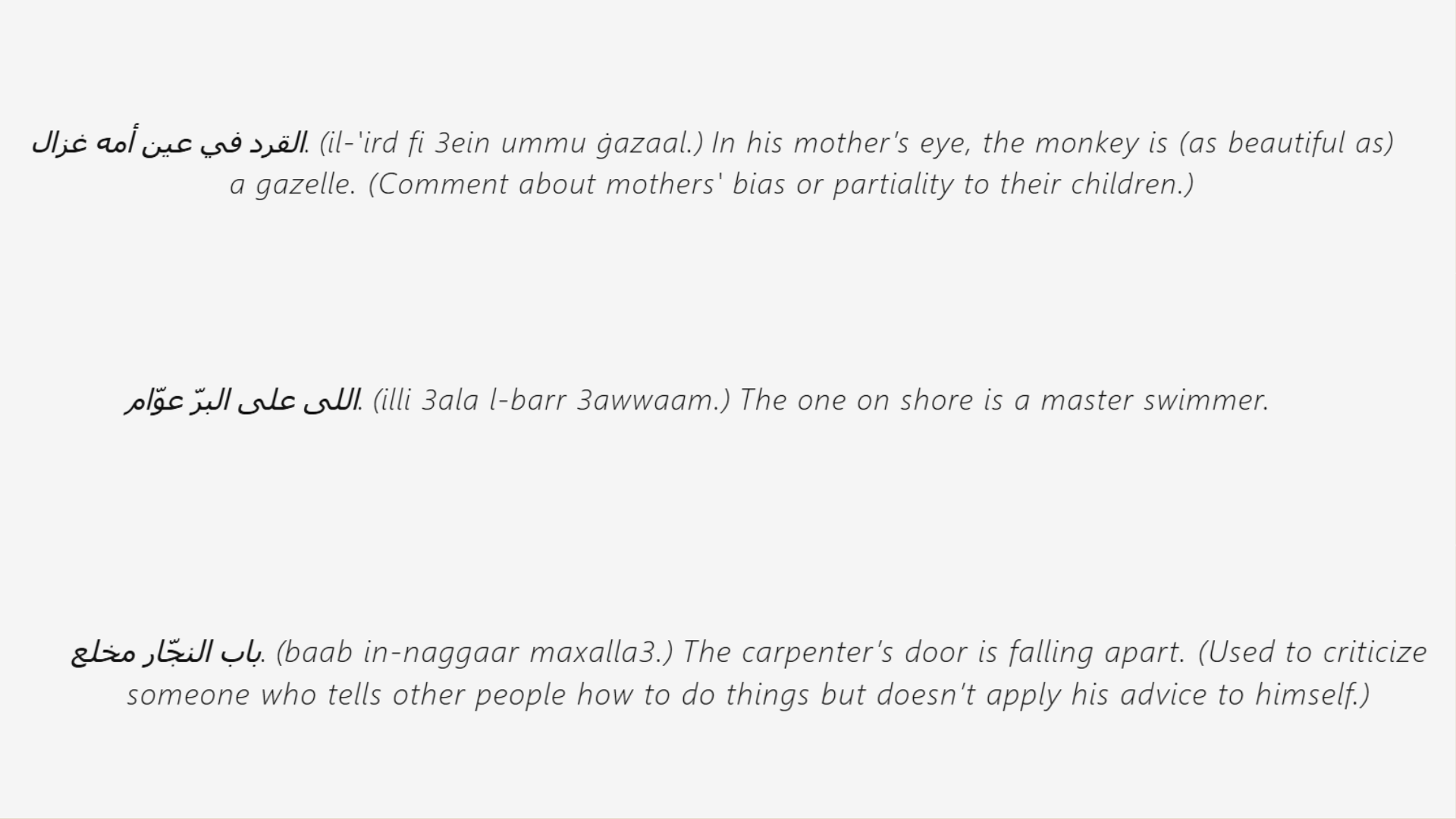
AUC business freshman Nourjahan Bahram and her group asked their peers about whether they knew famous Egyptian proverbs, creating a video and website that provides a proverb of the day, to share the different meanings of Egyptian proverbs with Gen Z.
“We focused on Gen Z because we know that the older generations, like our parents and grandparents, are familiar with these proverbs, but Gen Z only hears them. They don't know the meaning,” Bahram says.
The course is structured to develop a student’s critical academic skills through the exploration of six different themes: education, cultural anthropology, gender studies, business, philosophy and politics. Said views the project as an opportunity for students to apply their academic skills in their everyday lives and future studies at AUC.
“I always try to find realistic life experiences that will get them engaged and use language for a real purpose,” Hala says. “I want them to be able to write content that would reach a wider audience.”
Gorgy looks forward to incorporating his new knowledge into his steps and dances with the AUC Folklore Troupe, of which he is a member.
“From my point of view, it encouraged me to continue to try and revive this heritage by performing even better at the Folkore Troupe at AUC.”