From March 8 to Every Day: Advancing Gender Equality Worldwide
Take a look into the history behind International Women's Day, and why it's important to celebrate today.
March 8 marks International Women’s Day, celebrating women’s achievements and highlighting the ways we can work together to improve the quality of life for women and girls worldwide. Helen Rizzo, associate professor of sociology in the Department of Sociology, Egyptology and Anthropology and the director of the Cynthia Nelson Institute for Gender and Women’s Studies, sat down with News@AUC to discuss the history of this holiday and the impact it has on feminism worldwide.
“The history of International Women’s Day is quite interesting, as it’s always been tied to women’s labor movements,” Rizzo explained.
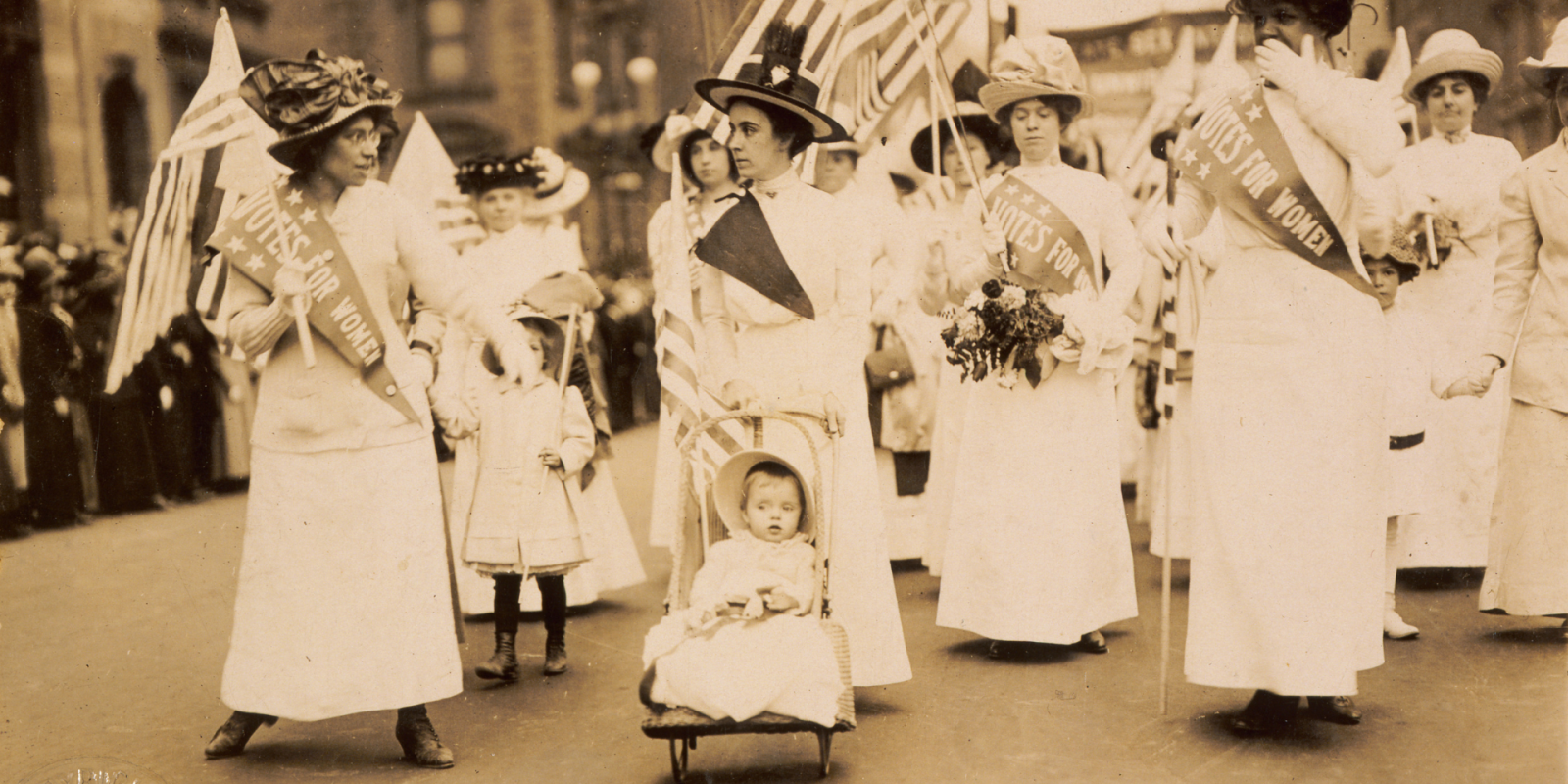
The first International Women’s Day took place in 1909, hosted by the Socialist Party in the United States, celebrating women’s participation in the workforce. As an arm of first-wave feminism, these early women’s days were centered around ending gender discrimination in employment as well as women’s suffrage. The day was a way to highlight the issues facing women and celebrate the achievements that had been made. By 1914, March 8, which so happened to be the Sunday that year, spread across Europe as a day for women to raise their voices and be heard.
As time passed, International Women’s Day continued to evolve. “In the 1960s and 1970s, second-wave feminism caused a revival in celebrating March 8,” Rizzo continued. “The Women's History Center, which was an archive of the women's movement in Berkeley, went even further and established March as Women's History Month in the United States. Then, the United Nations began celebrating International Women's Day in 1975 to commemorate this day for women's rights and international peace. That’s when it truly became a global phenomenon.”
Having a globally focused women’s day allows for feminist scholars to engage with the transnational ways women’s issues affect each other. For gender practitioners, offering support across borders is incredibly important for gender parity worldwide. There are many ways to celebrate International Women’s Day, but a major part is analyzing how to improve the status of women globally. The United Nations declared the theme for the 2026 International Women’s Day to be ‘Rights. Justice. Action. For ALL Women and Girls,’ emphasizing the importance of a global perspective.
“The UN lists the areas where women are still unequal, which includes unemployment, the wage gap as well as violence in the workplace, the home and public spaces,” Rizzo explained. “There are still all kinds of issues where we need to make progress. The UN has a statistic that it will take over 200 years to close legal protection gaps. We’re facing the same issues we faced 100 years ago, which is why this day is still important.”
"We’re facing the same issues we faced 100 years ago, which is why this day is still important.”
Highlighting the areas she believes the international community must continue to focus on, Rizzo noted, “There are many critical issues that disproportionately affect women. Gender-based violence can be devastating for many women and girls. Armed conflict and wars, combined with political violence, disproportionately harm women.” .
With education, we’re still not there yet, Rizzo explained. “There has been a lot of improvement in women’s education. However, there are still areas, even in this region, where women face high barriers to education. We’re also seeing issues where women receive an education, but that doesn’t translate into employment or equal wages.”
Wage inequality is prevalent across the world and still heavily impacts Egypt, Rizzo said, adding that family law is still a topic in the region that needs reform in order to reach gender equality. “Without equal rights within marriages and family relations, women are more restricted and have fewer access to protections,” she said.
While these issues might feel overwhelming, Rizzo emphasized the power we as individuals have to make a difference. “Spreading information and performing research as a University is a critical step in helping women and girls,” she affirmed. “Having a public reminder to everyone that we still need to work on issues of inequality and discrimination is essential. It’s important to provide evidence that inequality is still there. The research we do at AUC can work in tandem with NGOs, social movements and international organizations that can translate into policy recommendations and social change.”
“Spreading information and performing research as a University is a critical step in helping women and girls."
In addition, Rizzo expressed that both men and women are critical parts of achieving gender equality. Men too are hurt by the standards set up by the patriarchy: They’re not encouraged to express a range of emotions, there is less room for them to explore “feminine” fields and they are often placed into societal boxes. While International Women’s Day focuses on women, achieving gender parity helps people of all sexes. “It’s critical to have men as allies in feminist spaces,” Rizzo stated. “Gender equality does not merely mean rights for women. It means equality overall, and that includes men.”
Looking toward the future of gender equality, Rizzo believes it's essential to have as many gender practitioners as possible. An engaged, active look into gender equality is now more important than ever before. There are growing attacks on academic freedom in the Global North, and funding toward women’s studies has been severely cut and departments and programs have been shut down in places like the United States, she stated.
“I went to a workshop in Morocco last year where they invited the directors of gender and women’s studies centers from across the Middle East and North Africa region. The goal was to try to map academic departments, research centers and NGOs focused on women’s rights across the region to form a support network,” Rizzo shared.
"Global gender equality must be based in all parts of the world, and there is plenty of action we can take from the Middle East."
The workshop was funded by the United Nations and the women’s section of the Arab League, and will lead to an official UN report. “Given what’s happening to gender studies programs in the United States, it’s time for our region to step up,” Rizzo concluded. “Global gender equality must be based in all parts of the world, and there is plenty of action we can take from the Middle East. International Women’s Day is a time where we can appreciate the action that’s been made and figure out how moving forward will benefit as many women as possible.”
