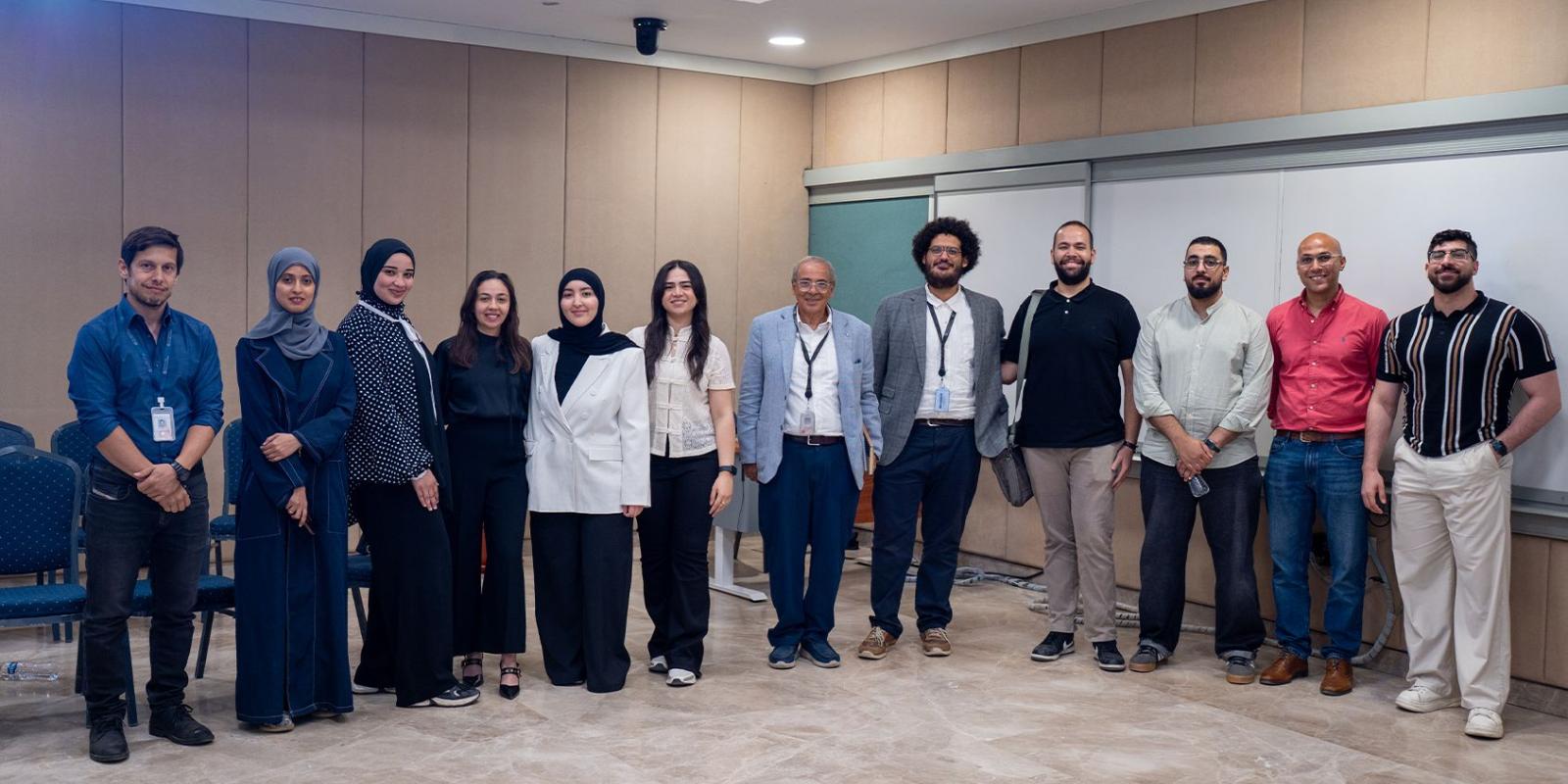
Biotechnology, MBA Students Innovate Industry Solutions
Ruqia Akkad is a biotechnology graduate student at AUC who is trying to create an AI-optimized virtual cell line to decrease the cost of biologics — medical products derived from living organisms — to make it more accessible to patients.
“Before taking the Basics of Bioentrepreneurship course, I didn't have a background in business. I didn’t even think like a business student,” Akkad said. “Through this course, we started thinking about what the market is demanding, where the opportunities are, and how we can take those opportunities and turn them into solutions.”
It was very important for us to understand through this course how the industry operates, the key organizations within and how each plays a role in contributing to building the company as a whole.”
Andreas Kakarougkas, assistant professor in the Department of Biological, Chemical and Global Health Sciences and former director of the biotechnology program, led the initiative to expose biotechnology and MBA students like Akkad, to real-life industry challenges.
“This course was traditionally taught by faculty from the School of Sciences and Engineering, but we wanted our students to experience a multidisciplinary environment that brought together the different elements of bioentrepreneurship," said Kakarougkas.
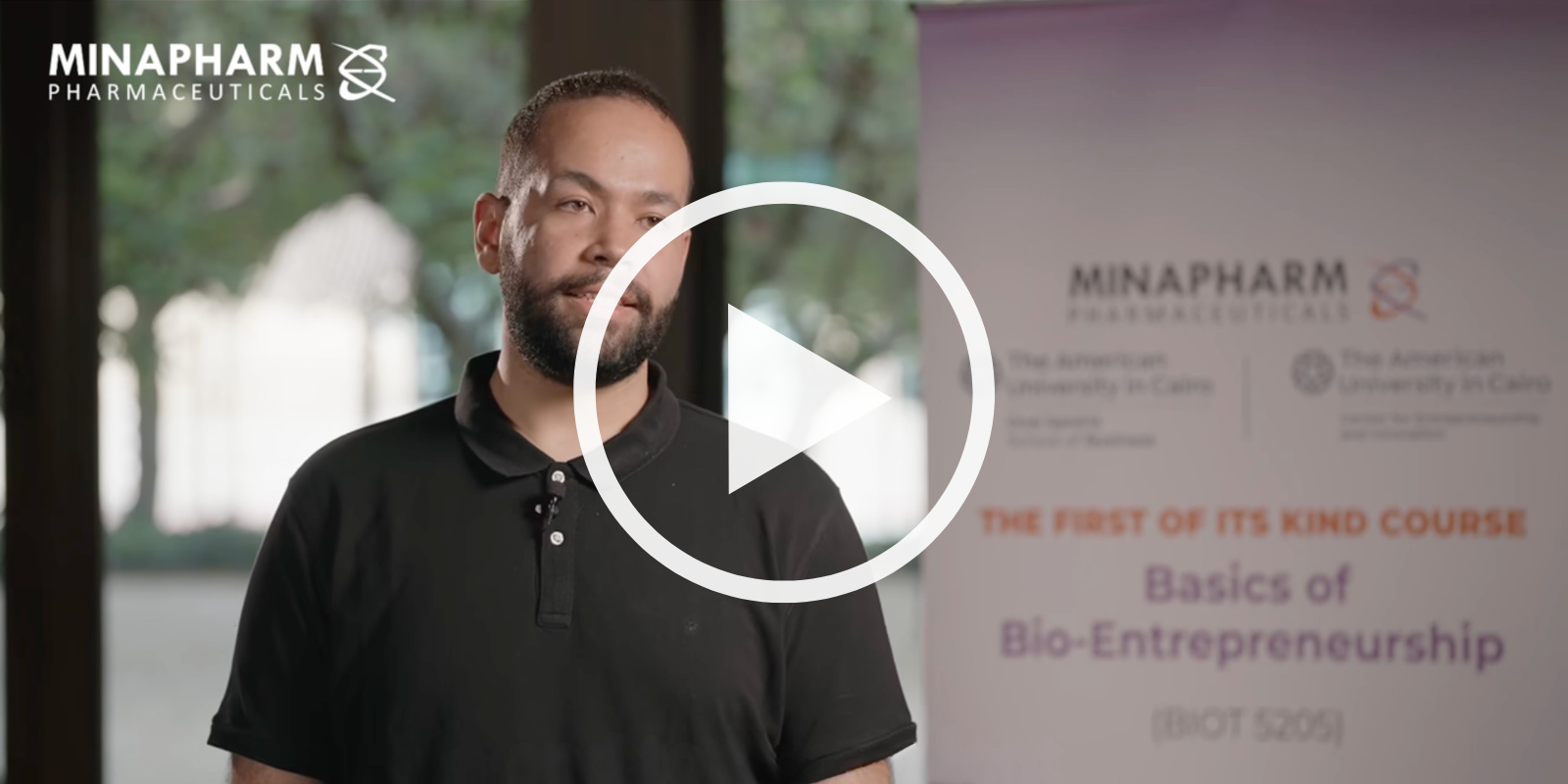
The course brought together Minapharm, the School of Sciences and Engineering, and the Center for Entrepreneurship and Innovation at the Onsi Sawiris School of Business, combining science with business and entrepreneurship. It builds on AUC’s partnership with the global pharmaceutical retailer, creating new opportunities for joint academic research and career pathways for AUC graduates.
Students in the class also attended field trips to Minapharm’s facilities, where they gained firsthand exposure to the company’s operations, workflow and processes.
Hala Barakat ’98, director of the Center for Entrepreneurship and Innovation, said the course brought a challenge-based methodology, previously applied in other entrepreneurship courses, into this biotechnology class.
“This really made the students focus not only on entrepreneurship or innovation, but also think in a very structured way about innovation for a specific industry challenge,” Barakat said. “The industry really needs that fresh eye from students on its challenges and the different solutions they can bring.”
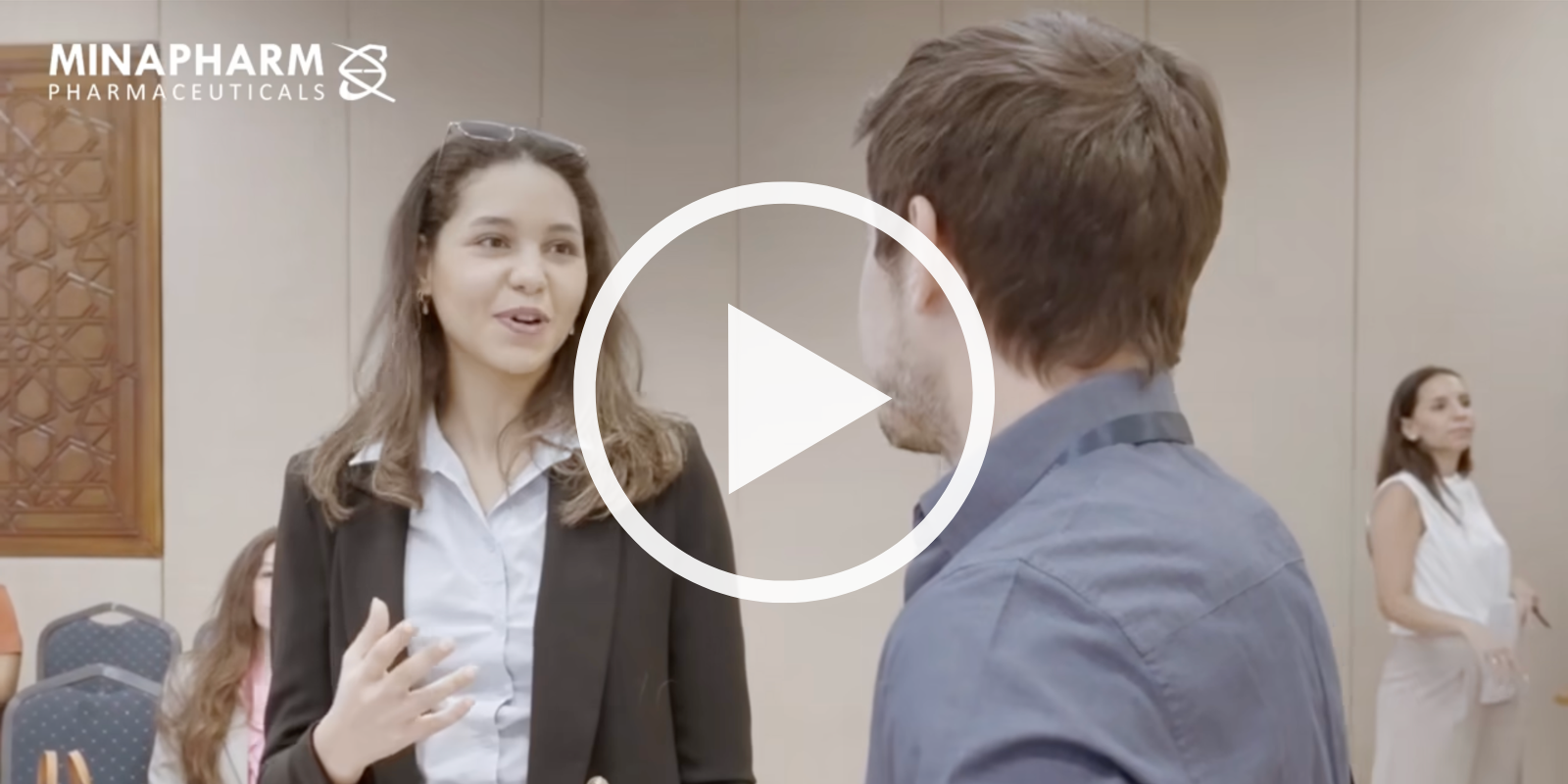
The course’s final project required students to develop a minimal viable product that provided a solution to real-world industry problems. Biotech master’s student Mohamed Allam created a digital ecosystem with his team that supports product monitoring at each stage of the manufacturing process.
“As biotechnologist or science students, we are very focused on the know-how rather than what to do with it,” Allam said. “We come out into the field knowing the techniques and methods and how to apply them in the lab, but we never really see how the industry is shaped, organized or structured. It was very important for us to understand through this course how the industry operates, the key organizations within and how each plays a role in contributing to building the company as a whole.”
“This really made the students focus not only on entrepreneurship or innovation, but also think in a very structured way about innovation for a specific industry challenge.”
As the partnership evolves, the program is exploring future internship and research opportunities for biotechnology students.
“We're exploring the possibility for some of our most promising students to conduct their thesis projects under the co-supervision of AUC faculty and a Minapharm supervisor, either in Egypt or in Germany,” Kakarougkas said.
