26
Feb
Disability Etiquette 201
Learn some helpful hints and pointers you can use in your everyday life to communicate effectively and respectfully with people with disabilities.
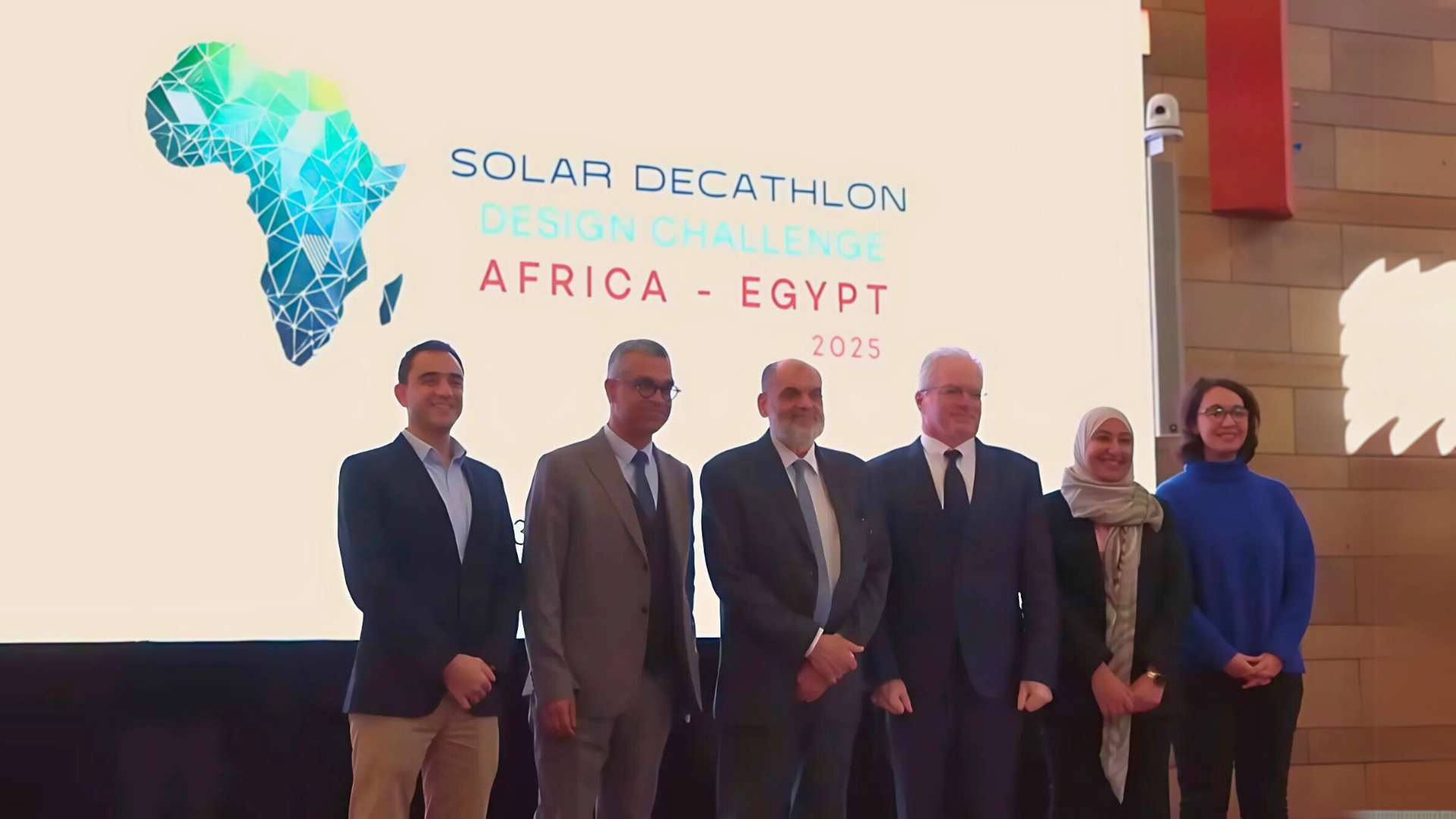
Reaffirming its belief that youth are pivotal in facing climate challenges and promoting energy-efficient building design, AUC is hosting The Solar Decathlon Design Challenge – Africa 2025, an international competition that seeks fresh and innovative ideas by challenging university students to design high-performance, low-carbon buildings powered by renewable energy.
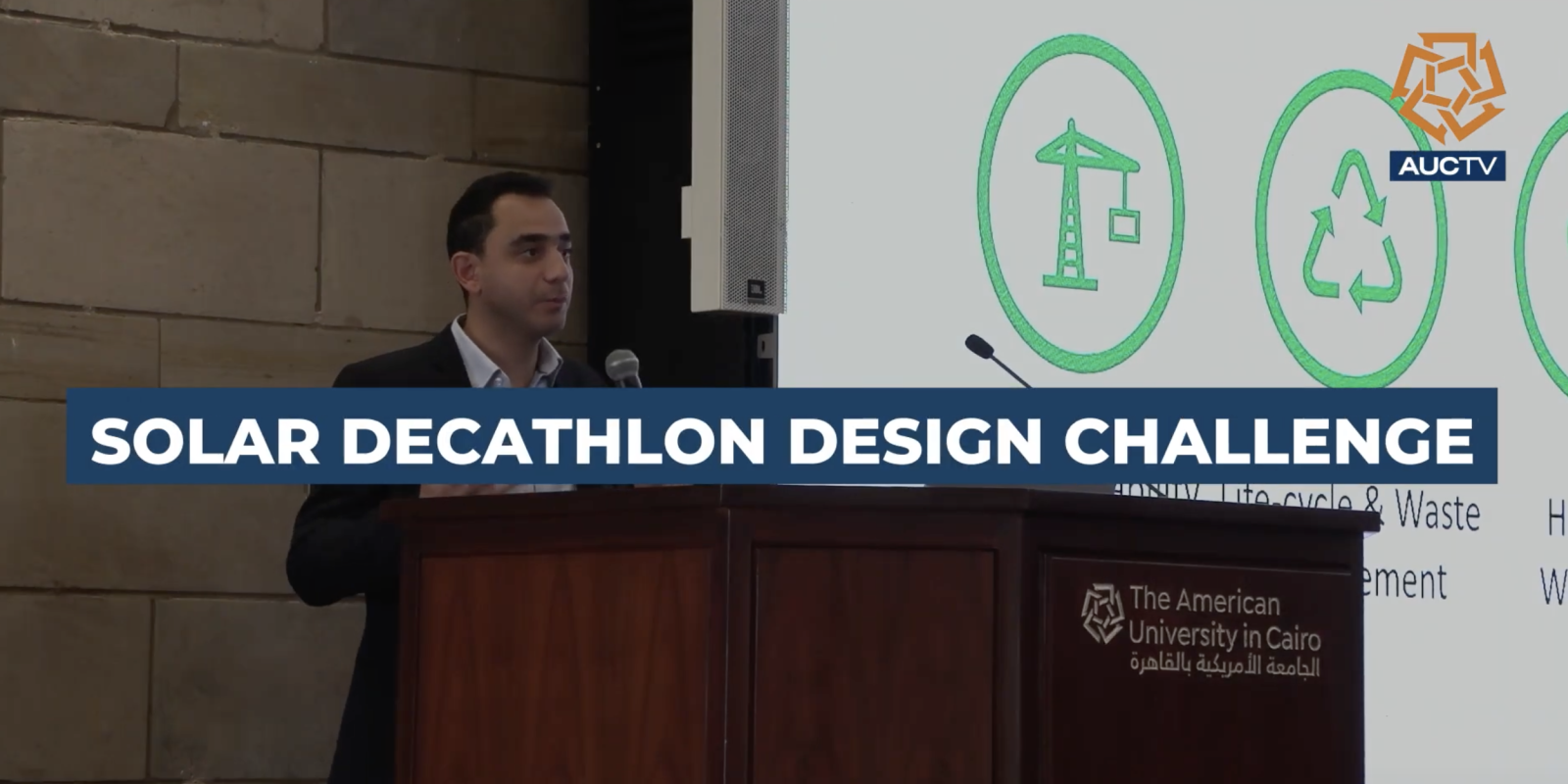
“The Solar Decathlon Design Challenge is an excellent opportunity for students to showcase their innovation in sustainable design, and to network and learn from others,” said Khaled Tarabieh, associate professor of sustainable design and University architect.
"By bringing together students and professionals from across the continent, this competition encourages collaboration, knowledge exchange and the celebration of Africa’s unique approach to sustainability in the built environment.”
AUC is hosting the competition — held for the first time in Egypt — in partnership with the U.S. Department of Energy and the Egyptian Ministry of Higher Education and Scientific Research, reinforcing the University’s commitment to sustainability, clean energy education and innovative research. The challenge aligns with AUC’s mission to lead in green building initiatives and empower students to become drivers of the global transition to clean energy solutions.
“The competition serves as a platform to bridge diverse African cultures, fostering a deeper understanding of how traditional knowledge, local materials and indigenous architectural practices contribute to sustainable and resilient built environments,” said Ibrahim Abotaleb, associate professor and associate chair of the Department of Construction Engineering.
"For AUC, it is an opportunity to highlight our leadership in sustainable and high-efficiency building solutions."
The challenge comprises 10 contests that test the ability of students to collaboratively develop zero-energy buildings while addressing real sustainability challenges such as carbon emissions, energy consumption, affordability, and community resilience. Participants will also integrate the latest technologies and materials when designing their solutions, tailored to the unique challenges facing Africa’s building environment.
“The focus on Africa in this edition enables competing teams to showcase innovative and effective solutions that fit the needs, wants and aspirations of all the peoples of Africa," said Sherif Goubran, assistant professor of sustainable design and graduate program director in the Department of Architecture. "For AUC, it is an opportunity to highlight our leadership in sustainable and high-efficiency building solutions."
Registered teams will be working through the next year on developing their design solutions and will have the opportunity to present their initial designs to expert jurors at the virtual semi-final competition in November 2025. Finalist teams will then be invited to compete in person at AUC in March 2026, where the Division Winners and Grand Winners will be announced.
“I’m looking forward to welcoming the young, bright minds from across Africa at AUC in March 2026 to celebrate their success and learn from them,” said Goubran.
Registration is open and closes on October 15, 2025.
“The competition presents a remarkable opportunity to showcase the richness of African creativity and innovation in sustainable design," Abotaleb said. "By bringing together students and professionals from across the continent, this competition encourages collaboration, knowledge exchange and the celebration of Africa’s unique approach to sustainability in the built environment.”
Key Milestones for the Solar Decathlon Design Challenge – Africa 2025 (SDDC-A 2025)
For more information: The Solar Decathlon Design Challenge – Africa 2025 (SDDC-A 2025)

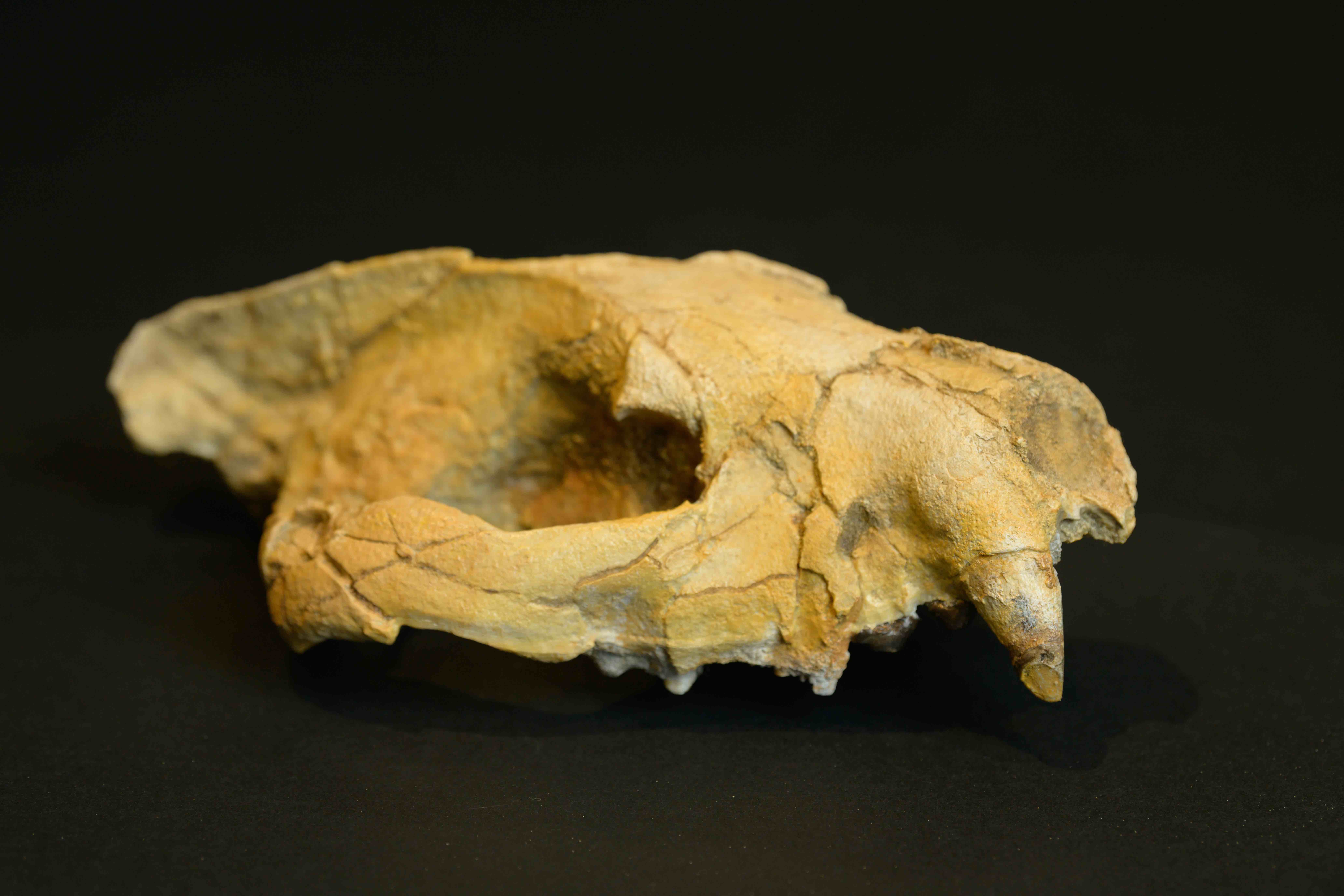
Hesham Sallam, professor of vertebrate paleontology at AUIC and founder of the Mansoura University Vertebrate Paleontology Center, is the senior author of an international study that led to the discovery of a nearly complete skull in the Egyptian desert. This finding has resulted in the groundbreaking revelation of a new 30-million-year-old species of the ancient apex predatory carnivore, Hyaenodonta.
The paper, published today in the peer-reviewed Journal of Vertebrate Paleontology, was led by Shorouq Al-Ashqar, from Sallam Lab at AUC and Mansoura University, in collaboration with researchers from Duke, Southern California and Michigan universities. The study details how this ferocious creature likely preyed on primates, early hippos and elephants, and hyraxes in the lush forests of Fayoum, Egypt — now a desert area.
"This timespan ... reveals how these climate shifts played a crucial role in shaping ecosystems that we still see today.”
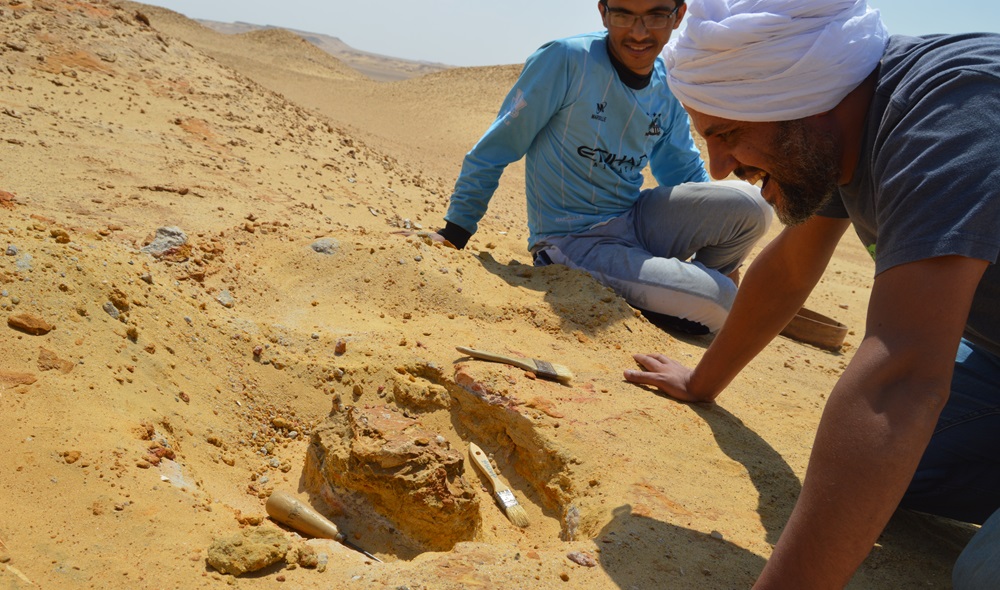
Describing the discovery, Al-Ashqar said that for days, the team meticulously excavated layers of rock dating back around 30 million years. “Just as they were about to conclude their work, Belal Salem, a team member, spotted something remarkable — a set of large teeth sticking out of the ground," she said. "His excited shout brought the team together, marking the beginning of an extraordinary discovery: a nearly complete skull of an ancient apex carnivore, a dream for any vertebrate paleontologist.”
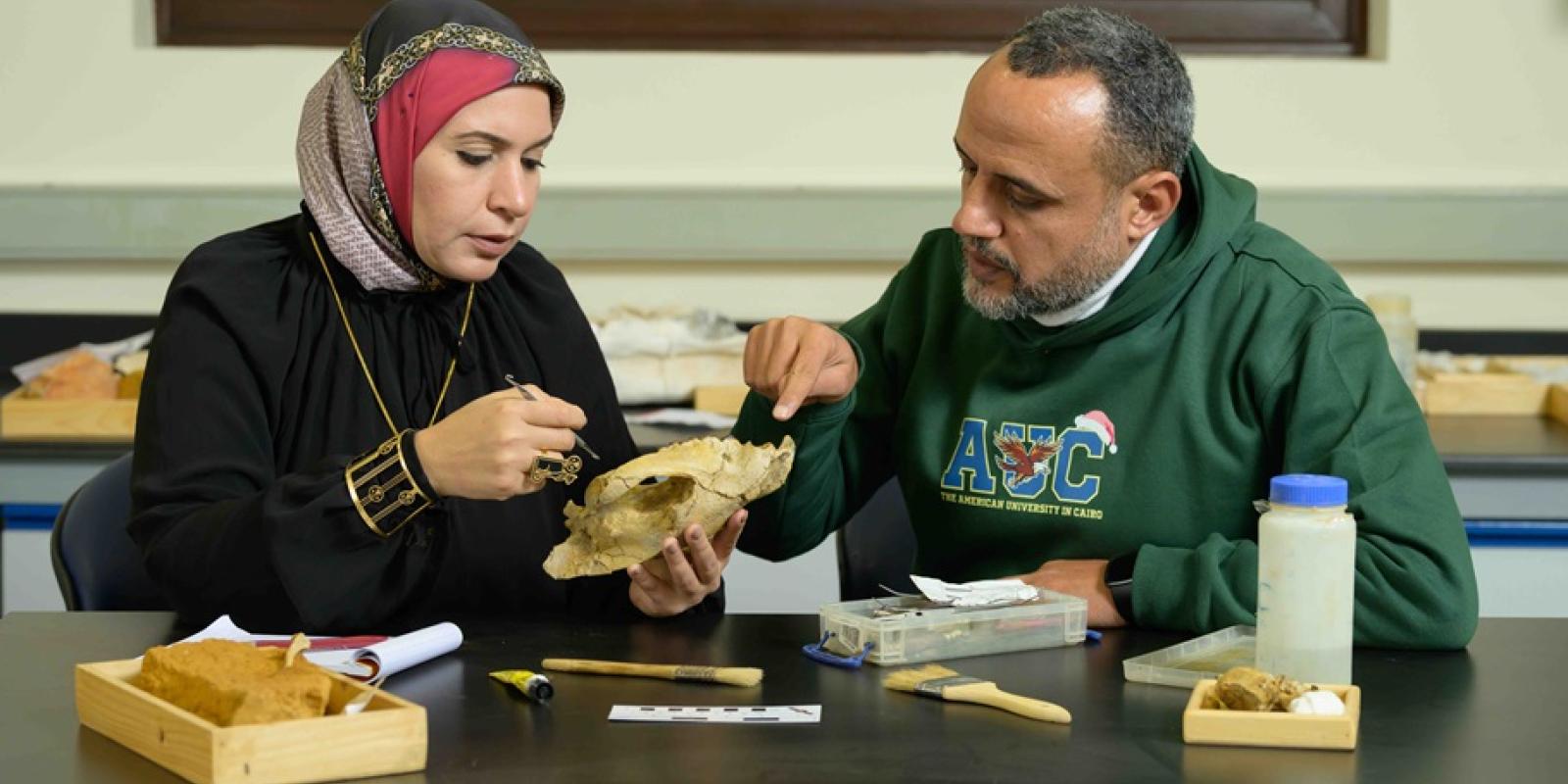
Sallam explains that the skull was unearthed during his team’s expedition to the Fayoum Depression, where digs reveal an important time window into about 15 million years of the evolutionary history of African mammals. “This timespan not only captures the transition from the Eocene’s global warming to the Oligocene’s global cooling but also reveals how these climate shifts played a crucial role in shaping ecosystems that we still see today.”
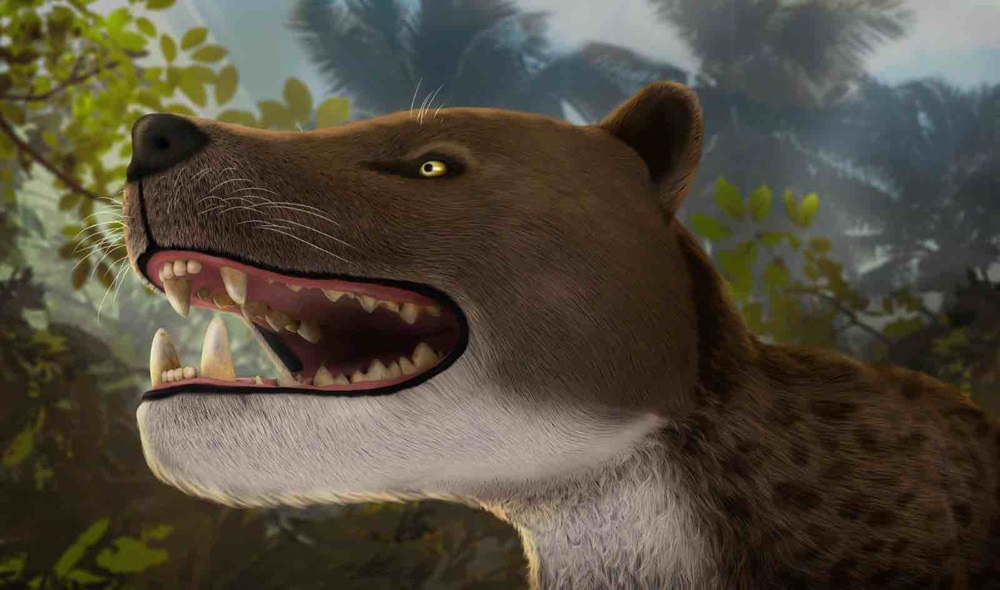
Bearing sharp teeth and powerful jaw muscles, suggesting a strong bite, the newly identified ‘Bastetodon,’ named after the cat-headed ancient Egyptian goddess Bastet, was a leopard-sized “fearsome” mammal. It belongs to a species in an extinct group of carnivorous mammals called hyaenodonts, which evolved long before modern-day carnivores such as cats, dogs and hyenas. These predators with hyena-like teeth hunted in African ecosystems after the extinction of the dinosaurs.
"His excited shout brought the team together, marking the beginning of an extraordinary discovery: a nearly complete skull of an ancient apex carnivore, a dream for any vertebrate paleontologist.”
Beyond just a new ancient creature discovery, the finding of Bastetodon has already allowed the research team to re-evaluate a group of lion-sized hyaenodonts discovered in the rocks of Fayoum over 120 years ago.
In their paper, the team also constructed the genus Sekhmetops to describe this century-old material and to honor Sekhmet, the lion-headed goddess of wrath and war in ancient Egyptian mythology (“-ops” means “face”). In 1904, Sekhmetops was placed within a European group of hyaenodonts. The team demonstrated that Bastetodon and Sekhmetops both belonged to a group of hyaenodonts that originated in Africa, specifically Egypt. Bastet was often associated with Sekhmet, making the two genera scientifically and symbolically connected.
The study demonstrates the relatives of Bastetodon and Sekhmetops spread from Africa in multiple waves, eventually making it to Asia, Europe, India and North America. Some relatives of these hyaenodonts were among the largest mammalian meat-eaters to ever walk on the planet 18 milllion years ago.
"Paleontologists have been working in Fayoum for over a century, but the Sallam Lab demonstrated that there is more to discover in this remarkable region.”
However, cataclysmic changes in global climate and tectonic changes in Africa opened the continent to the relatives of modern cats, dogs and hyenas. As environments and prey changed, the specialized, carnivorous hyaenodonts diminished in diversity, ultimately becoming extinct and leaving our primate relatives to face a new set of antagonists.
“The discovery of Bastetodon is a significant achievement in understanding the diversity and evolution of hyaenodonts and their global distribution,” Shorouq noted. “We are eager to continue our research to unravel the intricate relationships between these ancient predators and their environments over time and across continents.”
Co-author Matt Borths, curator of Fossils at the Duke Lemur Center Museum of Natural History at Duke University in Durham, North Carolina, said: “ Fayoum is one of the most important fossil areas in Africa. Without it, we would know very little about the origins of African ecosystems and the evolution of African mammals like elephants, primates and hyaenodonts. Paleontologists have been working in Fayoum for over a century, but the Sallam Lab demonstrated that there is more to discover in this remarkable region.”