Home page
ع

No Size Fits All: Contextualizing Mental Health Care 

Graphic of a group of faces in a circle with a green ribbon over top
Em Mills
October 11, 2023

Far from one-size-fits-all, mental health care is deeply personal. Between individuals, communities and cultures, mental health and the issues surrounding it take on a variety of looks. So what can psychologists, especially those working cross-culturally, do to make sure that the care they’re providing is hitting the mark?

“Even simple things, like terms such as ‘depression’ or even ‘mental health’ itself carry different connotations across cultural backgrounds,” said Gurusewak Khalsa, associate professor of practice in the Department of Psychology. “We might have to throw these terms out completely and find a way to use not just the technical language that a community is using, but also their own description of what it means to be depressed, what it means to feel anxious, what it means to have psychiatric disorders –– everything.” 

The idea of translation in mental health care stretches far beyond language. Each society understands and addresses mental health issues in a different way, so it's important for counselors who have been trained in a cultural background different than their clients to address this potential gap in order to be able to provide effective support. To navigate this, discussing mental health must be approached flexibly and responsively. 

“A lot of people in the field of mental health have really good intentions. Those intentions can end up causing harm when we apply them without attention to the cultural context of who we’re working with,” said Khalsa. “It’s your responsibility to learn as much as you can about your clients’ values and beliefs, and develop an understanding of their experience. And then any intervention or support should be based on that understanding rather than solely your training.”

The more that mental health care can match its context and individual recipient, the more people can access support that is meaningful to them. That requires shifting away from a rigid idea of what these concepts mean and adopting a fluid, adaptive approach to how mental health care functions. 

“It’s important that we, as a profession, first try to understand and recognize the needs of the community or people we are serving from their own perspective before developing plans for support,” Khalsa said. “We can also make sure we are including a focus on the community’s strengths–things that are already working well–and help the community grow and develop those strengths to other areas, rather than falling into a trap of starting from a place where only see or recognize things that seem wrong or broken.”

Mental health care access is a topic discussed across the world, showing up in a variety of ways transnationally. Physical and economic barriers affect access, alongside social factors such as stigma. But amidst the continuing conversation, the first step is to be able to get in the room.

“Sometimes the first step is the biggest one. If we can make that first step comfortable and supportive, then we’ve addressed a large barrier to the situation.” said Khalsa. “Meeting that [first step] with flexibility, with both personal and cultural awareness can play an important role in addressing mental health issues in any context.”

To find out more about mental health resources at AUC, visit the AUC Wellbeing webpage.

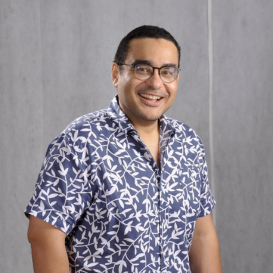
Photo of Gurusewak Khalsa
Gurusewak Khalsa
Share

Remembering Professor Emeritus Saad Eddin Ibrahim

Photo of Saad Eddin Ibrahim
October 9, 2023

“Something many don’t know is that as a Cairo University undergrad, Saad [Eddin Ibrahim] took extension classes in English at AUC and read in the old Hill House library.  Once appointed to the faculty, his affection for AUC grew with each new batch of students. While Saad never wavered from his civic activism, I truly believe he was most fulfilled when in a sociology classroom teaching.”

This is how Barbara Ibrahim, who served as founding director of AUC’s John D. Gerhart Center for Philanthropy, Civic Engagement and Responsible Business, described her husband’s affinity and longstanding relationship with AUC and its students. Saad Eddin Ibrahim taught sociology at AUC for 33 years, after which he returned to the University as an adjunct professor and was later named professor emeritus. 

Ibrahim was raised in Daqahliyah, a rural town on the Nile Delta. He graduated with honors in sociology from Cairo University, where he was president of the student union. He moved to the United States in 1962, earning a master’s in sociological development from the University of California, Los Angeles – where he later taught political sociology – and a doctorate in political sociology from the University of Washington. Before joining AUC, he taught sociology from 1967 to 1974 at DePauw University, where he met his wife of 50 years Barbara, who was a DePauw student at the time. 

An award-winning public intellectual, scholar, author and human rights advocate, Ibrahim is co-editor of Arab Society: Class, Gender, Power, and Development (1998) with the late Professor Emeritus Nicholas S. Hopkins, and author of Egypt, Islam, and Democracy: Critical Essays (2002) – both AUC Press publications. He has written extensively on Islam, politics, democracy and civil society, and "his work remains a central reference for students and scholars in the field," said Provost Ehab Abdel-Rahman in a message to the AUC community.

Colleagues also attest to his scholarly expertise and camaraderie.

“Saad Eddin Ibrahim was a prolific scholar-activist whose work on the sociology of the Middle East, particularly democratization and civil society, was influential in my own work on gender and democratization in the region when I first joined AUC as an assistant professor of sociology,” said Helen Rizzo, associate professor of sociology and head of the sociology unit at AUC. “Moreover, he was a supportive and caring departmental colleague, and his sense of humor made for entertaining departmental meetings. He will be missed.”

What Former Students Have to Say


Screenshot of Instagram comment reading: Deepest condolences to his family and friends, we all took the Arab society course with him, he had great passion.. I was lucky enough to work as his assistant when I majored in anthropology back in the 90's for 2 consecutive semesters, I really learned a lot
Screenshot of Instagram comment reading: My deepest condolences. He taught me a few courses back in the 80s and made a great impact on me and all his students. I still quote him until now.
Text reads: Very Sad, he was one of the best professors we learned from. May his soul rest in peace.
Text reads: Deepest condolences to his family. Was truly a treasure and role model
Text reads: My condolences to all his loved ones. A man with vast knowledge and passion and courage and humanity, I was honored to be his student. May he rest in peace.
Text reads: Such a sad news! Dr. Saad was an excellent professor and I owe him attaining my Master's in Sociology due to his guidance and profound knowledge. Rest In Peace dear Dr. Saad. You will be so missed.


Text reads: May his soul rest in peace. he was a great professor and he had an amazing personality


Text reads: A big loss and an outstanding professor. I was very lucky to have taken a course with him in my student life. Rest in peace dear Dr. Ibrahim.


Text reads: Dr. Ibrahim was a brilliant and kind professor. I remember feeling extremely lucky to have him as my sociology professor. I always looked forward to attending his classes because of his wisdom and intellect. Thank you Dr. Ibrahim for all that you've done. May your soul rest in peace.
Share

AUC, UNDP Collaboration Advancing Sustainable Development Goals

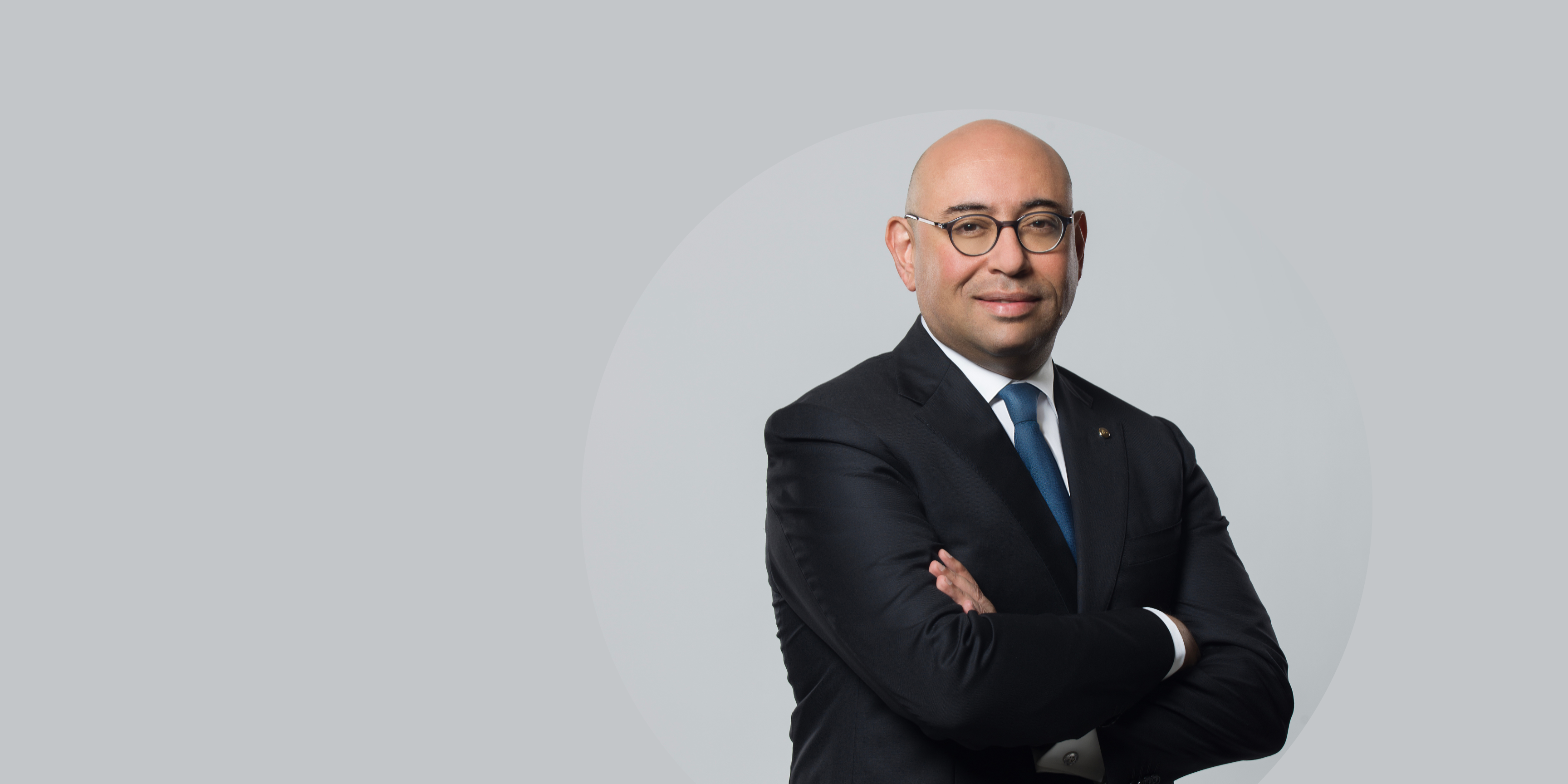
President Ahmed Dallal and UNDP Egypt Resident Representative Alessandro Fracassetti sign the MoU
October 9, 2023

AUC has partnered with the United Nations Development Programme in Egypt to promote knowledge exchange, sustainability, student engagement and entrepreneurship as well as support the UN Sustainable Development Goals in Egypt.

The collaboration is dedicated to getting involved on campus through programming such as hackathons and boot camps, sustainable campus initiatives and student-led outreach activities. Emphasizing evidence-based approaches to policy and programming, the partnership will use the expertise of AUC’s labs and centers. It will also offer students practical experience, mentorship opportunities and internships to prepare them as future leaders.

 “We aim to tackle key policy and development topics, conduct action-oriented research and foster knowledge-sharing initiatives,” said AUC President Ahmad Dallal. “By aligning our efforts with Egypt’s national priorities, we aim to accelerate progress toward the Sustainable Development Goals, leaving a lasting impact on the communities we serve.”

The partnership signals a commitment to using the combined expertise, resources and networks of both organizations to create lasting and positive change for Egyptian citizens while contributing to the nation’s overarching goals. “Together, we’ll work toward a future of progress, innovation and sustainable impact,” said UNDP Egypt Resident Representative Alessandro Fracassetti. 


Share

AUC Leads School-University Partnerships to Enhance Sustainability, Engagement in Public Schools

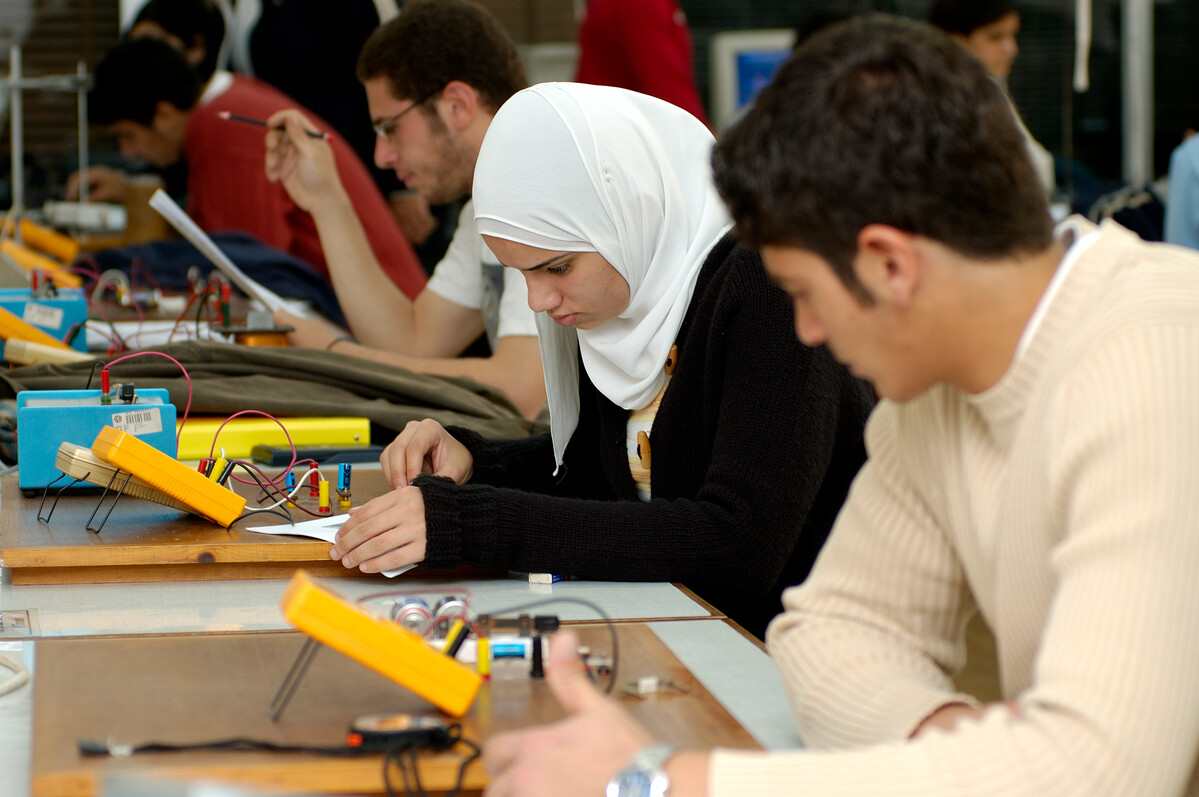
Professor plants trees with public school students in their playground
October 4, 2023

A new outreach initiative from AUC’s Middle East Institute of Higher Education is creating school-university partnerships that promote community engagement, empower public school students and foster sustainable development.

While planting trees at a public school in New Cairo last spring, mechanical engineering sophomore Hassan El Hassan met a seventh-grade girl from the school who blew his mind.

“She already knew coding languages that university sophomores and juniors haven’t touched,” he said. “My mindset about public school students immediately changed — I was inspired to help them succeed.

Read the full story in AUCToday magazine. 

Share