26
Nov
AMEPPA International Conference 2026
Join scholars, policymakers and practitioners at this annual conference examining how public policy and governance must adapt to an increasingly uncertain and complex world.

AUC senior Karim Katnajy is studying how metals retain memory through an internship at Dublin City University
Mechanical engineering senior Karim Katnajy spent his summer as an intern at a materials science lab in Ireland’s Dublin City University, researching how certain metals can “remember” their previous shapes.
Born in Ireland to Syrian parents, Katnajy’s family frequently traveled when he was younger, living in Syria, the United Arab Emirates and Türkiye, inspiring his initial career dream to become a pilot. Now in Egypt and at AUC, Katnajy decided to study mechanical engineering with the goal of working in aerospace, airline applications and satellites.
“When I came to Ireland, I found a place I could call home, where I could continue my education and build a life."
During his internship, Katnajy helped build a machine to train structures made from the nickel-titanium alloy nitinol, making it easier for researchers to study the smart material and how it responds to repeated changes in shape.
Nitinol is a shape memory alloy that can retain different shapes at two distinct atom arrangements — one at high temperatures and the other at low temperatures. This allows the alloy to be trained to retain one shape at a high temperature, change into a different shape when cooled and return to the original shape when heated again.
“We want to train it to go back and forth hundreds of times,” Katnajy said. This is done by heating up a wire of nitinol at its actuation temperature, turning the wire, cooling it down and rotating it in a different direction. The alloy is superelastic and a smart material, allowing it to respond to environmental changes without input from computers or mechanical switches. As a result, artery and heart stents are frequently made from nitinol because it can change in response to body temperature.
Nitinol can also be applied in aerospace, including in the flaps of a plane, Katnajy noted. Instead of electronically controlling these flaps during take off and landing, an alloy with shape-memory properties could be used. The alloy would respond to changes in temperature based on altitude, transforming into a specific shape to move the flaps.
“That could apply to satellites too,” Katnajy said. “It is also used in the human body because it is biocompatible, so you can have it in arteries as well as in knee replacements.”
Karim pursued an internship in Dublin to gain a better understanding of Ireland. Even though he was born there, he hadn’t spent much time in the country and has since made the most of his time abroad: traveling around Dublin and hiking through Ireland’s Wicklow Mountains with an international group of fellow interns from Germany, Switzerland and Jordan.

“When I came to Ireland, I found a place I could call home, where I could continue my education and build a life,” Katnajy said.
Working in the lab with PhD students has been a valuable learning experience for Katnajy. “They understand that I'm still learning and are very accommodating in that sense. They're all very passionate about what they're doing, and that alone gives me a sense of passion as well,” he said.
The internship experience has given Katnajy a deeper understanding of materials science and exposure to new paths in his future career.
“Materials science is very big, and Nitinol and 4D materials in Ireland, especially in the medical field, are very prominent,” he said. “So if I decide to do my master's here and continue my career in materials science, this is really going to propel me in the right direction.”

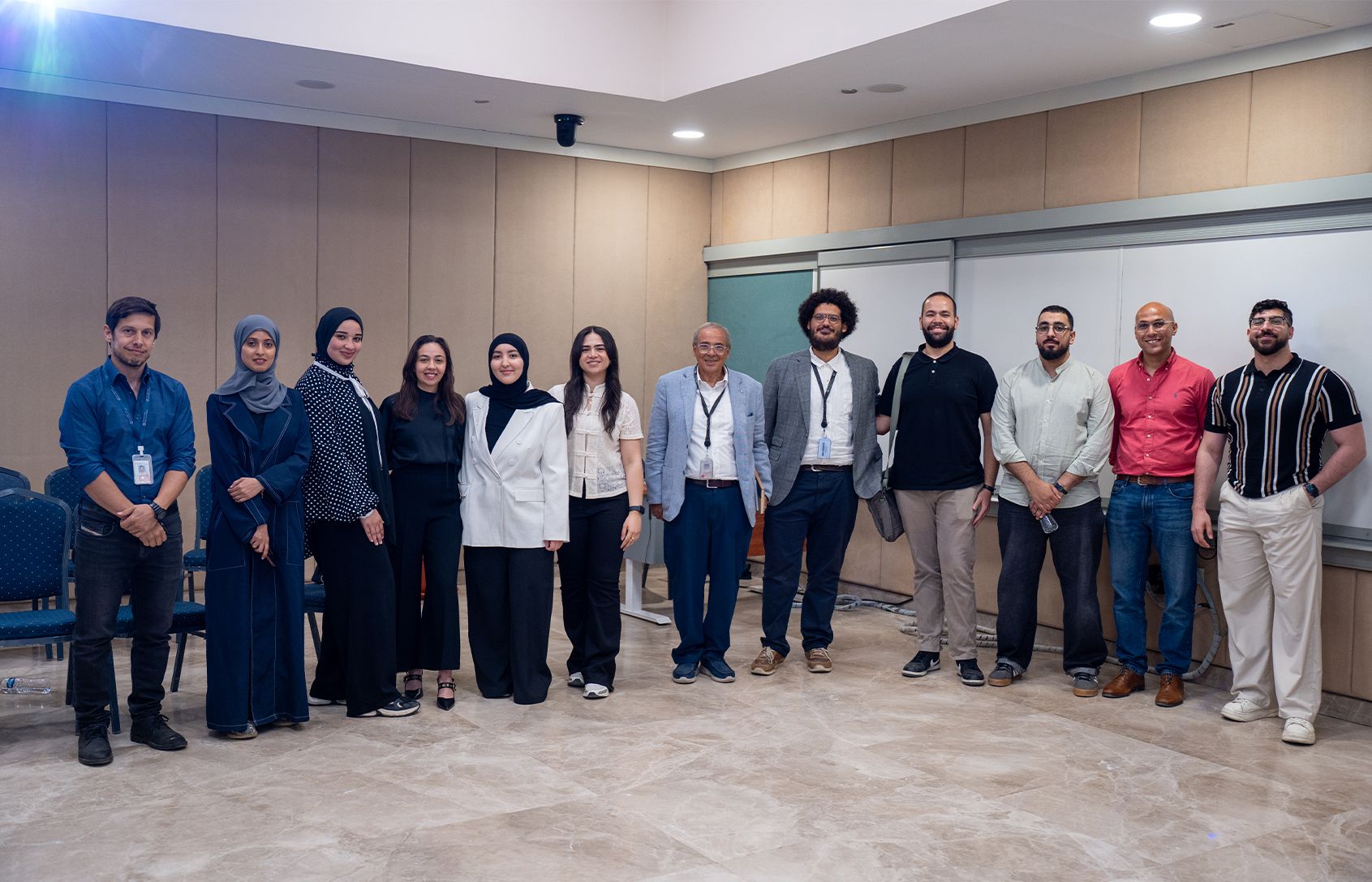
Ruqia Akkad is a biotechnology graduate student at AUC who is trying to create an AI-optimized virtual cell line to decrease the cost of biologics — medical products derived from living organisms — to make it more accessible to patients.
“Before taking the Basics of Bioentrepreneurship course, I didn't have a background in business. I didn’t even think like a business student,” Akkad said. “Through this course, we started thinking about what the market is demanding, where the opportunities are, and how we can take those opportunities and turn them into solutions.”
It was very important for us to understand through this course how the industry operates, the key organizations within and how each plays a role in contributing to building the company as a whole.”
Andreas Kakarougkas, assistant professor in the Department of Biological, Chemical and Global Health Sciences and former director of the biotechnology program, led the initiative to expose biotechnology and MBA students like Akkad, to real-life industry challenges.
“This course was traditionally taught by faculty from the School of Sciences and Engineering, but we wanted our students to experience a multidisciplinary environment that brought together the different elements of bioentrepreneurship," said Kakarougkas.
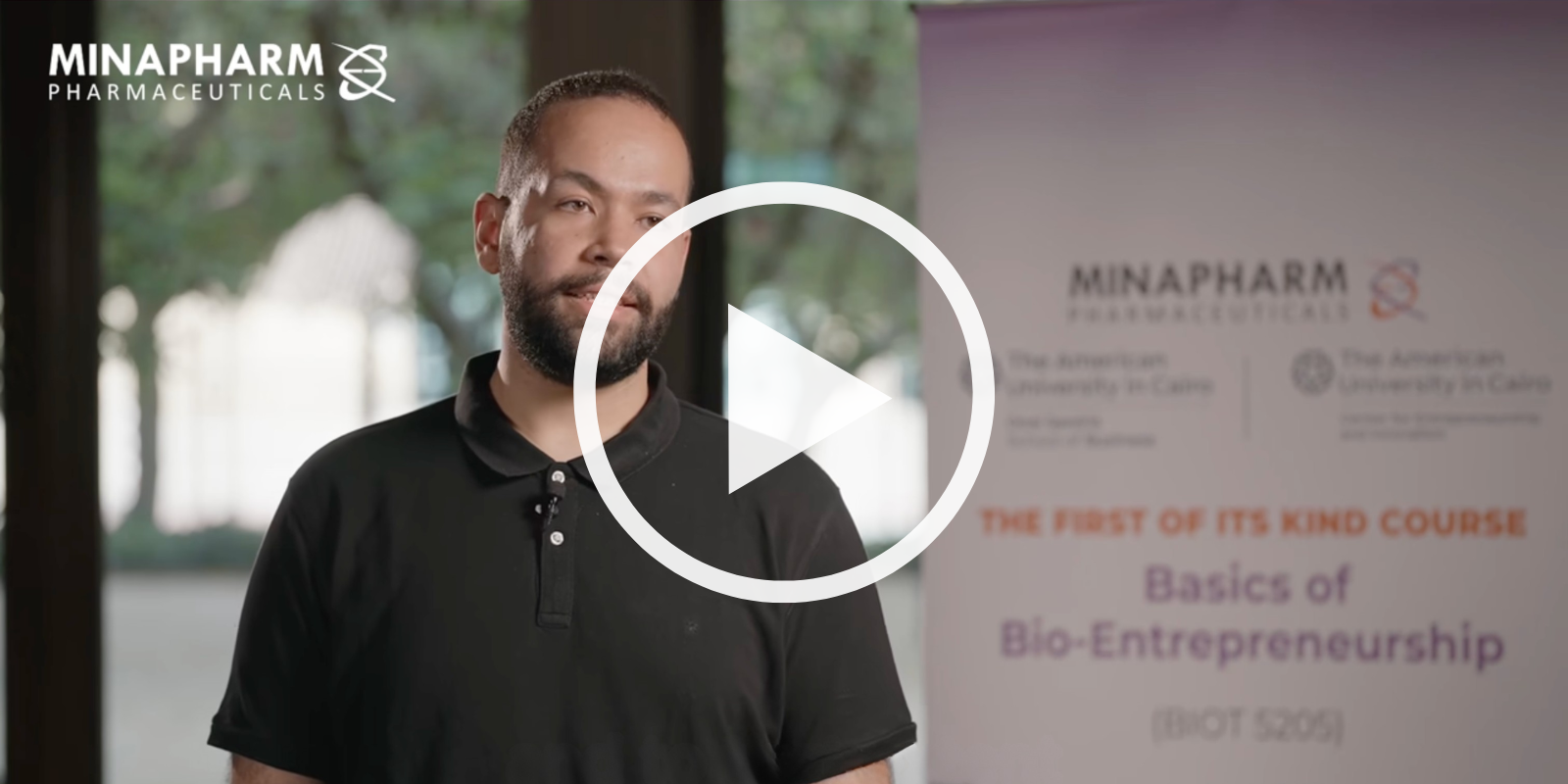
The course brought together Minapharm, the School of Sciences and Engineering, and the Center for Entrepreneurship and Innovation at the Onsi Sawiris School of Business, combining science with business and entrepreneurship. It builds on AUC’s partnership with the global pharmaceutical retailer, creating new opportunities for joint academic research and career pathways for AUC graduates.
Students in the class also attended field trips to Minapharm’s facilities, where they gained firsthand exposure to the company’s operations, workflow and processes.
Hala Barakat ’98, director of the Center for Entrepreneurship and Innovation, said the course brought a challenge-based methodology, previously applied in other entrepreneurship courses, into this biotechnology class.
“This really made the students focus not only on entrepreneurship or innovation, but also think in a very structured way about innovation for a specific industry challenge,” Barakat said. “The industry really needs that fresh eye from students on its challenges and the different solutions they can bring.”
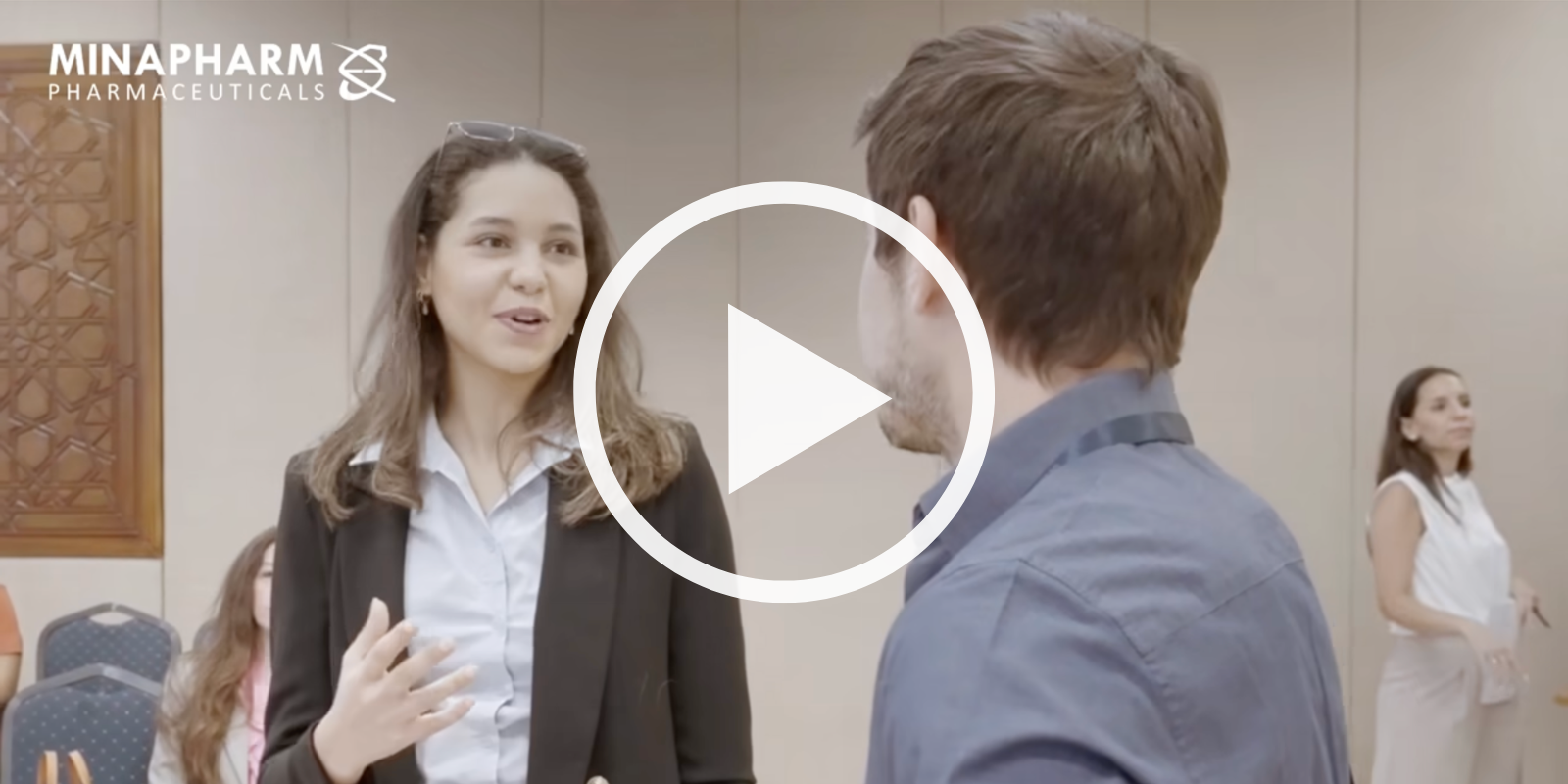
The course’s final project required students to develop a minimal viable product that provided a solution to real-world industry problems. Biotech master’s student Mohamed Allam created a digital ecosystem with his team that supports product monitoring at each stage of the manufacturing process.
“As biotechnologist or science students, we are very focused on the know-how rather than what to do with it,” Allam said. “We come out into the field knowing the techniques and methods and how to apply them in the lab, but we never really see how the industry is shaped, organized or structured. It was very important for us to understand through this course how the industry operates, the key organizations within and how each plays a role in contributing to building the company as a whole.”
“This really made the students focus not only on entrepreneurship or innovation, but also think in a very structured way about innovation for a specific industry challenge.”
As the partnership evolves, the program is exploring future internship and research opportunities for biotechnology students.
“We're exploring the possibility for some of our most promising students to conduct their thesis projects under the co-supervision of AUC faculty and a Minapharm supervisor, either in Egypt or in Germany,” Kakarougkas said.