Home page
ع Search AUC

Ceasefire: What's Next for the Middle East?

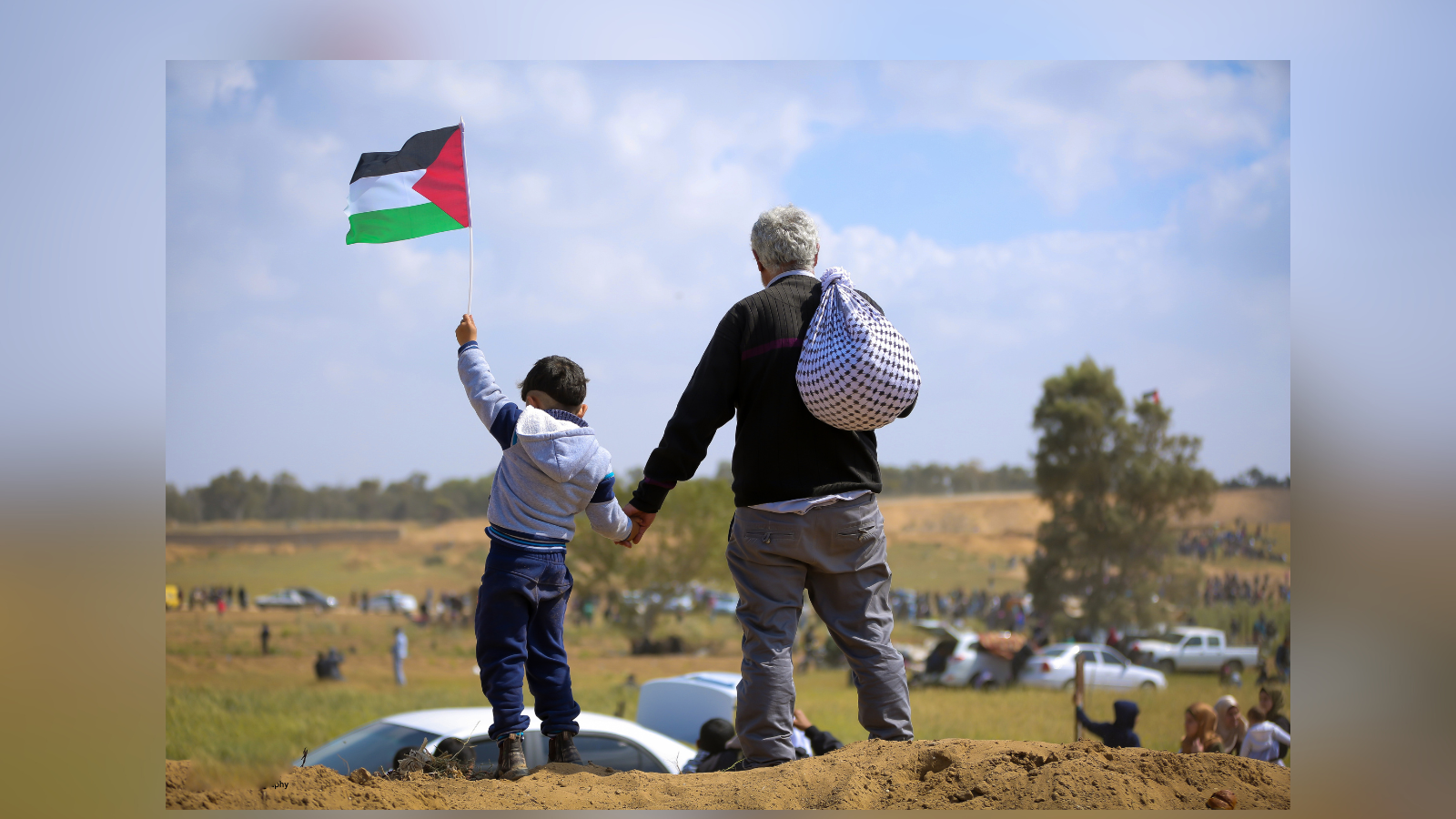
Boy holding Palestinian flag stands next to father
Celeste Abourjeili
February 5, 2025

Amid talks about a “new Middle East,” News@AUC spoke to Ibrahim Awad, professor of practice in global affairs, to know what we can expect in the region’s most turbulent corners.


A Precarious Ceasefire in Palestine


Awad expressed satisfaction about the ceasefire in Gaza, which came into effect on January 19 but skepticism about whether it will be sustained. “Many speculate that once the Israeli captives are liberated, the agreement will collapse,” he said.

Since the ceasefire began, 18 Israeli hostages have been released in exchange for hundreds of Palestinian prisoners, many of them minors, activists, journalists or prisoners held without charges.

Awad remains hesitant about the second phase of the negotiations, which has not yet been agreed upon. “The agreement provides for negotiating the second stage of the ceasefire while the first stage is unfolding, which means we’re still not there,” he said. Additionally, U.S. President Donald Trump said that he is “not confident” that the ceasefire would hold. 

Citing Trump’s request for Jordan and Egypt to receive Palestinian refugees, Awad expressed further reservations about the immediate future. “This only means that the Palestinian question would be liquidated and, of course, Egypt and Jordan also have their own problems,” said Awad. He warned that we must be cautious with our expectations. 

“Many speculate that once the Israeli captives are liberated, the [ceasefire] agreement will collapse.”

Egypt and Jordan have since rejected the suggestion, with the Arab League releasing a joint statement refusing any plans to move Palestinians out of their territories in Gaza and the occupied West Bank. “Attitudes toward the Palestinian question make up a good part of the legitimacy of Arab political systems,” said Awad, further explaining the responses by Egypt and Jordan.

President Abdel Fattah El-Sisi said that Egypt will not participate in the displacement of Palestinians, which he referred to as an “act of injustice” that would threaten Egyptian security.

Despite the perception of a “disequilibrium in power” between Israel and Arab states, Awad believes that Egypt and Jordan have political leverage. It would therefore not be “in Israel’s interest to renege on the promise of a ceasefire,” he said.

In late January, a formal ban on UNRWA by the Israeli legislature took effect. This move forbids the organization, which is the main United Nations aid agency for Palestinian refugees, from operating in Israel and the occupied Palestinian territories. It also prohibits contact between Israeli officials and UNRWA employees. The law received heavy diplomatic backlash as the organization has been the main source of humanitarian aid in Gaza and the West Bank. 


New Leaders in Lebanon


A wave of optimism washed over Lebanon in early January as the country’s parliament elected Joseph Aoun as president, the first person to fill the role in two years. Days later, President Aoun named Nawaf Salam, the former president of the International Court of Justice, as prime minister. 

But while Awad admitted that political forces are now more balanced in Lebanon, he said that the country will continue to be affected by regional conflict and its own internal economic and political challenges. 

“We have to recognize that Lebanon will be affected by events in the region,” said Awad, recalling Lebanon’s conflict-ridden history. Lebanon was seriously affected by the Palestinian question in the 1970s and early 1980s. "There was a point in time when Palestinian resistance was headquartered in Lebanon, and this created pushback forces,” Awad noted. Later on, Awad said that the implications of the Israel-Iran confrontation and the Syrian military presence in Lebanon “resulted in a paralysis of Lebanon’s political system.”

“There is no universally recognized authority over Syria.”

According to Awad, all of these factors come on top of existing internal issues that predate them, such as Lebanon’s economic and political instability. A ceasefire deal between Israel and Hezbollah, originally signed in November and set to expire on January 26, has been extended until mid-February. 

Israeli forces opened fire on civilians attempting to return to their homes in southern Lebanon on the day that the ceasefire was meant to expire, killing at least 22 and injuring 124. Awad said, “This is clearly a breach of the ceasefire agreement that prolongs conflict and hostility, further undermining trust in the region.”


Stagnation in Syria


After Assad’s regime fell in early December 2024, there was optimism in Syria. However, this was followed by apparent silence. Awad mentioned that visits to Damascus, including ones by representatives from European Union countries, could be interpreted as signs of optimism. However, there is still much uncertainty, Awad explained. 

“The forces in control of Damascus are not in control of the entire Syria,” he said. “Kurds are in control in the northeast, Turks in the northwest, the south is currently autonomous and the coast is nominally under Damascus’ authority,” Awad said. “There is no universally recognized authority over Syria.”

“Conflicts in the Middle East have not been solved, so the region’s future remains uncertain.”

Awad gave three possible scenarios for Syria. The first is that Syria can respond to terms that regional and international powers want Syria to meet, such as the establishment of an inclusive political system. Secondly, there could be an all-out conflict between the different actors in Syria, though Awad believes this is unlikely. Finally, the current fragmentation can continue, which Awad said would make reconstruction extremely difficult.

Though Syria’s future remains unclear, the country suspended its constitution and declared Ahmed al-Sharaa, a former rebel leader, its transitional president just days ago. “Conflicts in the Middle East have not been solved, so the region’s future remains uncertain,” said Awad. 

Share

AUC’s Yousef Jameel Fellows Tour to India

Yousef Jameel Fellows stand before the Taj Mahal
February 3, 2025

In January 2025, 22 fellows from the Yousef Jameel Public Leadership Program at AUC traveled to India for a weeklong study tour that combined policy discussions, cultural immersion and personal discovery. 

The program was packed with visits to some of India’s top think tanks and research institutions, including the Observer Research Foundation, the Vivekananda International Foundation, and the Kalinga Institute of Indo-Pacific Studies. Engaging with scholars and experts, the fellows explored India’s evolving role in global politics, its growing influence in the Global South, and the challenges it faces in navigating both domestic and international affairs. These interactions brought a new depth to their academic studies.

“I am a strong believer in the importance of linking theory with practice and getting students out of the class to learn and gain knowledge,"  said Laila El Baradei, professor and chair of he Department of Public Policy and Administration and the Yousef Jameel Fellowship faculty adviser. "Through the weeklong study tour to a populous country like India, with a population exceeding 1.4 billion, we tried to schedule as many visits as possible with government organizations, nonprofits, universities, think tanks, and rich cultural heritage sites. We may have only managed to scratch the surface of such a rich civilization, but the compendium of debates, discussions, presentations and observations will stay with us for a long time and constitute memorable indents into the enjoyable learning journey provided through the Yousef Jameel Fellowship."

Salma Habib, a master’s student in global affairs, reflected on how the experience shifted her perspective. “As a global affairs student, I have always been captivated by India’s rich history, dynamic geopolitical position and evolving foreign policy,” she said. “However, the insights shared by the Indian scholars and research experts during our lectures and discussions deepened my learning from what I had read about India prior to the trip.”

For Alaa Helal, also pursuing a master’s in global affairs, the study tour connected academic concepts and real-world applications. “This trip took us beyond conventional lecture halls and topics that we studied in a way that made international relations feel tangible," Helal said. "Each of us studied one or two organizations or think tanks we were visiting beforehand and presented our findings to the group. This helped us dive deeper into our interactions with the experts we met. Our daily debriefings on the bus before each visit also helped us tie it all together, making the learning feel more purposeful."

"This trip not only deepened my understanding of India but also fostered lifelong friendships."

But the trip wasn’t just about policy. It was also a chance to experience India in all its richness — its history, traditions and daily life. From the breathtaking grandeur of the Taj Mahal to the bustling energy of Delhi’s markets, every encounter deepened the students' appreciation of a nation that is both steeped in history and rapidly modernizing.

For Rowan Mahmoud, a public affairs master's student, the visit was the realization of a long-held dream. A lifelong fan of Indian music and films, she had always wanted to experience the culture firsthand. “The highlight of my experience was the opportunity to sing my favorite Indian songs alongside a team of talented Indian singers," Mahmoud said. "Sharing music transcends language barriers and creates an unforgettable bond between us.”

Nour Abdelkader, a journalism and mass communication master's student, described the journey as a full-circle moment in her life. As a child, she had been captivated by an Indian Nobel laureate she researched for a school projectv— an experience that once inspired her to pursue political science. While her academic and professional path later took a different direction, the study tour reignited something deep within her. “As a little girl, I was inspired by a Nobel prize winner to pursue studies in political science. Almost two decades later, I found myself in a country halfway across the world representing my own and learning about their foreign policy. This trip ignited something in me that had long been burnt out.”

"This trip took us beyond conventional lecture halls and topics that we studied in a way that made international relations feel tangible."

Beyond academic enrichment, the fellows found joy in the everyday moments of cultural exchange. Lobna Shaheen, a public policy master's student, spoke about the deep connections she formed along the way: “This journey was elevated by the incredible group of fellow Jameelians I had the privilege to travel with. We formed strong bonds that enriched our discussions and experiences, creating a continuous exchange of thoughts, ideas and lessons that will last long after the trip. This experience not only deepened my understanding of India but also fostered lifelong friendships."

Rolane Eissa, a public affairs master's student, discovered that cultural immersion comes with its own surprises. “Mastering India’s traditional attire is harder than it looks! Who knew that safety pins and a tiny dot (bindi) could bring so much joy while wearing a sari?” she joked, recalling the group’s enthusiastic attempts at embracing Indian fashion.

The most meaningful moments weren’t necessarily the ones planned on the itinerary. Long bus rides turned into spaces for reflection, deep conversations and lighthearted fun. Some days, the group debated global affairs; other times, they simply played music — Egyptian, Indian and everything in between. Even meals became an adventure, introducing them to new flavors and spices they’d never forget.

By the time they returned to Cairo, the fellows brought home more than souvenirs. They carried with them fresh perspectives, new friendships and a renewed sense of purpose. The study tour was a reminder that real learning doesn’t happen in isolation. It happens when different cultures meet, when tough questions are asked and when people step outside their comfort zones.

“This trip was living proof that members of my cohort are already changing the world."

Abdelkader captured the collective sentiment of the group best: “This trip was living proof that members of my cohort are already changing the world. It’s not too far to be the next big thing. Not too far to be resilient no matter the circumstances. Not too far to work harder. This trip reminded me that believing is halfway to making your dreams come true.”


Share