الصفحة الرئيسية
En
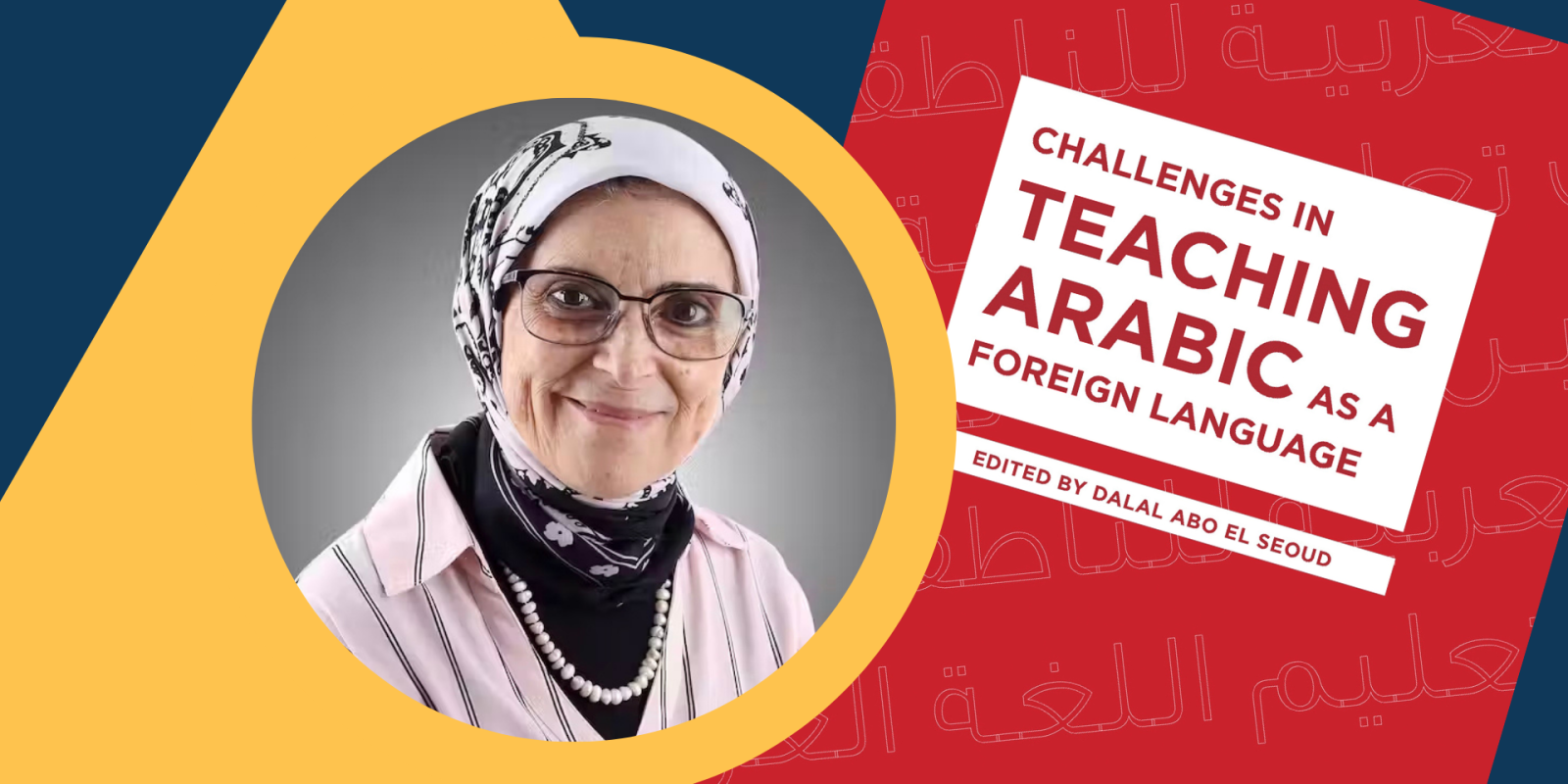
Woman with a red book behind her reading Teaching Arabic as a Foreign Language

Teaching Arabic as a Foreign Language: Dalal Abo El Seoud

Honey ElMoghazi February 21, 2024
Arts and Culture

Effective methods of teaching Arabic as a foreign language (TAFL) incorporate both communication and creativity to address the complexities of the Arabic language. Exploring this topic, Dalal Abo El Seoud, senior instructor II in the Department of Arabic Language Instruction, most recently edited the newly released book, Challenges in Teaching Arabic as a Foreign Language (AUC Press, 2024), which brings together the expertise of 18 TAFL professionals.

We spoke with Abou El Seoud to learn more about the challenges that TAFL instructors and students face, her motivation for editing the book and what she hopes readers will take away from it. 

1. What are the common challenges that non-native speakers of Arabic face when studying the language?

Students studying the Arabic language face several difficulties, including pronunciation and the Arabic script itself, which differs significantly from the Roman alphabet. The complexity of Arabic grammar, vast vocabulary, and reading comprehension can be daunting. In addition, Diglossia, the coexistence of Modern Standard Arabic and regional dialects, can create communication difficulties. Understanding the cultural and historical context linked to Arabic can also be time consuming.  


2. What do you believe motivates non-Arabic speakers to learn the language?

Some are motivated by cultural interest, seeking to understand the rich tapestry of Arabic culture. Others are compelled by religious reasons, with many Muslims worldwide studying it for a more profound connection to their faith. Some are also drawn to it for professional and academic opportunities –– whether travel, communication, humanitarian efforts or personal relationships.


3.What is the best way to teach Arabic to non-native speakers?

The ideal teaching approach should be eclectic and student-centered, creating an enjoyable learning environment through interactive games and engaging activities. It should focus on clear learning outcomes for each lesson and put together multiple assessment measures to ensure student comprehension and progress. 


4. What motivated you to edit Challenges in Teaching Arabic as a Foreign Language?  

My profound passion for the Arabic language and strong desire to share its beauty and significance with others. I want to create a valuable resource that fills a noticeable gap in the existing TAFL literature. By offering practical insights and guidance, I hope to not only contribute to the field of language education but also promote cross-cultural understanding. 


5. What was the most challenging part?

Ensuring grammar and style consistency, preserving the author’s voice, handling citations, managing deadlines and providing constructive feedback to authors.


6. What’s the most valuable benefit you gained from editing this book?

This experience has not only deepened my knowledge but also expanded my professional network. I derived benefit and inspiration from each and every chapter. Whether it was insights into educational methods, discussions on cultural sensitivity, examinations of emerging trends or nuanced approaches to assessments, every chapter offered valuable perspectives that deepened my appreciation of the subject matter. It was truly a holistic journey of learning, and the synergy of all these facets within the book left a profound impact on me. 


7. What can readers expect to gain from the book?

The book can highlight some of the challenges that teachers face when teaching Arabic as a second language and offer practical solutions and effective strategies to address them. It can provide insights into instructional techniques, materials, and activities that have proven successful in Arabic language classrooms. It can also inspire further research and academic advancement in understanding the challenges and effective practices in teaching Arabic. In addition to that, researchers and scholars can benefit from the book as a resource for literature reviews, theoretical frameworks, and ideas for future research directions.


8. What about the instructors featured in the book?

All of them have extensive experience in teaching students of Arabic as a foreign language over an extended period. Their collective wisdom and years of dedicated teaching have equipped them with a profound understanding of the challenges and nuances that non-native students encounter. Their longstanding commitment to the field makes their contributions to this book particularly insightful. 


9. What advice would you give other TAFL instructors and teachers-in-training?

Opting for continuous engagement in ongoing research and new teaching methodologies to implement in the classroom, as well as being proactive in creating diversified assessment techniques that would provide students with hands-on learning experiences. This commitment to staying abreast of the latest educational advancements not only maintains their teaching dynamic but also enriches the educational journey of their students. 

Related stories

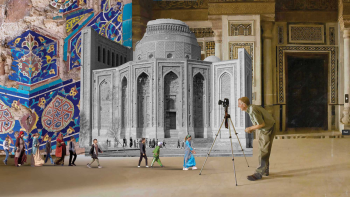
Bernard O'Kane taking a photo of tiles, with the monuments collaged onto the image

Tiles That Tell

The summer after his first year of university, Bernard O’Kane boarded a train from Ireland to Istanbul, emerging in a world of brightly colored tiles. The next year, he took the same train to Istanbul and boarded a boat to Alexandria to see the architecture of Egypt. He continued this habit a third summer, venturing further east from Turkey into Iran, Iraq, Jordan, Syria and Lebanon. The colorful art and architecture of the Islamic world captured O’Kane in a way he wasn’t able to shake then.Now a professor of Islamic art and architecture in the Sheikh Hassan Abbas Sharbatly Department of Arab and Islamic Civilizations, O’Kane’s love of travel never faded. He regularly visits places in the Middle East and Central Asia to investigate the historical architecture and tilework around the region. Most recently, O’Kane traveled to Turkmenistan, researching the tilework of monuments in Kuhna Urgench. This historical site was the capital of the Khorezm region with monuments including a mosque, the gates of a caravanserai, fortresses, mausoleums and a 60-meter-high minaret. O’Kane was drawn to the tilework, whose soulful colors have endured more than seven centuries.“Tilework is a particularly important form of Islamic art. It serves as a colorful, vibrant way to shape the identity of sacred and secular spaces,” he said. 
Arts and Culture
book cover

Visual Voices

“I always insist on the collective because this is how you change history,” says Bahia Shehab (MA ’09), professor of practice in the Department of the Arts and co-editor of Revealing, Recording, Reflecting: Graphic Women from Southwest Asia and North Africa (SWANA), the first publication of its kind to document the work and legacy of contemporary women designers.“This landmark book is about the ‘us’ of women,” says Shehab, who founded AUC’s graphic design program in 2011. ‘When people hold the book, I want them to recognize women’s voices in the Arab world. They are beautiful, they are colorful and they are varied. And they’re not limited to the geography of the Arab world. We are everywhere.”Full of vibrant images, the book emerged from a collaborative initiative aimed at documenting and celebrating the contributions of SWANA women in the field of design. It all started when four women graphic designers from different institutions — Shehab from AUC in Egypt, Huda Smitshuijzen AbiFarès from Khatt Foundation in the Netherlands, Yasmine Nachabe Taan from the Lebanese American University in Lebanon and Soukeina Hachem from Shape interior design studio in Morocco — decided to research and showcase the work of Arab women designers. “We are four women from various parts of the region who came together to reflect, collect and reveal stories of Arab women designers,” says Shehab. Not only were they tapping into an undocumented frontier, but their research process was atypical. “The normal route usually involves archives and a lot of reading,” explained Shehab. “But for this book, we decided to do something else: We opened up our research to a bigger community. So we were four curators, not authors. The idea is that it is a collective story of over 80 Arab women graphic designers that we are telling together, so there isn’t a single authority or voice.”The first step for the co-editors was to focus on themes, the types of stories they want to tell. For Shehab, the choice was clear. “I love everything about Arabic design — its calligraphy, letters and typography — so I chose to work on Ladies of Letters: women who are as passionate about Arabic letters as I am. Each of us worked on a topic that she felt eager to explore in-depth.” The book explores themes of Visual Storytelling by Women, Engaged Image-Making for Social and Political Commentary, Ladies of Letters (connecting generations of women writers and designers) and Navigating Diasporic Identities. Focusing on the work and impact of Arab women graphic designers, illustrators, calligraphers and typographers, the book includes critical writing, testimonials, primary documents and artwork. The co-editors proposed the project online, collecting reflections on the different themes through Zoom panels and collaboration with a cultural space in Berlin, Germany for people to share their insights and recommend women in the field who can be featured in the book. “That physical space became our living research space, with sticky notes, observations, posters and new books. It was the first time for us to experiment with collective crowd-sourced research, and it was an enriching experience,” Shehab says.Questionnaires were then sent out to women graphic designers, asking them to tell their own stories. “In the book, we are not reflecting on how they feel or assuming the meaning of their work. They are choosing what stories they want to tell — in their own words,” affirmed Shehab. 
Arts and Culture
Share