AUC Psychology Professor Aids WHO Funded Study on Autism Care Training in Egypt
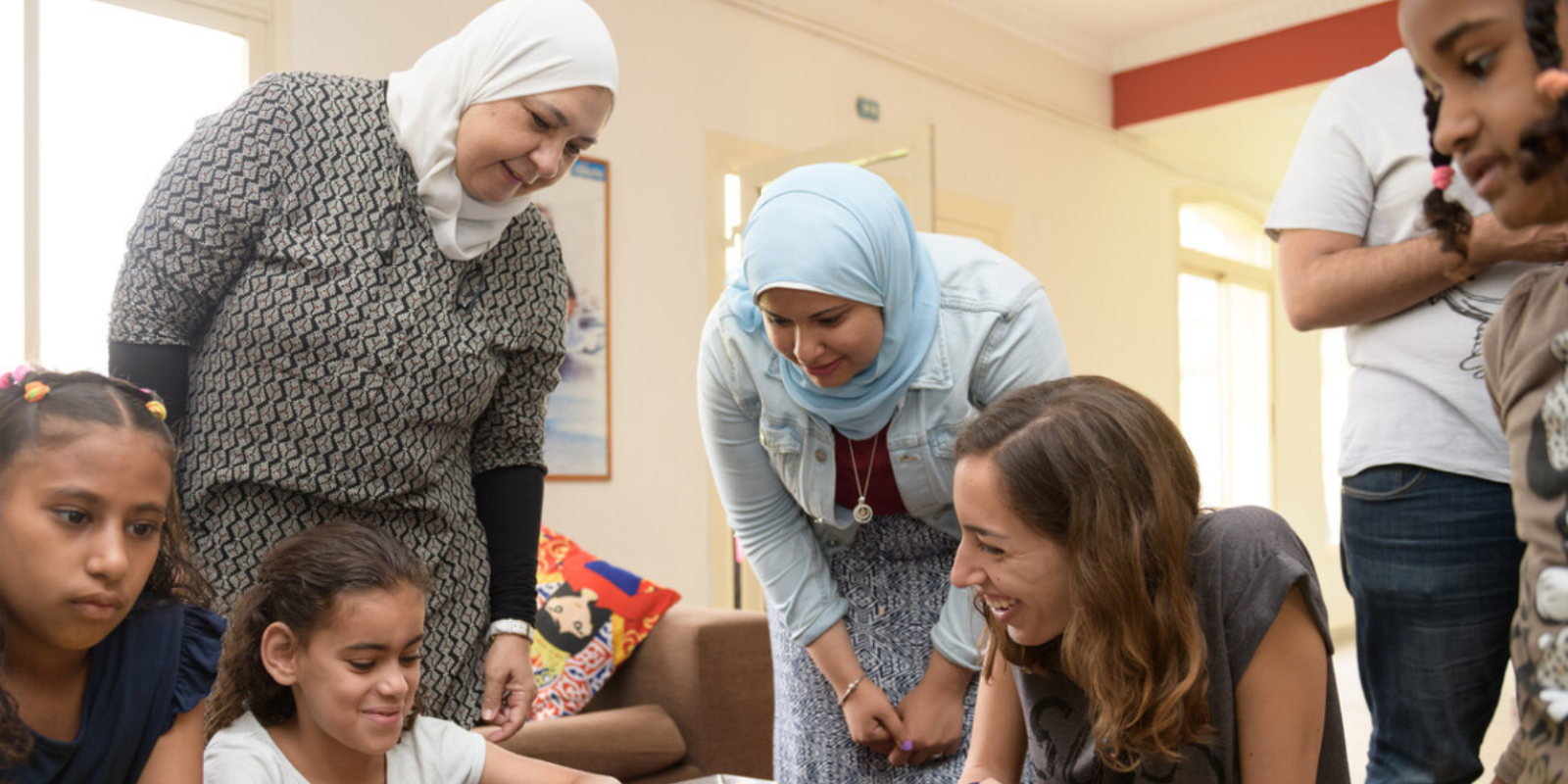
Heba Kotb '84, associate professor of practice in psychology, worked with the World Health Organization to research ways autism support can be tailored to the Egyptian context.
As researchers and psychologists work to improve the lives of those with autism around the world, the need for country-specific support networks and training has become clear. Heba Kotb ‘84, associate professor of practice in psychology, helped to develop an Egypt-specific autism training program in partnership with the World Health Organization and international universities.
“It’s critical that we tailor autism care to specific cultural environments, which is exactly what this research developed," Kotb explained. “The importance of this program comes not only from the context-specific research, but also the ability to share it with families who need the support.”
Autism care in Egypt has been heavily concentrated in major urban areas, with limited access to support for those outside of Cairo. This study — which was in partnership with AUC, the University of Maryland, McGill University’s Montreal Neurological Institute-Hospital, Egypt’s Ministry of Health and Population, Autism Speaks and WHO — sought to train families to care for the needs of youth with autism. The study sent out 16 Master Trainers to conduct five-day intensives in rural areas, with the intention of providing caregivers — mainly mothers — with the knowledge to support their children.
Kotb worked with the international partners to design the training for the Egypt-specific program. “Egypt has a very different societal context around caregiving than, say, the United Kingdom,” Kotb affirmed. “It was essential that we consulted on this context so that Egyptian families could best access the support they needed.”
Kotb also helped to assess the effectiveness of the program after it was concluded, interviewing eight mothers in Upper Egypt and 10 in Alexandria. She then provided thematic analysis on the data, which was published into a paper last August, concluding that programs like the country-specific master training do have a strong impact.
“The interviews were really eye opening; I couldn't believe the impact of the program. Families don't get many services, especially for children with disabilities. In many cases, they are neglected,” Kotb said.
Reflecting on her experience within the study, Kotb said that parents shared with interviewers that their children couldn’t speak and would spend all day at home doing nothing until this program began training them how to better interact with their kids.. “The parents described it as a miracle,” Kotb said. “The children were suddenly speaking and playing, and became toilet-trained. They started to learn that they can actually do anything.”
Kotb has been specializing in researching children with disabilities for over 30 years. After getting her bachelor’s in psychology from AUC, she worked as an educator in a school for students with disabilities before eventually pursuing her PhD in education from Leeds University in the United Kingdom. Since then, she has been researching how to make schools accessible for all students. “I found working with children with disabilities to be incredibly rewarding. All my research has been in the area of disability studies, and it’s such satisfying work.”
Ultimately, Kotb hopes that this study will serve as a pilot program that will lead to many other training programs like it. Now that the study is concluded, WHO and Egypt’s Ministry of Health will potentially work together to expand the training. Kotb is eager to continue helping. “I think the training program should be spread to all cities. Children with autism are everywhere. Many people don't realize that children with autism can be educated and trained, and can become productive members of society. We need to continue working to provide support.”
